
Drafting the Future: A Deep Dive into 2D Drafting and 3D Modeling for Smarter Manufacturing Decisions
Manufacturing stands at a powerful intersection of tradition and innovation. On one side, time-tested drafting methods continue to guide workshops and factories around the world. On the other, advanced digital modeling tools are reshaping how products are imagined, tested, and produced. As competition intensifies and product lifecycles shorten, selecting the right design approach becomes a strategic decision rather than a technical preference. Companies must evaluate efficiency, cost, adaptability, collaboration, and long-term scalability before committing to a workflow. The discussion around 2D 3D Manufacturing Design is not about replacing one with the other overnight. Instead, it revolves around understanding how each method contributes to productivity and accuracy.
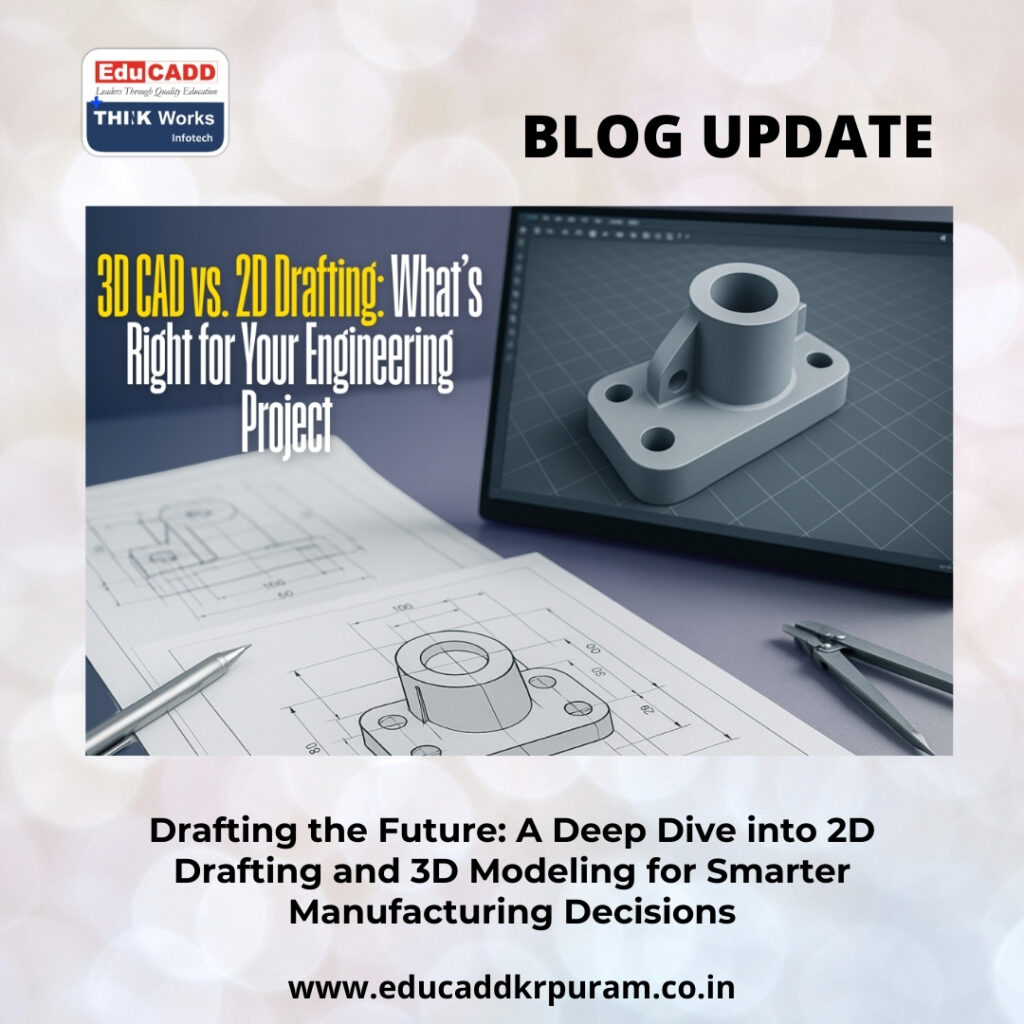
2D 3D Manufacturing Design
While traditional drafting offers clarity and simplicity, digital modeling provides immersive visualization and simulation capabilities. Manufacturing leaders who grasp the nuances of both approaches can align design practices with operational goals. In this detailed exploration, we will examine the strengths, limitations, applications, and future relevance of both systems across fourteen comprehensive sections.
1. The Origins and Evolution of 2D 3D Manufacturing Design
2D drafting has shaped engineering communication for centuries. From manual drawing boards to computer-aided design software, it has served as the backbone of technical documentation. Engineers represent objects using flat views such as front, top, and side projections. Dimensions, symbols, and tolerances define the manufacturing instructions clearly.
This method gained widespread acceptance because it standardized communication. Workshops across regions could interpret drawings consistently, ensuring parts were produced according to specification. As CAD software emerged, drafting shifted from paper to digital screens. Productivity improved, yet the fundamental principles remained unchanged.
Even today, many manufacturing units rely on 2D drafting for layout planning, mechanical components, and structural detailing. Its simplicity allows technicians to interpret drawings quickly. Moreover, the learning curve remains manageable, making it accessible to entry-level professionals. While technology advances rapidly, the foundational importance of clear two-dimensional documentation continues to hold value in numerous industries.
2. The Digital Transformation Through 2D 3D Manufacturing Design
3D modeling introduced a revolutionary perspective in product design. Instead of relying on separate views, engineers create a unified digital representation of an object in three-dimensional space. This model reflects real-world geometry and can be rotated, sectioned, and analyzed from any angle.
The shift toward 3D modeling accelerated as manufacturing processes became more complex. Automotive assemblies, aerospace components, and consumer electronics demanded intricate design precision. Digital models enabled engineers to visualize assemblies before physical production began. As a result, companies reduced errors and improved product reliability.
Furthermore, parametric modeling allows designers to define relationships between features. If one dimension changes, related elements update automatically. This dynamic capability enhances flexibility and reduces redundancy. Over time, 3D modeling has become a cornerstone of advanced manufacturing strategies.
3. Comparing Visualization Capabilities
Visualization directly influences design clarity and stakeholder confidence. In 2D drafting, understanding a product requires interpreting multiple projections. Skilled engineers can mentally construct the 3D form from flat drawings. However, clients and non-technical team members may struggle with this interpretation.
3D modeling eliminates such barriers. Interactive models display realistic proportions and spatial relationships instantly. Teams can review exploded views, cross-sections, and animated assemblies. These features improve comprehension during design reviews and accelerate approval cycles.
Because visual clarity reduces ambiguity, collaboration becomes smoother. Marketing teams, procurement departments, and production planners gain a shared understanding of the final product. Consequently, decision-making processes become more efficient.
4. Accuracy and Dimensional Integrity
Precision is fundamental in manufacturing. Even minor discrepancies can lead to production setbacks. In 2D drafting, accuracy depends on carefully placed dimensions and annotations. Designers must verify each view manually to maintain consistency.
In contrast, 3D modeling embeds dimensions directly within the model’s geometry. Parametric relationships ensure consistency across features. If adjustments are required, the model updates systematically. This automation reduces the likelihood of human error.
Moreover, digital models support advanced validation tools. Engineers can perform tolerance analysis and interference checks before production begins. Early detection of potential issues minimizes rework and improves overall product quality.
5. Efficiency in Design Modifications
Manufacturing rarely follows a perfectly linear path. Market feedback, regulatory requirements, or cost optimization strategies often demand design revisions.
When using 2D drafting, revisions require manual updates across multiple drawings. Designers must ensure that every related sheet reflects the change accurately. This process consumes time and increases the risk of oversight.
With 3D modeling, modifications are more streamlined. Parametric systems allow designers to alter one dimension, triggering automatic updates across the entire model. Associated drawings regenerate accordingly. This flexibility supports rapid iteration and continuous improvement, giving manufacturers a competitive advantage.
6. Integration with CNC and CAM Systems
Modern factories rely heavily on computer-controlled machinery. Seamless integration between design and production systems enhances operational efficiency.
2D drafting can provide essential geometry for CNC machines, especially for simple components. However, complex surfaces and multi-axis machining often require more detailed data.
3D modeling integrates directly with computer-aided manufacturing software. Toolpaths can be generated from the digital model with precision. This connection reduces programming errors and shortens setup times. As automation expands, such integration becomes increasingly valuable.
7. Prototyping and Simulation Advantages
Traditional prototyping methods involve creating physical models for testing. While effective, this approach requires material investment and time.
3D modeling introduces virtual prototyping. Engineers can simulate stress, motion, and thermal performance within the digital environment. By identifying weaknesses early, companies avoid costly physical iterations.
Although 2D drafting supports prototype development, it lacks integrated simulation capabilities. Digital modeling therefore enhances innovation by enabling experimentation without excessive material waste.
8. Cost Considerations and Long-Term Value
Initial investment often influences design tool selection. 2D drafting software typically involves lower licensing fees and minimal hardware requirements. Small manufacturing units may prefer this cost-effective solution.
However, long-term value extends beyond upfront expenses. 3D modeling reduces errors, accelerates development cycles, and minimizes material waste. Over time, these benefits can outweigh initial costs.
Companies must assess total cost of ownership rather than focusing solely on immediate expenditure. Strategic investment in advanced tools can generate measurable returns through improved productivity.
9. Learning Curve and Workforce Readiness
The ease of adoption plays a crucial role in technology implementation. 2D drafting principles are straightforward and widely taught. Technicians can achieve proficiency within a relatively short timeframe.
3D modeling requires deeper understanding of geometry, parametric relationships, and simulation tools. Structured training programs are often necessary. However, educational institutions increasingly prioritize digital modeling skills, preparing future professionals for advanced manufacturing environments.
Organizations that invest in employee development strengthen their ability to adopt innovative technologies successfully.
10. Collaboration and Data Management
Manufacturing projects often involve multidisciplinary teams. Effective collaboration ensures alignment across design, procurement, and production departments.
Managing multiple 2D drawing files can become challenging in large projects. Version control issues may arise if updates are not tracked carefully.
3D modeling platforms frequently include centralized data management systems. Teams can access updated models in real time, reducing confusion and duplication. Cloud-based collaboration further enhances global coordination. Improved data control fosters transparency and accountability.
11. Industry-Specific Applications
Different sectors adopt design tools according to complexity and regulatory demands. Construction and sheet metal industries often rely on 2D drafting for straightforward layouts and detailing.
Aerospace, automotive, and medical device industries depend heavily on 3D modeling. Complex assemblies and strict compliance standards require detailed digital validation. By understanding sector-specific needs, companies can select the most suitable approach.
12. Environmental Impact and Sustainability
Sustainability has become a core objective in modern manufacturing. Reducing waste and conserving resources align with environmental responsibility.
Physical prototyping based solely on 2D drawings may increase material consumption. In contrast, digital simulation through 3D modeling limits unnecessary trials. Virtual testing supports resource optimization and lowers environmental footprint.
Therefore, adopting digital modeling contributes to both operational efficiency and ecological stewardship.
13. Future Trends in Design and Manufacturing
Emerging technologies continue to reshape industrial practices. Additive manufacturing, digital twins, and smart factories rely heavily on detailed 3D data. Real-time monitoring systems integrate seamlessly with digital models to enhance predictive maintenance.
While 2D drafting remains relevant for documentation and simple projects, the broader trajectory points toward digital integration. Artificial intelligence and automation will further expand the capabilities of 3D modeling systems.
14. Strategic Decision-Making for Manufacturers
Selecting between 2D 3D Manufacturing Design requires a balanced evaluation of business objectives. Companies producing simple components may find 2D drafting sufficient and cost-effective. Meanwhile, organizations focused on innovation and complex assemblies often benefit from digital modeling.
A hybrid strategy may offer the best solution. By combining traditional documentation with advanced modeling tools, manufacturers can leverage the strengths of both approaches. Strategic alignment between technology and operational goals ultimately determines long-term success.
Conclusion
The debate between 2D 3D Manufacturing Design reflects the broader transformation of manufacturing itself. Traditional drafting continues to deliver clarity, affordability, and reliability for numerous applications. At the same time, 3D modeling introduces visualization, simulation, and integration capabilities that drive modern innovation.
Rather than viewing these methods as competitors, forward-thinking organizations recognize them as complementary tools. By understanding project requirements, workforce skills, and long-term growth objectives, manufacturers can select or combine approaches effectively. In doing so, they position themselves for sustainable success in an increasingly digital industrial landscape.

