
Reimagining Interiors: The Transformative Power of 3D Visualization in Interior Design
Interior design has always been a blend of imagination, functionality, and aesthetics. Historically, designers relied on sketches, mood boards, and 2D plans to communicate their visions. While these traditional methods offered a foundation, they often fell short in conveying the spatial experience, material quality, and lighting effects. Enter 3D Interior Design Visualization, a technology that allows designers and clients to experience spaces virtually before any physical construction begins. With this tool, abstract ideas transform into immersive, realistic environments, enabling designers to experiment boldly and clients to make confident decisions. By combining precision with creativity, 3D visualization ensures that the final space mirrors the envisioned design accurately and efficiently.
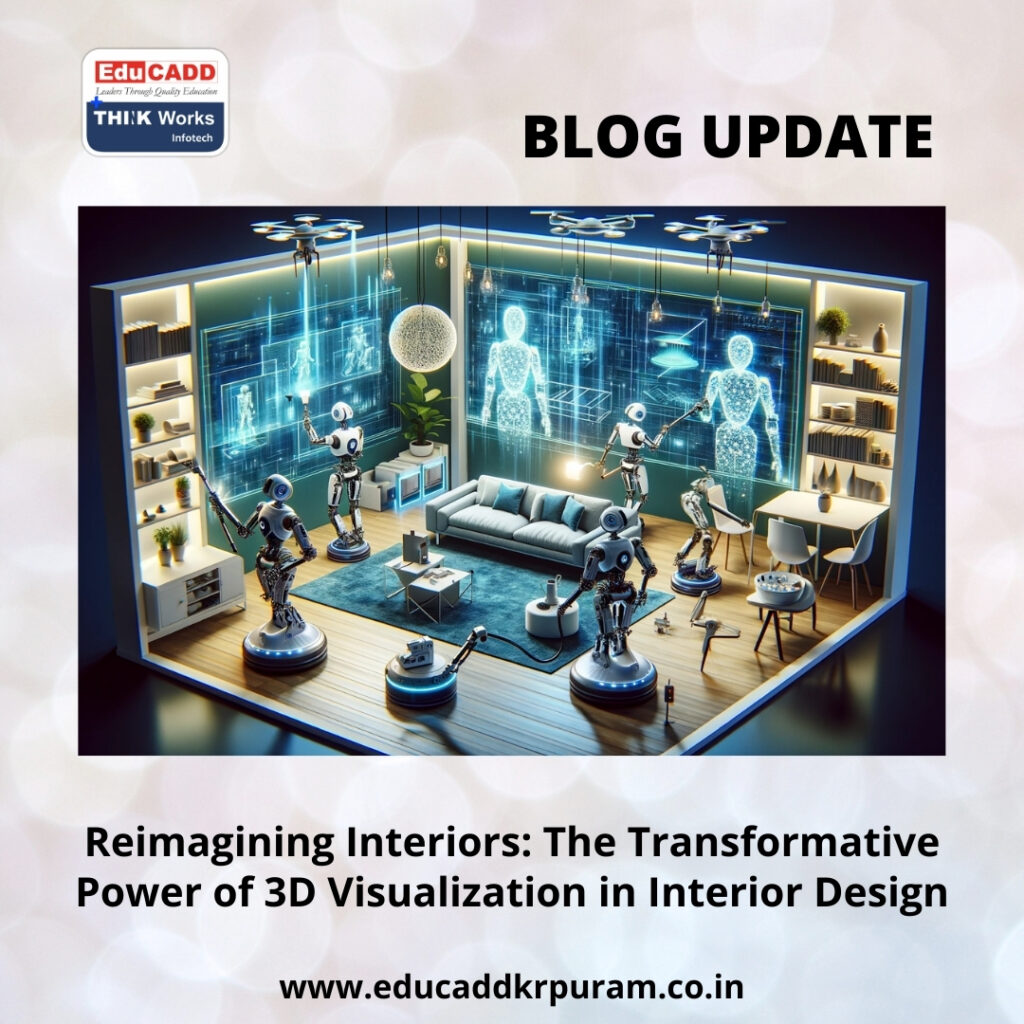
3D Interior Design Visualization
1. Understanding 3D Visualization in Interior Design
3D Interior Design Visualization is the process of creating lifelike digital models of interior spaces using specialized software. Unlike 2D plans or sketches, these models provide depth, perspective, and spatial awareness. Designers can simulate furniture, textures, lighting, and color schemes, producing realistic representations of rooms. Beyond aesthetics, 3D visualization supports functional planning, enabling designers to assess circulation, proportions, and spatial flow before implementation. By translating ideas into interactive models, designers bridge the gap between concept and reality, offering clients a tangible experience that enhances understanding and satisfaction.
2. The Role of Advanced Software in Shaping Interiors
Modern interior design thrives on sophisticated 3D software. Programs such as 3ds Max, Blender, SketchUp, Revit, and AutoCAD allow for precise modeling and artistic experimentation. These tools support intricate detailing, accurate measurement, lighting simulation, and high-quality rendering. Designers can test multiple layouts, tweak textures, and refine color palettes efficiently. The combination of technical precision and creative flexibility ensures that designs are both visually compelling and practically feasible. With software continually evolving, designers can now produce highly realistic environments faster than ever before.
3. Transforming Concepts into Immersive Experiences
Flat sketches or mood boards rarely capture the essence of a space. 3D visualization brings interiors to life, offering an immersive digital environment where clients can explore every angle and element. Walkthroughs, multiple viewpoints, and realistic scaling allow clients to experience the design as if they were physically inside it. This immersive quality eliminates ambiguity, ensures clarity, and strengthens the emotional connection between clients and their future spaces. As a result, design approvals become more straightforward, revisions decrease, and overall project efficiency improves.
4. Enhancing Client Communication and Collaboration
One of the most significant benefits of 3D visualization is its ability to facilitate clear communication. Clients often struggle to interpret technical drawings or verbal explanations. Realistic 3D models bridge this gap, providing a shared visual language for designers and clients. Interactive presentations allow clients to give immediate feedback, experiment with changes, and understand design decisions thoroughly. Transparent visualization fosters trust, reduces misunderstandings, and ensures that the client’s expectations align perfectly with the designer’s vision, ultimately leading to higher satisfaction and smoother project execution.
5. Realism Through High-Quality Rendering
Modern 3D rendering technology produces stunningly realistic images. Materials such as wood, marble, metal, and textiles can be simulated with remarkable accuracy, reflecting natural light and texture in a way traditional sketches cannot. Designers can demonstrate how surfaces interact with lighting conditions at different times of the day. This level of realism allows clients to make informed choices, ensuring that the final interior mirrors the visualization precisely. Accurate rendering reduces errors on-site and minimizes costly material changes or construction adjustments.
6. Optimizing Layouts and Functional Planning
Interior design is not just about aesthetics—it also requires functional spatial planning. 3D visualization allows designers to assess circulation paths, furniture placement, and spatial efficiency with precision. Multiple layout options can be tested virtually to determine the most effective configuration. This approach is invaluable for small apartments, multifunctional spaces, and commercial interiors where optimization is key. By visualizing spatial dynamics digitally, designers ensure that interiors are practical, comfortable, and tailored to client needs.
7. Experimenting Freely with Colors, Materials, and Textures
Experimentation is essential for creative interior design, and 3D visualization provides a cost-effective, efficient platform for it. Designers can test different color schemes, wall finishes, furniture styles, and textures instantly. Clients can compare alternatives side by side, refining their choices without wasting resources. This flexibility encourages creativity, supports informed decision-making, and ensures a harmonious blend of materials and colors. The result is an interior that is visually coherent and aligned perfectly with the client’s tastes and preferences.
8. Lighting Design and Its Impact on Mood
Lighting plays a crucial role in defining the character of an interior space. 3D visualization allows designers to simulate both natural and artificial lighting scenarios accurately. Different types of fixtures, light intensities, and placements can be explored to achieve the desired ambiance. Clients can see how light interacts with colors, textures, and surfaces, helping them understand the final effect before installation. Thoughtful lighting design enhances mood, supports functionality, and ensures that interiors are visually striking and inviting.
9. Reducing Costs and Improving Efficiency
Interior design projects are often bound by tight budgets and schedules. 3D visualization reduces costly revisions by allowing designers and clients to make informed decisions early in the process. Virtual models eliminate guesswork, helping avoid material waste and labor errors. Changes that might have required expensive on-site adjustments can be resolved digitally. This efficiency saves both time and money, ensuring that projects stay within budget and deliver value without compromising quality.
10. Streamlining Collaboration with Stakeholders
Successful interior design requires collaboration among multiple stakeholders, including clients, designers, contractors, and suppliers. 3D visualization acts as a common reference point, ensuring everyone understands the design intent clearly. Contractors can execute plans with greater precision, suppliers can estimate materials accurately, and clients can track progress confidently. This level of collaboration minimizes miscommunication, promotes accountability, and ensures that the design vision is preserved throughout the project lifecycle.
11. Interactive Walkthroughs for Enhanced Engagement
Virtual walkthroughs elevate client engagement by offering interactive experiences of the designed space. Clients can navigate rooms, examine furniture placement, and explore textures and finishes virtually. This interactive process strengthens emotional connections with the design and allows clients to experience spaces before they exist physically. Walkthroughs also serve as a powerful marketing tool, helping design firms showcase their capabilities and leave lasting impressions on prospective clients.
12. Applications Across Residential, Commercial, and Retail Interiors
The versatility of 3D visualization extends across various types of interior projects. In residential design, it allows homeowners to understand layouts, materials, and color combinations. Commercial spaces benefit from functional planning, branding alignment, and employee comfort. Retail interiors leverage visualization to optimize product placement and enhance customer experience. Across all sectors, 3D visualization ensures accuracy, clarity, and efficiency, enabling designers to deliver tailored solutions while maintaining high design standards.
13. Career Growth and Professional Opportunities in 3D Visualization
As the demand for digital interior design tools grows, professionals skilled in 3D visualization enjoy significant career advantages. Designers who master these tools can offer superior client experiences, execute complex projects efficiently, and differentiate themselves in a competitive market. Opportunities span from freelance visualization work to collaborating with global design firms. Continuous advancements in technology ensure that skilled visualizers remain in demand, enabling career growth, specialization, and recognition within the interior design industry.
14. The Future of Interior Design Visualization
The future of interior design is increasingly intertwined with technology. Emerging tools such as augmented reality (AR), virtual reality (VR), and artificial intelligence (AI) promise even more immersive and interactive experiences. Clients may soon modify layouts and experiment with materials in real time. AI-driven visualization tools will generate design suggestions, predict user preferences, and optimize spatial layouts automatically. These innovations will further streamline project approvals, enhance creativity, and elevate client satisfaction. As these technologies become mainstream, 3D visualization will continue to transform the way interiors are designed, experienced, and executed.
Conclusion
3D Interior Design Visualization has redefined the way designers create, communicate, and execute interior projects. By turning abstract concepts into lifelike digital models, it enhances clarity, facilitates collaboration, reduces costs, and accelerates approvals. Clients gain confidence, designers achieve precision, and projects are completed more efficiently. As technology advances, 3D visualization will remain a cornerstone of interior design, bridging imagination and reality, and ensuring that every project embodies creativity, functionality, and aesthetic excellence.

