
From Concept to Photorealism: Using 3D Max for Interior Design Presentations That Impress Clients
Interior design has evolved far beyond mood boards and hand sketches. Today, clients expect immersive visuals that help them understand space, lighting, materials, and mood before execution begins. Static drawings no longer communicate the full story. Designers must present ideas with clarity, realism, and confidence. This is where 3D Max Interior Rendering becomes a game changer.
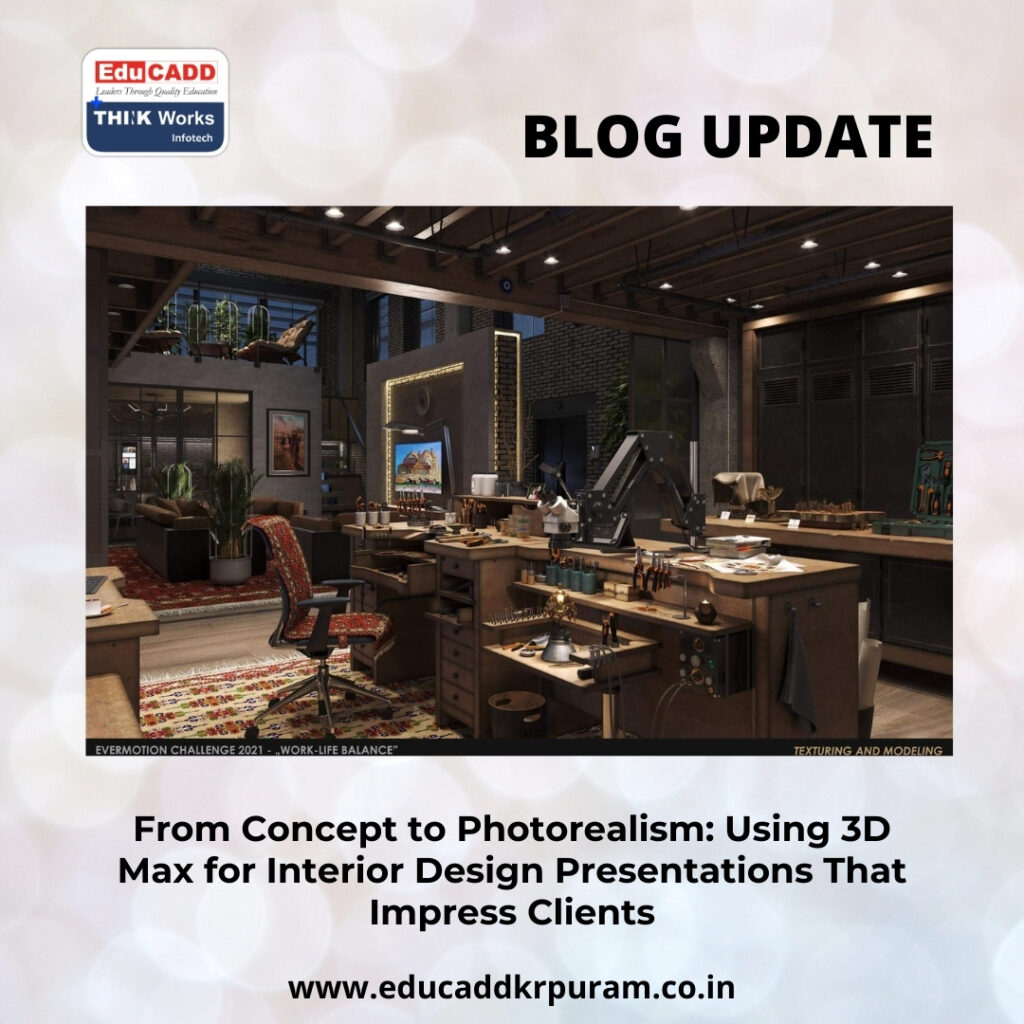
3D Max Interior Rendering
Autodesk 3D Max empowers designers to transform concepts into detailed, photorealistic visuals. It bridges the gap between imagination and reality. With advanced modeling, lighting, and rendering tools, designers can create presentations that feel tangible and persuasive. In this detailed guide, we will explore how Using 3D Max for Interior Design Presentations enhances creativity, improves communication, and increases client approval rates.
1. Why Modern Interior Designers Rely on 3D Visualization
Interior design is both artistic and technical. Designers must balance creativity with structural logic. However, communicating design intent often becomes a challenge. Clients struggle to visualize layouts from 2D drawings. As a result, misunderstandings occur.
Therefore, as a result, many professionals now strategically focus on using 3D Max for interior design presentations to eliminate confusion and improve project clarity. Moreover, three-dimensional visualization provides a far more immersive and realistic understanding of the space. Consequently, clients can clearly see furniture placement, ceiling details, textures, and lighting effects well before construction begins. In addition, this approach minimizes misunderstandings, streamlines approvals, and ensures smoother project execution from concept to completion.
Moreover, 3D presentations reduce revisions. When clients clearly understand the design direction, they make decisions faster. This saves time and improves workflow efficiency. In addition, designers build trust through accurate visual representation. Ultimately, visualization is no longer optional. It is a professional necessity.
2. Understanding the Core Capabilities of 3D Max
Before diving deeper into workflows, it is equally important to first understand what truly makes 3D Max so powerful. To begin with, the software offers advanced modeling tools that enable precise and intricate design development. In addition, it provides realistic material libraries that enhance surface detailing and visual authenticity. Furthermore, its sophisticated lighting systems and high-quality rendering engines contribute to lifelike visual output. As a result, these combined features allow designers to produce highly detailed, immersive, and presentation-ready interior spaces with greater efficiency and accuracy.
When professionals focus on 3D Max Interior Rendering, they gain control over every design element. They can adjust proportions precisely. They can test different layouts instantly. They can experiment with lighting moods effortlessly.
Furthermore, 3D Max supports plugins such as V-Ray and Corona Renderer. These tools enhance realism. They simulate natural light behavior and material reflections accurately. Consequently, presentations look like professional photographs rather than digital drawings.
3. Creating Accurate Interior Models
The foundation of every presentation lies in modeling. Accurate dimensions ensure realistic visualization. Designers begin by constructing walls, floors, ceilings, and structural elements. After that, they add furniture and décor components.
While Using 3D Max for Interior Design Presentations, precision matters greatly. Incorrect scaling can distort perception. Therefore, designers must follow architectural measurements carefully.
Additionally, 3D Max provides spline modeling and editable poly tools. These tools allow flexibility. Designers can create custom furniture pieces and intricate details. As a result, presentations look unique and tailored rather than generic.
4. Applying Realistic Materials and Textures
Materials define the personality of a space. Wood, marble, fabric, glass, and metal all contribute to ambiance. Without realistic textures, interiors appear flat and unrealistic.
Through Using 3D Max for Interior Design Presentations, designers can assign high-resolution materials with accurate mapping. Reflection, refraction, and glossiness can be adjusted precisely.
Moreover, designers can test multiple material options. For example, they can compare matte flooring with polished surfaces. Clients can instantly see the difference. This interactive approach enhances decision-making.
5. Lighting: The Heart of Interior Visualization
Lighting transforms ordinary interiors into extraordinary experiences. It influences mood, perception, and atmosphere. However, lighting must be handled carefully.
When focusing on Using 3D Max for Interior Design Presentations, designers utilize photometric lights and global illumination systems. These tools replicate natural daylight and artificial lighting accurately.
Furthermore, designers can simulate morning, afternoon, or evening environments. They can demonstrate how sunlight enters through windows. This level of realism impresses clients deeply.
6. Camera Angles and Composition Techniques
Presentation quality depends on perspective. Even a beautifully designed space can appear unattractive if the camera angle is incorrect.
Therefore, while Using 3D Max for Interior Design Presentations, designers strategically position cameras. Wide-angle views showcase spaciousness. Eye-level perspectives create realism.
In addition, depth of field effects add cinematic quality. Proper framing ensures that focal points remain clear. Consequently, the final presentation feels professional and engaging.
7. Rendering for Photorealistic Output
Rendering converts 3D models into final images. It determines the overall visual impact. High-quality rendering requires balanced lighting, accurate materials, and optimized settings.
By mastering Using 3D Max for Interior Design Presentations, designers achieve stunning photorealism. Render engines calculate shadows, reflections, and light bounce effectively.
Although rendering can consume time, optimized settings improve efficiency. Designers often use test renders before producing final outputs. This ensures flawless results.
8. Enhancing Presentations with Animation
Static images communicate space effectively. However, animation creates immersive storytelling. Walkthrough videos help clients experience movement within the interior.
Through Using 3D Max for Interior Design Presentations, designers can create camera paths and flythrough animations. This approach builds emotional engagement.
Additionally, animated lighting transitions highlight design features. Clients gain a deeper understanding of spatial flow. Consequently, approval rates increase significantly.
9. Integrating 3D Max with Other Design Tools
Interior designers rarely rely on a single software. They often combine AutoCAD, SketchUp, or Revit with 3D Max. This integrated workflow improves productivity.
When professionals focus on 3D Max Interior Rendering, they import architectural drawings accurately. This ensures alignment with technical plans.
Moreover, post-production tools such as Photoshop enhance final renders. Subtle color corrections and effects elevate presentation quality further.
10. Improving Client Communication and Trust
Effective communication builds strong professional relationships. Clients feel confident when they clearly visualize the final outcome.
By prioritizing Using 3D Max for Interior Design Presentations, designers reduce ambiguity. They present clear layouts, material choices, and lighting effects.
As a result, clients provide precise feedback. Fewer misunderstandings occur. This strengthens collaboration and builds long-term trust.
11. Increasing Project Approval Rates
One of the biggest advantages of 3D visualization lies in faster approvals. Clients hesitate when they feel uncertain. Detailed presentations eliminate hesitation.
Designers who specialize in Using 3D Max for Interior Design Presentations often experience higher approval rates. Realistic renders create emotional impact. Clients connect with the space visually.
Furthermore, persuasive visuals support pricing discussions. When clients see value clearly, they invest confidently.
12. Reducing Errors Before Execution
Construction mistakes cost time and money. Visualization helps identify design flaws early. Designers can adjust layouts before implementation begins.
While Using 3D Max for Interior Design Presentations, professionals detect spacing issues, lighting conflicts, or proportion errors.
Therefore, revisions occur digitally rather than physically. This saves resources and enhances efficiency.
13. Building a Competitive Portfolio
In today’s competitive market, portfolio quality determines opportunities. Clients prefer designers who showcase realistic project visuals.
By mastering Using 3D Max for Interior Design Presentations, designers create impressive portfolios. High-resolution renders demonstrate skill and creativity.
Consequently, professionals attract premium clients and large-scale projects. Visualization becomes a marketing asset.
14. Future Trends in 3D Interior Presentation
Technology continues to evolve rapidly. Real-time rendering and virtual reality are shaping the future of design visualization.
Designers who focus on Using 3D Max for Interior Design Presentations can integrate VR experiences. Clients can explore interiors interactively.
Moreover, AI-assisted rendering tools are improving efficiency. Faster outputs and enhanced realism will define upcoming trends. Staying updated ensures continued relevance in the industry.
Conclusion
Interior design presentations have transformed dramatically in recent years. Clients demand clarity, realism, and immersive visualization. Traditional drawings alone cannot meet these expectations. Therefore, 3D Max Interior Rendering has become an essential professional skill.
From accurate modeling and realistic materials to advanced lighting and animation, 3D Max empowers designers to communicate ideas effectively. It reduces errors, improves client satisfaction, and enhances approval rates. Moreover, it strengthens portfolios and boosts competitive advantage.
Ultimately, mastering this tool allows designers to convert creative visions into compelling visual stories. When executed skillfully, 3D presentations do more than display interiors. They inspire confidence, build trust, and turn concepts into convincing realities.

