
From Concept to Comfort: Learning Space Planning & Ergonomics at EduCADD
The most successful spaces are more than just beautiful—they’re easy to use, comfortable to be in, and efficient to navigate. That balance doesn’t happen by chance. It’s the result of Space Planning & Ergonomics, two disciplines that turn empty rooms into environments where people thrive.
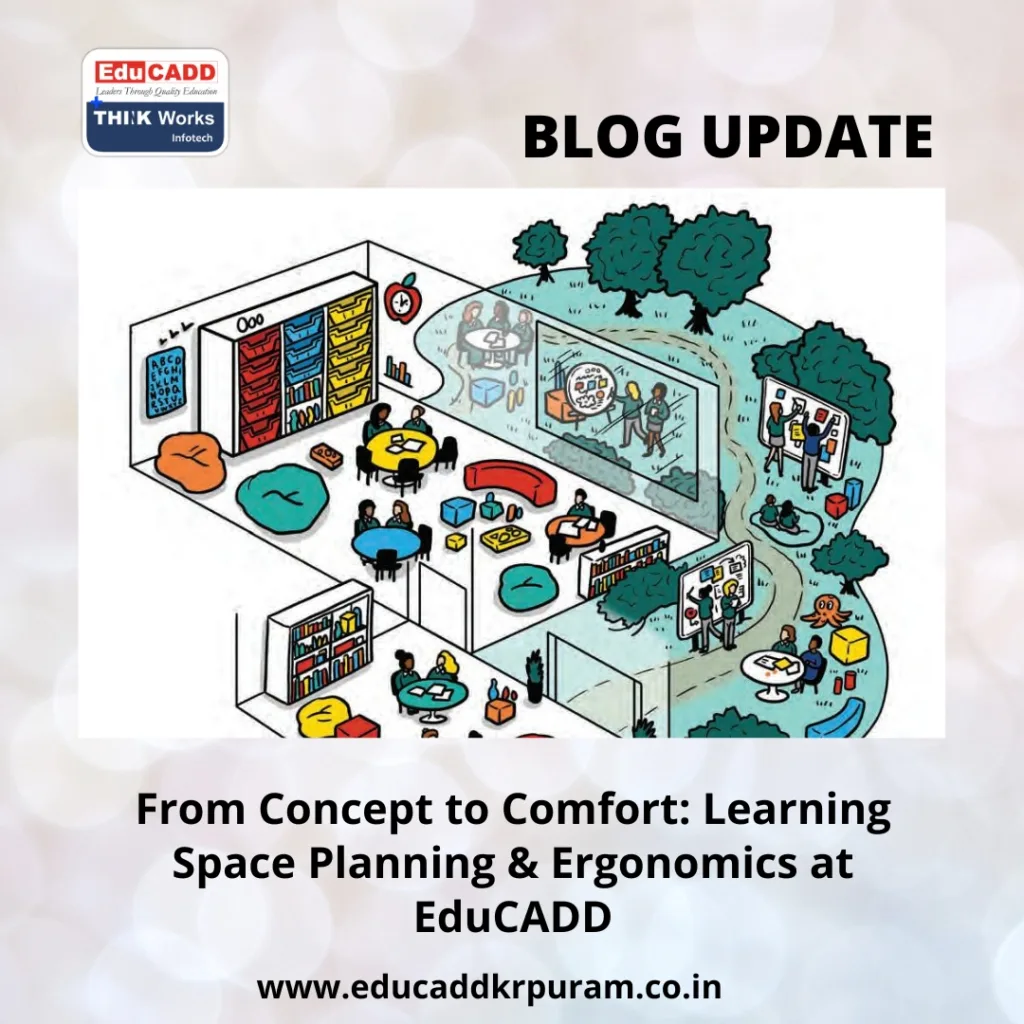
Space Planning and Ergonomics
At EduCADD, students don’t just learn design theory—they develop the skills to create spaces that meet both human and functional needs. From arranging furniture for better movement to selecting materials that enhance comfort, this program equips you with a complete toolkit for modern design challenges.
1. Space Planning: The Art of Layout
Every design begins with understanding how a space will be used. Space planning is about placing every element where it makes the most sense, ensuring flow, functionality, and purpose. EduCADD introduces you to the logic behind great layouts, teaching you to see spaces as interactive systems rather than static areas.
You’ll cover:
-
Zoning strategies to separate different functions
-
Pathway planning to avoid bottlenecks
-
Scale and proportion for harmonious arrangements
For example, a well-planned retail store layout can encourage customers to explore, while a poorly planned one can cause frustration. Through practical exercises, you’ll learn to anticipate user behavior and design accordingly.
2. Ergonomics: Putting People at the Center
While space planning focuses on structure, ergonomics is about the human experience inside that structure. At EduCADD, ergonomics isn’t just an add-on—it’s at the core of every design decision.
This part of the program helps you understand:
-
Human body measurements and how they guide design choices
-
Workstation design that supports posture and reduces fatigue
-
Lighting and environmental factors that affect comfort and health
Whether it’s a kitchen counter height that minimizes strain or an office chair that encourages proper posture, you’ll learn how these details impact everyday life. The goal is to make spaces intuitive and comfortable without sacrificing style.
3. The Fusion of Form and Function
A space can be practical yet uninspiring, or visually stunning but inconvenient. The magic happens when both merge seamlessly. EduCADD trains you to think about form and function as partners, not opposites.
You’ll explore:
-
Color psychology to influence mood and behavior
-
Material choices that balance durability and aesthetics
-
Design principles that make spaces inviting and usable
Real-world examples show how small adjustments—like moving a doorway, changing wall colors, or selecting different fabrics—can dramatically improve both the appearance and usability of a space.
4. Technology: Enhancing Precision and Creativity
Modern design work relies heavily on technology, and EduCADD ensures you’re fluent in the tools professionals use daily. CAD software forms the foundation of your technical skillset, but the curriculum goes further.
You’ll gain experience with:
-
2D drafting for accuracy in measurements
-
3D visualization to bring concepts to life
-
Simulation tools to test lighting, movement, and ergonomics before building
Emerging technologies like VR and AR will also be introduced, giving you the ability to walk clients through a space virtually. This not only makes your presentations more engaging but also helps detect design issues early.
5. Applying Skills in Real Projects
The EduCADD program is built on the principle that learning by doing is the most effective approach. You’ll apply your knowledge to real or simulated projects that mirror professional scenarios.
You will work on:
-
Residential interiors with limited space requirements
-
Commercial layouts that prioritize efficiency and branding
-
Collaborative projects that mimic industry teamwork
By graduation, you’ll have a portfolio showcasing your ability to design for comfort, efficiency, and style. This hands-on experience opens doors to careers as an interior designer, workplace planner, retail layout specialist, or ergonomic consultant.
Conclusion – Designing for Life, Not Just Looks
When you master Space Planning & Ergonomics, you gain the power to create spaces that truly improve lives. EduCADD’s approach ensures you leave with more than just technical skills—you develop the confidence to design with purpose, empathy, and precision.
From understanding human needs to using advanced software, you’ll be equipped to tackle any design challenge. In a world where space is precious and comfort is essential, these skills will set you apart as a designer who not only sees the big picture but also pays attention to the smallest details.

