
Designing Tomorrow’s Cities: How BIM Powers Sustainable Urban Planning
Urban populations are expanding faster than ever, and cities must find new ways to balance growth with Sustainable Urban Planning BIM. Traditional planning methods struggle to address the complexity of modern urban challenges, from energy consumption to waste management. This is where Building Information Modeling (BIM) is transforming the game.
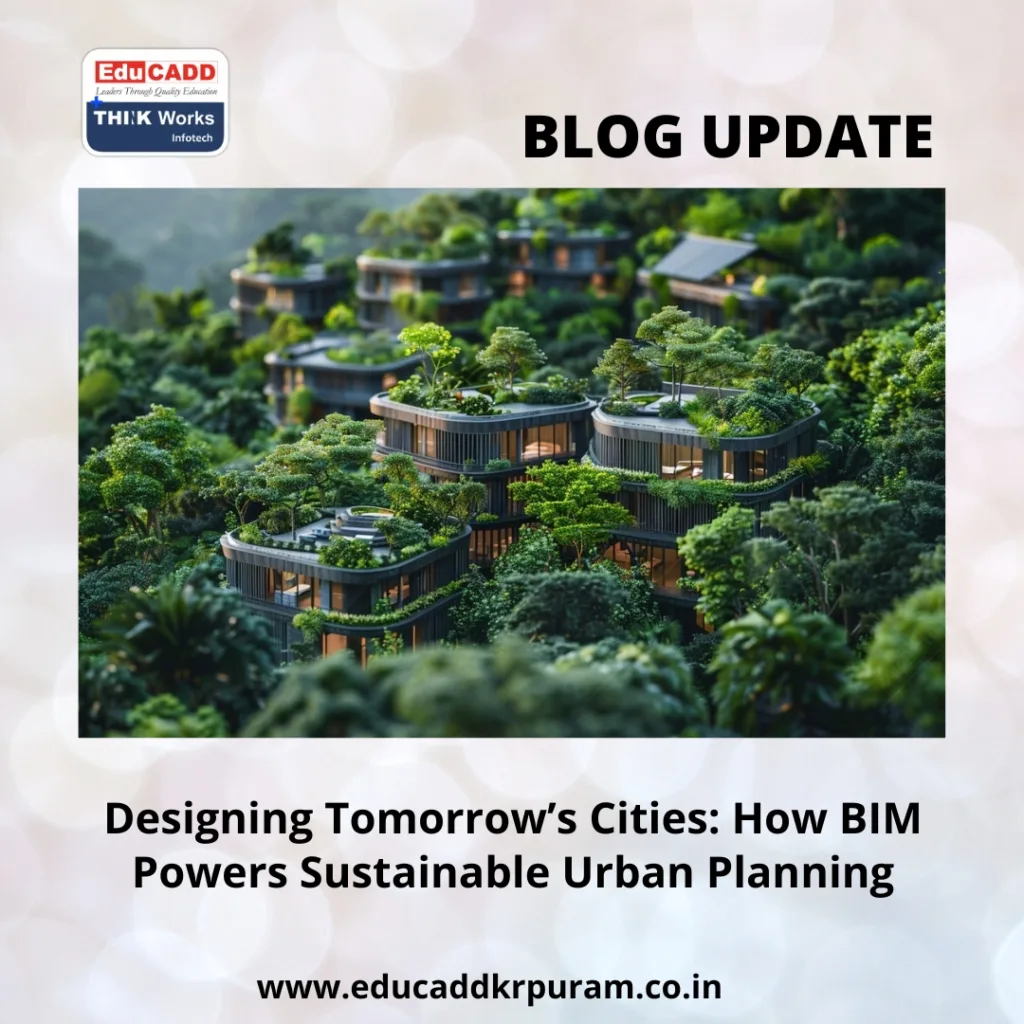
Sustainable Urban Planning BIM
Once seen only as a tool for architects, BIM is now a cornerstone of sustainable urban development. By combining data, design, and collaboration, it allows planners to create eco-friendly cities that are efficient, resilient, and people-focused. Let’s explore how BIM is redefining the future of urban planning.
1. BIM as a Smart Framework for Urban Growth
At first glance, BIM may look like advanced 3D design software. Yet, its true power lies in data-driven planning. BIM connects every phase of a project—design, construction, and maintenance—through a single digital model.
For urban planners, this means creating a “digital twin” of a neighborhood, district, or even an entire city. This twin allows them to test scenarios, predict challenges, and make informed decisions before construction begins.
Additionally, BIM fosters collaboration across teams. Architects, engineers, and policymakers can work on the same platform, sharing insights and updates in real time. This eliminates costly delays and ensures sustainability stays central to the project vision.
2. Building Eco-Friendly Cities with BIM
Sustainability is no longer optional in city development—it’s essential. BIM equips planners with tools to design greener infrastructure from the start. It can simulate how much energy a building consumes, how natural light impacts interior spaces, or how renewable energy sources can be integrated.
Another major advantage is resource efficiency. BIM calculates exact material needs, preventing waste and reducing carbon emissions during construction. Less material waste means less strain on natural resources.
Water management also benefits from BIM. By modeling drainage systems, rainwater harvesting setups, and flood risks, it helps cities build resilience against climate challenges.
Transportation design is another area where BIM supports sustainability. It helps optimize road networks, plan bicycle lanes, and improve public transport. As a result, cities reduce traffic congestion and cut down harmful emissions.
3. Data-Driven Insights for Smarter Planning
Urban planning thrives on reliable data. Without it, projects risk inefficiency and poor outcomes. BIM changes this by offering data-rich models that analyze everything from traffic flows to environmental impacts.
For example, before approving a new housing project, planners can use BIM to measure how it will affect energy demand, road congestion, or air quality. This ensures that decisions align with long-term sustainability goals.
What makes BIM powerful is its ability to test multiple scenarios. Planners can compare different layouts, evaluate environmental effects, and select the most eco-friendly design. This not only speeds up approvals but also ensures smarter urban development.
BIM also improves transparency. Policymakers and citizens can visualize projects before they are built, fostering trust and encouraging community participation. Beyond that, BIM integrates easily with smart city technologies like IoT sensors and AI tools, making cities more adaptable to changing conditions.
4. Collaboration as the Core of Sustainable Development
Building sustainable cities requires teamwork among diverse stakeholders. Unfortunately, traditional planning often suffers from poor communication and disconnected workflows. BIM solves this by acting as a central hub for collaboration.
With cloud-based models, engineers, designers, and city officials can work together in real time. If one team makes changes, others instantly see the impact. This reduces errors, prevents rework, and improves project efficiency.
Lifecycle management is another strength of BIM. Its data doesn’t stop at construction—it extends into building operations and maintenance. City authorities can use it to track infrastructure health, schedule repairs, and manage upgrades efficiently.
Importantly, BIM also enhances citizen involvement. Communities can interact with virtual models of new projects, provide input, and feel part of the process. This level of transparency builds stronger connections between people and their cities.
5. The Future of Urban Planning with BIM
The future of urban planning lies in technology-driven sustainability, and BIM is leading the way. As artificial intelligence, IoT, and machine learning evolve, BIM will become even more predictive and dynamic.
Digital twins will soon monitor cities in real time—tracking energy use, traffic patterns, and air quality. With these insights, city managers can adapt infrastructure and policies instantly to maintain sustainability goals.
Governments worldwide are already adopting BIM as a standard for infrastructure projects. This trend reflects a global recognition of BIM’s ability to build greener, smarter, and more resilient cities.
Ultimately, BIM acts as a bridge between technology and sustainability. It empowers urban growth that respects both human needs and environmental limits. With BIM at the core of planning, cities can thrive while ensuring a greener tomorrow.
Conclusion
Urban growth cannot come at the cost of environmental decline. Sustainable urban planning is now a necessity, not a choice. BIM plays a critical role in this transformation by uniting data, collaboration, and eco-friendly strategies.
From reducing construction waste to enabling smart infrastructure, BIM ensures every step of city development is aligned with sustainability. The role of BIM in sustainable urban planning extends beyond buildings—it shapes entire communities for a better future.
With BIM guiding the way, cities can embrace innovation while protecting the planet. The result is a vision of tomorrow where urban living is efficient, inclusive, and truly sustainable.

