
Engineering Reliable Substations and Power Distribution Networks
Electricity powers almost every aspect of modern life, from homes and offices to industries. Ensuring that it reaches safely and efficiently requires careful planning and design. At the core of this process are substations and power distribution networks. Learning Reliable Substation Power Design equips engineers and designers to plan systems that are reliable, safe, and scalable.
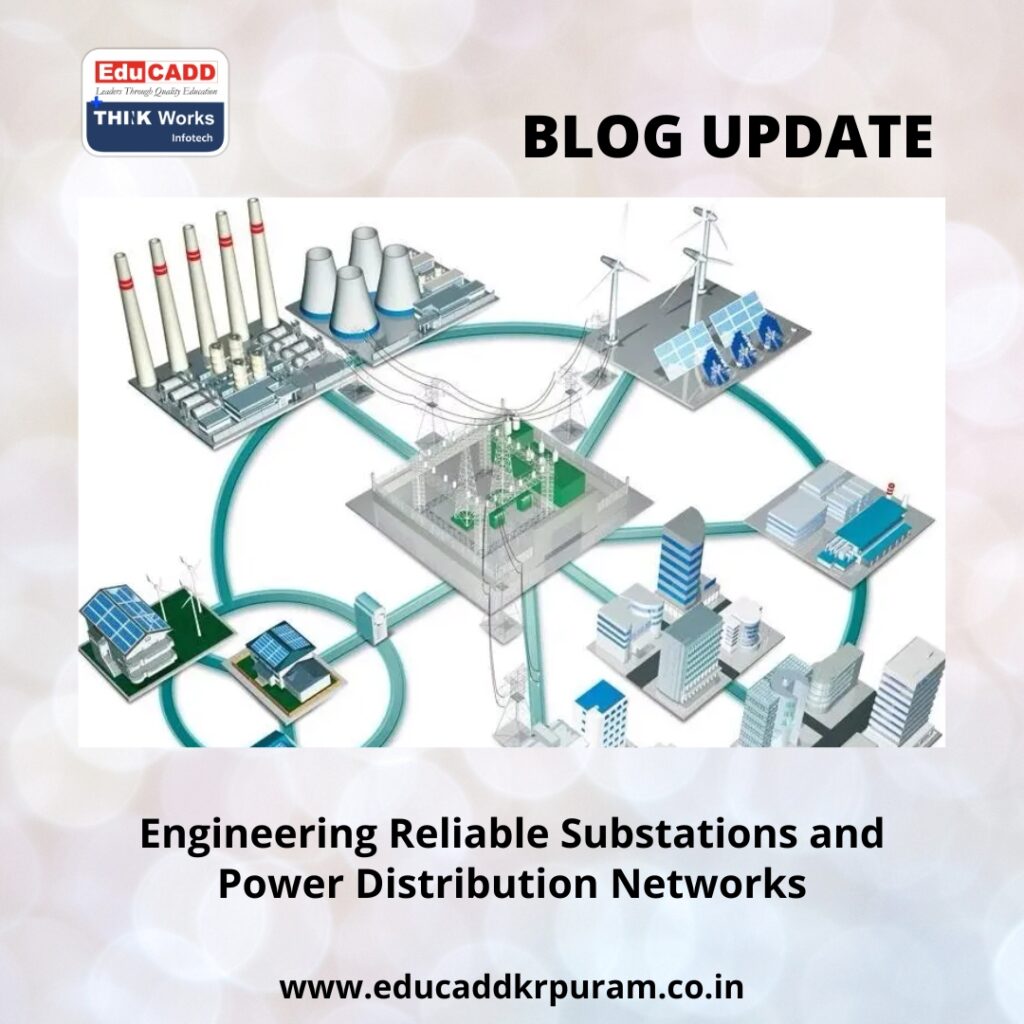
Reliable Substation Power Design
Drafting is more than creating technical drawings. It combines electrical knowledge, spatial awareness, and industry standards. Skilled professionals in this field help utilities, industries, and urban planners optimize power delivery. This blog explores the essentials of drafting, its applications, and career opportunities.
1. Core Concepts of Substation Layouts
Substations act as the critical nodes where high-voltage electricity is transformed and distributed to users. A well-thought-out Reliable Substation Power Design ensures that all equipment functions efficiently and safely.
Key elements include transformers, circuit breakers, isolators, busbars, control panels, and protective relays. Their positions in the layout are determined by factors such as safety clearances, accessibility for maintenance, and optimal power flow. For instance, transformers are placed to minimize heat buildup, while circuit breakers are positioned for quick isolation during faults.
Modern drafting tools like AutoCAD Electrical, MicroStation, or Revit MEP allow designers to convert real equipment into precise, standardized layouts. Proper planning also includes earthing systems, fault analysis, and provisions for future network expansions. A clear, accurate layout reduces costs, minimizes downtime, and enhances safety.
2. Significance of Power Distribution Drafting
After electricity leaves a substation, it flows through the distribution network to reach end users. Accurate substation layout and power distribution drafting ensures that this flow is reliable and efficient.
Drafting includes creating single-line diagrams, feeder layouts, underground cable routes, and pole placements. These diagrams serve as blueprints for technicians and engineers, helping avoid errors during installation.
Distribution systems vary in design. Radial systems are simple but vulnerable to faults. Ring systems improve reliability but require complex layouts. Interconnected networks combine these features, demanding advanced drafting skills.
Drafting also addresses load balancing, voltage drops, and protection against faults. By visualizing the system before installation, engineers can prevent costly mistakes and improve operational efficiency.
3. Skills Needed for Drafting Professionals
Success in substation layout and power distribution drafting requires a combination of technical knowledge and practical skills:
-
Electrical Fundamentals: Understanding transformers, protective devices, switchgear, and voltage ratings.
-
CAD Expertise: Proficiency in software like AutoCAD Electrical or Revit MEP enables accurate and professional layouts.
-
Regulatory Knowledge: Familiarity with IEC, IEEE, and local standards ensures compliance.
-
Attention to Detail: Small mistakes in drafting can lead to major safety or operational issues.
-
Spatial Awareness: Ability to translate real-world systems into clear 2D or 3D drafts.
Structured training and hands-on projects are essential for developing these competencies efficiently.
4. Practical Applications of Drafting
Drafting is not limited to drawing diagrams—it plays a critical role in system implementation and maintenance. Substation layout and power distribution drafting has several practical uses:
-
Urban Development: Helps plan new electrical networks safely and efficiently.
-
Industrial Power Systems: Supports customized layouts for factories with heavy machinery.
-
Renewable Energy Integration: Ensures smooth connection of solar and wind energy to the grid.
-
Maintenance and Upgrades: Drafts provide a reference for troubleshooting and expansion.
-
Training and Documentation: Simplifies complex systems for learning and knowledge transfer.
As cities grow and energy demand increases, the need for skilled drafting professionals continues to rise.
5. Career Prospects in Drafting for Power Systems
A career in substation layout and power distribution drafting offers multiple paths. Beginners often start as CAD technicians or junior design engineers. Experienced professionals can advance to project engineers, substation planners, or design managers.
Demand for drafting professionals is high in utilities, construction firms, and consultancy agencies. Knowledge of Building Information Modeling (BIM) and smart grid systems is an added advantage.
Freelancing opportunities are also growing. Many international companies outsource drafting work to qualified engineers. Continuous learning and adaptation to new standards and software are essential for staying competitive.
Conclusion
Reliable Substation Power Design is a vital skill in designing reliable, efficient, and safe electrical systems. It combines technical knowledge, design expertise, and practical experience. Professionals in this field play a key role in powering cities, industries, and renewable energy projects.
With consistent learning, hands-on experience, and proficiency in modern tools, engineers can build a rewarding career while contributing to a more reliable and sustainable power infrastructure. Drafting is not just a technical skill—it is a cornerstone of modern electrical engineering.

