
Crafting Homes with Soul: A Complete Journey Into Residential Interior Styling Mastery
Every home carries a story. Some stories feel calm and soothing, while others feel dynamic and expressive. Interior styling shapes these stories with intention, creativity, and structure. When you learn Residential Interior Styling Mastery, you gain the power to transform empty rooms into inviting sanctuaries. You learn how different elements communicate with each other and how they influence daily living.
Today, homeowners crave spaces that feel warm, stylish, and purposeful. They want homes that support their routines yet reflect their personality. As a result, interior styling has evolved into a valued skill that blends design thinking with emotional understanding.
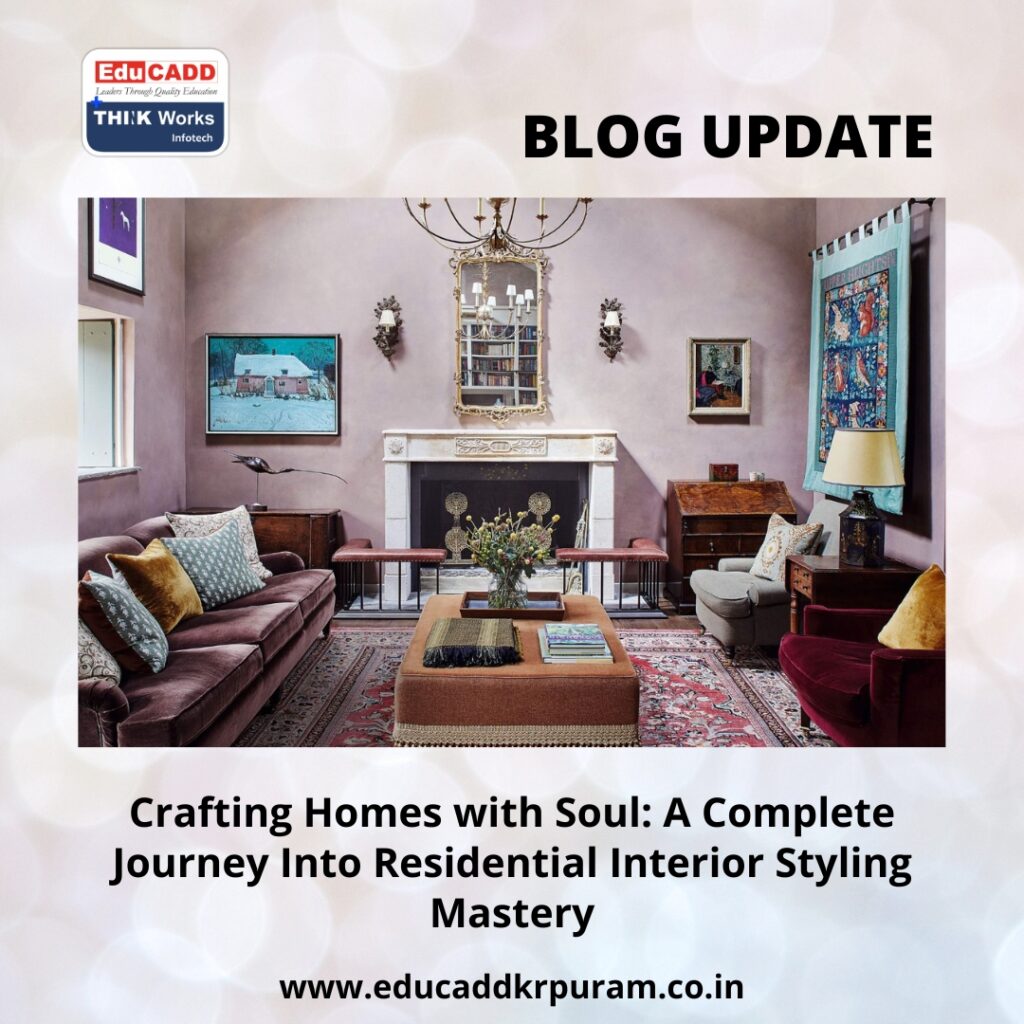
Residential Interior Styling Mastery
This guide explores the essence, techniques, materials, planning strategies, and practical applications of styling. It offers a complete path to mastering interior styling for residential projects—whether you’re aiming for professional expertise or personal improvement.
1. Discovering the True Spirit of Residential Interior Styling
Residential Interior Styling Mastery goes beyond choosing attractive décor. It is the art of building a visual and emotional rhythm inside a home. When you begin learning interior styling for residential projects, you discover that styling is about understanding how people live and how spaces behave.
Every room has its own identity. A living room invites interactions. A study room encourages focus. A bedroom creates calmness. Styling strengthens this identity by shaping the environment. You consider how colors affect moods, how textures create comfort, and how the overall layout influences movement.
Light plays a defining role. Natural light changes throughout the day, influencing how materials look and how colors feel. Morning light might highlight soft textures, while evening light might emphasize warm tones. When you understand light behavior, your styling decisions become sharper and more intentional.
Another important aspect is emotional design. Colors are not just visual choices; they elicit responses. Soft beiges feel warm. Rich greens feel grounded. Deep blues feel reflective. Visual weight, proportions, and balance also influence how a room makes you feel.
Cohesion is the final pillar. A well-styled interior feels connected. The elements complement each other without competing for attention. When pieces clash, the room feels confusing. When everything flows naturally, the space becomes harmonious.
Learning interior styling for residential projects teaches you to evaluate a room from every angle—function, feel, and aesthetic—to build a space that stands beautifully complete.
2. Planning Strategies That Build the Foundation of Every Styled Space
Great interiors don’t happen by chance. They are built through careful planning. When styling residential spaces, planning helps avoid errors, manage budgets, and create strong visual narratives.
Begin with accurate measurements. Measure walls, openings, furniture, ceiling height, and window placements. These dimensions guide your choices. They prevent the common mistake of selecting oversized or undersized furniture.
Next, evaluate the room’s natural strengths. Identify focal areas, light directions, and dead corners. These observations help you decide where to place seating, art, décor, and storage. For example, a corner with warm afternoon light may become a reading nook.
Create a mood board to define your styling direction. Mood boards include color palettes, fabric swatches, patterns, inspiration images, flooring samples, and material references. They give you clarity and consistency. Whenever you feel doubtful about a styling choice, your mood board becomes your anchor.
Color planning is another crucial step. Choose a colour scheme that aligns with the room’s purpose. Warm tones encourage relaxation. Cool shades promote clarity. Neutral palettes create balance and longevity. After selecting a base tone, choose supporting colors that enhance the main theme.
Planning the furniture arrangement is equally important. Study how the household functions. Does the family host guests frequently? Do they need open pathways for children? Do they prefer cozy seating or structured arrangements? Understanding these needs helps you plan layouts that feel both functional and stylish.
Lighting design completes the planning phase. Use a mix of ambient lighting for general illumination, task lighting for activities, and accent lighting for drama. Layered lighting brings depth, texture, and personality to the room.
Effective planning ensures that the final space looks intentional, cohesive, and effortlessly stylish.
3. Creative Styling Techniques That Transform Ordinary Rooms into Impactful Spaces
Once planning is in place, styling brings life to your interiors. This is where creativity takes center stage. You experiment with composition, balance, layering, and decorative accents to build character.
Start with a focal point. Every room needs a visual anchor—a bold piece of art, a unique furniture item, a textured wall, or an eye-catching chandelier. The focal point guides the arrangement of surrounding elements, ensuring the space feels organized and expressive.
Balance is another essential technique. Symmetry offers formality and calmness. Asymmetry brings energy and interest. For example, matching lamps on a console table create symmetry, while placing a vase on one side and a stack of books on the other gives asymmetry.
Layering enriches the space. Combine different textures, materials, and decorative objects. A sofa becomes more inviting when paired with cushions, throws, and side tables. A coffee table feels curated when layered with candles, trays, plants, and books. Layering creates dimension and visual depth.
Curate accessories thoughtfully. Plants introduce nature. Sculptures add sophistication. Photographs bring identity. Books introduce warmth and intelligence. However, avoid clutter. Choose accessories with purpose and maintain breathing room.
Group décor items in odd numbers, especially threes or fives. They create a natural rhythm that feels pleasing to the eye. Use variations in height, shape, and texture to add richness to your compositions.
Pay attention to negative space. Empty areas help the eye rest and allow the styled elements to shine. Overcrowding reduces elegance. Well-balanced negative space makes styling look polished.
These creative techniques work together to elevate the visual appeal of any residential space.
4. Choosing Materials, Textures, and Colors That Define Style and Personality
Materials and textures have the power to shape a room’s identity. When learning interior styling for residential projects, material selection becomes one of the most enjoyable aspects of the process.
Wood adds warmth and grounding to any room. It works well in rustic, classic, and even contemporary spaces. Metals like brass and steel bring a modern edge. Glass increases openness and helps light travel. Stone evokes luxury and permanence. The strategic mix of materials creates depth and richness.
Color theory helps guide emotional impact. Soft pastels create serenity. Bold colors add confidence. Earth tones promote stability. Studying color relationships—such as complementary or monochromatic schemes—helps you create a harmonious palette.
Patterns introduce visual movement. Geometric patterns feel modern. Ethnic patterns tell cultural stories. Botanical patterns create freshness. When mixing patterns, vary scale—pair a large pattern with smaller, subtle ones to avoid visual clutter.
Texture adds emotional comfort. Smooth surfaces feel minimal and sleek. Rough textures feel organic and warm. Combine woven textures, polished finishes, and plush fabrics to achieve a balanced sensory experience.
Material and color harmony ensures that the space feels unified. By blending contrast and cohesion, you create interiors that feel both dynamic and calm.
5. Practical Styling Skills That Elevate Your Ability from Learning to Mastery
Knowledge turns into mastery when it is applied consistently. Learning interior styling for residential projects requires hands-on exploration. Begin by observing rooms with intention. Walk into a space and identify what draws attention, what feels off-balance, and what feels harmonious.
Practice rearranging existing furniture. Small adjustments often create dramatic improvements. Move chairs closer to windows. Shift sofas to create better conversation areas. Reorganize shelves with a more intentional accessory placement.
Photography is a useful technique. Taking pictures helps you see the room from a different perspective. You notice gaps, clutter, and proportion issues more easily in a photo than in real time.
If you plan to work with clients, communication becomes an essential skill. Understand their lifestyle, preferences, emotional triggers, and expectations. Ask about their favorite colors, activities, routines, and dislikes. The more you know, the more personal and effective your styling becomes.
Budget management is a crucial part of the process. Not all stylish spaces require expensive items. Mixing high-quality pieces with budget-friendly accents can create stunning results. Repurpose items when possible. Creativity often brings more impact than cost.
Time management ensures that your styling process stays organized. Create checklists, timelines, shopping lists, and installation schedules to maintain smooth progress.
When these practical skills combine with creativity, planning, and design theory, you gain the ability to style homes at a professional level.
Conclusion
Mastering Residential Interior Styling Mastery is a journey that blends creativity, planning, psychology, and hands-on practice. It teaches you how to look beyond aesthetics and understand the deeper emotional connection between people and their homes. By learning the foundations of styling, exploring material choices, practicing creative techniques, and refining your practical skills, you gain the confidence to transform any room into a meaningful and beautiful space. Whether you aim to style for clients or reimagine your own home, these principles empower you to create interiors that feel warm, intentional, and truly reflective of the people who live in them.

