
Designing the Ground Before the Structure: A Deep Dive into Land Development with Civil CAD
Every successful building begins with land that is properly planned, analyzed, and prepared. Before concrete is poured or steel is erected, engineers must transform raw land into a functional, safe, and compliant site. This transformation depends heavily on digital design tools. Among them, Land Development Civil CAD has become the most reliable and efficient approach in modern engineering practice.
Civil CAD software enables professionals to visualize land conditions, test design options, and resolve challenges before construction begins. It replaces guesswork with data-driven decisions. As urban growth accelerates and land constraints increase, this precision becomes essential.
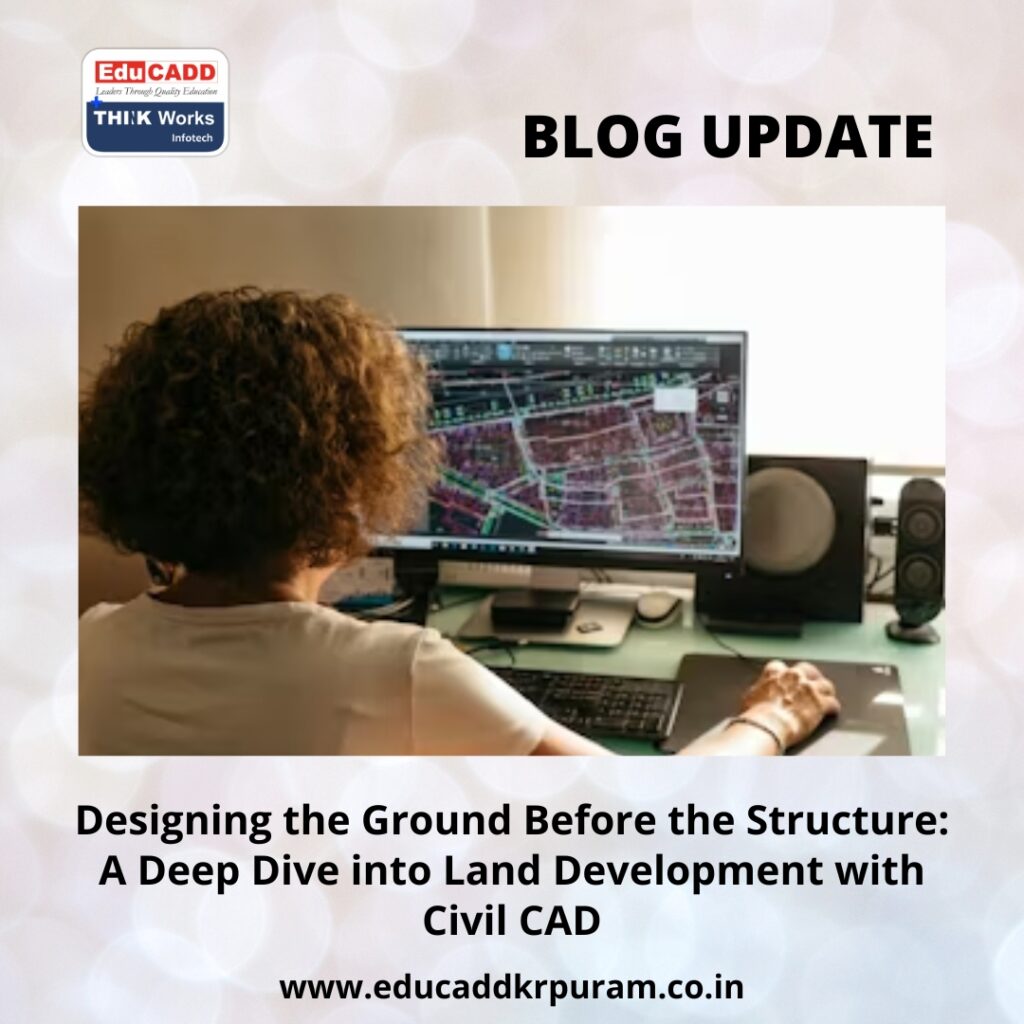
Land Development Civil CAD
Today, developers expect faster approvals, reduced costs, and sustainable outcomes. Civil CAD supports all these goals by integrating planning, design, and documentation into a single workflow. This blog explores how land development works using Civil CAD, the processes involved, the benefits it delivers, and why it is indispensable for modern infrastructure projects.
The Meaning and Scope of Land Development in Today’s Infrastructure Projects
Land development is a comprehensive process that prepares land for human use. It includes planning access, managing terrain, controlling water flow, and coordinating utilities. Each decision influences long-term performance and safety.
In earlier times, engineers relied on static drawings and manual calculations. These methods increased the risk of errors and design conflicts. Today, Land Development Civil CAD allows teams to manage complex data within a dynamic digital environment.
Civil CAD brings together survey information, design standards, and engineering logic. Designers create surfaces, alignments, and networks that respond instantly to changes. This flexibility supports better planning and faster decision-making.
Modern land development also faces stricter environmental and regulatory requirements. Civil CAD helps engineers analyze impacts early and demonstrate compliance clearly. As a result, projects move forward with fewer delays and fewer surprises.
How Civil CAD Software Supports the Entire Land Development Lifecycle
Civil CAD software plays a central role throughout the life of a land development project. It does not support just one phase. Instead, it connects every stage from concept to construction.
At the start, Civil CAD imports survey data collected using modern instruments. Engineers generate accurate existing ground models that reflect real site conditions. This accuracy sets the tone for the entire project.
During planning, designers explore layout options for roads, plots, and open spaces. Civil CAD allows rapid comparisons between alternatives. Stakeholders can visualize outcomes clearly and provide informed feedback.
As designs become detailed, Civil CAD manages grading, drainage, and utility systems together. Changes in one area update related components automatically. This coordination reduces errors and rework.
Finally, Civil CAD produces drawings, reports, and quantities needed for approvals and construction. This seamless flow explains why Land Development with Civil CAD improves efficiency and reliability across projects.
Understanding Existing Site Conditions Through Civil CAD Modeling
Accurate understanding of site conditions is the foundation of successful land development. Civil CAD makes this understanding clear and actionable.
Survey data provides information about elevations, boundaries, and features. Civil CAD converts this data into digital terrain models. These models show contours, slopes, and natural drainage paths.
Engineers analyze these models to identify constraints such as steep slopes, low-lying areas, or protected zones. This analysis helps avoid costly design mistakes later.
Civil CAD also supports integration with GIS data. Designers can overlay zoning limits, environmental buffers, and utilities. This holistic view strengthens planning decisions.
Through detailed modeling, Land Development ensures that designs respect the land instead of forcing unsuitable solutions.
Grading Design and Earthwork Planning with Civil CAD
Grading shapes how land supports construction and manages water. It is one of the most critical aspects of land development.
Civil CAD allows engineers to design finished ground surfaces that meet functional and regulatory requirements. Designers control slopes to ensure stability, accessibility, and drainage.
One major advantage lies in earthwork optimization. Civil CAD calculates cut-and-fill volumes automatically. Engineers balance these volumes to reduce material movement and lower costs.
Designers can test different grading strategies quickly. Each option updates volumes and slopes instantly. This speed supports value engineering and better cost control.
By simplifying complex calculations, Land Development with Civil CAD makes grading both efficient and precise.
Roadway and Access Planning in Land Development Projects
Access defines how people and services move through a site. Road design must balance safety, efficiency, and land utilization.
Civil CAD supports horizontal and vertical alignment design. Engineers define curves, gradients, and profiles according to standards. The software checks compliance continuously.
Designers also generate cross-sections that show pavement structure and side slopes. These views help verify constructability and safety.
Civil CAD allows quick revisions when layouts change. Roads adapt smoothly to new site constraints or stakeholder feedback.
Through these capabilities, Land Development with Civil CAD ensures access networks that are safe, compliant, and cost-effective.
Stormwater Management and Drainage Design Using Civil CAD
Water management remains one of the biggest challenges in land development. Poor drainage leads to flooding, erosion, and long-term damage.
Civil CAD helps engineers analyze natural water flow across the site. Designers identify catchment areas and runoff paths early.
Using this information, engineers design stormwater networks that include channels, pipes, culverts, and retention systems. Civil CAD calculates slopes and capacities accurately.
Designers test different scenarios to ensure performance during heavy rainfall. This proactive approach reduces risk and supports regulatory approval.
Effective drainage design highlights the value of Land Development with Civil CAD in protecting infrastructure and the environment.
Utility Coordination and Infrastructure Integration
Land development requires coordinated planning of multiple utility systems. These systems must coexist without conflicts.
Civil CAD supports the layout of water supply, sewer, power, and communication lines. Designers place utilities within defined corridors and maintain required clearances.
The software identifies clashes early, allowing quick resolution. This coordination reduces costly changes during construction.
Civil CAD also generates profiles and sections that help contractors understand installation requirements. Clear documentation improves execution quality.
Through integrated planning, Land Development with Civil CAD ensures reliable infrastructure that supports long-term site performance.
Documentation, Quantities, and Approval Support
Accurate documentation is essential for approvals and construction. Civil CAD simplifies this process significantly.
Designers generate plans, profiles, and sections directly from the model. Consistency across drawings improves clarity and reduces review comments.
Civil CAD also produces quantity takeoffs automatically. These quantities support cost estimation and tendering.
When authorities request changes, designers update the model once. All related drawings and reports update together. This efficiency accelerates approvals.
Clear documentation strengthens the role of Land Development with Civil CAD in project success.
Key Benefits of Land Development with Civil CAD
Civil CAD delivers advantages that extend beyond design speed.
Accuracy improves because designs rely on real data and parametric relationships. Errors reduce significantly.
Productivity increases through automation and integrated workflows. Teams deliver projects faster.
Costs stay under control due to precise earthwork and quantity calculations.
Collaboration improves through shared models and compatible data formats.
Sustainability gains attention through early analysis of environmental impact.
Together, these benefits explain why Land Development with Civil CAD has become an industry standard.
Common Challenges in Land Development and How Civil CAD Addresses Them
Land development projects often face uncertainty and complexity.
Irregular terrain complicates design decisions. Civil CAD visualizes conditions clearly.
Frequent design changes disrupt schedules. Civil CAD handles revisions efficiently.
Coordination between disciplines creates risk. Civil CAD integrates systems into one model.
Regulatory requirements delay progress. Civil CAD improves compliance and documentation.
By addressing these challenges, Land Development builds confidence across teams.
Future Directions in Land Development with Civil CAD
Technology continues to evolve rapidly. Civil CAD adapts alongside these changes.
Automation and intelligent tools reduce repetitive tasks.
Integration with BIM and digital twins enhances lifecycle management.
Cloud collaboration enables real-time teamwork.
Sustainability and climate resilience influence design priorities.
These trends reinforce the long-term importance of Land Development.
Conclusion: Why Civil CAD Is the Foundation of Modern Land Development
Land development shapes the built environment long before construction begins. It requires accuracy, coordination, and foresight. Civil CAD delivers all three through a unified digital approach.
Professionals who embrace Land Development Civil CAD gain stronger control over design quality, costs, and compliance. They solve problems early and deliver reliable outcomes.
As land becomes more valuable and projects more complex, Civil CAD will remain essential. It is not just a design tool. It is the foundation of successful, future-ready land development.

