
From Concept to Completion: Master High-Speed Design with Parametric Modeling at EduCADD
Design and engineering industries are evolving faster than ever before. Clients expect shorter timelines, higher accuracy, and the flexibility to adapt designs at any stage. In such a competitive environment, traditional drafting and static modeling methods often become bottlenecks. Every small change demands rework, consuming valuable time and increasing the risk of errors.This is where Parametric Modeling Training Course emerges as a game-changing approach. It transforms design from a rigid process into an intelligent, responsive system. By defining parameters and relationships instead of fixed geometry, designers gain the power to modify entire models in seconds.
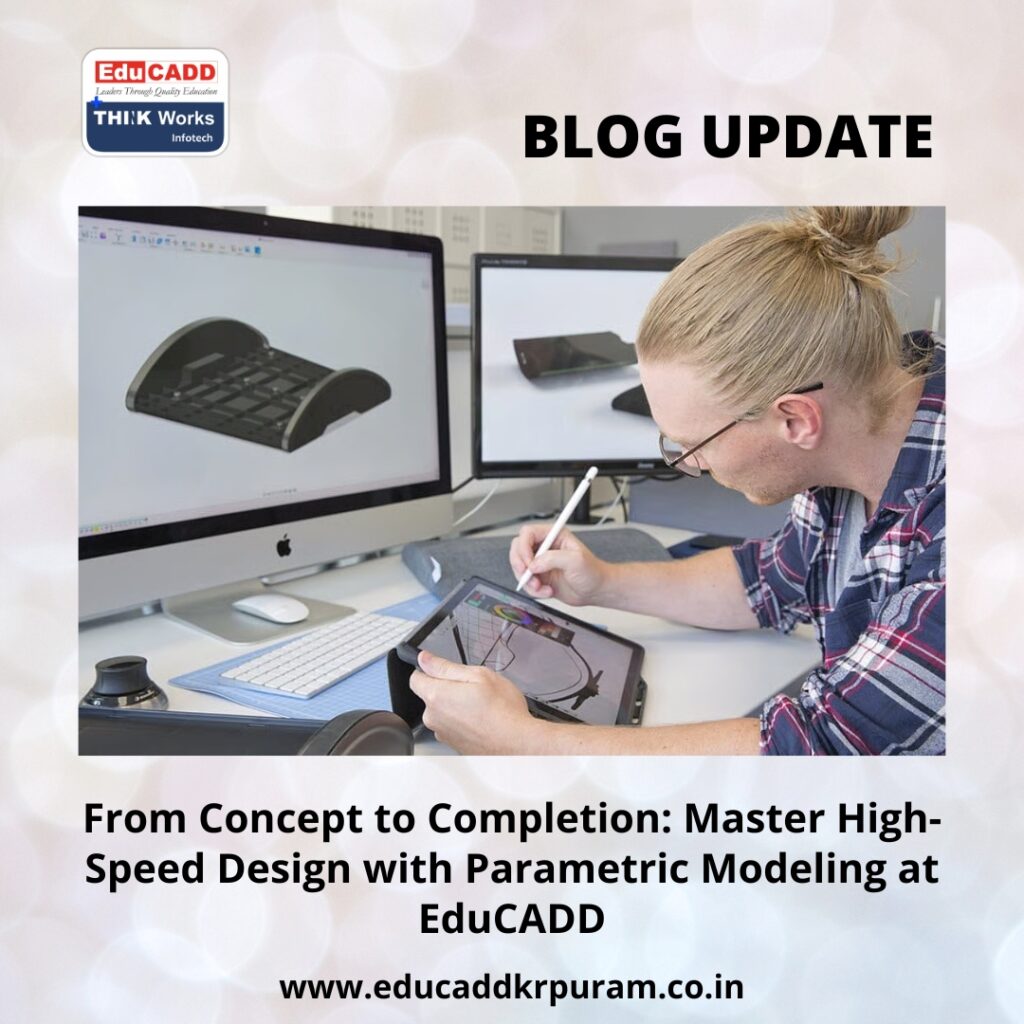
Parametric Modeling Training Course
At EduCADD, parametric modeling is not taught as a mere software function. It is developed as a core professional skill that enables designers, engineers, and architects to work faster, smarter, and with greater confidence. This blog explores parametric modeling in depth, explains its impact across industries, and highlights how EduCADD helps learners build future-ready design expertise.
1. Parametric Modeling: A Smarter Way to Build Designs
Parametric Modeling Training Course is a design methodology where geometry is controlled by parameters, constraints, and logical relationships. Dimensions, alignments, and dependencies drive the model’s behavior. When one element changes, all related components update automatically.
This approach preserves design intent throughout the project lifecycle. Instead of manually adjusting multiple elements, designers simply modify parameters. The model responds instantly while maintaining accuracy and consistency.
Another key advantage lies in reusability. Parametric models can be saved as templates and adapted for different projects. This capability significantly improves efficiency and standardization.
At EduCADD, learners first understand the logic behind parametric modeling. This foundation ensures they do not rely on guesswork. Instead, they develop structured thinking that leads to clean, reliable models.
2. Why Parametric Modeling Reduces Design Time Dramatically
Time efficiency is one of the strongest reasons professionals adopt parametric modeling. Traditional workflows require repetitive edits when design changes occur. Parametric modeling eliminates this inefficiency.
Designers can test multiple variations without rebuilding models. Adjusting dimensions or constraints updates the entire structure instantly. This flexibility speeds up approvals and decision-making.
Parametric modeling also reduces revision cycles. Since relationships remain intact, errors caused by manual edits decrease. Teams spend less time correcting mistakes and more time refining design quality.
EduCADD emphasizes real-world workflows where speed matters. Learners practice handling frequent changes under realistic conditions, preparing them for professional challenges.
3. Enhancing Accuracy and Consistency Through Parametric Logic
Accuracy plays a critical role in design success. Even minor inconsistencies can lead to costly delays or failures. Parametric modeling addresses this issue by enforcing logical relationships between elements.
When parameters control geometry, designs stay consistent across all views and components. This reliability becomes especially important in large projects involving multiple stakeholders.
Parametric modeling also improves documentation accuracy. Drawings, schedules, and quantities update automatically when changes occur. This integration minimizes discrepancies between design and documentation.
At EduCADD, learners understand how precision connects directly to parametric thinking. They develop habits that prioritize accuracy without sacrificing speed.
4. Industry Applications That Rely on Parametric Modeling
Parametric modeling has become essential across multiple industries. In architecture, it enables flexible layouts and responsive building designs. Architects can explore alternatives quickly while maintaining spatial relationships.
Mechanical and product design teams benefit from parametric assemblies. Engineers modify components without breaking connections. This capability shortens development cycles and improves product reliability.
Construction and infrastructure projects use parametric modeling within BIM workflows. Designers coordinate disciplines effectively, reducing clashes and rework before construction begins.
EduCADD designs its curriculum to reflect these real-world applications. Learners gain exposure to industry-specific scenarios, making them job-ready from day one.
5. Tools That Power Parametric Modeling Workflows
Parametric modeling depends on advanced design software. Applications such as AutoCAD, Revit, SolidWorks, Fusion 360, and Inventor support parametric workflows across disciplines. These tools allow designers to define constraints, formulas, and dependencies with precision.
However, mastering software alone is not enough. Designers must know how to structure models logically. Poor parameter planning can slow performance and complicate future edits.
EduCADD focuses on best practices rather than shortcuts. Learners understand how to build efficient, scalable models that perform well even in complex projects.
6. EduCADD’s Structured and Practical Training Approach
EduCADD follows a systematic training methodology designed for long-term success. Courses begin with essential concepts and gradually progress to advanced parametric techniques. This structured approach ensures strong comprehension at every stage.
Hands-on learning forms the backbone of training. Learners work on practical assignments and real-time projects. This exposure builds confidence and reinforces concepts effectively.
Experienced trainers guide learners throughout the journey. Their industry experience brings clarity to complex topics and connects theory with application.
EduCADD also offers flexible learning options, including classroom and online formats. This flexibility allows students and working professionals to upskill conveniently.
7. Parametric Modeling as a Career-Defining Skill
Parametric modeling significantly enhances professional value. Employers prefer designers who can handle changes efficiently without compromising quality. Parametric expertise demonstrates adaptability and technical depth.
Professionals with parametric modeling skills often progress faster in their careers. They contribute more effectively to projects and take on greater responsibilities.
EduCADD certifications add credibility to these skills. They validate expertise and improve employability. Many learners experience career growth after completing parametric modeling programs.
8. Supporting Collaboration and Team Efficiency
Modern design projects rely heavily on collaboration. Parametric modeling supports teamwork by maintaining consistent design logic across files and teams.
When updates occur, parametric relationships ensure that everyone works with accurate information. This transparency reduces confusion and rework.
EduCADD trains learners to work within collaborative environments. They understand how parametric models support coordination and communication across disciplines.
9. Preparing for the Future of Intelligent Design
The future of design lies in automation, generative design, and digital transformation. Parametric modeling forms the foundation of these advanced technologies. Designers who master parametric thinking stay relevant as tools evolve.
Parametric modeling also encourages innovation. Designers explore possibilities rather than limitations. This mindset supports creative problem-solving and continuous improvement.
EduCADD prepares learners for this future by focusing on core principles rather than temporary trends. Graduates remain adaptable and confident in changing environments.
Conclusion: Unlock Faster, Smarter Design with EduCADD
Parametric Modeling Training Course has redefined modern design workflows. It accelerates project delivery, improves accuracy, and enhances flexibility. In industries where speed and precision determine success, parametric modeling stands as an essential skill.
EduCADD provides a comprehensive learning environment that combines theory, practice, and industry relevance. Through structured training, expert guidance, and real-world projects, learners gain the confidence to design efficiently and adapt quickly.
By mastering parametric modeling at EduCADD, professionals move beyond traditional limitations. They build smarter designs, respond faster to change, and position themselves for long-term career growth. For anyone aiming to stay competitive and future-ready, parametric modeling through EduCADD is the pathway to success.

