
Designing Lifeline Systems with Revit: A Complete Guide to Plumbing and Fire Protection Modeling
Buildings today are expected to do much more than simply stand strong. They must deliver clean water, remove waste efficiently, and protect occupants during emergencies, all while meeting strict regulations and tight construction timelines. Revit Plumbing Fire Systems form the lifeline of any building, yet they are also among the most complex to design and coordinate. As projects grow larger and more integrated, traditional drafting tools fall short. Revit has emerged as a powerful solution that changes how these critical systems are planned, visualized, and delivered. Learning Revit for plumbing and fire protection systems equips professionals with the ability to design intelligently, collaborate effectively, and respond confidently to real-world challenges. This blog offers an in-depth exploration of how Revit reshapes MEP workflows and why mastering it has become essential for modern building services professionals.
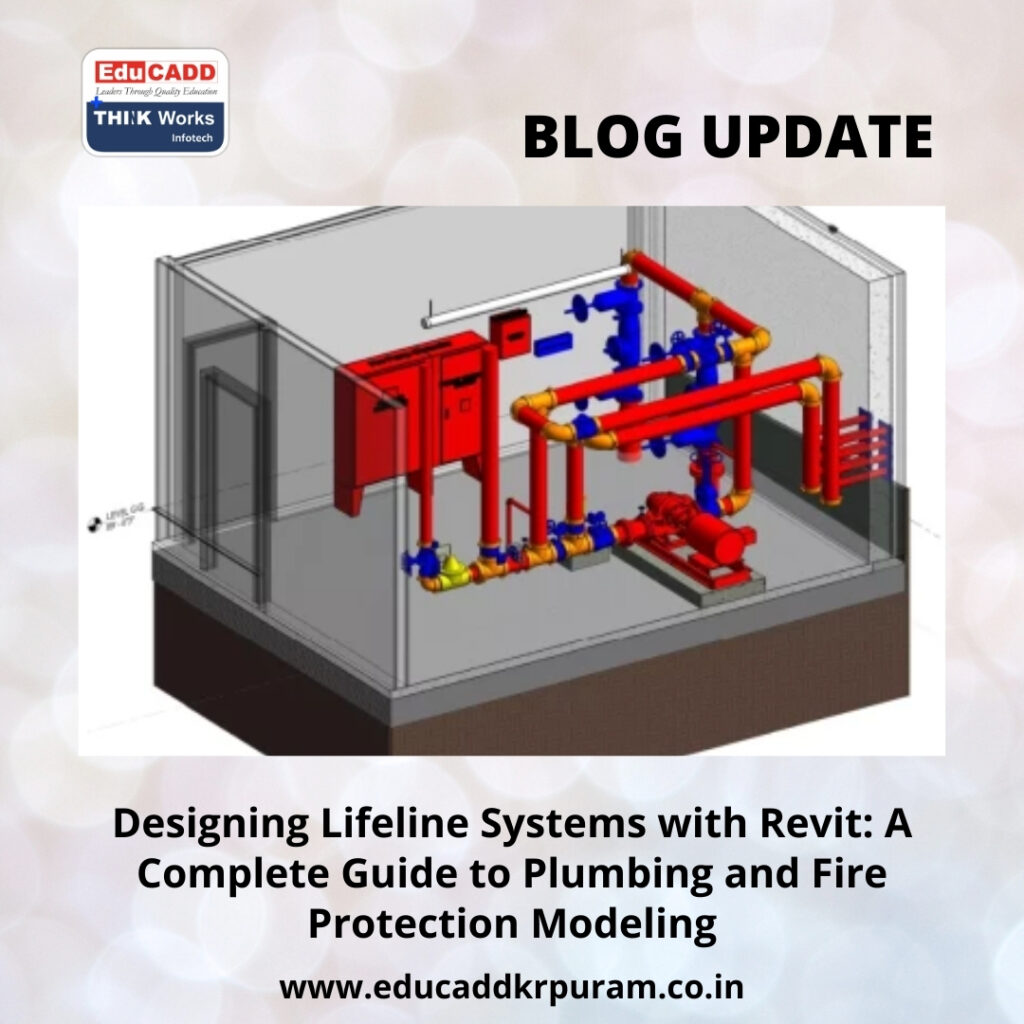
Revit Plumbing Fire Systems
From Conventional Drawings to Intelligent Building Models
For many years, plumbing and fire protection designs relied on 2D drawings created in isolation. While these drawings communicated intent, they often failed to represent how systems interacted within the building. Revit replaces fragmented documentation with an intelligent building model where systems coexist and influence one another. Pipes, fittings, valves, and sprinklers are no longer static symbols but data-rich elements connected to real-world behavior. Learning Revit for plumbing and fire protection systems allows designers to move beyond drafting and into true system modeling. This shift improves clarity, reduces interpretation errors, and creates a single source of truth for the entire project team.
Revit’s Value in Modern Plumbing System Design
Plumbing systems must balance functionality, efficiency, and compliance. Revit supports this balance by enabling designers to create domestic water, sanitary, vent, and storm systems within one coordinated environment. Each component carries information about size, material, and flow direction. When professionals learn Revit for plumbing systems, they gain the ability to manage slopes, elevations, and connections accurately. Design changes propagate automatically, ensuring drawings and schedules remain consistent. This level of control improves design reliability and supports smoother construction execution.
Fire Protection Modeling as a Critical Safety Discipline
Fire protection design directly affects life safety, making accuracy and coordination non-negotiable. Revit provides specialized tools for placing sprinklers, routing piping, and modeling fire pumps and risers. Designers can verify coverage areas, maintain code-required spacing, and visualize system integration with architectural features. Learning Revit for fire protection systems enables professionals to communicate safety strategies clearly and support approval processes more efficiently. The result is a design that inspires confidence among authorities, contractors, and building owners.
Understanding the Revit Environment for MEP Professionals
The Revit interface may appear complex at first, but it is structured to support multidisciplinary collaboration. MEP professionals work with levels, views, and system browsers that organize information logically. Learning how to control visibility, manage worksets, and navigate views improves efficiency and reduces frustration. When designers feel comfortable within the Revit environment, they can focus on engineering decisions rather than software mechanics. Learning Revit for plumbing and fire protection systems becomes more productive when this foundation is strong.
Building Accurate Plumbing Systems from the Ground Up
Successful plumbing modeling begins with thoughtful project setup. Designers define pipe types, materials, and system classifications that align with project requirements. Revit allows fixtures to connect seamlessly with piping networks, maintaining proper slopes and elevations. When changes occur, the model updates instantly, preserving coordination. Learning Revit for plumbing systems empowers professionals to deliver designs that reflect real installation conditions. This accuracy reduces field adjustments and improves long-term system performance.
Developing Code-Compliant Fire Protection Networks
Fire protection networks demand strict adherence to standards and best practices. Revit simplifies this process by providing tools that support consistent routing, elevation control, and tagging. Designers can manage complex layouts without sacrificing clarity. Learning Revit for fire protection systems helps professionals maintain compliance while adapting designs to architectural constraints. This capability shortens review cycles and supports efficient construction planning.
Coordinating with Architecture and Structure
Plumbing and fire protection systems share space with architectural and structural elements, making coordination essential. Revit enables designers to visualize system interactions within a shared model. Early detection of clashes allows teams to resolve issues before construction begins. Learning Revit for plumbing and fire protection systems strengthens collaboration and reduces costly site modifications. This coordinated approach protects project schedules and budgets.
Generating Reliable Construction Documentation
One of Revit’s strongest advantages lies in its documentation capabilities. Plans, sections, and details remain linked to the model, ensuring accuracy throughout design revisions. Schedules extract quantities and specifications directly from system data. Learning documentation workflows within Revit helps professionals deliver clear, consistent information to contractors. This reliability reduces confusion and supports efficient project execution.
Advancing Skills with Revit’s Powerful Tools
Beyond basic modeling, Revit offers advanced features that elevate MEP design. Custom families, parameter management, and system analysis tools allow designers to tailor solutions to specific project needs. Plumbing professionals can refine layouts for efficiency, while fire protection designers can optimize system performance. Learning advanced Revit tools positions professionals as technical leaders who add value beyond drafting.
Growing Industry Demand for Revit Expertise
The construction industry increasingly relies on BIM to deliver complex projects. Employers seek plumbing and fire protection professionals who can work confidently within Revit environments. Learning Revit for plumbing and fire protection systems opens opportunities in design consultancies, contracting firms, and global projects. These skills enhance career stability and support long-term professional growth.
Practical Strategies for Learning Revit Effectively
Mastering Revit requires more than software familiarity. A structured learning path that combines theory with hands-on practice yields the best results. Working on realistic projects reinforces understanding and builds confidence. Learning Revit for plumbing and fire protection systems becomes more effective when guided by industry-focused training and consistent application. This approach ensures skills remain relevant and practical.
Overcoming Challenges in Complex MEP Models
Large projects introduce challenges such as model performance, coordination complexity, and standardization. These issues become manageable with proper workflows and experience. Using templates, maintaining naming conventions, and performing regular quality checks improve efficiency. Learning how to troubleshoot within Revit helps professionals maintain control over demanding projects and deliver reliable results.
The Future of Plumbing and Fire Protection Design in BIM
As digital construction evolves, Revit continues to integrate with cloud platforms, automation tools, and data analytics. Plumbing and fire protection systems will increasingly connect with smart building technologies and lifecycle management. Learning Revit today prepares professionals for these advancements and ensures long-term relevance. Staying updated allows designers to contribute meaningfully to future-ready buildings.
Conclusion
Revit Plumbing Fire System sare designed, coordinated, and delivered. Learning Revit for plumbing and fire protection systems empowers professionals to create intelligent, compliant, and constructible designs. From improved collaboration to enhanced career prospects, the benefits extend across the entire project lifecycle. By mastering Revit, designers and engineers play a vital role in shaping safer, more efficient buildings for the future.

