
Primavera Project Management: Mastering Complex Projects with Precision and Control
In the current business environment, projects have grown far more intricate than ever before. Companies juggle tight deadlines, multi-location teams, constrained budgets, and constantly evolving stakeholder expectations. Traditional project management methods struggle to handle these challenges efficiently, often leading to delays, overspending, and resource mismanagement. Organizations now require tools that not only organize tasks but also provide comprehensive control, insightful reporting, and actionable data. Primavera Project Management Guide has emerged as a leading solution to meet these growing needs.
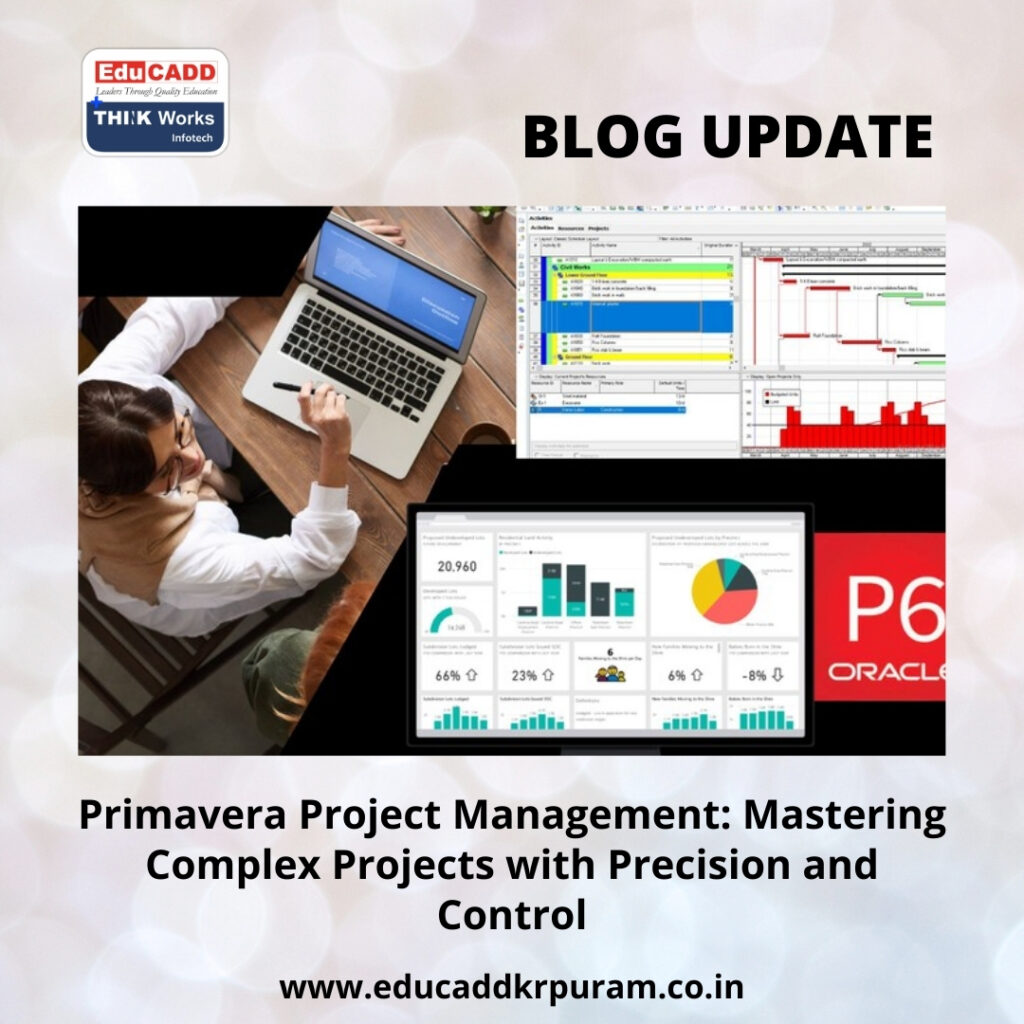
Primavera Project Management Guide
Primavera, developed by Oracle, is widely recognized for handling large, complex, and multi-layered projects. It supports industries such as construction, engineering, infrastructure, oil and gas, and IT, where delays and cost overruns can have significant consequences. Unlike conventional project management tools, Primavera integrates planning, scheduling, risk analysis, cost management, and resource optimization within a single platform. This integration transforms project execution from reactive problem-solving to strategic, data-driven decision-making. This blog explores the many ways Primavera improves project management and empowers organizations to deliver projects efficiently, consistently, and predictably.
Primavera as a Comprehensive Enterprise Solution
Primavera is more than just a scheduling tool—it functions as a full Primavera Project Management Guide. It is designed to manage projects of any scale, from a single small initiative to large, multi-million-dollar portfolios. By providing centralized control and seamless integration of multiple project components, Primavera ensures that managers have complete visibility and accurate information at every stage of the project lifecycle.
The software excels in handling thousands of interconnected activities without compromising performance. It allows teams to manage dependencies, track progress, allocate resources, and maintain schedules across multiple projects. Organizations can adopt Primavera as either a cloud-based or on-premise solution, providing flexibility to suit their operational preferences. Ultimately, Primavera transforms the way enterprises manage projects by providing a unified system that reduces complexity, enhances collaboration, and improves decision-making.
Structured Project Planning with Work Breakdown Structures
Effective project execution begins with a clear, detailed plan. Primavera empowers project managers to create structured plans using Work Breakdown Structures (WBS). This approach divides a large project into smaller, more manageable components, enabling teams to understand the scope and requirements of each task.
Breaking projects into logical units allows for improved task allocation, progress tracking, and accountability. Primavera’s WBS capabilities also help in visualizing project hierarchies, defining milestones, and establishing dependencies. Managers can experiment with multiple scenarios to find the most practical and realistic plan. By providing clarity at the planning stage, Primavera reduces ambiguity, sets clear expectations, and ensures that all team members are aligned from the outset.
Scheduling Accuracy Through Critical Path Method
Primavera excels in creating highly accurate schedules using the Critical Path Method (CPM). CPM identifies the most important tasks that directly influence project completion. By focusing on these critical activities, managers can prevent delays from cascading through the entire project.
Primavera automatically calculates task dependencies, durations, and float times, providing a realistic schedule that adapts to changes. When unforeseen delays occur, the system quickly shows their effect on the overall timeline. This proactive scheduling ensures that teams remain on track and helps stakeholders make timely decisions. Additionally, Primavera supports multiple calendars, shifts, and work zones, making it suitable for global projects with distributed teams.
Optimizing Resource Management for Maximum Efficiency
Managing resources effectively is a major challenge for complex projects. Primavera improves resource management by providing detailed insights into labor, equipment, and material allocation. It helps project managers identify over-allocation, underutilization, or potential bottlenecks well in advance.
Resource leveling features automatically adjust schedules to optimize usage while minimizing conflicts. Managers can forecast future resource requirements and plan accordingly, reducing idle time and cost overruns. This proactive resource management ensures that every task receives the right resources at the right time, improving overall project efficiency and team productivity.
Controlling Costs and Maintaining Financial Discipline
Budget management is one of the most critical aspects of successful project delivery. Primavera links scheduling and cost management to give a complete picture of project finances. Managers can track planned versus actual costs, identify variances, and implement corrective actions before budgets are exceeded.
Primavera also supports Earned Value Management (EVM), a methodology that measures project performance objectively. By analyzing cost, schedule, and progress metrics, managers can make informed decisions and maintain financial discipline. With accurate forecasting, timely alerts, and integrated cost controls, Primavera reduces the risk of budget overruns and ensures that projects deliver value for money.
Proactive Risk Management and Mitigation
Risk is inherent in every project. Primavera strengthens project management by enabling structured risk analysis and mitigation planning. Managers can identify potential risks, assess their probability and impact, and create mitigation strategies in advance.
Primavera also supports scenario simulations to understand how risks may affect schedules and costs. This visibility allows teams to act proactively rather than reactively. By embedding risk management into daily project operations, Primavera increases project resilience and ensures smoother execution even in uncertain conditions.
Real-Time Monitoring and Progress Control
Monitoring progress is essential for keeping projects aligned with their goals. Primavera allows project managers to update task statuses, progress percentages, and resource usage in real time. The system recalculates schedules automatically, providing an accurate picture of the project’s current state.
Dashboards and visual reports summarize complex data for quick interpretation. Deviations from the plan are highlighted immediately, enabling managers to take corrective actions before issues escalate. This continuous monitoring improves project control, reduces delays, and helps maintain the desired pace of execution.
Improving Communication and Stakeholder Transparency
Clear communication is crucial for project success. Primavera acts as a centralized repository of information, ensuring that all stakeholders access consistent and up-to-date data. Managers can generate customized reports for different audiences, such as executives, team members, and clients.
This level of transparency builds trust, reduces misunderstandings, and facilitates decision-making. By integrating with other enterprise systems, Primavera ensures that data flows seamlessly across departments. Teams can collaborate more effectively, and stakeholders are always informed of project progress, risks, and performance metrics.
Portfolio Management and Strategic Alignment
For organizations handling multiple projects simultaneously, Primavera provides robust portfolio management capabilities. It allows leaders to evaluate, prioritize, and allocate resources across all initiatives strategically.
By assessing each project’s value, risk, and resource requirements, organizations can focus on initiatives that deliver the highest return. Low-priority or underperforming projects can be postponed or canceled. This alignment of projects with organizational strategy ensures that resources are used efficiently, and long-term goals are met consistently.
Governance, Compliance, and Process Standardization
Compliance and governance are critical for modern project management. Primavera enforces standardized workflows, approval hierarchies, and documentation practices. These features ensure that every project follows organizational policies and regulatory requirements.
Audit trails and historical records provide transparency and accountability. Teams can review past decisions, analyze outcomes, and ensure adherence to compliance standards. Primavera’s governance framework reduces operational risk and strengthens the organization’s ability to deliver projects in a controlled and consistent manner.
Leveraging Data Analytics for Informed Decisions
Data-driven insights are essential for effective project management. Primavera transforms project data into actionable intelligence. Managers can track key performance indicators, analyze trends, forecast outcomes, and identify problem areas quickly.
Advanced reporting tools allow for customized dashboards, highlighting critical metrics while filtering out unnecessary information. When integrated with business intelligence platforms, Primavera offers a holistic view of organizational project performance. These insights empower managers to make faster, more accurate decisions and optimize project outcomes.
Enhancing Predictability and Reducing Uncertainty
Project uncertainty can lead to missed deadlines and budget overruns. Primavera improves predictability by integrating planning, scheduling, monitoring, and reporting into a single platform. Managers can simulate different scenarios and assess the impact of delays before they occur.
Historical data stored in Primavera enhances forecasting accuracy for future projects. This combination of proactive planning and real-time monitoring reduces surprises, improves on-time delivery, and strengthens stakeholder confidence.
Driving Organizational Maturity and Professional Growth
Primavera contributes to both organizational and professional development. It encourages structured workflows, analytical thinking, and disciplined execution, promoting a culture of continuous improvement. Teams naturally adopt best practices, increasing project management maturity across the organization.
For individual professionals, Primavera certification demonstrates expertise in handling complex projects. This recognition enhances career opportunities and positions organizations as capable, reliable project managers. Over time, Primavera strengthens organizational capability, enabling more predictable, efficient, and successful project delivery.
Conclusion
Primavera Project Management Guide transforms how organizations handle complex projects. By integrating planning, scheduling, cost control, risk management, and reporting into one platform, it provides unmatched visibility, control, and predictability. Managers gain the ability to make informed, data-driven decisions, minimize risks, optimize resources, and ensure projects are delivered on time and within budget.
Organizations that leverage Primavera do more than execute projects—they build a foundation for strategic success, operational excellence, and continuous growth. In a world where project success determines competitiveness, Primavera is not just a tool but a vital catalyst for long-term organizational achievement.

