
Civil CADD in Modern Construction: Building Smarter, Faster, and Safer
Civil CADD Construction Solutions has entered a new era thanks to digital technology, and at the forefront of this change is Civil CADD—Civil Computer-Aided Design and Drafting. Civil CADD empowers engineers, architects, and construction managers to create highly detailed, accurate, and scalable designs for infrastructure projects. Unlike traditional drafting methods, it allows professionals to simulate real-world conditions, foresee challenges, and optimize resources even before construction begins.
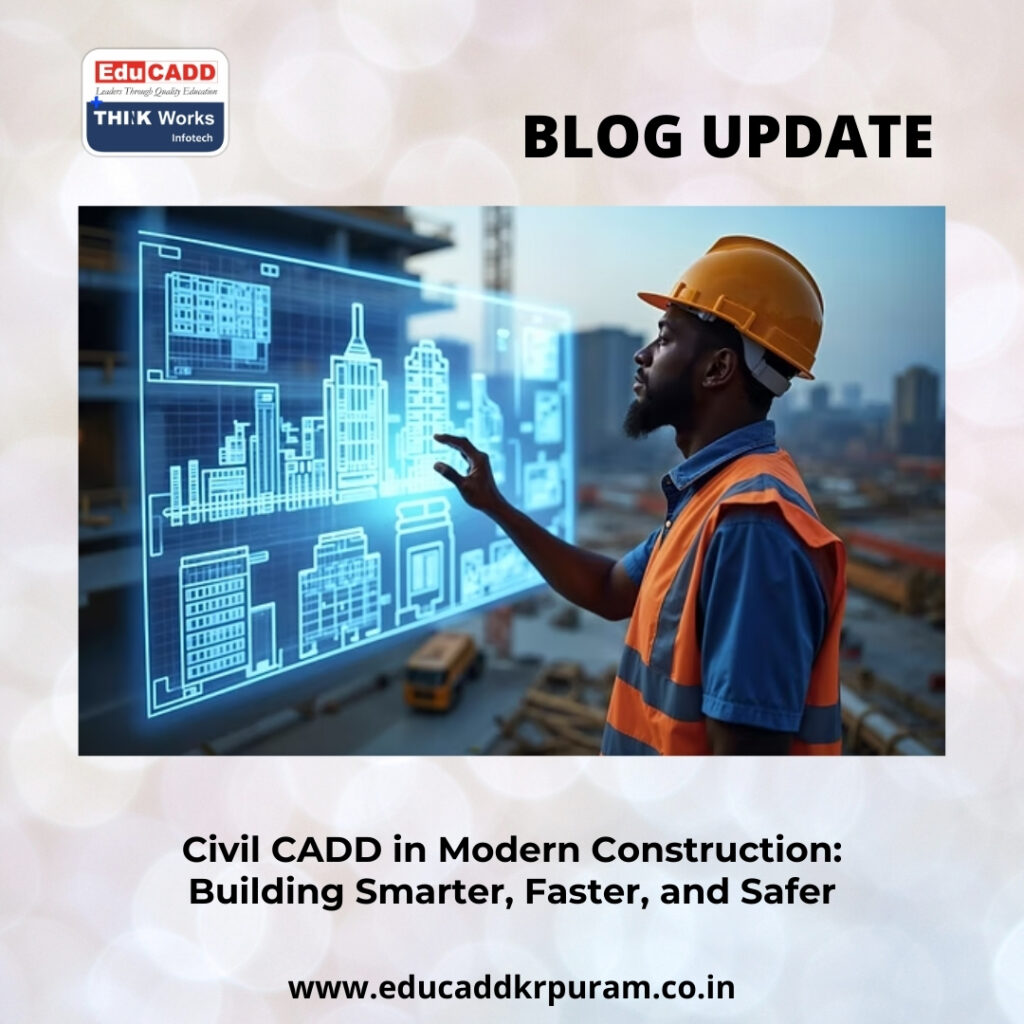
Civil CADD Construction Solutions
In today’s competitive construction industry, Civil CADD is more than just a software tool—it is a strategic necessity. Projects built without the precision and foresight offered by Civil CADD often face delays, cost overruns, and avoidable errors. This blog explores the significance, applications, benefits, and future of Civil CADD, highlighting why every modern construction project relies on it.
What Exactly is Civil CADD?
Civil CADD Construction Solutions is specialized computer-aided design software tailored to civil engineering needs. While generic CAD software offers general drafting tools, Civil CADD is designed to handle terrain mapping, road alignment, structural simulations, water management, and urban planning projects. It combines 2D drafting with 3D modeling and GIS integration, offering a complete digital representation of a project.
Civil CADD enables engineers to plan, visualize, and validate their designs efficiently. From contouring landscapes to simulating drainage systems, Civil CADD provides a level of accuracy and predictability that traditional methods cannot match. Its use has become essential in ensuring that civil engineering projects are both practical and compliant with safety and regulatory standards.
The Evolution of Civil Engineering Design
Civil engineering design has transformed remarkably over the past few decades. Traditionally, engineers relied on hand-drawn plans and physical blueprints. Revisions were cumbersome, often requiring entire sheets to be redrafted, which increased time, costs, and the likelihood of errors.
The introduction of CAD software revolutionized the design process, providing a faster, more accurate, and digital alternative to manual drafting. Civil CADD emerged as a specialized extension to CAD, addressing the complex requirements of civil infrastructure projects. Today, with the integration of BIM and GIS, Civil CADD supports more dynamic, intelligent, and collaborative design workflows than ever before.
Key Features That Make Civil CADD Indispensable
Civil CADD comes equipped with numerous features that make it a vital tool in modern civil engineering. Some of its core capabilities include:
-
3D Modeling: Provides realistic visualization of infrastructure projects before construction.
-
Terrain Analysis: Uses topographical data to simulate site conditions accurately.
-
Automated Drafting: Reduces manual labor through templates, macros, and reusable designs.
-
Structural Simulation: Analyzes stress, load distribution, and material efficiency.
-
Collaborative Platforms: Allows multiple stakeholders to work together seamlessly.
By leveraging these features, engineers can detect potential issues early, optimize resources, and design more sustainable and efficient structures.
Applications of Civil CADD in Infrastructure Development
Civil CADD is widely used across a variety of civil engineering projects. For roadways and highways, it helps engineers determine optimal alignments, traffic flow efficiency, and environmental impacts. For bridges, it allows the simulation of stress and load-bearing capacity. Water management projects, including drainage systems, pipelines, and flood mitigation designs, benefit from precise modeling and hydrological analysis.
Urban planning projects also utilize Civil CADD to design street networks, utility layouts, parks, and community spaces. The software’s versatility ensures it can handle both small residential projects and large-scale industrial developments with equal precision.
Benefits of Using Civil CADD
The benefits of Civil CADD extend beyond mere design. Some of the most important advantages include:
-
Higher Accuracy: Reduces human errors and miscalculations.
-
Time Efficiency: Accelerates the drafting and revision process significantly.
-
Cost Savings: Minimizes material wastage and reduces expensive on-site corrections.
-
Better Collaboration: Teams can work together in real-time across locations.
-
Regulatory Compliance: Ensures designs adhere to local and international standards.
These benefits make Civil CADD indispensable for modern construction, allowing projects to be completed on schedule, within budget, and with superior quality.
Comparing Civil CADD with Traditional Drafting Methods
Traditional drafting relied entirely on manual methods. Blueprints were drawn on paper using rulers, compasses, and protractors. Revisions were labor-intensive, time-consuming, and often introduced errors. Civil CADD Construction Solutions, in contrast, allows for dynamic changes, layer management, and real-time simulation. Engineers can test multiple design alternatives and visualize outcomes before committing to a plan.
This transition has not only improved efficiency and accuracy but has also enabled engineers to work collaboratively, share designs digitally, and reduce project timelines substantially. Civil CADD has become the industry standard in modern civil engineering for these reasons.
Popular Civil CADD Software Tools
Several Civil CADD software solutions dominate the market today. Key examples include:
-
AutoCAD Civil 3D: Widely used for drafting, modeling, and documentation.
-
MicroStation: Offers advanced modeling for infrastructure and civil projects.
-
Bentley InRoads: Specialized for transportation and roadway projects.
-
Revit Civil: Integrates with BIM to create intelligent infrastructure models.
Selecting the right software depends on project type, scale, and team expertise. Mastery of these tools is crucial for engineers and construction managers in delivering accurate and reliable projects.
Civil CADD Through the Project Lifecycle
Civil CADD supports the entire lifecycle of a construction project. During planning, it helps engineers analyze topography, assess feasibility, and simulate environmental factors. In the design stage, it facilitates detailed drafting, material planning, and structural simulations. During construction, Civil CADD ensures accurate implementation, monitors progress, and enables timely adjustments when required.
By incorporating Civil CADD into every phase, organizations can reduce risks, improve coordination, and ensure that projects meet deadlines, budgets, and quality benchmarks.
Civil CADD and Sustainable Construction Practices
Sustainability is a critical focus in today’s construction industry, and Civil CADD plays a vital role in promoting eco-friendly designs. It allows engineers to minimize material usage, optimize energy efficiency, and reduce the environmental footprint of infrastructure projects. Green design considerations, such as water management systems, erosion control, and energy-efficient layouts, can be simulated digitally before construction begins.
By integrating sustainable practices through Civil CADD, construction firms can achieve environmental compliance while creating efficient and resilient infrastructure.
Training and Professional Certification in Civil CADD
As Civil CADD becomes an industry requirement, formal training and certification have gained importance. Certification programs teach professionals how to use the software effectively, apply drafting standards, and handle real-world civil projects. These programs often include hands-on simulations that provide practical experience.
Certified Civil CADD professionals bring precision, efficiency, and expertise to any construction project. Organizations benefit from trained staff who can maximize the software’s capabilities while ensuring compliance with evolving industry standards.
Challenges in Adopting Civil CADD
Despite its advantages, implementing Civil CADD comes with certain challenges. The initial software and hardware costs can be substantial. Learning curves are steep, requiring dedicated training. Managing large design files and coordinating between teams can be complex. Integrating Civil CADD into existing workflows may require adjustments to traditional project management processes.
However, these challenges can be overcome with proper planning, investment in training, and effective project management. Once implemented, the efficiency and accuracy gains make Civil CADD a highly valuable asset.
Future Trends in Civil CADD
The future of Civil CADD is closely tied to emerging technologies such as artificial intelligence, cloud computing, and the Internet of Things (IoT). AI-assisted design can automate repetitive tasks, suggest optimized layouts, and reduce human error. Cloud-based collaboration allows geographically dispersed teams to work in real-time. IoT integration offers live feedback from construction sites, enhancing monitoring and project control.
Civil CADD will continue evolving, enabling engineers to design smarter, safer, and more resilient infrastructure with greater speed and accuracy than ever before.
Conclusion
Civil CADD Construction Solutions has redefined the construction industry by providing accuracy, efficiency, and intelligent design capabilities. Its integration into planning, design, and execution ensures that civil projects are cost-effective, timely, and of the highest quality. From transportation infrastructure to urban planning and water management, Civil CADD enables engineers to anticipate challenges and deliver exceptional results.
As the industry embraces digital transformation and sustainable practices, Civil CADD remains the backbone of modern construction. Mastery of this technology is essential for professionals seeking to excel in civil engineering, ensuring the delivery of smarter, faster, and safer infrastructure for the future.

