
Designing with Data and Vision: The Expanding Role of BIM Applications in Interior Design
BIM Applications in Interior has always balanced creativity and practicality. Designers shape experiences through light, texture, proportion, and material. However, modern projects demand more than artistic sensitivity. Clients now expect accurate budgets, rapid revisions, coordinated documentation, and sustainable solutions. At the same time, buildings have become technologically advanced, incorporating complex mechanical systems, smart devices, and performance standards. In this environment, digital transformation has become essential rather than optional.
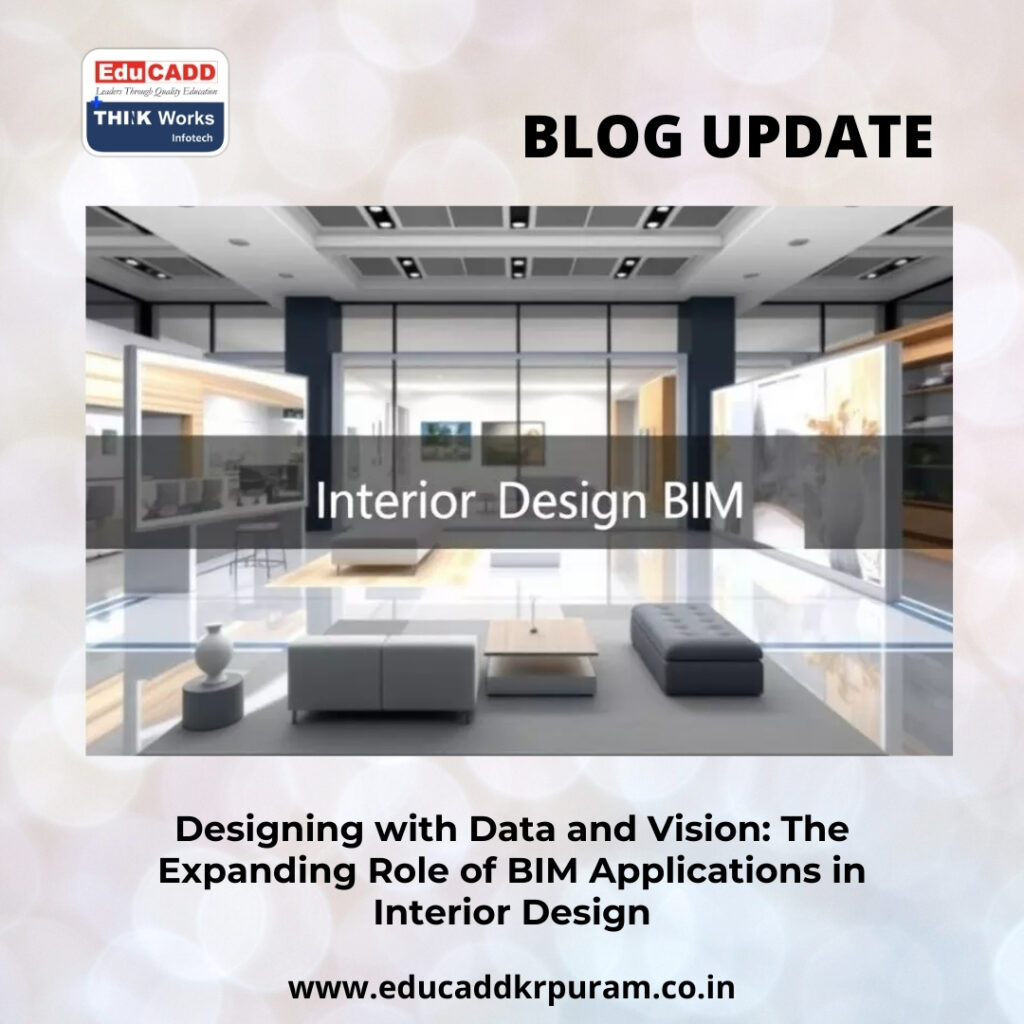
BIM Applications in Interior
BIM Applications in Interior Design provide a structured and intelligent framework that unites creativity with technical precision. Instead of relying on disconnected drawings and spreadsheets, designers develop coordinated digital models filled with real-time information. Every wall, finish, fixture, and furnishing exists not only as geometry but also as data. This unified process improves collaboration, enhances visualization, supports cost management, and reduces risk. Throughout this detailed exploration, we will examine how BIM Applications in Interior Design influence each phase of a project and why they have become central to contemporary interior practice.
1. The Shift from Drafting to Intelligent Modeling
Traditional drafting methods required designers to create separate plans, elevations, and sections. Whenever a revision occurred, they manually updated each drawing. This repetitive effort consumed time and increased the likelihood of inconsistencies. Minor errors could escalate into costly construction issues.
BIM Applications in Interior replaced static drafting with dynamic modeling. Designers now construct a three-dimensional digital representation of the interior environment. Each element carries embedded attributes such as size, material type, finish specification, and performance data. When one component changes, every related drawing updates instantly.
This shift from lines to intelligent objects has redefined workflow efficiency. Designers gain more control over accuracy while reducing repetitive tasks. The process also encourages deeper exploration because revisions no longer require starting from scratch. As a result, interior design evolves into a smarter, more responsive discipline.
2. Transforming Concept Development Through Visualization
Early-stage concepts often rely on imagination. Clients struggle to interpret two-dimensional drawings or mood boards. Misunderstandings at this stage can delay approvals and create confusion later. BIM Applications in Interior solve this problem through immersive visualization tools.
Designers generate realistic three-dimensional views that communicate scale, lighting, and texture effectively. They simulate daylight behavior, artificial lighting placement, and shadow effects. Clients can explore their future spaces through walkthrough animations or virtual reality experiences.
This clarity strengthens decision-making. Stakeholders provide precise feedback because they understand the spatial experience clearly. Designers refine ideas confidently and reduce the need for repeated corrections. Visualization therefore becomes a strategic advantage rather than a decorative add-on.
3. Intelligent Space Planning and Functional Efficiency
Space planning determines whether an interior functions smoothly. Designers must ensure proper circulation, ergonomic comfort, and zoning alignment. BIM Applications in Interior Design enhance this process with analytical precision.
Through the digital model, designers test multiple layout configurations quickly. They evaluate distances, clearances, and accessibility requirements in real time. Instead of relying on assumptions, they verify measurements directly within the model.
This analytical capability supports better decision-making. Designers identify inefficiencies early and adjust layouts before documentation progresses. The result is a well-organized interior environment that balances aesthetics and practicality seamlessly.
4. Strengthening Collaboration Across Disciplines
Interior projects involve architects, structural engineers, lighting consultants, and mechanical specialists. Coordination challenges often arise when teams work with isolated drawings. BIM Applications in Interior Design provide a shared digital environment that promotes seamless collaboration.
Designers integrate their interior models with architectural and engineering systems. They detect clashes between decorative ceilings and ductwork or between lighting fixtures and structural elements. Addressing these conflicts during the design phase prevents delays on-site.
Cloud-based collaboration platforms further improve communication. Team members review updates in real time and provide feedback instantly. This transparency fosters accountability and ensures alignment across disciplines.
5. Enhancing Accuracy in Material Quantification
Budget control remains one of the most critical aspects of interior projects. Estimation errors can disrupt financial planning and damage client trust. BIM Applications in Interior Design offer automated quantity take-offs directly from the model.
Designers generate schedules for flooring areas, wall finishes, ceiling materials, and custom furniture components. Whenever they adjust the design, quantities update automatically. This dynamic accuracy eliminates discrepancies between drawings and cost calculations.
Moreover, linking the BIM model to costing software allows designers to monitor budget implications instantly. Financial transparency strengthens client relationships and supports informed design decisions.
6. Streamlining Documentation and Drawing Production
Documentation demands precision and clarity. Traditional workflows required extensive manual drafting and cross-checking. BIM Applications in Interior Design simplify this process through automation.
Once designers complete the 3D model, the system produces coordinated plans, sections, elevations, and schedules. All drawings remain interconnected. When a modification occurs, updates reflect consistently across every sheet.
This efficiency reduces human error and saves time. Designers dedicate more energy to refining details and less to repetitive drafting. Documentation quality improves while deadlines become easier to meet.
7. Supporting Sustainable and Responsible Design
Sustainability has become integral to interior design. Clients increasingly prioritize energy efficiency, healthy materials, and reduced waste. BIM Applications in Interior Design enable data-driven environmental analysis.
Designers evaluate daylight distribution, thermal performance, and material life cycles within the digital model. They compare alternatives and choose options that minimize environmental impact.
Additionally, precise quantity calculations reduce material waste during construction. Sustainable planning not only benefits the environment but also enhances brand reputation. BIM therefore aligns creativity with ecological responsibility.
8. Detailed Customization of Furniture and Millwork
Custom furniture often defines the character of an interior. BIM Applications in Interior empower designers to model bespoke elements with high accuracy.
Parametric tools allow flexible adjustments to dimensions and configurations. Designers refine joinery details, hardware placements, and material specifications directly within the model. Manufacturers receive clear and precise fabrication information.
This clarity reduces production errors and improves installation efficiency. Customization becomes more manageable because changes occur systematically rather than manually.
9. Construction Planning and Time Management
Meeting project deadlines requires careful coordination between design and execution teams. BIM Applications in Interior Design integrate scheduling data with the model.
By linking components to construction timelines, designers visualize installation sequences. They anticipate potential bottlenecks and adjust plans proactively.
This time-based modeling enhances workflow organization and supports better resource allocation. Projects progress with greater predictability and reduced risk of delays.
10. Minimizing Errors and Rework
Construction errors often stem from miscommunication or outdated drawings. BIM Applications in Interior Design centralize project information within one coordinated environment.
Clash detection tools identify conflicts between interior elements and building systems before construction begins. Designers resolve issues digitally rather than physically.
Preventing errors early reduces rework and protects budgets. Contractors benefit from clear instructions, and clients experience smoother project delivery.
11. Compliance and Safety Verification
Interior projects must adhere to building codes and safety standards. BIM Applications in Interior Design incorporate rule-based validation tools that assist in compliance checking.
Designers verify accessibility requirements, fire safety clearances, and spatial regulations within the model. Detecting non-compliance early prevents costly redesigns later.
This proactive approach reinforces professional credibility. Clients appreciate assurance that their project meets regulatory expectations from the outset.
12. Lifecycle Value Through Facility Management Integration
The usefulness of BIM extends beyond project completion. BIM Applications in Interior Design create digital records that support long-term facility management.
The model stores information about finishes, fixtures, maintenance schedules, and warranties. Facility managers access accurate data without searching through paper documents.
This lifecycle integration enhances operational efficiency. Designers deliver not only a finished interior but also a comprehensive digital asset.
13. Competitive Advantage and Business Growth
Adopting BIM Applications in Interior positions firms as forward-thinking and reliable. Clients increasingly seek partners who combine creativity with technological expertise.
BIM-driven workflows shorten turnaround times and improve presentation quality. Enhanced visualization and accurate documentation strengthen proposals.
Firms that embrace BIM gain operational efficiency and expand their capacity to handle complex projects. This strategic advantage supports sustainable business growth.
14. The Future Trajectory of BIM in Interior Design
Technological innovation continues to reshape design practice. BIM Applications in Interior Design will integrate more deeply with artificial intelligence, automation, and real-time analytics.
Future systems may analyze occupant behavior and recommend layout improvements automatically. Digital twins could monitor interior performance continuously. Augmented reality will further enhance client engagement and site coordination.
As these advancements emerge, designers who invest in BIM skills remain adaptable and competitive. The integration of data, creativity, and collaboration defines the next chapter of interior design evolution.
Conclusion
BIM Applications in Interior have transformed the profession from a drawing-based practice into a data-driven, collaborative discipline. Through intelligent modeling, designers achieve precision in planning, budgeting, visualization, and documentation. The technology strengthens sustainability efforts, supports compliance, and enhances communication across teams.
Beyond efficiency, BIM empowers designers to deliver innovative and resilient interior spaces that align with modern expectations. It bridges artistic vision with technical accuracy, ensuring projects move smoothly from concept to completion. As the industry advances, BIM Applications in Interior Design will continue shaping smarter, more responsive environments that meet the demands of a rapidly evolving world.

