
From Blueprint to Breakthrough: Core Civil CADD Capabilities That Define an Exceptional Site Engineer
Construction projects today demand speed, accuracy, and seamless coordination across multiple teams. Deadlines continue to tighten, budgets grow more structured, and client expectations rise higher than ever before. In such an environment, a site engineer cannot rely solely on field supervision or theoretical engineering knowledge. Instead, digital competence has become equally important. Among all technical competencies, Civil CADD Site Engineering stands out as one of the most powerful skill sets that directly influences project quality and efficiency.
Civil CADD is no longer limited to drafting lines on a screen. It has evolved into a comprehensive digital framework that supports planning, visualization, documentation, cost control, and interdisciplinary collaboration. A site engineer who masters Civil CADD operates with confidence, precision, and adaptability. This expertise ensures accurate site execution, clear communication with consultants, and reduced rework.
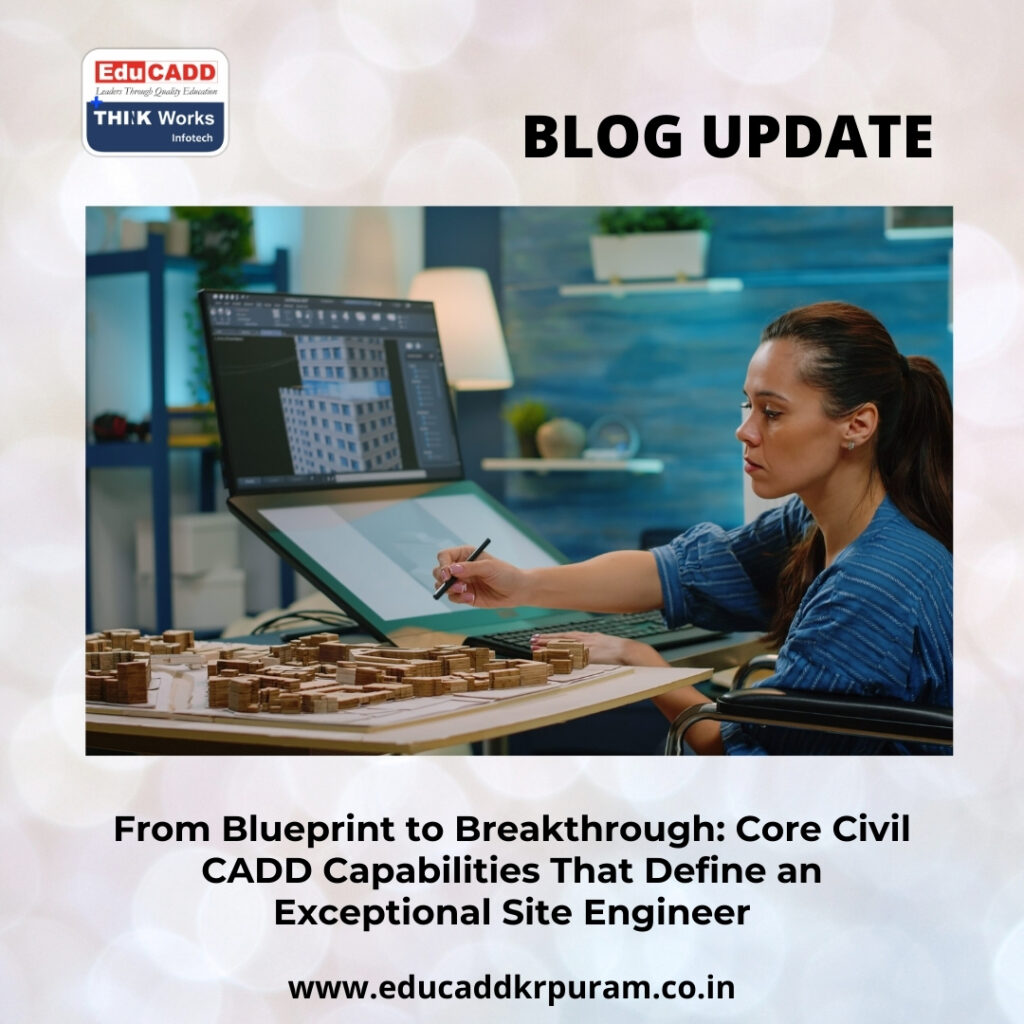
Civil CADD Site Engineering
The following in-depth guide explores fourteen essential Civil CADD capabilities that shape a high-performing site engineer. Each section highlights practical application, professional value, and the measurable impact these skills bring to modern construction projects.
1. Mastery of Construction Drawing Interpretation
Every successful Civil CADD Site Engineering begins with a deep understanding of construction drawings. Before creating or modifying digital files, a site engineer must interpret plans, sections, elevations, and detail sheets with clarity. Drawings communicate structural intent, load paths, dimensions, and material specifications. Therefore, strong interpretation skills eliminate guesswork and reduce costly site errors.
A competent engineer understands grid references, centerline markings, datum levels, and reference benchmarks. In addition, familiarity with symbols and legends ensures accurate translation of design intent into physical execution. When engineers carefully review drawing sets before construction begins, they identify inconsistencies early and raise queries proactively.
Moreover, drawing interpretation involves more than geometry. Specifications, schedules, and general notes must align with graphical elements. When these components are reviewed together, engineers gain a comprehensive understanding of the project scope. This foundational competence strengthens every other Civil CADD function that follows.
2. Advanced 2D Drafting Proficiency
Two-dimensional drafting remains the backbone of construction communication. Despite the rise of 3D modeling, most site coordination still relies on 2D plans. Therefore, advanced proficiency in drafting software is essential for site engineers.
Engineers must manage layers systematically to maintain clarity and organization. Proper use of line types, hatching, and annotations ensures drawings remain readable and professional. Dimensioning must follow standardized formats to prevent confusion during site execution. When dimensions appear clear and consistent, workers interpret drawings correctly without repeated clarification.
Furthermore, block libraries increase efficiency. Frequently used elements such as doors, columns, fixtures, and title blocks can be standardized. This approach reduces drafting time and ensures consistency across revisions. Engineers who command advanced drafting commands deliver faster modifications and higher-quality outputs, which ultimately accelerate project progress.
3. Effective Application of Building Information Modeling
Building Information Modeling has transformed the way construction projects are planned and executed. Unlike conventional drafting, BIM integrates geometry with data, creating intelligent digital models. Although site engineers may not always develop the entire model themselves, understanding BIM functionality significantly improves coordination and visualization.
Through 3D modeling platforms, engineers analyze spatial relationships between structural and service components. This early visualization helps identify clashes between beams, ducts, and pipelines. Resolving these conflicts before physical construction prevents delays and unnecessary material waste.
Additionally, BIM supports quantity extraction and progress tracking. Engineers access accurate data directly from the model, improving cost estimation and billing accuracy. Collaboration also becomes smoother, as multiple teams work within a coordinated digital environment. When engineers understand BIM principles, they strengthen communication between design and execution phases.
4. Accurate Site Layout Planning and Setting-Out Support
Site layout accuracy determines structural alignment and long-term stability. Even minor deviations in marking can cause cumulative errors. Therefore, Civil CADD Site Engineering competence must extend to precise layout planning.
Engineers prepare setting-out drawings that reflect exact grid coordinates and reference points. These digital layouts guide survey teams during on-site marking. By converting digital dimensions into physical coordinates, engineers maintain structural alignment with approved design documents.
Moreover, unexpected site conditions often require layout adjustments. A digitally skilled engineer can revise drawings quickly, ensuring that updated information reaches the field without delay. This agility minimizes downtime and maintains project momentum. Precision in layout planning directly influences construction quality and safety.
5. Digital Quantity Takeoff and Cost Awareness
Construction success depends on effective cost control. Engineers who understand digital measurement tools gain a significant advantage in material planning. Quantity takeoff using Civil CADD tools improves accuracy and reduces manual calculation errors.
Engineers calculate built-up areas, excavation volumes, concrete quantities, and finishing materials directly from digital drawings. These measurements support procurement planning and interim billing processes. Accurate quantities prevent material shortages that disrupt schedules. Similarly, they reduce surplus materials that inflate project costs.
Beyond measurement, cost awareness strengthens decision-making. When engineers understand how design modifications influence material usage, they evaluate alternatives more effectively. Digital quantity takeoff therefore bridges the gap between technical execution and financial management.
6. Structural Detailing and Reinforcement Clarity
Structural detailing ensures durability and safety. Site engineers must interpret reinforcement drawings and verify compliance with structural specifications. This capability extends beyond basic drafting; it requires understanding load distribution and anchorage principles.
Engineers analyze bar bending schedules, lap lengths, stirrup spacing, and cover requirements. When reinforcement details appear clear and accurate, workers execute placement confidently. Digital drafting tools allow engineers to represent reinforcement layouts precisely, minimizing ambiguity.
Furthermore, detailed structural documentation simplifies inspection processes. Supervisors verify compliance quickly, reducing the risk of structural defects. Effective detailing strengthens quality control and builds trust with consultants and clients.
7. Three-Dimensional Visualization for Problem Solving
While 2D drawings communicate dimensions effectively, 3D visualization enhances spatial understanding. Engineers who visualize structures in three dimensions anticipate challenges before they occur on site.
For example, beam drops, slab variations, and service routes become easier to comprehend in 3D models. Engineers assess headroom clearances and alignment conflicts during planning stages. This foresight prevents costly on-site modifications.
Additionally, 3D visualization improves client communication. When stakeholders see realistic representations of the structure, they grasp design intent quickly. Faster approvals and clearer discussions accelerate project timelines. Strong visualization skills therefore contribute to proactive decision-making.
8. Professional Plotting and Presentation Standards
The value of a drawing depends heavily on its clarity when printed or shared. Engineers must configure plotting settings carefully to maintain scale accuracy and readability.
Selecting appropriate paper sizes, line weights, and plot styles ensures consistent presentation. Title blocks should include project information, revision history, and drawing numbers. Clear legends and notes enhance understanding across all teams.
Professional presentation reflects disciplined documentation practices. When drawings appear organized and legible, field teams interpret them confidently. Consequently, fewer clarification meetings are required, and productivity increases.
9. Cross-Disciplinary Coordination and Clash Detection
Modern construction involves structural, architectural, electrical, plumbing, and mechanical disciplines working simultaneously. Engineers must overlay drawings digitally to identify potential conflicts early.
Clash detection prevents interference between beams and service ducts or between structural walls and plumbing routes. By resolving these issues during planning, engineers avoid costly rework during execution.
Digital comparison tools also assist in tracking design revisions across disciplines. Updated files replace outdated versions systematically. Effective coordination strengthens collaboration and enhances project reliability.
10. Workflow Optimization Through Templates and Automation
Time efficiency defines productivity on active construction sites. Engineers who optimize digital workflows complete tasks faster without compromising accuracy.
Templates standardize layers, annotations, and plotting configurations. This consistency reduces repetitive setup work. Dynamic blocks and parametric tools further accelerate drafting by automating repetitive components.
Organized file structures and naming conventions enhance document retrieval speed. Engineers locate required drawings quickly, which supports faster decision-making. Workflow optimization allows engineers to focus more on quality supervision and problem-solving rather than administrative tasks.
11. Revision Management and Document Control
Construction projects evolve continuously due to design updates, client instructions, or regulatory changes. Engineers must manage revisions carefully to maintain documentation integrity.
Revision clouds and clear change notes communicate modifications effectively. Drawing numbers and version histories must remain consistent to avoid confusion. Digital comparison tools highlight differences between drawing versions, ensuring teams always use the latest information.
Strong document control protects project credibility. It ensures accountability and supports smooth audits or inspections. When revision management remains systematic, project risks decline significantly.
12. Integration with Scheduling and Planning Systems
Digital drafting does not operate independently. It connects closely with project scheduling and resource planning. Engineers who align drawing updates with construction timelines enhance coordination.
For instance, slab drawings should correspond with casting schedules. Structural modifications must reflect upcoming milestones. Integrating drafting outputs with scheduling systems prevents material delays and workforce misallocation.
This integrated approach improves predictability and reduces unexpected disruptions. Engineers anticipate upcoming requirements and prepare documentation accordingly.
13. Compliance with Codes and Industry Standards
Every construction project must comply with regulatory guidelines and engineering standards. Engineers must ensure that drawings follow prescribed dimensioning formats and safety clearances.
Compliance reduces approval delays from authorities and consultants. It also enhances overall project quality. Engineers verify that fire safety provisions, structural tolerances, and accessibility standards are incorporated correctly.
Consistent adherence to standards reflects professionalism and responsibility. It demonstrates technical maturity and strengthens stakeholder confidence.
14. Continuous Skill Development and Technological Adaptation
Technology in construction evolves rapidly. Therefore, engineers must remain committed to continuous improvement. Learning advanced software features enhances drafting efficiency and coordination capability.
Participation in workshops, certifications, and industry seminars expands professional knowledge. Exposure to emerging technologies such as cloud-based collaboration tools strengthens adaptability.
Engineers who embrace learning remain competitive in the job market. They approach site challenges with innovative solutions supported by digital precision. Continuous development ensures long-term career growth and relevance.
Conclusion
The role of a site engineer has transformed significantly in the digital age. Technical supervision alone no longer defines professional excellence. Instead, mastery of Civil CADD Site Engineering capabilities determines accuracy, efficiency, and collaboration across construction projects.
From interpreting complex drawings to coordinating multiple disciplines and managing revisions, digital proficiency influences every stage of execution. Engineers who cultivate these competencies reduce errors, improve cost control, and enhance project timelines.
Ultimately, Civil CADD expertise does not replace field experience. Rather, it strengthens it. When practical construction knowledge merges with advanced digital capability, site engineers achieve exceptional performance and contribute meaningfully to successful, sustainable construction outcomes.

