
Designing the Future: The Complete Digital Mastery Blueprint Every Interior Designer Needs Today
Digital Interior Design Mastery is no longer limited to sketches, fabric swatches, and physical site visits. The profession has evolved into a technology-powered discipline where creativity merges with precision, visualization, data, and digital collaboration. Clients today expect immersive presentations, accurate documentation, fast revisions, and seamless communication. Consequently, interior designers must develop strong digital capabilities to remain competitive and relevant.
The modern design studio runs on software, cloud systems, visualization engines, and intelligent tools that streamline every stage of a project. From concept development to final handover, technology supports planning, modeling, budgeting, sourcing, marketing, and client interaction. Therefore, mastering essential digital platforms is not just an advantage; it is a professional requirement.
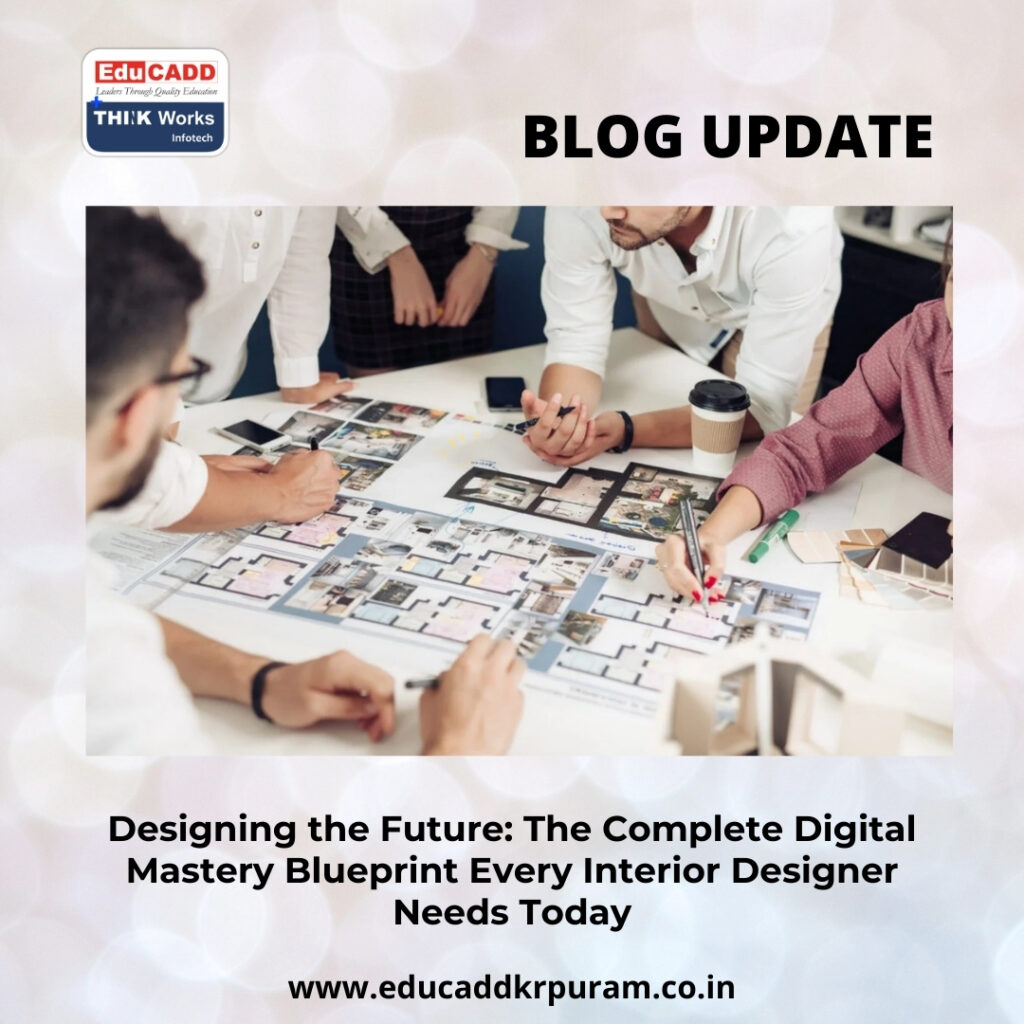
Digital Interior Design Mastery
This comprehensive guide explores the most critical digital systems and technical skills that every interior designer should command. Each section highlights practical benefits, workflow impact, and long-term career value. By understanding and integrating these tools effectively, designers can elevate both creativity and operational efficiency while delivering exceptional client experiences.
1. Precision Drafting Software: Establishing the Technical Backbone
Every successful interior project begins with accurate drawings. Digital drafting platforms form the technical backbone of professional interior design. These tools allow designers to create detailed floor plans, elevations, sections, and construction drawings with exact measurements and clear annotations.
Accuracy is essential because even small dimensional errors can create costly on-site problems. Digital Interior Design Mastery manual inconsistencies and ensures that every wall, ceiling detail, and furniture placement aligns perfectly. Moreover, layered drawing systems allow designers to separate electrical, plumbing, lighting, and furniture layouts efficiently.
Another major advantage is flexibility. When revisions occur, designers can modify layouts instantly without redrawing entire plans. This adaptability saves time and reduces stress during client feedback cycles. Clear documentation also improves communication with contractors and consultants. As a result, projects progress smoothly from planning to execution.
2. Three-Dimensional Modeling Platforms: Bringing Concepts to Life
While technical drawings provide structure, three-dimensional modeling software adds visual clarity. These platforms enable designers to convert flat layouts into immersive spatial representations. Clients often struggle to interpret 2D plans; however, 3D models remove confusion instantly.
Through modeling tools, designers can explore spatial proportions, ceiling heights, furniture arrangements, and circulation paths realistically. This experimentation phase encourages creativity while minimizing risks. Designers can test multiple layouts before finalizing the design direction.
Furthermore, modeling software supports the integration of textures, materials, and finishes. Clients can visualize how wood grains, marble patterns, or wall colors interact within the space. Consequently, decision-making becomes faster and more confident. Mastering 3D modeling strengthens presentation quality and improves project approvals significantly.
3. Intelligent BIM Systems: Enhancing Coordination and Data Management
Building Information Modeling, commonly known as BIM, has transformed large-scale design coordination. Unlike basic modeling, BIM systems connect every design element through embedded data. When a designer modifies one component, related elements update automatically.
This interconnected structure reduces errors and inconsistencies. For example, changing wall thickness instantly updates floor area calculations and furniture layouts. Such automation minimizes coordination issues between architects, engineers, and contractors.
BIM platforms also improve collaboration. Multiple professionals can work within the same digital environment while accessing real-time updates. Consequently, communication gaps shrink, and project timelines improve. For interior designers working on complex or commercial developments, BIM expertise significantly enhances professional credibility and efficiency.
4. Advanced Rendering Engines: Crafting Photorealistic Experiences
Visual storytelling plays a decisive role in design approval. High-quality rendering engines allow designers to create lifelike images that simulate natural lighting, artificial illumination, reflections, and shadows.
Photorealistic visuals help clients emotionally connect with the proposed environment. Instead of imagining the final outcome, they see it in near reality. This clarity builds trust and reduces uncertainty.
Rendering software also allows designers to experiment with lighting moods. Daytime brightness, evening ambiance, and accent lighting effects can be demonstrated effectively. Such detailed visualization improves material selection and design refinement. Although mastering rendering tools requires practice, the impact on portfolio quality and client satisfaction is substantial.
5. Real-Time Visualization Tools: Accelerating Client Interaction
Traditional rendering workflows can be time-consuming. However, real-time visualization platforms provide instant feedback. When designers adjust textures, move furniture, or change lighting, updates appear immediately on screen.
This dynamic responsiveness enhances collaboration during meetings. Clients can suggest modifications and see results live. As a result, approval processes become faster and more engaging.
Additionally, real-time systems often support immersive walkthroughs. Clients virtually navigate spaces before construction begins. This interactive experience reduces misunderstandings and limits costly revisions. By incorporating real-time tools, designers enhance productivity while delivering memorable client presentations.
6. Image Editing and Post-Production Software: Perfecting Presentation Quality
Even the most detailed renderings benefit from refinement. Image editing programs allow designers to enhance visual outputs professionally. Adjusting color balance, contrast, brightness, and texture sharpness improves overall presentation impact.
These tools also assist in creating mood boards and concept collages. Designers can combine inspiration images, material samples, and color palettes into cohesive visual narratives. Such presentations communicate design direction clearly and effectively.
Moreover, polished visuals elevate marketing materials and portfolios. A refined presentation reflects professionalism and attention to detail. Consequently, image editing skills strengthen both creative expression and brand positioning.
7. Graphic Design Platforms: Strengthening Brand Identity
Digital Interior Design Mastery must communicate their expertise beyond project sites. Graphic design software enables the creation of brochures, digital portfolios, social media content, and presentation templates.
Consistent visual branding builds recognition and credibility. When marketing materials align with your design philosophy, potential clients perceive reliability and professionalism.
Additionally, graphic tools streamline communication. Designers can prepare visually appealing proposals, quotations, and presentations quickly. Strong branding enhances client trust and differentiates your services in a competitive market. Therefore, mastering graphic platforms contributes directly to business growth.
8. Budgeting and Spreadsheet Systems: Managing Financial Control
Creative vision must align with financial feasibility. Spreadsheet software plays a crucial role in cost estimation, vendor comparison, and expense tracking.
By organizing budgets digitally, designers maintain transparency with clients. Clear cost breakdowns prevent misunderstandings and foster trust. Designers can calculate quantities, monitor expenditures, and adjust allocations efficiently.
Furthermore, spreadsheets support long-term financial planning. Tracking project profitability ensures sustainable business operations. Although budgeting may seem less exciting than visualization, it remains essential for professional stability and success.
9. Project Management Applications: Structuring Workflow Efficiency
Handling multiple projects requires systematic organization. Project management platforms allow designers to assign tasks, set deadlines, and monitor progress visually.
Centralized task boards clarify responsibilities within teams. Everyone understands priorities and timelines. Consequently, workflow becomes more structured and productive.
These applications also streamline communication. Files, comments, and updates remain accessible in one organized system. Reduced confusion leads to improved collaboration and timely project completion. Effective management tools transform chaotic processes into controlled and efficient workflows.
10. Cloud Collaboration and Secure Storage Systems
Modern design practices rely on digital data. Cloud storage platforms provide secure and accessible file management solutions. Designers can share drawings, contracts, and presentations with clients and consultants instantly.
Remote accessibility enhances flexibility. Team members can access updated documents from any location, ensuring continuity. Additionally, automatic backups protect against hardware failures and data loss.
Secure cloud environments strengthen reliability and professionalism. Efficient collaboration across locations supports smooth project execution and strengthens client confidence.
11. Virtual and Augmented Reality: Redefining Spatial Experience
Immersive technologies are reshaping how clients experience interior design. Virtual reality allows users to step inside a simulated environment through headsets. They can explore rooms, observe textures, and evaluate spatial flow realistically.
Augmented reality overlays digital elements onto real environments using mobile devices. Clients can preview furniture placement within existing spaces instantly.
These immersive tools enhance engagement and reduce uncertainty. Clients gain a deeper understanding of design proposals, which leads to quicker approvals. By adopting VR and AR, designers position themselves at the forefront of technological innovation.
12. Digital Material Libraries and Smart Sourcing Platforms
Selecting materials efficiently requires organized research. Digital product databases provide comprehensive catalogs of finishes, fixtures, and furnishings. Designers can compare specifications, dimensions, and pricing quickly.
Such platforms streamline procurement processes. Instead of relying solely on physical samples, designers evaluate options virtually before ordering. This efficiency reduces time consumption and improves sustainability.
Organized digital sourcing accelerates decision-making and strengthens project planning. By leveraging material libraries effectively, designers maintain both creativity and operational control.
13. Artificial Intelligence in Design Development
Artificial intelligence has begun influencing interior design workflows. AI-driven tools assist in generating layout suggestions, color combinations, and spatial optimization ideas.
While AI does not replace human creativity, it accelerates brainstorming. Designers can explore multiple alternatives rapidly and refine selected options strategically.
Data-driven insights also improve functionality. AI algorithms analyze room dimensions and suggest efficient arrangements. Consequently, designers enhance usability without compromising aesthetics. Embracing AI prepares professionals for future advancements in digital innovation.
14. Professional Website Builders and Digital Portfolios
A strong online presence defines modern professional identity. Website builders and portfolio platforms allow designers to showcase projects, testimonials, and service offerings clearly.
When potential clients search online, digital impressions shape their decisions. A well-structured website communicates credibility and expertise immediately.
Online portfolios also expand geographic reach. Designers can connect with clients beyond local boundaries. Integration with social media platforms further amplifies visibility and brand awareness.
Investing in digital presence tools ensures long-term business expansion and competitive positioning.
Conclusion
Digital Interior Design Mastery has evolved into a discipline where creativity and technology intersect seamlessly. Digital platforms support every stage of the design journey, from concept development and visualization to budgeting, collaboration, and marketing.
By mastering drafting systems, modeling software, rendering engines, management tools, immersive technologies, and AI-driven platforms, designers enhance both efficiency and innovation. These tools do not replace artistic vision; instead, they empower it.
Professionals who embrace digital transformation position themselves ahead of industry trends. They deliver projects with clarity, precision, and confidence. Ultimately, the future of interior design belongs to those who combine creative imagination with technological mastery, ensuring sustainable growth in an ever-evolving marketplace.

