
Beyond Aesthetics: The Expanding Universe of Interior Design Careers in 2026
Interior Design Careers 2026 has progressed far beyond arranging furniture or selecting color palettes. It has become a powerful discipline that shapes human experiences, enhances productivity, supports sustainability, and integrates advanced technologies into everyday life. As 2026 unfolds, the industry stands at a pivotal moment where creativity meets innovation and strategy. Rapid urbanization, digital transformation, environmental awareness, and lifestyle evolution are driving new demands across residential, commercial, hospitality, healthcare, and retail sectors.
Consequently, interior design career opportunities in 2026 are broader, more specialized, and more technology-oriented than ever before. Designers today must combine artistic vision with technical precision, sustainability knowledge, business understanding, and communication expertise. Clients expect thoughtful spatial planning, efficient budgeting, immersive presentations, and measurable value.
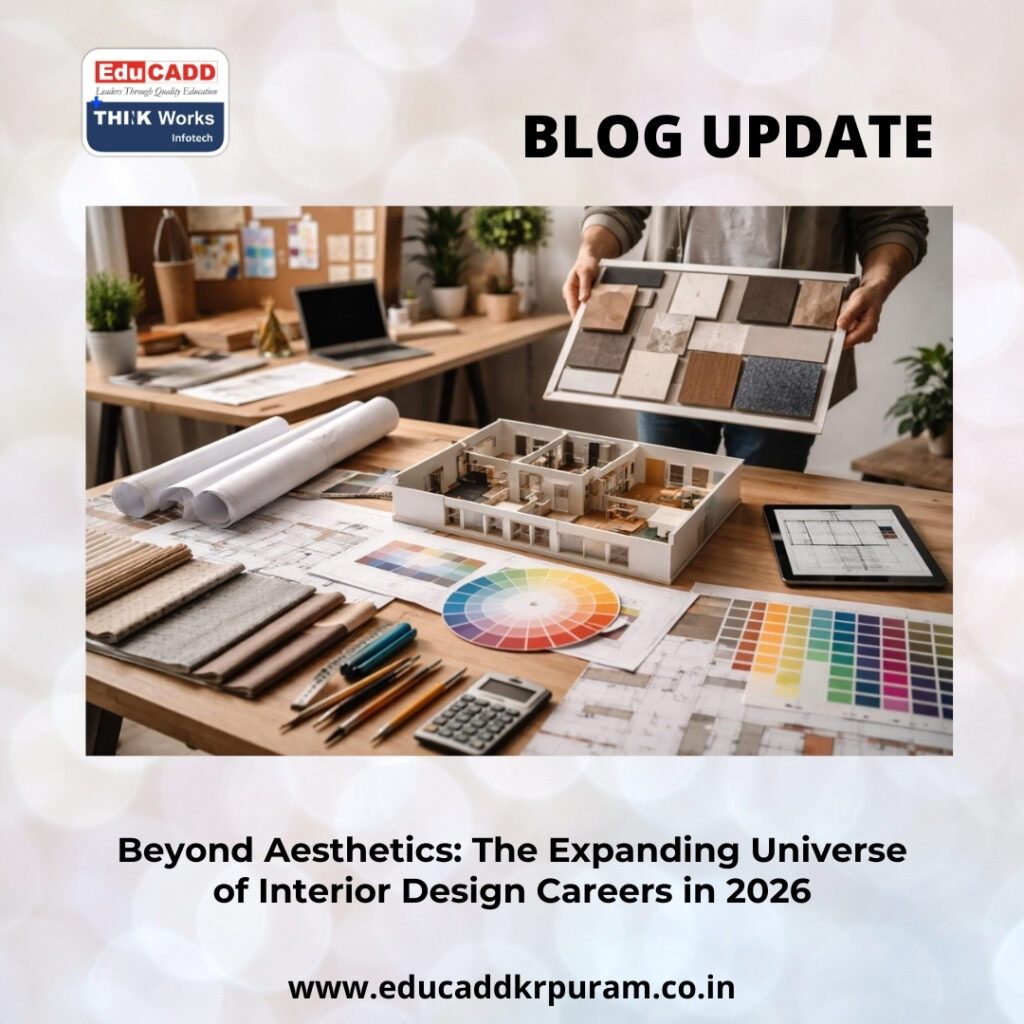
Interior Design Careers 2026
This comprehensive blog explores Interior Design Careers 2026 in depth. It highlights emerging trends, high-growth sectors, required skills, income potential, entrepreneurial pathways, and long-term prospects. Whether you are a student, a working professional, or an entrepreneur planning to enter this dynamic field, this detailed guide will help you understand how to position yourself for long-term success.
1. The Transformation of Interior Design into a Strategic Profession
The perception of interior design has changed dramatically over the last decade. Earlier, the profession was often viewed as decorative or supplementary to architecture. However, Interior Design Careers 2026 reflect a strategic and integral role in shaping built environments. Designers now collaborate closely with architects, engineers, sustainability consultants, and technology experts to create functional, efficient, and future-ready spaces.
Urban living has intensified the need for smart space utilization. Apartments are becoming compact, offices are shifting to hybrid layouts, and retail spaces must compete with digital platforms. Therefore, designers analyze human behavior, workflow efficiency, and environmental impact before finalizing layouts. This analytical approach has elevated the profession to a strategic level.
Moreover, clients are more informed than ever. Digital platforms expose them to global trends and innovative concepts. As expectations rise, designers must deliver creative yet practical solutions. This transformation ensures that interior design career opportunities in 2026 extend far beyond aesthetic styling and into strategic problem-solving.
2. Residential Design: Smart, Sustainable, and Personalized Living
Residential interiors continue to generate strong demand, yet client expectations have evolved significantly. Homeowners now seek personalized, technology-enabled living environments that reflect their lifestyles and values. Interior design career opportunities in 2026 within residential sectors emphasize smart integration, sustainability, and multifunctionality.
Smart home technology plays a major role in modern residences. Automated lighting systems, intelligent security features, and climate control solutions are integrated seamlessly into design concepts. Designers must coordinate with technical experts to ensure functionality aligns with aesthetics. This collaboration expands career possibilities in smart home consultancy.
In addition, sustainability influences material selection and layout planning. Homeowners prefer energy-efficient lighting, natural ventilation, and eco-friendly finishes. Designers who understand green building practices gain a competitive advantage. Luxury residential projects also offer premium opportunities. High-end clients demand bespoke furniture, artistic installations, and innovative spatial solutions. Consequently, residential design remains a cornerstone of interior design career opportunities in 2026.
3. Commercial Office Spaces and Workplace Innovation
Corporate environments are evolving rapidly due to hybrid work models and employee wellness priorities. As a result, commercial interiors represent one of the most promising interior design career opportunities in 2026. Companies now recognize that workspace design directly influences productivity, collaboration, and job satisfaction.
Flexible layouts are replacing rigid cubicle systems. Designers incorporate breakout zones, collaborative pods, quiet workstations, and recreational areas within the same office. Ergonomic furniture and acoustic solutions enhance employee comfort. Additionally, natural lighting and indoor greenery contribute to well-being and stress reduction.
Corporate branding also shapes interior decisions. Offices reflect company culture through colors, materials, and spatial storytelling. Designers who understand organizational psychology and brand identity can deliver impactful solutions. This alignment between business strategy and interior planning strengthens the value of professionals in commercial sectors.
4. Hospitality and Experiential Design Expansion
The hospitality industry continues to expand globally, creating vibrant interior design career opportunities in 2026. Hotels, resorts, cafes, and restaurants compete through ambience and customer experience rather than price alone. Therefore, immersive design concepts have become essential.
Designers craft thematic narratives that engage guests emotionally. Lighting design plays a critical role in setting mood and atmosphere. Textures, patterns, and material choices contribute to sensory experiences. Boutique hotels emphasize storytelling elements, while luxury resorts integrate biophilic design principles to connect guests with nature.
Social media visibility has further increased the importance of visually striking interiors. Unique backdrops attract online engagement, which enhances brand recognition. Consequently, hospitality design remains a high-growth sector within interior design career opportunities in 2026.
5. Retail and Experiential Brand Environments
Retail spaces must offer more than product displays. They must create memorable experiences that encourage customer interaction. Therefore, interior design career opportunities in 2026 include experiential retail specialists who combine marketing knowledge with spatial creativity.
Designers plan store layouts to influence movement and purchasing behavior. Strategic lighting highlights featured products, while interactive zones encourage exploration. Pop-up stores and temporary installations provide additional project-based opportunities.
As brands compete for attention, physical stores must reflect strong identities. Designers translate brand stories into immersive environments. This integration of marketing strategy and design expertise strengthens career growth within retail sectors.
6. Sustainable and Green Interior Practices
Environmental responsibility is a defining trend shaping interior design career opportunities in 2026. Clients increasingly demand eco-conscious solutions that reduce carbon footprints and promote healthier living conditions. Designers must stay updated on sustainable materials, energy-efficient systems, and waste reduction techniques.
Recycled materials, low-emission finishes, and renewable resources are becoming standard choices. Natural lighting strategies reduce electricity consumption. Indoor plants improve air quality and aesthetic appeal. Designers who understand environmental certifications can guide clients toward greener decisions.
Governments and organizations support sustainable construction initiatives. As regulations evolve, demand for sustainability-focused designers continues to grow. This specialization offers both ethical fulfillment and strong professional potential.
7. Technology Integration and Digital Visualization
Technology has revolutionized how designers conceptualize and present projects. Interior design career opportunities in 2026 require strong digital proficiency. Advanced 3D modeling software enables realistic renderings that help clients visualize spaces before execution.
Virtual reality enhances client engagement by providing immersive walkthrough experiences. Designers can demonstrate lighting variations, furniture arrangements, and spatial flow interactively. Building Information Modeling facilitates seamless coordination between different project stakeholders.
Artificial intelligence tools assist in layout optimization and cost analysis. Designers who leverage these innovations deliver efficient, data-driven results. Technology integration is no longer optional; it is essential for competitive success.
8. Healthcare and Wellness-Centered Interiors
Healthcare environments demand careful planning and regulatory compliance. Interior design career opportunities in 2026 include hospital and clinic design specialists who prioritize hygiene, safety, and emotional comfort.
Calming color schemes reduce patient anxiety. Durable materials support infection control. Wayfinding systems enhance navigation efficiency. Designers must balance aesthetics with strict healthcare guidelines.
Wellness-centered design also extends beyond hospitals. Corporate offices, residences, and hospitality spaces incorporate wellness features such as natural light, ergonomic furniture, and relaxation zones. This emphasis on holistic well-being expands professional opportunities significantly.
9. Educational and Institutional Design Development
Educational institutions seek dynamic learning environments that encourage collaboration and creativity. Interior design career opportunities in 2026 within this sector involve flexible classroom layouts, technology integration, and ergonomic solutions.
Designers must consider acoustics, lighting, and spatial adaptability. Interactive zones foster engagement, while modular furniture supports various teaching methods. Universities and training centers increasingly invest in innovative interior concepts to attract students.
Institutional design requires attention to durability and budget efficiency. Professionals who specialize in this area often enjoy stable project pipelines.
10. Freelancing and Independent Consulting
Entrepreneurship offers strong potential within interior design career opportunities in 2026. Many professionals establish independent studios to gain creative freedom and higher income possibilities. Digital platforms allow designers to showcase portfolios globally and attract diverse clients.
Freelancers manage projects from concept to completion. However, they must also handle budgeting, vendor coordination, and marketing. Strong networking skills support sustainable growth.
Consultancy services, including space planning and material selection advice, provide additional revenue streams. Independent practice remains an attractive pathway for ambitious designers.
11. Global Market Expansion and Cross-Border Projects
Globalization has expanded Interior Design Careers 2026 beyond local markets. Rapid urban development in emerging economies generates strong demand for skilled professionals. Designers who understand cultural preferences can adapt concepts accordingly.
Remote collaboration tools enable cross-border projects. International certifications enhance credibility and employability. Luxury hospitality developments and large commercial complexes often require experienced global teams.
Cross-border exposure enriches professional growth and broadens creative perspectives.
12. Income Potential and Financial Growth Trends
Income potential varies depending on specialization, location, and experience. Entry-level designers typically begin with moderate salaries. However, expertise in luxury design, sustainability, or technology integration increases earning capacity.
Freelancers can scale income through multiple concurrent projects. Studio owners often diversify services to maximize profitability. Repeat clients and strong portfolios contribute significantly to long-term financial growth.
Therefore, strategic career planning plays a vital role in maximizing earnings within interior design career opportunities in 2026.
13. Essential Skills and Continuous Learning
To succeed in interior design career opportunities in 2026, professionals must develop diverse skill sets. Creativity remains fundamental, yet technical proficiency is equally important. Designers must understand spatial planning, materials, lighting, and digital tools.
Communication skills facilitate smooth client interactions. Time management ensures project efficiency. Problem-solving abilities help overcome design challenges effectively.
Continuous learning through workshops, certifications, and industry exposure keeps professionals competitive. Adaptability remains crucial in a rapidly evolving landscape.
14. Future Outlook Beyond 2026
The future of interior design appears promising and innovation-driven. Smart cities, sustainable housing, and experiential retail will continue shaping industry trends. Designers will integrate advanced technologies while maintaining human-centered principles.
Interior design career opportunities in 2026 represent a transitional period toward more intelligent and environmentally responsible spaces. Professionals who embrace change and refine their expertise will thrive in the coming years.
Conclusion
Interior design has evolved into a multifaceted profession that combines artistry, technology, sustainability, and strategic thinking. Interior Design Careers 2026 span residential, commercial, hospitality, healthcare, retail, and institutional sectors. Each domain offers unique challenges and growth potential.
As digital tools and environmental awareness reshape the industry, designers must remain adaptable and forward-thinking. Continuous skill development, technological proficiency, and strong client relationships will determine long-term success. Ultimately, 2026 marks a defining moment for interior design professionals ready to shape inspiring and future-ready spaces worldwide.

