
From Blueprint to Breaker Panel: Mastering Electrical Design Documentation for Tender and Execution Excellence
In every construction or infrastructure project, electrical systems serve as the lifeline that powers operations, safety mechanisms, communication networks, and productivity. However, the true strength of any electrical installation lies not only in the equipment selected but also in the precision of the documentation that defines it. Electrical Design Documentation Mastery and execution plays a decisive role in shaping how smoothly a project moves from concept to commissioning. When documentation is structured, coordinated, and technically sound, it eliminates confusion and strengthens accountability. Conversely, incomplete or inconsistent documentation leads to disputes, delays, and unnecessary costs.
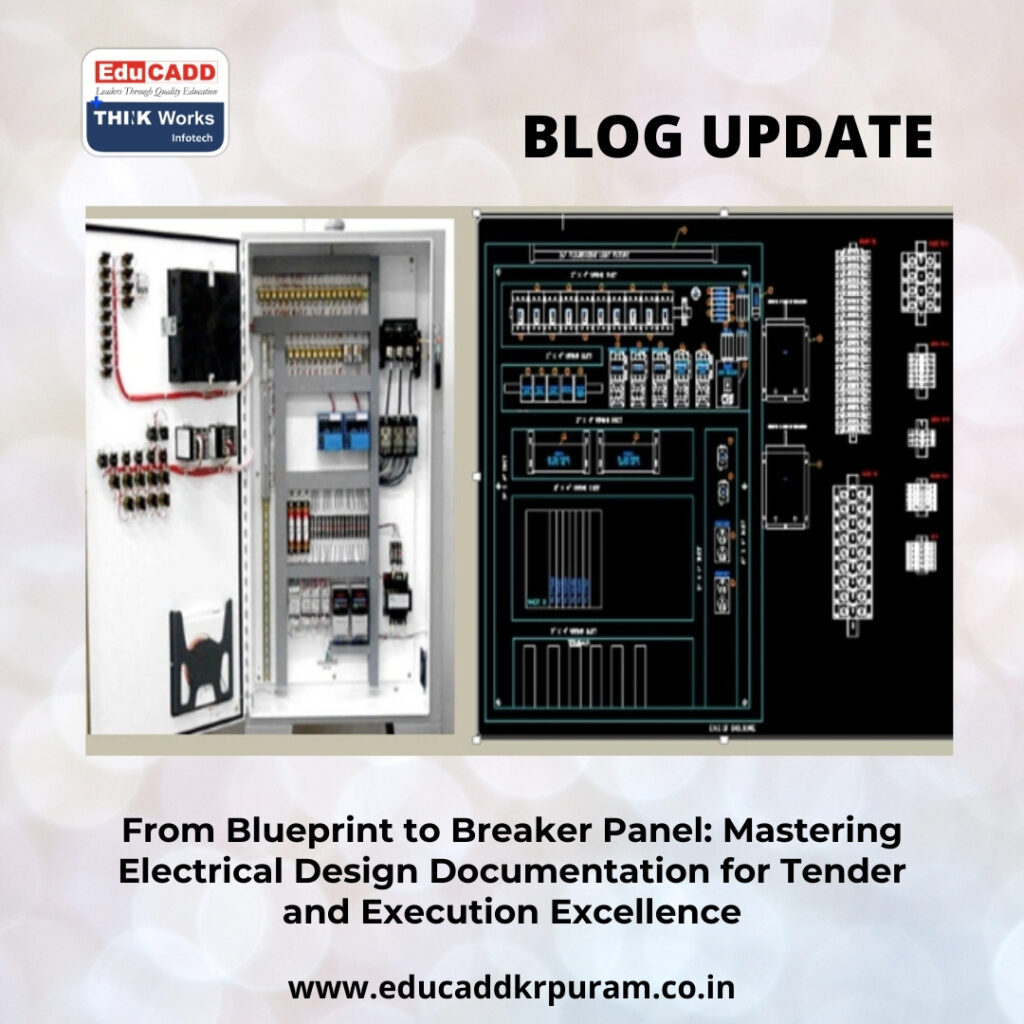
Electrical Design Documentation Mastery
Electrical Design Documentation Mastery for tender and execution bridges the gap between engineering design and on-site implementation. It provides contractors with clear scope definitions during bidding and guides site teams during installation. Therefore, documentation must remain comprehensive, readable, and aligned with regulatory standards. This blog explores the complete framework, components, strategies, and best practices that define effective electrical design documentation for tender and execution, offering deep insight into how it drives successful project delivery.
1. Defining Electrical Design Documentation for Tender and Execution
Electrical Design Documentation Mastery for tender and execution refers to the complete collection of drawings, specifications, calculations, schedules, and cost documents that define the electrical scope of a project. It ensures that all stakeholders share a unified understanding of system requirements.
During the tender phase, documentation allows contractors to evaluate material quantities, equipment ratings, and labor requirements accurately. It provides the foundation for competitive and transparent bidding. After the contract award, the same documentation guides installation, inspection, and commissioning. Therefore, consistency across all documents is essential.
In addition, electrical design documentation for tender and execution establishes measurable performance standards. It describes not only what needs to be installed but also how it must perform. By doing so, it reduces ambiguity and ensures that the completed system meets safety and operational expectations.
2. The Strategic Role of Documentation in the Tendering Stage
The tender stage represents a critical decision-making phase. Contractors analyze project requirements and prepare financial proposals based on the documentation provided. If electrical design documentation for tender and execution lacks clarity, contractors may include risk allowances, leading to inflated bids.
Clear and detailed documentation encourages fair competition. Since every bidder works with identical information, the client can compare proposals objectively. Moreover, accurate scope definitions prevent post-award claims and variations.
Well-prepared documentation also accelerates evaluation processes. Technical teams can assess compliance quickly because requirements are defined precisely. Consequently, project timelines improve even before construction begins.
3. Core Components of Comprehensive Electrical Documentation
Electrical design documentation for tender and execution typically includes several interrelated components. Each component contributes to overall clarity and technical accuracy.
First, electrical drawings present visual representations of power distribution, lighting layouts, and equipment locations. Second, technical specifications describe materials, performance standards, and installation methods. Third, load calculations justify system sizing decisions. Fourth, the Bill of Quantities translates design into measurable items for pricing. Finally, compliance documents confirm adherence to applicable regulations.
All these elements must align seamlessly. For instance, cable sizes shown in drawings must match load calculations and BOQ entries. When coordination between components remains strong, documentation becomes reliable and execution becomes predictable.
4. Electrical Drawings: Visualizing the System Architecture
Drawings serve as the most direct communication tool within electrical design documentation for tender and execution. They provide graphical clarity that written descriptions alone cannot achieve.
Single-line diagrams illustrate the overall power distribution network. They display transformers, switchboards, feeders, and protective devices in a simplified format. Power layouts identify equipment connections and socket placements, while lighting layouts define fixture positions and illumination distribution.
Moreover, earthing and lightning protection drawings highlight safety arrangements. Cable routing drawings prevent clashes with mechanical or structural systems. By presenting detailed and clearly labeled drawings, engineers enable contractors to interpret requirements quickly and accurately.
5. Technical Specifications: Setting Performance Benchmarks
While drawings illustrate physical layouts, technical specifications establish quality standards. Electrical design documentation for tender and execution must define equipment characteristics in measurable terms.
Specifications should describe voltage ratings, insulation classes, short-circuit capacities, environmental protection levels, and testing requirements. Instead of using vague language, documentation must specify exact parameters.
By clearly stating performance benchmarks, engineers eliminate uncertainty. Contractors understand expectations, suppliers know acceptable alternatives, and inspectors can verify compliance objectively. Consequently, the entire project benefits from enhanced transparency and quality assurance.
6. Load Calculations and Engineering Justification
Load calculation forms the engineering backbone of electrical design documentation for tender and execution. Engineers evaluate connected loads, demand factors, and diversity assumptions to determine system capacity.
Accurate calculations ensure that transformers, generators, and panels operate efficiently without overloading. In addition, voltage drop assessments help maintain performance standards across long cable runs. Short-circuit studies confirm that protective devices can interrupt fault currents safely.
Proper documentation of these calculations demonstrates technical rigor. It also protects projects from future operational failures. When systems are sized correctly, maintenance costs decrease and reliability increases significantly.
7. Bill of Quantities: Converting Design into Cost
The Bill of Quantities plays a vital financial role within electrical design documentation for tender and execution. It lists item descriptions, measurement units, and estimated quantities.
Clear BOQ formatting allows contractors to prepare transparent pricing. Furthermore, it supports cost monitoring throughout execution. Project managers can track material usage and compare it with original estimates.
When design revisions occur, the BOQ provides a structured reference for evaluating variations. Therefore, detailed and accurate BOQ preparation strengthens financial discipline and reduces contractual disputes.
8. Compliance and Regulatory Alignment
Electrical installations must comply with safety codes, fire regulations, and energy efficiency standards. Electrical design documentation for tender and execution must reference applicable national and international standards.
Compliance considerations include earthing resistance limits, circuit protection coordination, and fire-rated cable selection. Documentation should also define emergency lighting and backup power requirements.
By embedding compliance measures within the documentation, engineers ensure that contractors integrate safety during installation. As a result, inspections proceed smoothly and legal risks diminish.
9. Multidisciplinary Coordination and Integration
Electrical systems coexist with architectural, structural, and mechanical elements. Therefore, electrical design documentation for tender and execution must reflect integrated planning.
Coordination meetings between disciplines help identify spatial conflicts early. Cable trays should avoid HVAC ducts, and panel rooms must align with structural load capacities.
Through collaborative planning and coordinated drawings, potential rework is minimized. Clear documentation supports these efforts by providing accurate reference data for all teams involved.
10. Shop Drawings and Execution-Level Detailing
After contract award, contractors prepare shop drawings derived from approved electrical design documentation for tender and execution. These drawings provide installation-specific details such as mounting heights, bracket designs, and cable supports.
Consultants review shop drawings to confirm alignment with design intent. Prompt approval cycles help maintain construction momentum.
As-built drawings are later prepared to reflect final installation conditions. These records support future maintenance and facility upgrades. Therefore, execution documentation remains as important as tender documentation.
11. Testing, Commissioning, and Performance Validation
Before project handover, systems must undergo comprehensive testing. Electrical design documentation for tender and execution should clearly define testing procedures and acceptance criteria.
Insulation resistance tests, earth continuity checks, relay calibration, and load simulations confirm operational readiness. Clear documentation ensures that each test follows recognized standards.
Recording results in structured formats enhances accountability. Clients receive documented proof that systems meet specified performance levels. Consequently, commissioning becomes systematic and reliable.
12. Risk Management and Quality Control Frameworks
Comprehensive electrical design documentation for tender and execution strengthens risk management strategies. By identifying potential hazards in advance, engineers can incorporate protective measures directly into the design.
Quality control procedures should include inspection checklists, material approval processes, and periodic audits. Documentation provides measurable criteria for evaluating workmanship and equipment performance.
When documentation remains detailed and updated, project teams can address risks proactively rather than reactively. This approach enhances safety and preserves project timelines.
13. Digital Transformation in Electrical Documentation
Modern technology has revolutionized electrical design documentation for tender and execution. Digital modeling platforms allow engineers to visualize systems in three dimensions.
Building Information Modeling tools facilitate clash detection and quantity extraction. Cloud-based systems streamline document sharing and revision tracking.
Although digital tools enhance efficiency, disciplined engineering practices remain essential. Technology supports documentation quality, but professional expertise ensures its accuracy and reliability.
14. Best Practices for Excellence in Documentation
Achieving excellence in electrical design documentation for tender and execution requires systematic planning. Engineers should maintain consistency between drawings, specifications, and BOQ entries. Regular peer reviews strengthen document integrity.
Clear communication between design and site teams enhances understanding. Timely updates prevent outdated revisions from reaching construction crews.
Furthermore, documentation should anticipate future expansion and maintenance needs. By adopting forward-thinking practices, engineers create systems that remain adaptable and efficient over time.
Conclusion
Electrical Design Documentation Mastery for tender and execution forms the foundation upon which safe, reliable, and cost-effective electrical systems are built. From initial load calculations to final commissioning reports, every document contributes to project success.
When prepared with precision and coordinated across disciplines, documentation ensures transparent tendering, smooth execution, and regulatory compliance. It strengthens risk management, improves financial control, and enhances long-term system performance.
Ultimately, well-structured electrical design documentation for tender and execution transforms engineering expertise into actionable guidance. It empowers stakeholders to deliver projects that meet technical standards, financial objectives, and safety expectations while supporting sustainable growth in modern infrastructure.

