
Engineering Excellence Redefined: A Complete Guide to Structural Drafting Using Civil CADD in Modern Construction
Structural Drafting Using Civil CADD has transformed the way structural engineers and construction professionals convert ideas into reality. Every building that stands tall today began as a set of detailed structural drawings. Those drawings communicate dimensions, reinforcement details, load paths, and material specifications with clarity. Structural drafting using Civil CADD ensures that these technical details are presented accurately, efficiently, and professionally.
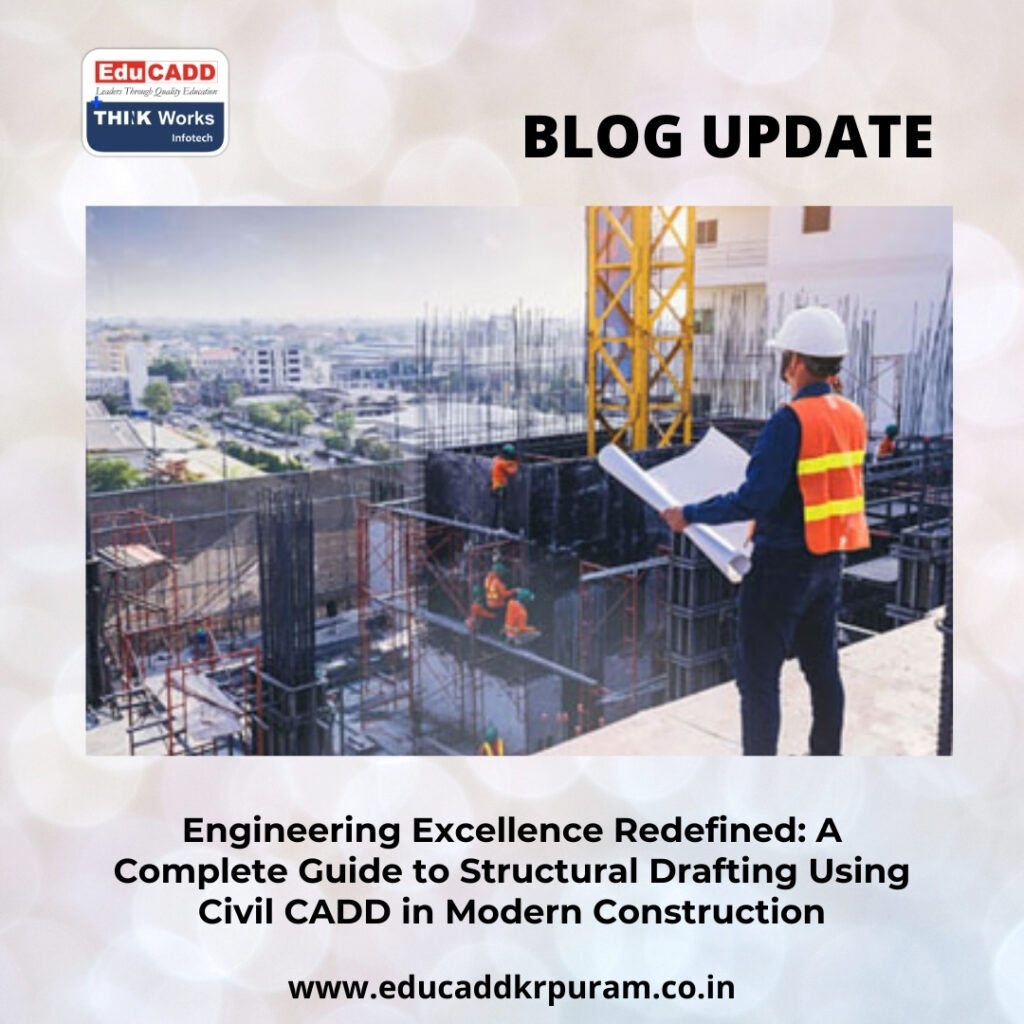
Structural Drafting Using Civil CADD
In a fast-paced construction environment, time and precision determine success. Traditional hand drafting demanded patience and repetitive effort, yet digital solutions have reshaped the workflow. Structural drafting using Civil CADD allows engineers and drafters to create, modify, and coordinate drawings with greater speed and accuracy. As projects grow more complex and timelines become tighter, this skill continues to gain importance across residential, commercial, and infrastructure sectors. This comprehensive blog explores the principles, workflow, tools, applications, advantages, and future scope of structural drafting using Civil CADD in depth.
1. The Foundation of Structural Drafting Using Civil CADD
Structural drafting using Civil CADD begins with understanding structural engineering fundamentals. Engineers calculate loads, bending moments, shear forces, and material strengths. However, these calculations must be translated into visual drawings that contractors can interpret easily. Structural drafting using Civil CADD bridges that gap between theory and execution.
The process involves preparing structural layouts, sectional drawings, reinforcement details, and schedules. Civil CADD software provides a digital platform that ensures scale accuracy and consistent formatting. Drafters use predefined units and drawing standards to maintain uniformity across sheets. Because of this digital precision, structural drafting using Civil CADD reduces discrepancies that often occur in manual drafting.
Moreover, digital drafting improves adaptability. When engineers revise column sizes or beam depths, drafters can update drawings without recreating entire plans. This flexibility enhances productivity and supports efficient project management.
2. Why Structural Drafting Matters in Construction Projects
Every construction project depends on accurate structural documentation. Structural drafting using Civil CADD ensures that structural elements align with architectural designs and safety codes. Without proper drafting, site teams may misinterpret design intentions, which can lead to costly errors.
Detailed structural drawings guide contractors during reinforcement placement and concrete casting. Structural drafting using Civil CADD presents information in a clear and organized format. This clarity reduces confusion and improves site coordination. As a result, construction proceeds smoothly and safely.
Furthermore, documentation plays a critical role in project approvals. Authorities require precise structural drawings before granting construction permits. Structural drafting using Civil CADD helps professionals meet regulatory standards while maintaining technical excellence.
3. Key Software Features That Enhance Drafting Accuracy
Civil CADD offers several powerful tools that streamline drafting tasks. Structural drafting using Civil CADD relies on commands such as line, arc, polyline, offset, trim, extend, and mirror. These commands help create accurate geometrical shapes and structural layouts.
Layer management improves organization. Drafters can separate beams, columns, slabs, and reinforcement details into distinct layers. Structural drafting using Civil CADD becomes easier to review and edit when elements remain organized systematically. Additionally, dimensioning tools ensure precise measurement representation.
Blocks and templates enhance efficiency. Frequently used components, such as column cross sections or footing details, can be reused across multiple drawings. This feature saves time and ensures consistency in structural drafting using Civil CADD.
4. Drafting Structural Foundations with Confidence
Foundation drawings represent the starting point of any structure. Structural drafting using Civil CADD allows drafters to prepare detailed foundation layouts that include footing dimensions, depth levels, and reinforcement specifications. Accurate foundation plans ensure proper load transfer to the soil.
Drafters include sectional views to illustrate reinforcement placement clearly. Structural drafting using Civil CADD enables easy modifications when soil conditions require design adjustments. Engineers can update footing sizes, and the changes reflect immediately in the drawings.
Additionally, digital drafting improves readability. Clear annotations and dimension styles enhance communication between design and construction teams. Structural drafting using Civil CADD therefore strengthens the reliability of foundation documentation.
5. Column Layouts and Structural Grid Systems
Columns form the vertical backbone of a structure. Structural drafting using Civil CADD ensures accurate positioning of columns according to grid references. Column layout drawings show exact dimensions and alignment with architectural spaces.
Precise drafting prevents misalignment during construction. Structural drafting using Civil CADD allows drafters to cross-check column positions using snap and alignment tools. When structural calculations change, updates can be implemented efficiently.
Grid systems further enhance coordination. Structural drafting using Civil CADD integrates grid lines into layouts, helping site engineers maintain accuracy during execution. This systematic approach minimizes construction deviations.
6. Beam Detailing and Load Distribution Clarity
Beams distribute loads from slabs to columns. Structural drafting using Civil CADD ensures detailed representation of beam sizes, spans, and reinforcement patterns. Clear sectional drawings illustrate stirrup spacing and main reinforcement placement.
Accurate beam detailing improves structural stability. Structural drafting using Civil CADD helps engineers verify reinforcement arrangements before final approval. This digital clarity reduces the risk of site errors.
Furthermore, digital drafting allows quick adjustments. If engineers revise beam depths or reinforcement quantities, drafters can update drawings without compromising alignment. Structural drafting using Civil CADD therefore enhances both efficiency and precision.
7. Slab Reinforcement and Floor Plan Documentation
Slabs require careful reinforcement planning to withstand loads effectively. Structural drafting using Civil CADD enables accurate slab layout preparation. Drafters specify reinforcement direction, spacing, and bar diameters clearly.
Floor plans often repeat across multiple levels. Structural drafting using Civil CADD allows duplication of layouts while maintaining uniform standards. This capability saves significant drafting time.
Clear labeling ensures site teams understand reinforcement placement easily. Structural drafting using Civil CADD strengthens communication and prevents confusion during slab construction.
8. Reinforcement Schedules and Quantity Control
Reinforcement schedules support cost estimation and procurement planning. Structural drafting using Civil CADD assists in generating accurate bar bending schedules that summarize bar lengths, shapes, and quantities.
These schedules help reduce material wastage. Contractors rely on precise documentation to manage steel procurement efficiently. Structural drafting using Civil CADD simplifies schedule revisions when design changes occur.
Because digital calculations reduce arithmetic errors, reinforcement documentation remains reliable. Structural drafting using Civil CADD therefore contributes to both safety and budget control.
9. Coordination Between Structural and Architectural Designs
Structural and architectural drawings must align perfectly. Structural drafting using Civil CADD ensures that column placements match room layouts and beam depths align with ceiling heights. Overlaying drawings helps detect conflicts early.
Early clash detection saves time and prevents expensive modifications. Structural drafting using Civil CADD enhances collaboration among architects, engineers, and project managers.
Clear documentation promotes teamwork. Structural drafting using Civil CADD supports integrated project delivery by maintaining accurate alignment between disciplines.
10. Maintaining Quality and Reducing Drafting Errors
Quality assurance remains essential in structural documentation. Structural drafting using Civil CADD allows drafters to verify dimensions, reinforcement spacing, and material specifications carefully. Organized layers help identify missing elements.
Review processes improve drawing reliability. Structural drafting using Civil CADD enables easy corrections without affecting the overall layout. This flexibility strengthens final output quality.
By adopting systematic checking methods, professionals maintain high standards in structural drafting using Civil CADD and reduce construction risks significantly.
11. Advantages Over Traditional Hand Drafting
Manual drafting required extensive time and repetitive effort. Structural drafting using Civil CADD eliminates many of those challenges. Digital tools enhance speed and maintain measurement accuracy.
Editing becomes straightforward. Structural drafting using Civil CADD allows real-time modifications and easy file sharing. Electronic storage simplifies documentation management.
Consistency improves professionalism. Structural drafting using Civil CADD ensures uniform text styles, dimension formats, and sheet layouts. These advantages make digital drafting indispensable in modern construction.
12. Career Growth and Professional Opportunities
The demand for skilled drafting professionals continues to expand. Structural drafting using Civil CADD opens opportunities in construction firms, consultancy companies, and infrastructure projects. Professionals can pursue roles such as structural CAD technician or detailing specialist.
Experience and expertise increase career prospects. Structural drafting using Civil CADD strengthens technical competence and industry relevance. Many professionals advance into project coordination roles over time.
As infrastructure development grows, the value of structural drafting using Civil CADD remains strong in both domestic and international markets.
13. Integration with Advanced Technologies
Construction technology continues to evolve rapidly. Structural drafting using Civil CADD integrates with 3D modeling and building information modeling systems. This integration enhances visualization and design accuracy.
Digital collaboration tools improve communication among stakeholders. Structural drafting using Civil CADD supports data exchange and coordinated workflows. Engineers can analyze structural performance more effectively.
Adapting to technological advancements ensures long-term professional growth. Structural drafting using Civil CADD remains a core competency within a broader digital ecosystem.
14. The Future of Structural Drafting Using Civil CADD
The future of structural documentation will involve automation and intelligent tools. Structural drafting using Civil CADD will continue to evolve alongside digital innovation. Cloud-based collaboration will enable real-time updates across teams.
Artificial intelligence may assist in identifying drafting inconsistencies and improving design efficiency. Sustainable construction practices will influence detailing methods and material documentation. Structural drafting using Civil CADD will adapt to meet these evolving demands.
Continuous learning will remain essential. Professionals who upgrade their skills will thrive in the changing construction landscape. Structural drafting using Civil CADD will continue serving as a foundational pillar of structural engineering excellence.
Conclusion
Structural Drafting Using Civil CADD stands at the center of modern structural engineering practice. It transforms analytical calculations into clear, accurate, and build-ready drawings that guide construction teams effectively. From foundation layouts to reinforcement schedules, every structural component depends on precise drafting.
Digital tools enhance efficiency, coordination, and quality control. Structural drafting using Civil CADD reduces errors, improves collaboration, and accelerates project timelines. As construction complexity increases, this expertise becomes even more valuable.
Professionals who master structural drafting using Civil CADD contribute significantly to safer, stronger, and more efficient buildings. In an industry driven by accuracy and innovation, this skill continues to shape the future of construction documentation and engineering success.

