
The Complete Blueprint for Resource Planning and Leveling in Primavera P6: Turning Schedules into Execution Powerhouses
Primavera P6 Resource Planning stands at the center of professional project control in today’s fast-moving industries. Organizations no longer compete only on design quality or technical capability; they compete on how efficiently they use their resources. Skilled labor, specialized equipment, and critical materials are limited assets. When these assets are mismanaged, project timelines slip and costs escalate rapidly.
Primavera P6 provides a structured environment where planners can forecast resource demand, analyze constraints, and balance workloads before execution begins. Instead of relying on assumptions, project teams can build schedules driven by measurable capacity and realistic productivity. Resource Planning and Leveling in Primavera P6 therefore transforms a static schedule into a living execution strategy.
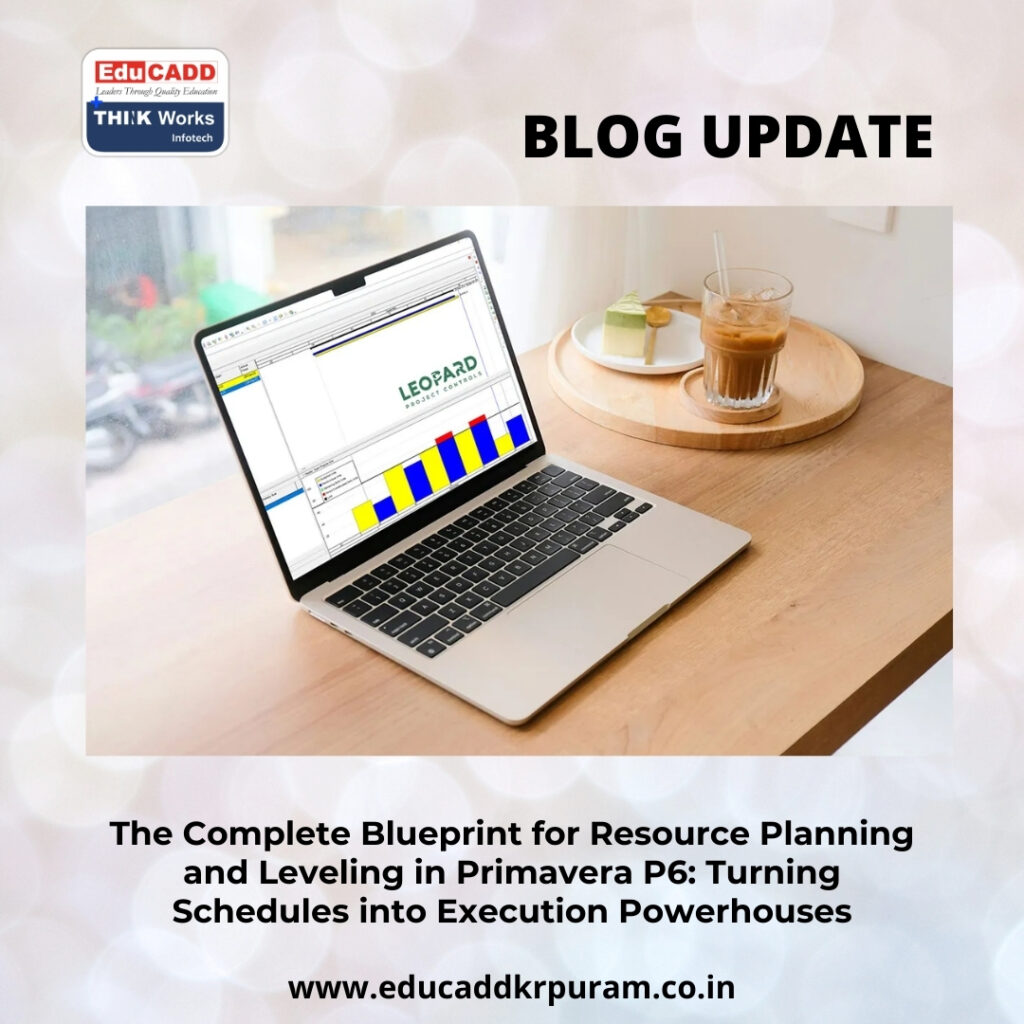
Primavera P6 Resource Planning
This detailed guide explores every important dimension of Primavera P6 Resource Planning, including configuration, optimization, enterprise applications, cost integration, and advanced control methods. Each section explains the logic behind the system and highlights how planners can use it effectively to drive project success.
1. Building the Strategic Foundation of Resource Planning
Resource Planning and Leveling in Primavera P6 begins with establishing a strong structural framework. Before assigning resources, planners must understand how Primavera connects activity duration, effort, and unit allocation. The software operates on the principle that duration and resource effort share a direct relationship.
When planners assign labor or equipment to activities, Primavera calculates the workload based on units per time period. If the project uses effort-driven scheduling, increasing the number of assigned resources reduces activity duration automatically. This functionality allows planners to simulate multiple workforce scenarios without rebuilding the schedule.
A strategic foundation also includes organizing the Enterprise Resource Dictionary logically. Resources should be grouped by discipline, department, or cost center. Clear categorization enhances reporting clarity and simplifies enterprise-level analysis. Without this structural preparation, Resource Planning and Leveling in Primavera P6 becomes inefficient and error-prone.
Therefore, the first step toward mastery involves designing a resource architecture that reflects real organizational capacity.
2. Aligning Resource Planning with Project Objectives
Every project has unique constraints and performance goals. Primavera P6 Resource Planning must align with those objectives from the start. If the project demands aggressive deadlines, planners may prioritize speed over cost efficiency. Conversely, cost-sensitive projects may require optimized manpower distribution rather than schedule compression.
Primavera allows planners to evaluate how resource allocation decisions influence both time and cost outcomes. By reviewing workload histograms and budget projections, teams can identify trade-offs early. This early visibility reduces surprises during execution.
Additionally, aligning resource planning with project objectives enhances stakeholder communication. Clients gain confidence when schedules reflect realistic capacity rather than optimistic assumptions. Therefore, Resource Planning and Leveling in Primavera P6 should always support broader strategic goals rather than operate as a standalone scheduling function.
3. Structuring Labor, Equipment, and Material Resources
Effective Resource Planning and Leveling in Primavera P6 requires a clear understanding of resource categories. Labor resources represent human effort and are usually measured in hours. Equipment, categorized as non-labor resources, represents machinery and tools that support activities. Material resources track consumables and bulk quantities.
Each category behaves differently in the system. Labor and non-labor resources are typically leveled to resolve conflicts. Material resources, however, focus more on cost tracking and quantity forecasting. Recognizing these distinctions ensures accurate planning outcomes.
Proper structuring also involves defining maximum units per time period. This value represents the total available capacity for each resource. If assigned units exceed this threshold, Primavera identifies the conflict immediately.
When resource structures reflect real operational limits, Resource Planning and Leveling in Primavera P6 produces reliable and meaningful results.
4. Designing Accurate Resource Calendars
Calendars play a decisive role in Resource Planning and Leveling in Primavera P6. Different teams may follow varying work schedules. Some operate six days per week, while others follow five-day rotations. Equipment may undergo maintenance shutdowns, and specialized technicians may work only during certain shifts.
Primavera allows planners to assign custom calendars to each resource. These calendars define working days, holidays, and shift durations. By aligning resource calendars with actual operational patterns, planners avoid unrealistic scheduling.
For example, assigning a seven-day activity to a crew that works five days per week automatically extends duration according to the defined calendar. This automated adjustment improves accuracy significantly.
Therefore, precise calendar configuration strengthens Resource Planning and Leveling in Primavera P6 and ensures schedule feasibility.
5. Estimating Productivity and Effort with Confidence
Accurate productivity estimation strengthens every aspect of Resource Planning and Leveling in Primavera P6. Instead of guessing durations, planners calculate the effort required to complete each activity. Historical data, site conditions, and team capability should inform these calculations.
When productivity rates are realistic, the schedule reflects actual performance potential. Primavera allows planners to input budgeted units, which represent total effort required. Dividing total effort by units per time period determines activity duration.
This data-driven approach minimizes future adjustments. It also enhances cost forecasting because resource rates directly influence budget projections.
By focusing on measurable effort rather than estimated duration alone, Resource Planning and Leveling in Primavera P6 becomes a precision-driven management tool.
6. Monitoring Resource Utilization with Visual Tools
Primavera provides visual dashboards that support continuous monitoring. Resource Planning and Leveling in Primavera P6 relies heavily on these analytical features. The Resource Usage Profile displays graphical histograms comparing demand versus availability.
When demand exceeds availability, the histogram highlights the conflict clearly. This immediate visibility allows planners to adjust sequencing or reallocate manpower proactively.
The Resource Usage Spreadsheet complements graphical analysis with numerical detail. Planners can review daily, weekly, or monthly allocation values to pinpoint overload periods.
Regular monitoring ensures that conflicts do not accumulate unnoticed. Consequently, Resource Planning and Leveling in Primavera P6 supports proactive rather than reactive management.
7. Understanding the Mechanics of Resource Leveling
Resource leveling forms the corrective component of Resource Planning and Leveling in Primavera P6. Once conflicts appear, leveling adjusts activity dates to eliminate overallocation.
Primavera evaluates float values, activity priorities, and logical relationships before making adjustments. Activities with greater float usually shift first, preserving critical tasks whenever possible.
The leveling engine respects logic links between activities, ensuring that dependency structures remain intact. Planners can also define leveling priority manually, protecting high-importance tasks from delays.
Understanding how the system selects activities for adjustment enables planners to predict outcomes accurately. Therefore, mastering leveling logic enhances the effectiveness of Resource Planning and Leveling in Primavera P6.
8. Configuring Leveling Settings for Optimal Results
Leveling outcomes depend heavily on configuration choices. Resource Planning and Leveling in Primavera P6 includes several adjustable parameters that influence behavior.
One key setting allows leveling only within available float. This option protects project completion dates by preventing extension beyond planned milestones. Another option allows leveling beyond float if resource limits demand it.
Activity priority also influences decision-making. By assigning higher priority values to critical tasks, planners ensure those tasks remain stable during adjustments.
Testing multiple scenarios strengthens confidence in final decisions. Comparing leveled schedules against baseline versions highlights changes clearly.
Strategic configuration transforms Resource Planning and Leveling in Primavera P6 from a simple automation feature into a controlled optimization process.
9. Evaluating the Impact on Critical Path
Resource adjustments often influence the project’s critical path. Resource Planning and Leveling in Primavera P6 may convert previously non-critical activities into critical ones if float is consumed during leveling.
After each leveling run, planners should review total float values and identify changes in critical sequences. This review ensures that risk exposure remains visible.
If leveling extends the completion date, managers must decide whether to increase manpower or accept delay. Primavera supports scenario comparison, enabling teams to evaluate different staffing strategies.
Thus, Resource Planning and Leveling in Primavera P6 becomes an iterative evaluation process rather than a single action.
10. Differentiating Between Smoothing and Leveling
Although closely related, smoothing and leveling serve different objectives within Resource Planning and Leveling in Primavera P6. Resource smoothing adjusts tasks within available float to balance workload while preserving final deadlines.
Full leveling, however, may shift completion dates if necessary to resolve conflicts completely.
Selecting the appropriate technique depends on contractual commitments and risk tolerance. For fixed-deadline projects, smoothing often proves more suitable. For capacity-driven projects, full leveling may be required.
Understanding this distinction empowers planners to use Resource Planning and Leveling in Primavera P6 strategically.
11. Integrating Cost Control with Resource Planning
Resources drive project cost directly. Labor rates, equipment rentals, and material quantities influence budget performance significantly. Resource Planning and Leveling in Primavera P6 integrates these financial dimensions seamlessly.
When durations shift during leveling, cost distribution adjusts automatically. This alignment supports accurate earned value management and cash flow forecasting.
Balanced schedules reduce overtime expenses and emergency mobilization costs. By planning resources effectively, organizations enhance profitability while maintaining schedule control.
Therefore, financial integration strengthens the overall value of Resource Planning and Leveling in Primavera P6.
12. Managing Resources Across Multiple Projects
Large organizations often manage several projects simultaneously. Primavera P6 Resource Planning supports enterprise-wide resource visibility.
Shared resource pools allow managers to analyze cumulative demand across all active schedules. This perspective prevents cross-project overallocation.
Executives can forecast hiring needs and equipment procurement requirements based on future workload trends. Such foresight enhances long-term planning stability.
Enterprise integration expands Resource Planning and Leveling in Primavera P6 beyond individual project control into strategic portfolio management.
13. Avoiding Common Implementation Pitfalls
Despite its capabilities, improper use can weaken results. Resource Planning and Leveling in Primavera P6 requires discipline and accurate data.
Common issues include excessive date constraints, outdated calendars, unrealistic productivity assumptions, and failure to update progress regularly. These errors distort leveling outcomes.
Regular audits and structured training programs help maintain data integrity. Planners should review settings before each leveling run to avoid unintended consequences.
By maintaining disciplined practices, teams protect the reliability of Resource Planning and Leveling in Primavera P6.
14. Leveraging Advanced Optimization Techniques
Experienced professionals maximize Resource Planning and Leveling in Primavera P6 through advanced features. Role-based planning enables assignment at a generic level before confirming specific individuals.
Global Change tools allow bulk adjustments efficiently, saving time during revisions. Resource curves simulate realistic distribution patterns, enhancing accuracy.
Scenario analysis empowers managers to compare alternative manpower strategies before finalizing commitments.
These advanced techniques elevate resource management from operational scheduling to strategic optimization. As complexity increases, leveraging these features becomes essential for competitive performance.
Conclusion
Primavera P6 Resource Planning transforms project schedules into intelligent execution frameworks. By aligning manpower, equipment, and materials with realistic timelines, organizations gain predictability and control.
In today’s competitive environment, success depends on disciplined planning, accurate data, and proactive conflict resolution. Primavera P6 offers the tools required to manage resources strategically, but effective implementation requires expertise and consistent monitoring.
When mastered, Resource Planning and Leveling in Primavera P6 delivers balanced workloads, improved cost efficiency, and stronger stakeholder confidence. Ultimately, structured resource management becomes the driving force behind successful and sustainable project delivery.

