
Measured for Mastery: How Dimensioning in Mechanical Drawings Shapes Precision Engineering
Every successful Mechanical Drawing Dimensioning Precision begins with a drawing, yet only dimensioning gives that drawing authority. Lines outline form, but dimensions define reality. They establish measurable values that guide machining, inspection, assembly, and long-term maintenance. When dimensions are precise, organized, and purposeful, they eliminate uncertainty and align every stakeholder with the same technical intent. Conversely, weak dimensioning creates confusion, delays, and financial loss. In modern engineering environments where speed and accuracy determine competitiveness, the discipline of dimensioning stands at the center of operational excellence.
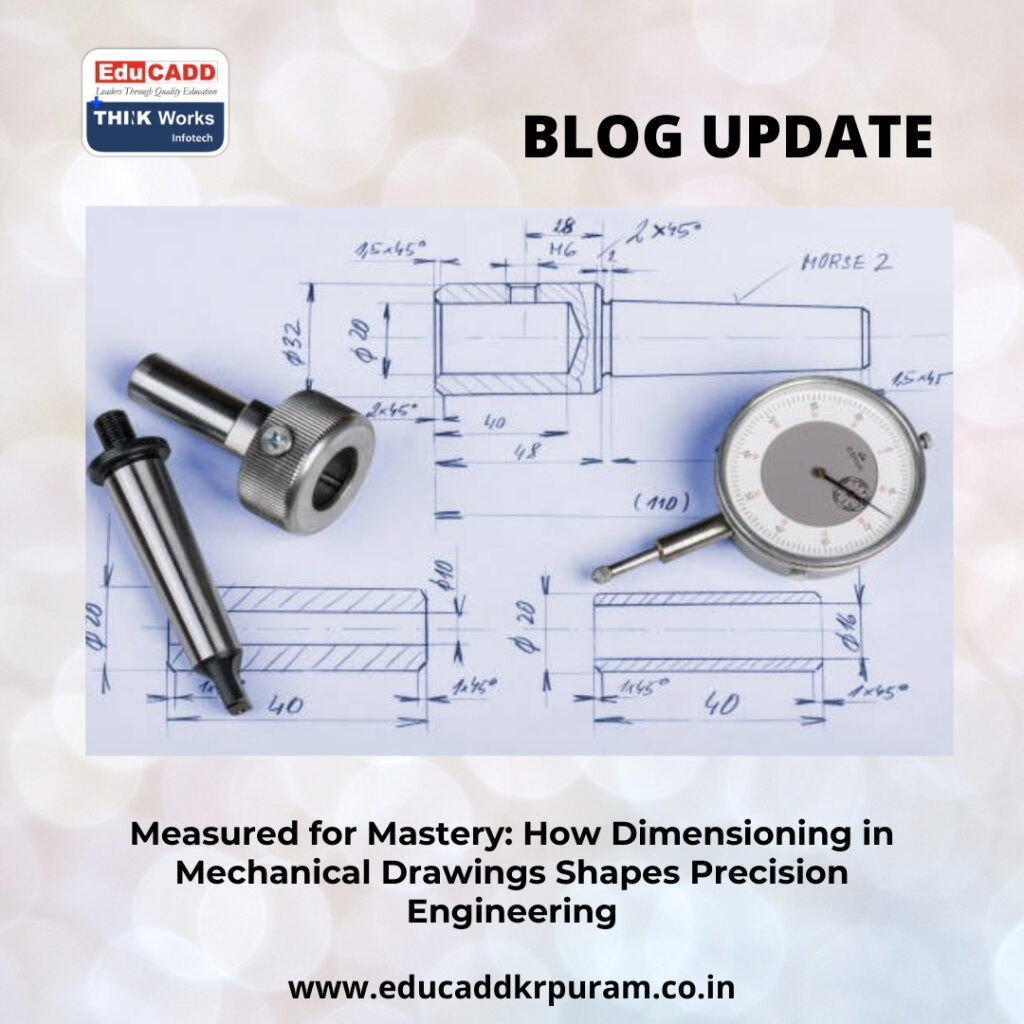
Mechanical Drawing Dimensioning Precision
This in-depth article examines how structured measurement practices elevate communication, strengthen quality, reduce cost, support automation, and sustain innovation. By understanding dimensioning as a strategic tool rather than a drafting afterthought, engineers unlock the full potential of mechanical design.
1. Establishing a Universal Technical Language
Mechanical Drawing Dimensioning Precision serve diverse teams that include designers, machinists, procurement specialists, and quality inspectors. While graphical representation communicates shape, dimensioning delivers quantifiable clarity. It specifies exact lengths, widths, diameters, angles, and depths so that every reader interprets the design identically.
Clear measurement placement prevents misunderstandings across departments. For example, when a hole diameter is defined precisely with its tolerance, both machining and inspection teams understand the requirement without discussion. This shared clarity streamlines collaboration. Moreover, dimensioning ensures that verbal explanations become unnecessary because the drawing itself conveys complete instructions. In this way, it creates a universal engineering language grounded in measurable facts rather than subjective interpretation.
2. Converting Design Intent into Production Reality
Ideas remain theoretical until they can be manufactured. Dimensioning converts creative concepts into practical instructions that machines can execute. Without numeric values, a design remains an artistic sketch rather than a technical document.
Production systems rely on specific measurements to cut, drill, and shape materials accurately. CNC programs, for instance, interpret digital dimensions directly from CAD models. When those values are incomplete or inconsistent, fabrication errors follow. However, when engineers define measurements systematically, production flows smoothly from design to final part. Dimensioning therefore acts as the bridge that connects conceptual thinking with physical realization.
3. Driving Precision in Machining Operations
Machining accuracy depends entirely on exact numerical guidance. A deviation of even a fraction of a millimeter can affect fit and performance. Dimensioning defines target values that guide tool selection, cutting paths, and inspection checks during manufacturing.
Well-structured dimension layouts also help machinists verify intermediate steps. By measuring critical features at different stages, they ensure alignment with specifications before completing the part. This proactive verification prevents costly corrections later. Additionally, consistent reference points reduce cumulative measurement errors. Through disciplined dimensioning, engineers maintain tight control over machining precision and product consistency.
4. Balancing Performance Through Tolerance Management
Every manufactured part experiences slight variation. Tolerances define the acceptable range within which those variations remain functional. Effective dimensioning integrates tolerance limits that reflect both performance needs and manufacturing capability.
If tolerances are excessively strict, production costs rise because additional machining time and inspection effort become necessary. On the other hand, overly loose tolerances may compromise reliability. Engineers must evaluate function, load conditions, and material behavior before assigning limits. Clear tolerance information empowers quality teams to assess compliance objectively. By carefully balancing accuracy and practicality, dimensioning protects both functionality and cost efficiency.
5. Ensuring Compatibility in Multi-Part Assemblies
Most mechanical systems consist of interconnected components that must fit seamlessly. Dimensioning defines the spatial relationships between these parts. Hole spacing, shaft diameters, and clearance gaps all depend on precise measurement.
When Mechanical Drawing Dimensioning Precision are accurate and logically organized, assembly technicians can align parts quickly without force or adjustment. Properly defined clearances reduce friction and wear during operation. Furthermore, consistent measurement references prevent misalignment across production batches. As assemblies grow more complex, reliable dimensioning becomes increasingly essential to maintain structural harmony and operational smoothness.
6. Preventing Costly Manufacturing Errors
Inaccurate drawings often lead to material waste and machine downtime. Poorly defined dimensions create ambiguity that results in incorrect machining operations. By contrast, comprehensive dimensioning eliminates uncertainty and reduces production risk.
Clear measurement placement allows operators to interpret instructions confidently. As a result, first-pass yield improves, and rework decreases. Reduced scrap translates directly into financial savings. Moreover, precise documentation shortens troubleshooting time when issues arise. Instead of guessing design intent, teams can reference exact numerical specifications. Effective dimensioning thus acts as a preventive mechanism that safeguards operational budgets.
7. Strengthening Inspection and Quality Assurance Systems
Quality assurance relies on measurable standards. Inspectors compare manufactured parts against specified dimensions to confirm compliance. Without clear measurement references, inspection becomes inconsistent and unreliable.
Dimensioning provides objective criteria for evaluation. Tools such as micrometers, calipers, and coordinate measuring machines depend on exact numerical benchmarks. Additionally, documented dimensions support traceability in regulated industries. When audits occur, organizations can demonstrate that every component meets defined requirements. Through disciplined measurement practices, companies maintain product integrity and customer confidence.
8. Supporting Global Standardization and Compliance
Engineering projects frequently involve suppliers and partners across different regions. Standardized dimensioning practices ensure that drawings remain universally understandable. Recognized drafting conventions guide how measurements appear, including arrow placement, units, and tolerance notation.
Adherence to standards eliminates regional interpretation differences. Suppliers can manufacture components accurately without extensive clarification. Furthermore, standardized documentation reflects professional discipline and regulatory awareness. In competitive global markets, consistent dimensioning strengthens collaboration and reduces risk.
9. Enhancing Drawing Clarity and Readability
Technical drawings must communicate efficiently. Overcrowded measurement layouts can overwhelm readers and obscure essential information. Effective dimensioning prioritizes organization and visual balance.
Engineers should group related measurements logically and avoid duplication. Clear spacing and consistent alignment improve readability. As a result, design reviews become more efficient. Stakeholders identify issues quickly because dimensions appear in predictable locations. Thoughtful presentation ensures that clarity accompanies accuracy, reinforcing the drawing’s authority.
10. Aligning Design Decisions with Cost Efficiency
Mechanical Drawing Dimensioning Precision directly influences production economics. Tight tolerances and complex measurement requirements increase machining time and inspection effort. Engineers must therefore align dimensional precision with functional necessity.
Strategic planning prevents unnecessary over-engineering. For example, non-critical surfaces may allow broader tolerance ranges without affecting performance. By focusing precision where it truly matters, companies control manufacturing expenses. Additionally, accurate measurement planning reduces material waste. In competitive industries, cost-conscious dimensioning supports profitability while maintaining quality standards.
11. Integrating with Digital Design and Automation
Modern engineering environments rely heavily on digital tools. CAD systems convert dimensional data into 3D models and manufacturing instructions. Any measurement error embedded in the model propagates through automated processes.
Parametric modeling further emphasizes accurate dimension control. Designers modify numerical parameters to test alternative configurations quickly. Reliable dimension structures allow efficient updates without compromising design integrity. In automated factories, robotics and CNC machines depend entirely on digital measurement inputs. As technology advances, dimensioning becomes the numerical backbone of integrated production systems.
12. Safeguarding Structural Strength and Operational Safety
Mechanical components operate under stress, temperature variation, and vibration. Dimensioning defines wall thickness, reinforcement spacing, and load-bearing areas that determine structural integrity.
Precise measurement ensures that parts withstand intended forces without failure. Inadequate thickness or improper clearance can lead to overheating or mechanical interference. Engineers must calculate dimensions carefully to meet safety margins. By documenting those calculations clearly within drawings, they provide a transparent reference for future verification. Accurate dimensioning therefore protects both equipment reliability and human safety.
13. Enabling Efficient Maintenance and Product Evolution
Products require servicing and occasional redesign throughout their lifecycle. Clear dimensioning simplifies replacement and modification tasks. Maintenance technicians rely on documented measurements to source compatible components quickly.
When organizations retain consistent dimensional records, they support long-term improvement initiatives. Engineers can refine existing designs by adjusting specific measurements without disrupting overall compatibility. Detailed documentation preserves institutional knowledge, even when personnel change. Consequently, disciplined dimensioning enhances sustainability and operational continuity.
14. Fueling Innovation Through Structured Measurement
Innovation thrives when experimentation rests on reliable data. Dimensioning provides a structured measurement framework that allows engineers to test improvements methodically. By adjusting dimensions and analyzing results, teams refine performance with confidence.
Precise documentation ensures that prototype modifications remain traceable. Engineers can compare versions objectively because each variation is numerically defined. This analytical approach accelerates research and development. Instead of relying on intuition alone, teams build innovation on measurable evidence. Through structured dimensioning, creativity and precision work together to advance engineering capability.
Conclusion
Mechanical Drawing Dimensioning Precision stands as the foundation of mechanical drawing effectiveness. It transforms visual sketches into authoritative technical documents that guide manufacturing, inspection, and assembly. By delivering measurable clarity, it aligns teams, reduces errors, and ensures functional compatibility. Effective tolerance management balances performance with cost efficiency. Organized layouts enhance readability, while standardized practices promote global collaboration. In digital manufacturing environments, dimensioning integrates seamlessly with automation and parametric modeling. Most importantly, it safeguards safety, reliability, and product longevity. When engineers treat dimensioning as a strategic discipline rather than a routine drafting task, they strengthen every stage of the engineering process. Precision in measurement ultimately defines excellence in mechanical design, turning thoughtful concepts into dependable, high-performing realities.

