
Engineering the Skyline: Powerful Civil CADD Strategies for Designing High-Rise Buildings
The skyline of modern cities reflects technological progress, architectural creativity, and engineering precision. Civil CADD High-Rise Design dominate urban landscapes because they provide efficient land use and support growing populations in densely populated regions. However, constructing these tall structures is far more complex than building traditional low-rise developments. Engineers must ensure that every structural element, foundation component, and infrastructure system works together perfectly. To achieve this level of precision, the construction industry relies heavily on digital technologies, particularly Civil CADD.
Civil CADD, which stands for Computer-Aided Design and Drafting in civil engineering, has become a vital tool for planning and designing large construction projects. It enables engineers to develop accurate drawings, technical plans, and digital models that represent every detail of a structure before construction begins. In high-rise building projects, this level of accuracy is extremely important because even small errors can create significant structural issues or construction delays. By using advanced Civil CADD methods, engineers can visualize the entire building, analyze its components, and refine the design until it meets safety and performance standards.
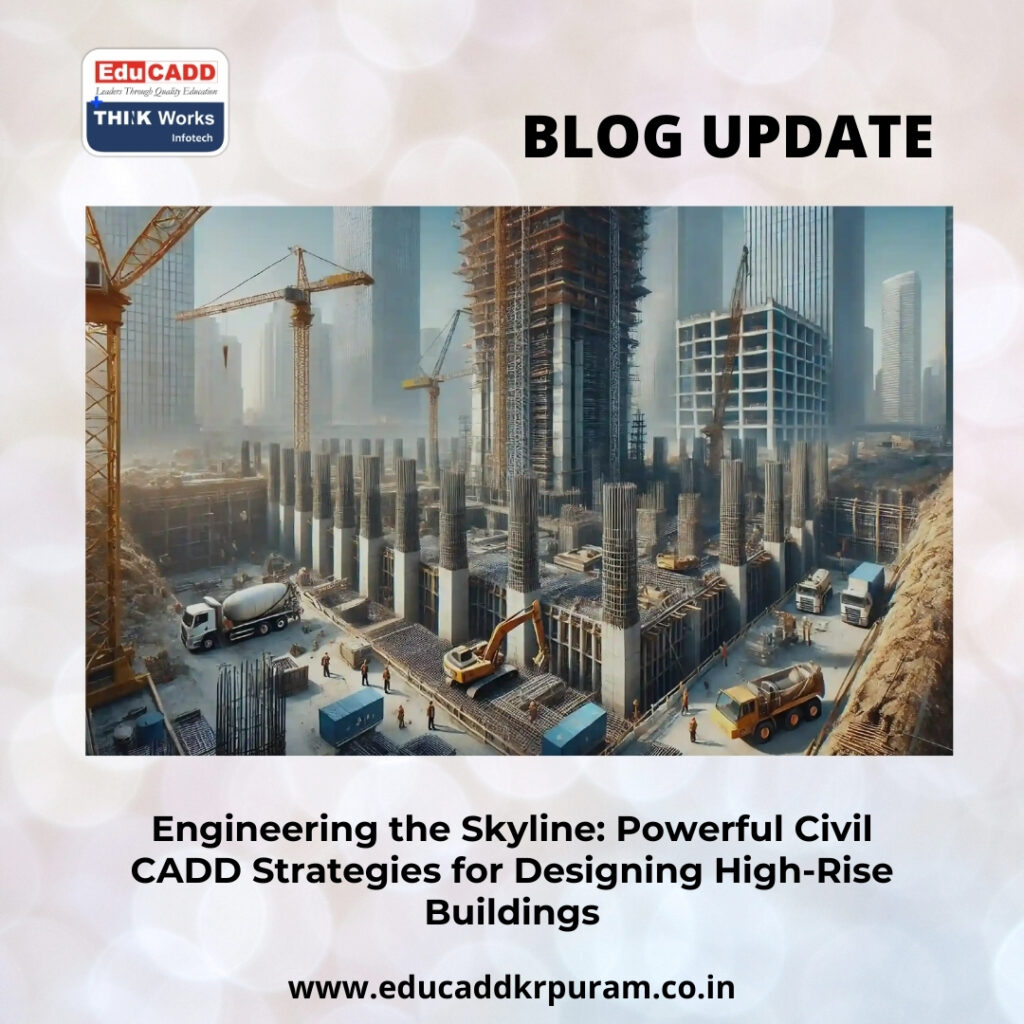
Civil CADD High-Rise Design
Furthermore, Civil CADD High-Rise Design improves efficiency throughout the project lifecycle. Engineers can produce multiple design variations, test structural ideas, and modify plans without starting from scratch. This flexibility reduces time and effort while improving overall project accuracy. As cities continue to grow upward rather than outward, the importance of Civil CADD techniques for high-rise buildings will only increase. Understanding these techniques allows engineers to design safer, smarter, and more sustainable skyscrapers that define the future of urban development.
The Growing Importance of Civil CADD in High-Rise Construction
Civil engineering projects have evolved significantly over the past few decades. Traditional drafting once depended on manual drawings created with rulers, compasses, and large drafting boards. Although these techniques required skill and patience, they often resulted in slower workflows and higher chances of error. The introduction of Civil CADD changed this process completely by digitizing the design environment.
In high-rise construction, engineers must consider numerous structural factors such as vertical load distribution, lateral forces caused by wind, seismic resistance, and building materials. Civil CADD software enables engineers to convert these complex calculations into precise technical drawings. These drawings serve as the foundation for the entire construction process because contractors rely on them to build structural components accurately.
Civil CADD also enhances design visualization. Engineers can produce detailed layouts that show the arrangement of beams, columns, and floor systems. When these elements are clearly illustrated, project teams can understand how different parts of the building interact. This clarity reduces confusion during construction and helps avoid costly modifications later.
Another reason Civil CADD plays such an important role in high-rise construction is its ability to streamline communication among professionals. When engineers, architects, and consultants collaborate on the same digital platform, they can exchange ideas quickly and coordinate design changes effectively. This collaborative environment improves project efficiency and ensures that the final design meets both engineering standards and architectural goals.
Site Analysis and Planning Using Civil CADD
Every Civil CADD High-Rise Design begins with careful site analysis and planning. Engineers must evaluate the land conditions, surrounding infrastructure, and environmental factors before designing the building structure. Civil CADD provides powerful tools that assist in analyzing these elements and preparing accurate site plans.
One of the first steps in site planning involves mapping the terrain of the construction area. Civil CADD software allows engineers to create digital maps that display property boundaries, roads, existing buildings, and utility lines. These maps help engineers understand how the new structure will integrate with the surrounding environment.
Topographic analysis is another crucial component of site planning. Civil CADD tools generate contour maps that illustrate elevation differences across the site. By studying these contours, engineers can determine how the terrain might affect the building’s foundation and drainage system. If the site has uneven ground levels, engineers can design grading solutions that create a stable construction platform.
Site planning also includes designing access routes for construction vehicles and future building occupants. Civil CADD helps engineers position roads, parking areas, and pedestrian pathways efficiently. Proper site planning ensures that the building operates smoothly after completion and remains accessible for maintenance activities.
Structural Design and Drafting for Skyscraper Strength
High-rise buildings must support tremendous loads because they contain multiple floors, heavy construction materials, and thousands of occupants. Engineers rely on structural design principles to ensure that these buildings remain stable under various conditions. Civil CADD tools play a crucial role in translating structural calculations into detailed engineering drawings.
Structural drafting involves designing elements such as columns, beams, floor slabs, shear walls, and core systems. These components work together to distribute loads evenly throughout the building. Civil CADD software allows engineers to prepare precise layouts that show the exact location and dimensions of each structural element.
Wind forces become more significant as building height increases. Engineers must design structural systems that resist lateral movement caused by strong winds. Civil CADD helps illustrate these systems clearly, allowing engineers to visualize how loads transfer from the upper floors down to the foundation.
Seismic design is another important factor in many regions. Buildings located in earthquake-prone areas require flexible structural systems that can absorb vibrations and prevent collapse. Through Civil CADD drafting, engineers can incorporate reinforcement details and structural configurations that improve earthquake resistance.
Designing Strong Foundations for Tall Structures
A Civil CADD High-Rise Design is only as strong as the foundation supporting it. Foundations must transfer the weight of the entire structure safely into the ground. Because skyscrapers carry enormous loads, foundation design becomes one of the most critical phases of the project.
Civil CADD techniques assist engineers in creating foundation layouts that match both structural requirements and soil conditions. Engineers often rely on pile foundations, raft foundations, or combined foundation systems for tall buildings. Civil CADD drawings illustrate the arrangement of piles, footings, and reinforcement bars required to support the structure.
Soil testing data also plays a vital role in foundation design. Geotechnical engineers analyze soil properties to determine its bearing capacity and settlement characteristics. Civil CADD software allows this information to be integrated into foundation plans, ensuring that the design accounts for real ground conditions.
Clear foundation drawings guide contractors during excavation and construction. They show exact measurements, reinforcement details, and placement instructions that help maintain structural integrity.
Efficient Floor Layout Design in High-Rise Projects
Floor planning is an essential aspect of high-rise design because it determines how interior spaces will function. Engineers and architects work together to develop floor layouts that balance structural efficiency with occupant comfort. Civil CADD tools simplify this process by allowing designers to create accurate and flexible floor plans.
Digital drafting platforms allow engineers to draw room layouts, corridors, staircases, and service areas with precision. Designers can also include essential safety features such as emergency exits and fire escape routes. By visualizing these elements clearly, Civil CADD ensures that buildings comply with safety regulations.
Another important factor in high-rise floor planning is vertical circulation. Elevators and staircases must be strategically positioned to allow smooth movement between floors. Civil CADD helps engineers allocate adequate space for elevator shafts, mechanical rooms, and service ducts without interfering with structural components.
Infrastructure Systems in High-Rise Buildings
High-rise buildings rely on complex infrastructure networks to provide water supply, electricity, communication systems, and waste management. Engineers must plan these systems carefully to ensure efficient building operations.
Civil CADD tools allow engineers to design utility networks within the building structure. They can map water pipelines, electrical conduits, and drainage systems accurately. By visualizing these networks digitally, engineers avoid conflicts between infrastructure systems and structural elements.
Water supply planning requires special attention in tall buildings. Engineers must ensure that water pressure remains sufficient for upper floors. Civil CADD diagrams help design pumping systems and storage tanks that maintain reliable water distribution.
Three-Dimensional Visualization for Project Clarity
One of the most valuable advantages of Civil CADD technology is its ability to create three-dimensional models. These models allow engineers and clients to visualize the entire building before construction begins.
3D visualization helps project teams understand how structural elements, interior spaces, and external features will appear in reality. Stakeholders can explore the design from different angles and identify potential improvements.
This visualization also assists construction teams in planning the sequence of building activities. By studying the digital model, engineers can determine the most efficient way to assemble structural components.
Reinforcement Detailing for Structural Durability
Concrete structures require steel reinforcement to resist tensile forces and prevent cracking. Reinforcement detailing ensures that steel bars are placed correctly within concrete elements.
Civil CADD software allows engineers to create reinforcement layouts that specify bar sizes, spacing, and bending patterns. These drawings provide clear instructions for construction workers and improve the overall strength of the building.
Detailed reinforcement plans also help engineers calculate material quantities accurately, which improves project cost management.
Documentation and Engineering Standards
Accurate documentation forms the backbone of any large construction project. Civil CADD helps engineers prepare professional drawings that follow international drafting standards.
These documents include floor plans, structural sections, elevation drawings, and construction details. Clear documentation ensures that contractors interpret the design correctly and follow engineering specifications.
Digital records also support future maintenance and renovation activities.
Interdisciplinary Collaboration in High-Rise Projects
Civil CADD High-Rise Design buildings require teamwork between multiple engineering disciplines. Civil CADD platforms enable professionals to share and coordinate drawings efficiently.
Architects can update design features while structural engineers adjust load-bearing systems accordingly. Mechanical and electrical engineers can align their infrastructure plans with the building layout.
This collaborative workflow improves communication and reduces design conflicts.
Accuracy and Quality Control in Digital Drafting
Accuracy is extremely important in high-rise engineering because small design errors can lead to major structural problems. Civil CADD tools provide measurement features and automated commands that improve drafting precision.
Engineers can verify dimensions, detect inconsistencies, and update drawings quickly when changes occur. This level of quality control ensures reliable project documentation.
Improving Construction Efficiency Through Digital Tools
Civil CADD significantly improves productivity during the design stage. Engineers can reuse templates, libraries, and predefined design components to speed up drafting tasks.
This efficiency allows teams to focus more on solving engineering challenges rather than repeating manual drawing processes.
Emerging Technologies Transforming Civil CADD
Modern engineering technologies continue to enhance Civil CADD capabilities. Integration with Building Information Modeling (BIM) platforms allows engineers to combine design data with construction schedules and cost analysis.
Artificial intelligence and cloud collaboration tools also support faster decision-making and global teamwork.
Conclusion
Civil CADD High-Rise Design represents one of the most challenging fields in civil engineering. Designing these towering structures requires careful planning, advanced technology, and strong collaboration between professionals.
Civil CADD techniques provide the digital foundation that supports every stage of high-rise development. From site planning and structural drafting to infrastructure coordination and 3D visualization, these tools help engineers create precise and reliable designs.
As urban areas continue to expand, high-rise buildings will remain a vital solution for modern cities. Engineers who master Civil CADD techniques will play a crucial role in shaping safe, efficient, and innovative skyscrapers that define the skylines of the future.

