
From Blueprints to Digital Brilliance: Complete Skill Development Through a Civil CADD Course
The civil engineering industry has evolved dramatically with the integration of digital technologies into design and construction processes. Manual drafting methods that once dominated the field have been replaced by intelligent software systems capable of producing highly accurate technical drawings, realistic models, and organized project documentation. This transformation has increased the demand for professionals who understand both engineering fundamentals and computer-aided design tools. A Civil CADD Course Training serves as a powerful gateway for students and professionals who want to enter the modern infrastructure design ecosystem with confidence and competence.
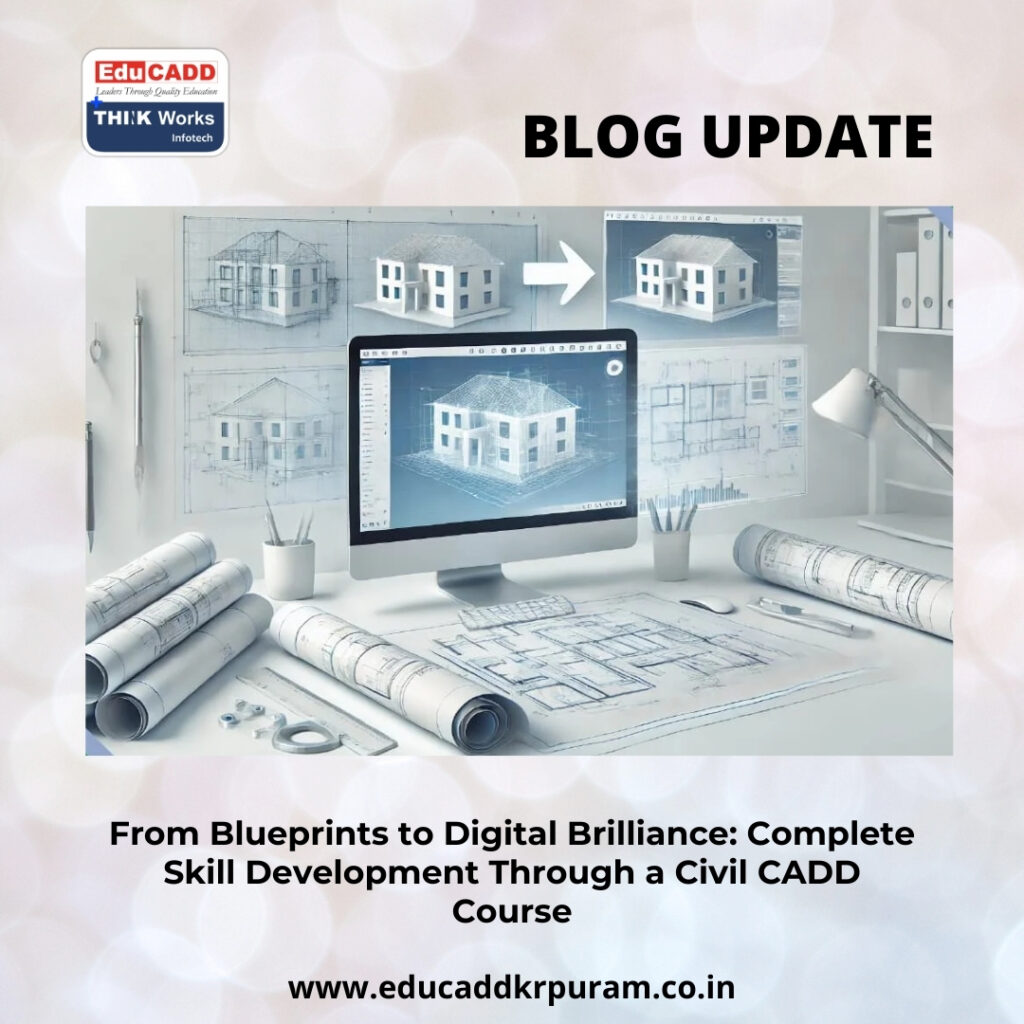
Through structured training modules, learners gain the ability to transform engineering ideas into detailed digital representations used in real construction projects. The program blends theoretical knowledge with practical exposure to industry-relevant tools, enabling students to understand how large-scale projects are conceptualized, visualized, and executed. From creating precise drawings to modeling complex structures, the course nurtures technical accuracy, logical thinking, and project coordination skills. As infrastructure development continues to expand globally, Civil CADD Course Training offers strong career stability and professional growth opportunities for aspiring civil engineers.
Digital Drafting Fundamentals and Engineering Drawing Principles
A strong foundation in digital drafting forms the first step in Civil CADD Course Training. Students learn how computer-aided drafting enhances accuracy, minimizes human errors, and accelerates design workflows. They are introduced to essential engineering drawing concepts that govern how technical information is visually communicated to architects, engineers, and construction teams.
Learners understand drawing scales, coordinate systems, projection methods, and dimensioning techniques that ensure precision in every plan. The course emphasizes standard annotation practices, enabling students to label drawings clearly and professionally. Different types of technical drawings such as plans, elevations, cross-sections, and detailed views are studied to help learners interpret complex construction information easily.
File organization is another important aspect of training. Students develop systematic methods for managing drawing sheets, layouts, and project directories so that large infrastructure projects remain structured and accessible. This strong drafting base prepares learners to handle advanced civil design software efficiently.
Key learning outcomes include:
• Understanding professional engineering drawing standards
• Applying accurate scaling and measurement methods
• Using correct dimensioning and annotation techniques
• Managing drawing files systematically
• Reading and interpreting construction drawings effectively
These competencies establish the technical base required for advanced Civil CADD applications.
Precision 2D Drafting and Technical Drawing Creation
Two-dimensional drafting remains essential for civil engineering documentation. Civil CADD courses provide extensive training in professional 2D drafting tools that enable learners to create accurate construction drawings. Students develop expertise in producing site layouts, floor plans, foundation drawings, and structural detailing sheets used in real projects.
Training begins with basic drafting commands and gradually progresses to advanced modification tools that enhance efficiency. Learners practice editing techniques such as trimming, extending, offsetting, mirroring, and array creation to refine designs quickly. Layer management systems are introduced to organize complex drawings into manageable sections, allowing engineers to isolate elements and apply properties effectively.
Reusable design components are created through block libraries, which help save time during repetitive drafting tasks. Standard templates ensure uniformity across project documents, improving presentation quality. Plotting and printing methods are also covered to help students produce professional construction drawings that meet industry standards.
Important drafting skills gained include:
• Producing accurate 2D technical drawings
• Editing and modifying designs efficiently
• Structuring drawings with organized layer systems
• Creating reusable drafting components
• Preparing construction-ready documentation sheets
These abilities enable learners to support engineering design teams confidently.
Three-Dimensional Modeling for Realistic Project Visualization
Three-dimensional modeling adds depth and clarity to engineering designs. Civil CADD Course Training introduces learners to advanced modeling techniques that convert flat drawings into realistic structural representations. Students develop spatial awareness that helps them understand how various civil components interact in real environments.
The course covers solid modeling, surface modeling, and mesh modeling approaches used for buildings, bridges, roads, and terrain visualization. Learners transform 2D plans into detailed 3D structures to analyze alignment, dimensions, and design feasibility more effectively. This modeling capability reduces construction uncertainties and improves design accuracy.
Rendering tools enhance visual appeal by applying textures, materials, and lighting effects to digital models. Walkthrough animations allow engineers to simulate real project experiences, making it easier to explain design concepts to clients and stakeholders. Visualization improves communication and speeds up project approvals.
3D modeling competencies include:
• Creating realistic structural models
• Developing terrain and landscape representations
• Converting technical drawings into 3D forms
• Applying materials and lighting effects
• Producing animated project walkthroughs
These visualization skills significantly strengthen professional design capabilities.
Building Information Modeling for Integrated Project Management
Building Information Modeling revolutionizes how civil infrastructure projects are designed and coordinated. Civil CADD Course Training introduce BIM concepts that integrate graphical models with detailed project data. Unlike conventional drafting, BIM platforms store information about materials, dimensions, scheduling, and costs within each digital component.
Students learn how multidisciplinary teams collaborate using shared BIM models, ensuring seamless coordination between architectural, structural, and utility systems. Clash detection tools help identify design conflicts before construction begins, reducing delays and financial losses. Centralized updates keep all stakeholders aligned with the latest project revisions.
BIM also supports quantity extraction and cost estimation directly from digital models. This feature improves budgeting accuracy and resource planning efficiency. Learners understand lifecycle management processes that track projects from planning to maintenance stages.
Core BIM skills developed include:
• Understanding intelligent parametric modeling
• Coordinating multidisciplinary project data
• Detecting and resolving design conflicts early
• Extracting quantities and cost data accurately
• Managing centralized model revisions efficiently
These integrated project management skills enhance the industry relevance of Civil CADD professionals.
Transportation Engineering and Roadway Design Expertise
Transportation infrastructure planning requires specialized design techniques and digital tools. Civil CADD courses equip learners with roadway design knowledge necessary for developing efficient and safe transport systems. Students understand how road geometry interacts with terrain conditions and traffic flow requirements.
The course covers horizontal alignment planning, vertical profile design, and cross-section development used in highway construction. Learners analyze topographic survey data to design road corridors that minimize environmental impact and ensure engineering feasibility. Curve design, gradient planning, and superelevation calculations are practiced to maintain vehicle safety.
Drainage integration is emphasized to prevent water accumulation and pavement damage. Detailed construction drawings guide field engineers during road development phases. Exposure to transportation standards prepares learners for large-scale infrastructure assignments.
Technical capabilities gained include:
• Designing precise road alignments
• Preparing elevation and gradient profiles
• Developing detailed cross-sectional roadway views
• Applying geometric design safety standards
• Creating drainage-supported road layouts
These skills allow Civil CADD professionals to contribute effectively to transportation projects.
Structural Drafting and Reinforcement Detailing Mastery
Structural integrity determines the safety and durability of civil infrastructure. Civil CADD programs train students in reinforcement detailing and structural drafting practices essential for construction execution. Learners understand load distribution mechanisms and reinforcement placement strategies used in reinforced concrete structures.
Students prepare detailed drawings for columns, beams, slabs, staircases, and foundations with precise reinforcement markings. Bar bending schedules are created to guide steel fabrication and placement processes. Training emphasizes compliance with engineering codes and safety regulations to ensure construction reliability.
Coordination between structural and architectural drawings is practiced to avoid on-site conflicts. Clear detailing improves construction accuracy and reduces material wastage. Structural drafting expertise enhances collaboration between design offices and field engineers.
Structural competencies include:
• Creating reinforced concrete detailing drawings
• Drafting structural component layouts accurately
• Preparing foundation and footing plans
• Developing reinforcement schedules systematically
• Ensuring compliance with engineering safety codes
These skills strengthen professional contributions to structural engineering projects.
Quantity Surveying, Costing, and Budget Planning Skills
Financial planning remains crucial for construction project success. Civil CADD Course Training introduces learners to quantity surveying techniques used for cost estimation and budgeting. Students learn measurement standards for calculating material quantities directly from design drawings.
The course covers estimation of concrete volumes, reinforcement weights, masonry quantities, plastering areas, and earthwork measurements. Learners perform rate analysis to determine unit costs for materials, equipment, and labor resources. Digital estimation tools simplify calculations and improve accuracy.
Preparation of Bills of Quantities supports tender participation and contractor selection processes. Cost control strategies help prevent financial overruns and improve project profitability. Budget planning knowledge enhances coordination between engineering and finance teams.
Estimation and costing skills include:
• Performing precise material quantity calculations
• Preparing detailed project cost estimates
• Conducting professional rate analysis
• Creating Bills of Quantities documents
• Supporting budgeting and financial planning processes
These skills add strong managerial value to Civil CADD expertise.
Survey Mapping and Land Development Planning Techniques
Accurate survey mapping guides infrastructure placement and land development decisions. Civil CADD programs teach learners to interpret geospatial data and topographic information for site planning. Students understand coordinate plotting methods used to mark boundaries and elevation points.
Contour generation helps visualize terrain variations and identify suitable construction zones. Learners prepare land development layouts that include plot divisions, internal roads, drainage systems, and utility corridors. Terrain analysis supports flood prevention and soil stability assessments.
Mapping tools enable overlaying satellite imagery with survey inputs for precise planning. Proper land development strategies improve project feasibility and reduce environmental risks.
Survey and mapping capabilities include:
• Processing digital topographic survey data
• Creating contour and elevation maps accurately
• Plotting site boundaries using coordinates
• Developing land subdivision layouts
• Analyzing terrain suitability for infrastructure
These planning skills enhance project preparation efficiency.
Construction Scheduling and Execution Planning Knowledge
Effective scheduling ensures timely completion of infrastructure projects. Civil CADD courses introduce learners to project planning strategies used in construction management. Students understand task sequencing, milestone setting, and dependency mapping techniques.
Scheduling tools assist in allocating labor, equipment, and materials efficiently across project phases. Learners create Gantt charts and workflow diagrams that visualize timelines clearly. Risk identification methods help reduce delays and maintain productivity.
Coordination between design teams and construction crews improves when planning processes are structured. Progress monitoring techniques allow project managers to track performance and implement corrective measures.
Project planning competencies include:
• Developing structured construction schedules
• Allocating manpower and resources efficiently
• Monitoring project progress systematically
• Coordinating multidisciplinary workflows
• Minimizing delays through proactive planning
These execution management skills broaden career opportunities for Civil CADD professionals.
Visualization, Rendering, and Design Presentation Excellence
Effective presentation enhances the impact of technical designs. Civil CADD Course Training equips learners with visualization tools used to produce realistic project representations. Students develop drawing composition techniques that improve clarity and visual hierarchy.
Rendering tools apply materials, textures, and lighting effects to create lifelike images. Walkthrough animations simulate real project environments, helping clients understand designs more easily. Presentation boards combine drawings, models, and annotations into compelling visual portfolios.
Professional presentation strengthens client trust and accelerates project approvals. Engineers with strong visualization skills stand out in competitive design environments.
Presentation capabilities include:
• Creating visually organized design layouts
• Producing realistic rendered project views
• Developing immersive walkthrough animations
• Annotating technical drawings clearly
• Communicating design concepts effectively
These creative skills enhance professional versatility.
Productivity Improvement Through Smart Automation Tools
Automation improves efficiency and reduces repetitive manual efforts in engineering workflows. Civil CADD programs train learners to use smart tools that accelerate drafting processes while maintaining precision. Templates, automated dimensioning features, and parametric components streamline documentation tasks.
Standardization ensures uniform design outputs across large projects. Automated editing tools reduce human error and improve overall drawing quality. Faster workflows enable professionals to focus on design improvements and innovation.
Increased productivity helps organizations meet tight deadlines and manage multiple projects effectively. Skilled Civil CADD professionals contribute significantly to operational efficiency.
Productivity enhancements include:
• Reducing manual drafting workload
• Accelerating documentation processes
• Utilizing intelligent automated features
• Maintaining standardized design formats
• Improving overall workflow efficiency
Automation expertise strengthens engineering performance.
Professional Documentation Standards and Compliance Practices
Engineering documentation must follow established standards to ensure clarity and legal safety. Civil CADD courses teach global drafting protocols used in professional construction documentation. Students understand dimensioning conventions, title block preparation, and revision management systems.
Standard symbols and notation methods improve communication between project teams. Organized document management prevents misinterpretation and simplifies regulatory approvals. Revision tracking ensures transparency in design modifications.
Compliance with documentation norms enhances credibility and ensures smooth project execution across multidisciplinary teams.
Documentation competencies include:
• Applying recognized drafting standards
• Maintaining systematic revision records
• Preparing professional title blocks accurately
• Using standardized engineering symbols
• Organizing complete drawing documentation sets
These practices ensure professional reliability.
Career Opportunities and Long-Term Professional Growth
Civil CADD expertise opens diverse career pathways in infrastructure industries. Skilled professionals are employed by construction firms, architectural consultancies, transportation agencies, and urban planning organizations. Government departments also recruit CAD specialists for public infrastructure projects.
Graduates may pursue roles such as civil CAD technician, structural drafting specialist, BIM coordinator, quantity surveyor, and infrastructure planning engineer. Freelancing opportunities allow independent professionals to provide drafting and modeling services globally.
Growing infrastructure investments worldwide continue to increase demand for digital design experts. Civil CADD professionals benefit from competitive salaries, stable career growth, and opportunities to work on high-profile engineering projects.
Career advantages include:
• Access to multiple engineering job roles
• Opportunities in large infrastructure developments
• Competitive salary and promotion prospects
• Freelancing and consulting flexibility
• Continuous technical skill advancement
Civil CADD training provides a strong foundation for long-term engineering success.
Conclusion
Civil CADD Course Training empowers aspiring engineers with digital design expertise required in modern infrastructure development. The course combines drafting precision, 3D modeling capabilities, cost estimation knowledge, and project planning skills into a comprehensive learning experience. Graduates become proficient in producing accurate technical documentation and realistic visual models that support construction workflows.
As infrastructure projects grow in complexity, digital coordination and intelligent design tools become indispensable. Civil CADD professionals play a crucial role in improving project efficiency, reducing errors, and enhancing communication among stakeholders. Their expertise supports faster approvals, optimized resource utilization, and streamlined execution.
With continuous technological advancements shaping the construction sector, Civil CADD mastery ensures strong employability and professional relevance. The program transforms learners into confident design specialists capable of contributing to the future of smart infrastructure development.

