
Mastering Corporate Interior Design Planning to Build Intelligent, Adaptive, and Inspiring Work Environments
The modern workplace has evolved far beyond rows of desks and enclosed offices. Today’s corporate spaces are expected to encourage collaboration, express brand personality, support employee wellness, and adapt to rapid business changes. Thoughtful Corporate Interior Design Planning enables organizations to transform ordinary offices into strategic environments that improve productivity and operational efficiency. A carefully designed workspace not only influences how employees perform daily tasks but also affects how clients and partners perceive a company’s professionalism.
Businesses across industries are recognizing that office environments shape organizational culture. When planning is executed with precision, workplaces become dynamic ecosystems where design, technology, and human comfort work together seamlessly. Poorly planned interiors, on the other hand, create workflow disruptions, employee dissatisfaction, and inefficient space utilization. Strategic planning eliminates these challenges and ensures that every design element serves a practical and visual purpose.
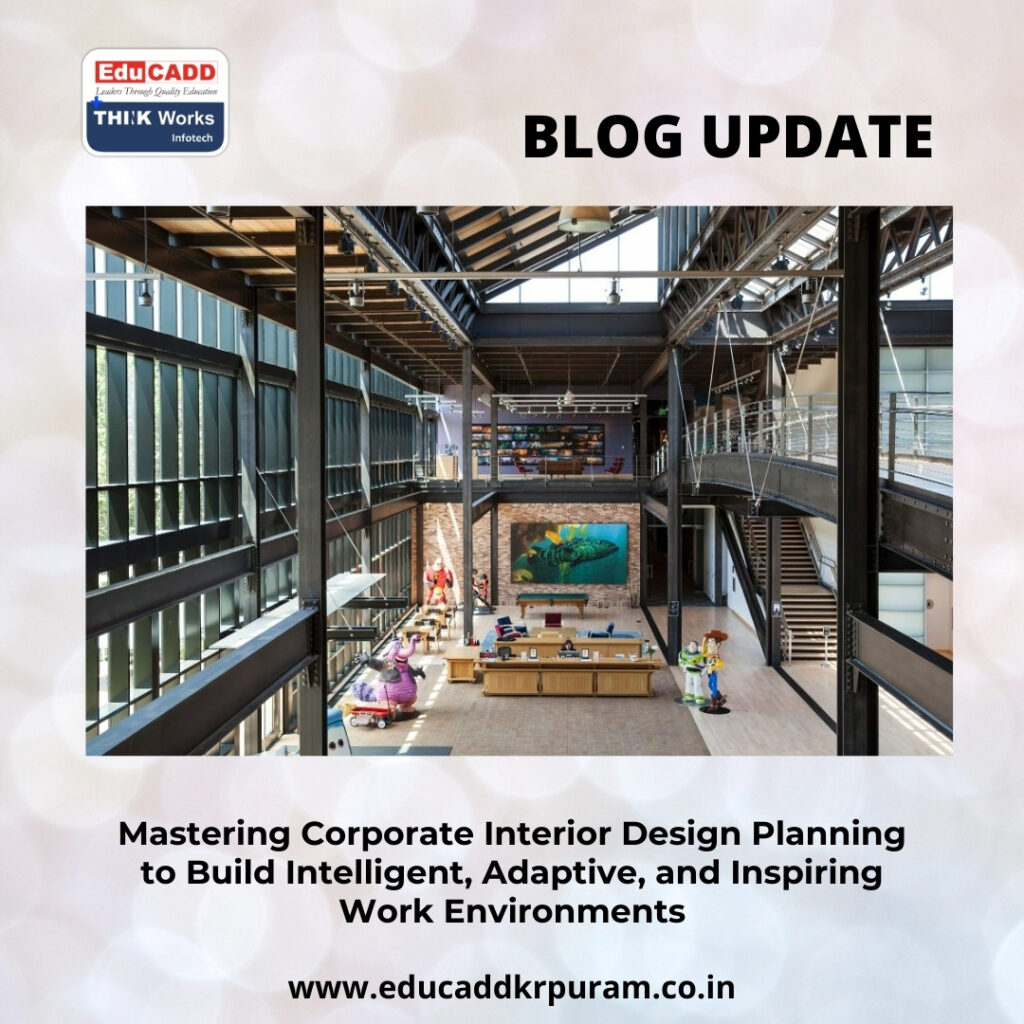
Corporate Interior Design Planning
This comprehensive guide explores practical approaches that organizations can adopt to create highly functional and future-ready workplaces. Each section explains essential components of Corporate Interior Design Planning, covering layout structuring, brand integration, employee comfort, lighting, furniture flexibility, acoustic balance, sustainability, digital infrastructure, safety systems, budgeting, project execution, and performance evaluation. Together, these insights help businesses design professional spaces that evolve with changing operational needs.
1. Establishing Business Objectives and Workspace Vision
Effective Corporate Interior Design Planning begins with a clear understanding of organizational goals and operational workflows. Every company functions differently based on its industry, team structure, communication style, and service model. Designers must evaluate these aspects before planning spatial layouts to ensure the office environment aligns with daily business activities.
A company’s workspace vision should reflect its growth strategy and future workforce requirements. Expanding teams, evolving technologies, and hybrid work patterns demand adaptable spatial solutions. If the planning phase overlooks these elements, organizations may face costly redesigns later. Strategic forecasting helps create scalable interiors that support long-term business expansion.
Understanding workforce behavior is equally important. Departments that require constant interaction benefit from collaborative spaces, while roles involving confidential tasks need private zones. Identifying such distinctions improves productivity and prevents operational disruptions.
Important considerations during planning include:
• Department-wise functional needs
• Nature of employee collaboration
• Privacy requirements for sensitive work
• Visitor and client interaction frequency
• Equipment and storage demands
• Training and conference space requirements
• Future workforce expansion projections
Aligning design decisions with business objectives ensures that the workplace becomes a supportive asset rather than a limitation.
2. Strategic Space Planning and Efficient Layout Design
Space planning forms the structural framework of Corporate Interior Design Planning. Efficient layouts maximize usable areas while ensuring smooth employee movement and accessibility. An intelligently designed office reduces clutter, prevents congestion, and creates logical workflow paths.
Various layout models suit different organizational needs. Open-plan offices encourage teamwork and transparency, while cabin-based layouts offer privacy and hierarchical organization. Hybrid configurations combine open workstations with enclosed meeting rooms, delivering flexibility and operational balance.
Modern offices increasingly adopt activity-based designs. These layouts provide designated zones tailored to specific tasks such as focused work, brainstorming sessions, client meetings, and informal discussions. Instead of fixed seating arrangements, employees use spaces based on their activity requirements.
Common workspace zones include:
• Individual focus workstations
• Collaborative project areas
• Enclosed conference rooms
• Informal discussion lounges
• Reception and waiting spaces
• Training and seminar rooms
• Breakout and relaxation areas
Effective zoning improves space utilization while creating a well-structured professional environment that supports productivity.
3. Integrating Practical Functionality with Visual Appeal
A professional workplace must deliver operational efficiency while maintaining aesthetic excellence. Corporate Interior Design Planning achieves this integration by balancing usability with visual sophistication. Practical functionality ensures that employees can perform tasks without obstacles, while appealing design enhances workplace ambiance.
Functional planning involves ergonomic layouts, accessible utilities, organized storage, and efficient seating arrangements. Visual elements such as color schemes, textures, lighting styles, and décor create an inviting atmosphere that positively influences employee mood.
When aesthetics and practicality complement each other, offices feel comfortable rather than restrictive. Visually pleasing environments also leave strong impressions on visitors and stakeholders.
Functional priorities include:
• Ergonomic workstation arrangements
• Easy access to shared facilities
• Organized storage solutions
• Smooth movement pathways
• Efficient meeting room layouts
Aesthetic enhancements include:
• Harmonized corporate color palettes
• Modern material finishes
• Elegant decorative elements
• Indoor greenery installations
• Stylish lighting fixtures
This balanced approach ensures that workplace interiors remain both efficient and visually engaging.
4. Expressing Brand Identity Through Interior Environments
Office interiors act as physical representations of corporate identity. Corporate Interior Design Planning incorporates brand elements to create spaces that reflect organizational culture, values, and vision. A cohesive brand environment strengthens credibility and reinforces corporate positioning.
When visitors enter an office, design aesthetics shape their first impressions. Consistent visual themes convey professionalism and attention to detail. Employees also develop stronger emotional connections when their workplace mirrors the organization’s mission.
Brand integration may range from subtle visual cues to bold expressive themes depending on the company’s personality.
Effective branding techniques include:
• Incorporating corporate colors into furnishings
• Displaying logos prominently in reception areas
• Installing branded wall graphics
• Designing theme-based meeting rooms
• Showcasing organizational achievements visually
• Using customized signage systems
Consistent branding across interiors strengthens identity and fosters workplace pride among employees.
5. Prioritizing Employee Comfort and Holistic Wellness
Employee well-being significantly influences productivity and job satisfaction. Corporate Interior Design Planning prioritizes human-centric design to ensure physical comfort and mental relaxation. Workspaces that support wellness create positive and motivating environments.
Ergonomic furniture reduces strain and prevents posture-related injuries. Access to natural lighting enhances mood and improves concentration. Quiet zones allow employees to focus without distractions, while breakout spaces provide opportunities for relaxation.
Biophilic design principles introduce natural elements that reduce stress and improve emotional balance. Integrating greenery into interiors creates refreshing and visually soothing work environments.
Wellness-focused features include:
• Adjustable ergonomic seating systems
• Height-adjustable workstations
• Natural ventilation and daylight access
• Indoor plants and green walls
• Calm relaxation lounges
• Dedicated meditation or quiet rooms
Benefits of employee-centric workplaces:
• Increased productivity
• Reduced absenteeism
• Enhanced job satisfaction
• Improved mental well-being
• Higher employee retention
Healthy work environments encourage engagement and strengthen organizational culture.
6. Optimizing Lighting for Productivity and Ambience
Lighting directly affects workplace efficiency and emotional comfort. Corporate Interior Design Planning integrates layered lighting systems that provide balanced illumination across various zones. Well-designed lighting enhances visibility while creating an inviting atmosphere.
Natural daylight remains the most effective source of illumination. Large windows, skylights, and glass partitions allow sunlight to penetrate interiors, reducing dependence on artificial systems. Artificial lighting should complement daylight through multiple layers.
Key lighting layers include:
• Ambient lighting for overall brightness
• Task lighting for focused work areas
• Accent lighting for decorative emphasis
• Motion-activated lighting for energy savings
Smart lighting solutions allow brightness adjustments based on occupancy and daylight levels.
Advantages of optimized lighting systems:
• Reduced eye strain
• Improved concentration
• Enhanced visual comfort
• Lower electricity consumption
• Attractive interior aesthetics
Proper lighting transforms office spaces into energetic and comfortable work environments.
7. Flexible Furniture Systems and Adaptive Workspace Design
Flexibility has become essential for evolving organizations. Corporate Interior Design Planning incorporates modular furniture systems that support reconfiguration without major structural changes. Adaptable designs allow businesses to respond quickly to changing workforce requirements.
Traditional fixed furniture restricts layout modifications and expansion possibilities. Modular setups enable dynamic adjustments that improve collaboration and space efficiency.
Flexible workspace components include:
• Modular workstation clusters
• Movable acoustic partitions
• Foldable training tables
• Stackable seating solutions
• Multi-functional collaborative desks
Benefits of adaptable furniture systems:
• Quick layout reorganization
• Cost-effective scalability
• Improved teamwork dynamics
• Efficient space utilization
Agile workspaces help companies accommodate future operational changes effortlessly.
8. Acoustic Planning for Noise Reduction and Focus
Noise distractions negatively affect concentration and productivity. Corporate Interior Design Planning addresses these challenges by incorporating sound management strategies. Acoustic planning ensures balanced environments that support both collaboration and focused work.
Open-plan offices often amplify noise due to reflective surfaces. Sound-absorbing materials minimize echoes and reduce disturbances.
Effective acoustic solutions include:
• Acoustic ceiling panels
• Fabric-covered wall systems
• Carpeted flooring for sound absorption
• Enclosed meeting booths
• Noise-dampening workstation dividers
Advantages of acoustic optimization:
• Improved concentration levels
• Clearer communication
• Reduced workplace stress
• Enhanced privacy during discussions
Controlled sound environments create peaceful and productivity-oriented offices.
9. Smart Technology Integration and Digital Connectivity
Modern workspaces rely heavily on digital infrastructure. Corporate Interior Design Planning incorporates advanced technology systems to support seamless communication and efficient workflows. Integrated solutions reduce operational disruptions and enhance workplace convenience.
Technology-ready offices feature structured cabling systems that prevent clutter and simplify maintenance. Wireless connectivity ensures flexibility for mobile workstations and collaborative tools.
Key technology features include:
• High-speed internet infrastructure
• Smart conference room equipment
• Interactive digital display boards
• Wireless device charging stations
• Centralized automation systems
Automated controls optimize lighting, climate, and security systems.
Benefits of smart technology integration:
• Faster communication channels
• Improved meeting efficiency
• Reduced downtime
• Streamlined operational processes
Digitally equipped offices support innovation and competitive business performance.
10. Sustainable Interior Solutions for Eco-Conscious Workplaces
Environmental responsibility is a growing priority for organizations. Corporate Interior Design Planning incorporates sustainable materials and energy-efficient systems that minimize ecological impact.
Green design focuses on resource conservation and healthier indoor environments. Eco-friendly offices also enhance corporate reputation and regulatory compliance.
Sustainable planning approaches include:
• Energy-efficient LED lighting
• Recycled and renewable building materials
• Smart climate control systems
• Water-saving plumbing fixtures
• Low-emission paints and adhesives
Indoor plants enhance air purification while adding visual freshness.
Benefits of eco-friendly interiors:
• Lower energy expenses
• Improved indoor air quality
• Reduced environmental footprint
• Positive corporate image
Sustainable offices demonstrate long-term commitment to environmental stewardship.
11. Ensuring Workplace Safety and Regulatory Compliance
Safety remains a non-negotiable aspect of Corporate Interior Design Planning. Offices must adhere to structural regulations and occupational safety standards to protect employees and visitors.
Well-planned safety systems minimize accident risks and ensure emergency preparedness.
Critical safety provisions include:
• Fire detection and suppression systems
• Clearly marked emergency exits
• Slip-resistant flooring materials
• Proper electrical installations
• Adequate ventilation systems
Ergonomic workstations also prevent repetitive stress injuries.
Advantages of safety-focused design:
• Reduced accident risks
• Compliance with legal standards
• Enhanced employee confidence
• Business continuity protection
Secure workplaces foster trust and operational stability.
12. Budget Management and Cost-Efficient Planning
Financial planning ensures Corporate Interior Design Planning remains practical and sustainable. Organizations must allocate budgets strategically to balance quality, durability, and aesthetics.
Budget structuring starts with accurate project scope assessment and prioritization of essential elements.
Budget management steps include:
• Requirement analysis and cost estimation
• Vendor quotation comparisons
• Material durability evaluation
• Allocation of contingency reserves
• Ongoing expense monitoring
Cost optimization strategies include:
• Phased project execution
• Modular furniture investments
• Energy-efficient system installation
• Vendor negotiations
Strategic budgeting prevents overspending while ensuring high-quality outcomes.
13. Coordinated Project Execution and Implementation
Efficient execution converts design concepts into operational workplaces. Corporate Interior Design Planning requires collaboration among designers, contractors, and stakeholders to ensure smooth implementation.
Structured project management prevents delays and cost overruns.
Key implementation stages include:
• Concept design development
• Stakeholder review and approval
• Procurement of materials
• Construction and installation processes
• Quality inspections and finishing
Transparent communication ensures all teams remain aligned throughout the project lifecycle.
Benefits of organized execution:
• Timely completion
• Budget adherence
• High construction quality
• Seamless operational transition
Effective coordination ensures successful design realization.
14. Post-Occupancy Evaluation and Continuous Improvement
Workspace optimization continues after project completion. Corporate Interior Design Planning includes post-occupancy evaluations to measure performance and identify improvement opportunities.
Feedback-driven adjustments ensure that office environments evolve with business requirements.
Evaluation methods include:
• Employee satisfaction surveys
• Space utilization assessments
• Energy efficiency tracking
• Workflow performance reviews
Future-ready improvement strategies include:
• Flexible expansion planning
• Periodic technology upgrades
• Furniture reconfiguration options
• Sustainable material replacements
Continuous enhancements maintain workplace efficiency and relevance.
Conclusion
Strategic Corporate Interior Design Planning transforms workplaces into adaptive environments that support productivity, collaboration, and innovation. Thoughtful planning aligns spatial design with organizational objectives while enhancing employee comfort and brand identity.
From efficient layouts and ergonomic furniture to sustainable materials and advanced technologies, every element contributes to a cohesive professional environment. Businesses that prioritize purposeful planning benefit from improved workflow efficiency, stronger corporate image, and long-term operational savings.
A well-designed office becomes more than a physical space. It evolves into a strategic asset that empowers teams, impresses clients, and supports continuous organizational growth in an ever-changing business landscape.

