
Transforming Project Data into Insights: Mastering Primavera Reporting and Dashboard Customization
In large-scale projects, data is generated continuously from multiple activities such as scheduling, resource allocation, budgeting, and performance tracking. Managing this information efficiently is essential for maintaining control over project progress and ensuring successful delivery. However, raw data alone cannot provide meaningful insights unless it is organized and presented in a structured format. This is where Primavera Reporting Dashboard Customization plays a vital role in modern project management environments.
Organizations across industries such as construction, engineering, infrastructure, and manufacturing rely heavily on Primavera to manage complex project schedules. While Primavera is widely known for its advanced planning and scheduling capabilities, its reporting and dashboard features are equally powerful. These features allow project teams to transform complex datasets into understandable insights that support decision-making at every stage of the project lifecycle.
Customized reports and dashboards enable project managers to monitor progress, identify risks early, and communicate updates effectively with stakeholders. Instead of spending hours reviewing spreadsheets or raw data tables, decision-makers can quickly analyze visual dashboards that summarize the most important project metrics. This improves efficiency and ensures that project teams remain proactive rather than reactive.
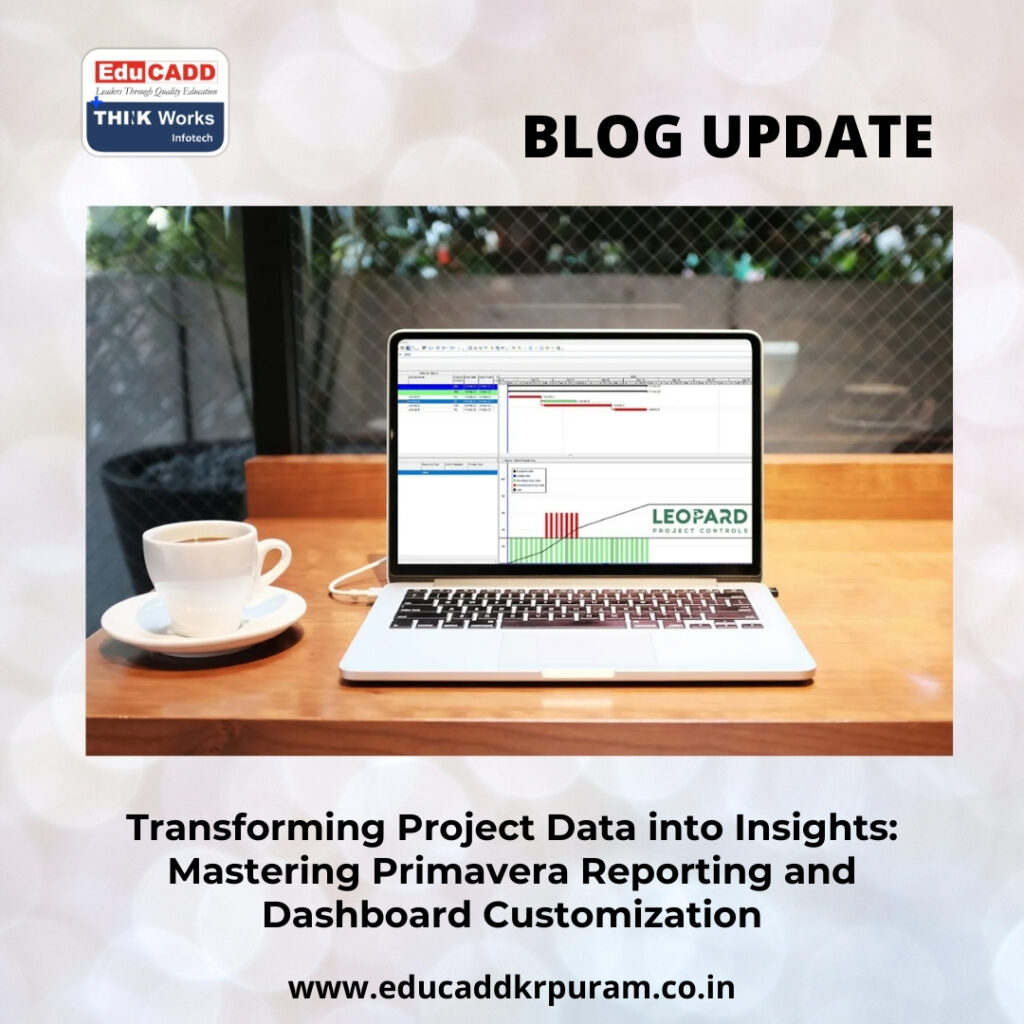
Primavera Reporting Dashboard Customization
This article explores the importance of Primavera Reporting Dashboard Customization, highlighting how organizations can design powerful reporting systems that convert project data into actionable intelligence.
Understanding the Importance of Reporting in Project Management
Effective reporting is a cornerstone of successful project management. Without structured reports, project managers may struggle to evaluate the progress of ongoing activities or identify potential issues that could disrupt the project timeline. Reports provide a clear and organized summary of project performance, allowing teams to assess whether tasks are moving forward according to plan.
Primavera provides a robust reporting framework that enables users to generate detailed reports based on scheduling data. These reports often include information about activity durations, task dependencies, resource assignments, and completion percentages. By analyzing these reports, project managers gain valuable insights into how the project is progressing.
Reporting also plays a crucial role in maintaining accountability. Stakeholders expect regular updates regarding project status, financial performance, and milestone achievements. Structured reports provide a reliable method for communicating this information.
Through Primavera Reporting Dashboard Customization, organizations can design reporting templates that align with their project objectives. These customized reports ensure that stakeholders receive the most relevant information in a clear and organized format.
The Role of Dashboards in Modern Project Monitoring
Dashboards have become an essential feature of modern project management tools because they present complex data in a visual and easily understandable format. Instead of reading lengthy reports or analyzing multiple spreadsheets, project managers can view key performance indicators on a single dashboard.
Dashboards provide a real-time overview of project progress. Visual elements such as charts, graphs, and progress indicators help users interpret data quickly and identify trends that may affect project outcomes.
When organizations implement Primavera Reporting Dashboard Customization, dashboards serve as centralized monitoring systems. They bring together critical project metrics and display them in a format that supports rapid decision-making.
Another advantage of dashboards is their ability to enhance collaboration among project teams. When everyone has access to the same visual insights, communication becomes more effective and misunderstandings are reduced.
Core Elements of Primavera Reporting Systems
Primavera reporting systems consist of several core elements that work together to provide comprehensive project insights. One of the primary components is activity data. This includes details about individual tasks, their durations, start and finish dates, and relationships with other activities.
Resource information is another important element. Reports can display how labor, equipment, and materials are allocated across the project schedule. This helps managers ensure that resources are used efficiently and that workloads remain balanced.
Cost data also plays a critical role in reporting. Primavera allows users to track budget allocations and compare planned costs with actual expenditures. These financial insights are essential for maintaining cost control throughout the project lifecycle.
Milestone tracking is another key element of reporting systems. Milestones represent major project achievements and provide a clear indication of overall progress.
By combining these elements, Primavera reporting and dashboard customization enables organizations to create a detailed picture of project performance.
Advantages of Customizing Primavera Reports
Customization significantly improves the usefulness of project reports. Generic reports may contain unnecessary information that makes it difficult for users to focus on critical insights. Customized reports, on the other hand, highlight the most relevant metrics and remove unnecessary details.
One major benefit of customization is improved clarity. When reports are designed specifically for the needs of an organization, stakeholders can interpret data more quickly and accurately.
Another advantage is efficiency. Automated and customized reports reduce the time required to compile project updates manually. This allows project managers to dedicate more time to strategic planning and problem-solving.
Customization also enhances stakeholder engagement by presenting data in formats that are easier to understand.
• Clear visibility into project performance indicators
• Faster identification of schedule delays and resource conflicts
These benefits demonstrate why many companies invest in Primavera reporting and dashboard customization to strengthen project oversight.
Tailoring Reports for Different Stakeholder Needs
Projects involve various stakeholders, each with different responsibilities and information requirements. Executives often need high-level summaries that focus on overall project progress, financial performance, and milestone completion.
Operational teams, such as planners and engineers, require more detailed information about scheduling activities, resource assignments, and potential delays. Primavera allows users to create multiple report formats that address these different needs.
For example, an executive report may present summary charts showing overall project progress. In contrast, a technical report may provide a detailed list of activities with start and finish dates.
Through effective Primavera reporting and dashboard customization, organizations can ensure that each stakeholder receives the information necessary to make informed decisions.
Principles for Designing Effective Dashboards
Creating effective dashboards requires a balance between simplicity and information depth. Dashboards should present essential metrics without overwhelming users with excessive data.
When designing dashboards, project managers should focus on key performance indicators that directly impact project success. Examples include schedule variance, resource utilization rates, and milestone progress.
Visual design elements also influence dashboard effectiveness. Charts, progress bars, and color-coded indicators help users interpret information quickly.
A well-designed dashboard should allow users to understand project status at a glance. With proper Primavera reporting and dashboard customization, dashboards become powerful tools for daily project monitoring.
Integrating Multiple Data Sources for Comprehensive Insights
Large projects often involve multiple software systems, including financial platforms, procurement tools, and enterprise resource planning solutions. Integrating these systems with Primavera significantly enhances reporting capabilities.
When external data sources are connected to Primavera dashboards, project managers can analyze scheduling data alongside financial and operational metrics. This integration provides a more complete view of project performance.
Integrated reporting also improves data accuracy. When information flows automatically between systems, the risk of manual entry errors decreases.
This integration capability strengthens Primavera reporting and dashboard customization, allowing organizations to develop more advanced reporting frameworks.
Monitoring Key Project Performance Indicators
Performance indicators are essential for evaluating whether a project is progressing according to plan. Dashboards allow managers to monitor these indicators continuously.
Common performance metrics include schedule performance index, cost performance index, and activity completion percentages. These indicators provide valuable insights into how efficiently the project is being executed.
Dashboards make it easier to detect deviations from the original plan. If performance indicators show declining trends, project managers can investigate the causes and implement corrective measures.
Continuous monitoring through Primavera reporting and dashboard customization helps organizations maintain better control over project outcomes.
Enhancing Decision-Making Through Visual Data Analysis
Visual data analysis is one of the most valuable aspects of dashboards. By presenting information through graphs and charts, dashboards allow users to identify patterns and trends quickly.
For example, trend charts can show whether project progress is accelerating or slowing down over time. This information helps managers evaluate whether corrective actions are required.
Comparative analysis is another important feature. By comparing planned performance with actual results, teams can measure how closely the project aligns with its original schedule.
These insights support informed decision-making and improve the overall efficiency of project management processes.
Best Practices for Developing Primavera Dashboards
Developing effective dashboards requires a strategic approach. Organizations should begin by identifying the most important metrics that influence project success.
Dashboards should remain simple and focused. Including too many indicators can reduce clarity and make it difficult for users to interpret information quickly.
Another best practice is maintaining consistent data updates. Accurate dashboards depend on up-to-date project information.
• Limit dashboards to essential performance indicators
• Maintain clear visual structures for easy interpretation
Following these practices ensures that Primavera reporting and dashboard customization delivers meaningful insights.
Leveraging Automation in Reporting Processes
Automation is an important feature that enhances the efficiency of reporting systems. Primavera allows users to schedule automated reports that generate at specific intervals.
Automated reporting reduces manual work and ensures that stakeholders receive timely updates. Instead of compiling reports manually, project managers can rely on automated systems to generate accurate summaries.
Automation also improves consistency. Each report follows the same structure, making it easier to track performance trends over time.
By incorporating automation into Primavera reporting and dashboard customization, organizations can improve efficiency while maintaining reliable reporting standards.
Addressing Challenges in Dashboard Customization
While customized dashboards provide numerous advantages, organizations may encounter certain challenges during implementation. One common challenge is information overload. When dashboards contain too many metrics, users may struggle to identify the most important insights.
Another challenge involves maintaining data accuracy. If project schedules are not updated regularly, dashboard information may become outdated.
Technical integration issues can also arise when connecting Primavera with external systems. However, these challenges can usually be resolved through proper planning and technical expertise.
Recognizing these obstacles early helps organizations implement successful Primavera reporting and dashboard customization strategies.
The Future of Primavera Reporting Technologies
Project management technologies continue to evolve rapidly, and reporting systems are becoming increasingly sophisticated. Advanced analytics and artificial intelligence are expected to play a larger role in future reporting tools.
Predictive analytics may allow dashboards to forecast potential project delays or resource shortages based on historical data. These predictions would help managers take preventive actions before problems occur.
Cloud-based reporting platforms are also gaining popularity. These platforms allow teams to access dashboards from any location, improving collaboration among distributed project teams.
As these innovations develop, Primavera reporting and dashboard customization will become even more powerful, providing organizations with deeper insights into project performance.
Conclusion
Successful project management requires clear visibility into scheduling data, resource allocation, and financial performance. Without effective reporting systems, project managers may struggle to monitor progress and respond to potential risks.
Primavera reporting and dashboard customization provides the tools necessary to transform raw project data into structured insights that support strategic decision-making. Customized reports simplify complex information, while visual dashboards present key metrics in a clear and accessible format.
By implementing tailored reporting strategies, organizations can improve transparency, enhance collaboration, and maintain better control over project outcomes. Automated reporting and integrated dashboards further strengthen project oversight by ensuring that accurate information is always available to stakeholders.
As project environments become increasingly complex, the ability to visualize and analyze data will become even more important. Organizations that invest in advanced reporting capabilities within Primavera will gain a significant advantage in managing projects efficiently and achieving consistent success.

