
Engineering the Future Faster: Advanced Design Optimization with Simulation Tools
Modern engineering is no longer limited by physical testing and repeated trial-and-error processes. Instead, it is driven by intelligent systems that allow designers to experiment, refine, and perfect their ideas in a virtual environment. Advanced Design Optimization Simulation has emerged as a transformative approach that helps engineers build smarter, faster, and more efficient solutions across industries.
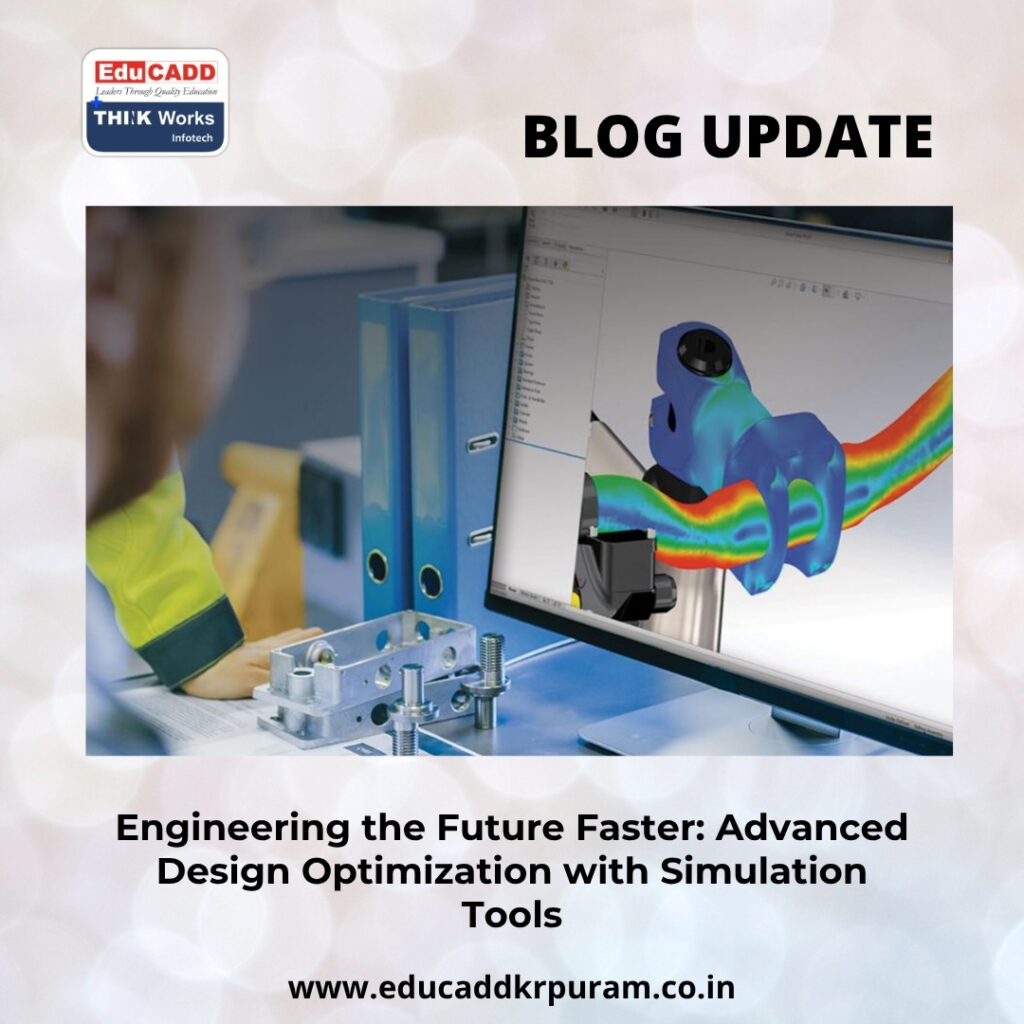
Advanced Design Optimization Simulation
This method enables organizations to test multiple design possibilities without investing in costly prototypes. By simulating real-world conditions, engineers gain deeper insights into how their designs will perform, allowing them to make informed decisions early in the development cycle. As a result, businesses can reduce time-to-market, cut costs, and enhance overall product quality. This blog explores the depth of simulation-driven design optimization, its benefits, applications, and its growing importance in shaping the future of engineering.
1. The Concept of Design Optimization in Engineering
Advanced Design Optimization Simulation is the process of refining a product or system to achieve the best possible outcome under specific constraints. These constraints may include cost, materials, performance requirements, or environmental factors. Engineers analyze different variables and adjust them strategically to reach optimal results.
Simulation tools make this process significantly more efficient. Instead of relying solely on physical prototypes, engineers can evaluate multiple design variations digitally. This allows for faster experimentation and better decision-making.
Moreover, optimization ensures that designs are not only functional but also efficient. It eliminates unnecessary complexity and focuses on achieving maximum performance with minimal resources.
2. The Shift from Traditional Methods to Digital Simulation
In the past, engineering design depended heavily on physical testing and manual calculations. While effective, these methods were often time-consuming and expensive. Each design change required new prototypes, leading to delays and increased costs.
With the rise of digital simulation tools, this approach has changed dramatically. Engineers can now create virtual models and test them under various conditions without building physical versions. This shift has revolutionized the design process.
Additionally, digital simulation provides greater flexibility. Engineers can quickly modify designs and evaluate the impact of changes, leading to faster innovation and improved outcomes.
3. Technologies Powering Simulation Tools
Advanced Design Optimization Simulation are built on advanced computational technologies that enable accurate analysis of complex systems. Finite element analysis (FEA) is widely used to study structural behavior, while computational fluid dynamics (CFD) focuses on fluid flow and heat transfer.
Other technologies, such as thermal analysis and motion simulation, provide additional insights into system performance. These tools allow engineers to understand how different components interact under various conditions.
By combining multiple simulation methods, engineers can gain a comprehensive understanding of their designs. This integrated approach leads to more reliable and efficient solutions.
4. Major Benefits of Simulation-Based Optimization
Simulation-driven design optimization offers numerous advantages that improve both efficiency and innovation.
-
Accelerated design cycles: Engineers can test multiple concepts quickly, reducing development time.
-
Enhanced cost efficiency: Fewer prototypes and optimized material usage lead to significant savings.
Furthermore, simulation encourages creativity. Engineers can explore unconventional designs without the risk of failure, leading to more innovative solutions.
5. Enhancing Product Quality Through Virtual Analysis
One of the key strengths of simulation tools is their ability to improve product quality. Engineers can analyze how designs perform under different conditions, such as stress, pressure, and temperature.
This allows them to identify potential weaknesses early and make necessary improvements. As a result, the final product is more reliable and efficient.
Additionally, virtual testing ensures consistency. Products are designed to meet performance standards before they are manufactured, reducing the likelihood of defects.
6. Reducing Risks and Preventing Design Failures
Design failures can have serious consequences, including financial losses and reputational damage. Simulation tools help mitigate these risks by identifying potential issues during the design phase.
Engineers can simulate extreme conditions and evaluate how their designs respond. This proactive approach allows them to address problems before they occur in real-world scenarios.
Moreover, simulation provides accurate data that supports better decision-making. This reduces uncertainty and increases confidence in the final design.
7. Improving Team Collaboration and Workflow
Engineering projects often involve multiple teams working together. Simulation tools facilitate collaboration by providing a centralized platform for design and analysis.
Teams can share simulation results, discuss improvements, and make decisions collectively. This enhances communication and ensures alignment across all stakeholders.
Cloud-based simulation tools further improve collaboration. Engineers can access data from anywhere, enabling seamless teamwork and faster project completion.
8. Real-World Applications Across Industries
Simulation-based design optimization is used in a wide range of industries, each benefiting in unique ways.
-
Automotive industry: Enhances vehicle safety, fuel efficiency, and aerodynamics.
-
Construction sector: Improves structural stability and reduces material waste.
In aerospace, simulation ensures safety under extreme conditions. In manufacturing, it optimizes production processes and improves product quality. These applications demonstrate the versatility and importance of simulation tools.
9. The Role of Artificial Intelligence in Optimization
Artificial intelligence is transforming the way simulation tools are used. AI algorithms can analyze large datasets and identify patterns that may not be obvious to human engineers.
These systems can suggest design improvements and automate repetitive tasks, saving time and effort. Engineers can focus on innovation while AI handles routine processes.
Additionally, machine learning enhances simulation accuracy over time. As more data is processed, the system becomes smarter and more reliable.
10. Digital Twins and Continuous Optimization
Digital twin technology creates a virtual representation of a physical system. This allows engineers to monitor performance and optimize designs in real time.
By integrating real-world data, digital twins provide valuable insights into system behavior. Engineers can make adjustments based on actual conditions, improving efficiency and performance.
This approach also supports predictive maintenance. Potential issues can be detected early, reducing downtime and maintenance costs.
11. Challenges in Implementing Simulation Tools
Despite their benefits, simulation tools come with certain challenges. High initial investment and the need for skilled professionals can be barriers for some organizations.
Accurate simulations also require high-quality data. Poor data can lead to incorrect results and flawed decisions.
However, these challenges can be addressed through proper planning and training. Organizations that invest in simulation tools often achieve long-term benefits.
12. Best Practices for Successful Design Optimization
To maximize the effectiveness of simulation tools, organizations should follow best practices. Defining clear objectives and constraints is essential for successful optimization.
Regular validation of simulation models ensures accuracy. Using reliable data and advanced software further improves results.
Collaboration among teams is also important. By involving multiple stakeholders, organizations can gain diverse perspectives and enhance decision-making.
13. Future Trends in Simulation and Optimization
The future of simulation-driven design optimization is shaped by technological advancements. Cloud computing and high-performance computing are making simulations faster and more accessible.
Automation is also playing a significant role. Intelligent systems are taking over routine tasks, allowing engineers to focus on complex challenges.
Integration with emerging technologies, such as the Internet of Things (IoT), is further enhancing simulation capabilities. This leads to more efficient and accurate design processes.
14. Driving Sustainability Through Smart Design
Sustainability is becoming a priority in engineering. Simulation tools help organizations create environmentally friendly designs by optimizing material usage and reducing waste.
Engineers can also improve energy efficiency and minimize environmental impact. This supports global sustainability goals and reduces operational costs.
Additionally, simulation ensures compliance with environmental regulations. Organizations can achieve both performance and sustainability objectives.
Conclusion
Advanced Design Optimization Simulation has redefined the engineering process. It enables organizations to create high-quality, efficient, and innovative solutions while reducing costs and risks. By leveraging advanced technologies such as artificial intelligence and digital twins, businesses can achieve greater precision and performance.
As industries continue to evolve, simulation-driven design optimization will play an increasingly important role. Organizations that adopt these tools will gain a competitive advantage and deliver superior products. Ultimately, simulation tools are not just enhancing engineering—they are shaping the future of innovation.

