
Design the Future: Unlock High-Growth Careers with the Best Mechanical CAD Course in Bangalore
Engineering design has moved far beyond drawing boards and manual sketches. Today, innovation begins inside powerful software environments where ideas are transformed into intelligent models, tested under real-world conditions, and optimized before production even starts. This transformation has created a massive demand for skilled professionals who can work with modern design tools. Enrolling in the Mechanical CAD Course Bangalore is one of the most effective ways to enter this dynamic and high-growth field.
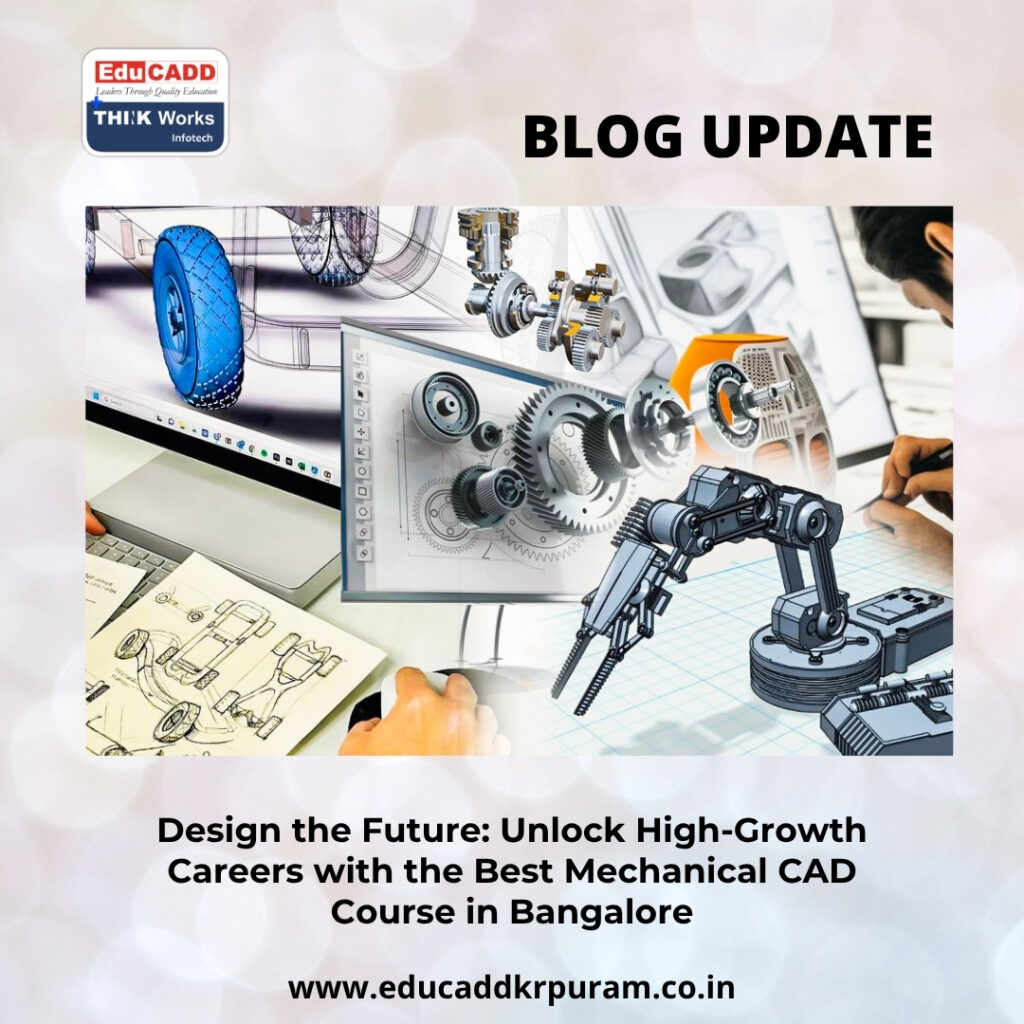
Mechanical CAD Course Bangalore
Bangalore has become a leading destination for technical education, especially in engineering and design domains. The city offers a unique combination of expert trainers, industry exposure, and career opportunities that make learning both practical and rewarding. Mechanical CAD Course Bangalore is not just about learning software; it is about understanding how design influences innovation, efficiency, and product success. With the right course, you can build a strong foundation and prepare yourself for a long-term career in mechanical engineering and product design.
1. What Mechanical CAD Really Means in Modern Engineering
Mechanical CAD, or Computer-Aided Design, is the use of specialized software to create detailed 2D drawings and 3D models of mechanical components. It allows engineers to visualize designs, test performance, and refine ideas before manufacturing begins.
In modern engineering, CAD is not just a tool but a complete design ecosystem. It integrates modeling, simulation, and analysis into a single workflow. This enables engineers to make better decisions, reduce errors, and deliver high-quality products. As industries continue to embrace digital transformation, CAD has become an essential skill for anyone looking to succeed in mechanical design.
2. Bangalore’s Advantage as a CAD Learning Hub
Bangalore is widely recognized as India’s technology capital, and it also stands out as a prime location for CAD education. The city hosts a wide range of training institutes that cater to both beginners and experienced professionals.
What makes Bangalore unique is its strong connection to industries such as automotive, aerospace, and manufacturing. Students who train here gain exposure to real-world practices and industry standards. This environment helps learners bridge the gap between theoretical knowledge and practical application, making them job-ready from day one.
3. Key Elements of a High-Quality Mechanical CAD Course
Choosing the right course is crucial for building a successful career in design engineering. The best mechanical CAD course in Bangalore focuses on delivering a comprehensive learning experience that goes beyond basic software training.
- Well-structured curriculum aligned with industry requirements
- Hands-on training with real-time projects
These elements ensure that students gain both technical knowledge and practical skills. A good course also emphasizes problem-solving and critical thinking, which are essential for tackling complex design challenges.
4. Software Tools That Shape Your Design Skills
Mechanical CAD training typically includes a range of software tools that are widely used in the industry. Each tool serves a specific purpose, from drafting to advanced modeling and simulation.
Students usually learn AutoCAD for 2D drafting, SolidWorks for 3D modeling, CATIA for complex assemblies, and Creo or NX for advanced design and analysis. Mastering these tools allows you to work on diverse projects and increases your employability across multiple industries.
5. Course Curriculum: From Basics to Advanced Concepts
A well-designed mechanical CAD course follows a step-by-step approach that builds knowledge gradually. Beginners start with fundamental concepts such as technical drawing and basic modeling.
As the course progresses, students move on to advanced topics like assembly design, motion analysis, and simulation. Some programs also include specialized modules such as finite element analysis and manufacturing processes. This comprehensive structure ensures that learners develop a deep understanding of mechanical design.
6. Duration and Cost of Mechanical CAD Training
The time required to complete a CAD course depends on its depth and level. Short-term programs may last a few weeks, while advanced courses can extend over several months.
The cost of training varies based on factors such as course content, institute reputation, and additional services like certification and placement support. While affordability is important, it is equally essential to choose a program that offers quality education and long-term value.
7. Placement Assistance and Career Support
One of the major benefits of enrolling in a reputed CAD institute is the availability of placement assistance. Many institutes in Bangalore provide structured support to help students secure job opportunities.
- Professional resume building and portfolio guidance
- Interview preparation and job referrals
These services play a significant role in helping students transition from training to employment. With the right support, learners can confidently enter the job market and pursue rewarding careers.
8. Skills You Develop During CAD Training
Mechanical CAD courses focus on building a wide range of skills that are essential for design engineers. Students learn how to create accurate models, interpret technical drawings, and analyze mechanical systems.
In addition to technical expertise, learners also develop soft skills such as communication, teamwork, and time management. These skills are crucial for working effectively in professional environments and delivering successful projects.
9. Career Paths After Completing Mechanical CAD Courses
Completing a mechanical CAD course opens up numerous career opportunities in various industries. Graduates can take on roles such as CAD Designer, Mechanical Design Engineer, Product Developer, and Drafting Specialist.
These roles are in demand across sectors like automotive, aerospace, construction, and heavy engineering. With experience, professionals can also move into senior positions or specialize in niche areas such as simulation and product development.
10. Importance of Real-Time Projects and Practical Learning
Practical experience is a vital part of mechanical CAD training. The best courses emphasize hands-on learning through real-time projects that simulate industry scenarios.
Working on live projects helps students understand how design concepts are applied in real-world situations. It also improves problem-solving abilities and builds confidence, making learners more prepared for professional challenges.
11. Certification and Its Role in Career Advancement
A certification in mechanical CAD adds significant value to your resume. It serves as proof of your skills and knowledge, making you more attractive to potential employers.
Certified professionals often have an advantage in the job market, as employers trust candidates who have undergone structured training. Certification also opens doors to better job opportunities and career growth.
12. How to Select the Best CAD Training Institute
Selecting the right institute is a critical step in your learning journey. It is important to evaluate factors such as faculty expertise, infrastructure, course content, and placement records.
Visiting the institute, attending demo sessions, and reading student reviews can help you make an informed decision. A good training center focuses on student success and provides continuous support throughout the course.
13. Why 2026 is the Perfect Time to Learn Mechanical CAD
The demand for skilled CAD professionals is growing rapidly as industries adopt advanced technologies and digital workflows. Learning mechanical CAD in 2026 gives you a competitive advantage in the job market.
With the rise of automation and smart manufacturing, companies are looking for professionals who can design efficient and innovative products. This makes it an ideal time to invest in CAD training and build a strong career foundation.
14. Future Scope of Mechanical CAD Careers
The future of mechanical CAD is closely linked with emerging technologies such as artificial intelligence, robotics, and advanced manufacturing systems. These innovations are transforming how products are designed and produced.
Professionals with CAD expertise will continue to play a crucial role in this evolution. They will contribute to developing smarter designs, improving efficiency, and driving innovation across industries. This ensures long-term career stability and growth.
Conclusion
Enrolling in the Mechanical CAD Course Bangalore is a powerful step toward building a successful career in engineering design. The city offers a rich learning environment, access to advanced tools, and strong industry connections that enhance your professional journey.
A well-structured CAD course not only equips you with technical skills but also prepares you to handle real-world challenges with confidence. Whether you are a student, a fresher, or a working professional, investing in mechanical CAD training can open doors to exciting opportunities and long-term success in the ever-evolving world of engineering.

