
From Passion to Profession: Interior Design Course with Placement That Shapes Your Career
An Interior Design Course Placement offers a practical and reliable pathway into this thriving industry. It does not just focus on theoretical knowledge but also ensures that students gain hands-on experience and career opportunities. These courses are designed to prepare learners for real-world challenges while helping them secure employment after completion. In this comprehensive blog, you will gain a deep understanding of how such courses work, the benefits they offer, and why they are an ideal choice for aspiring designers.
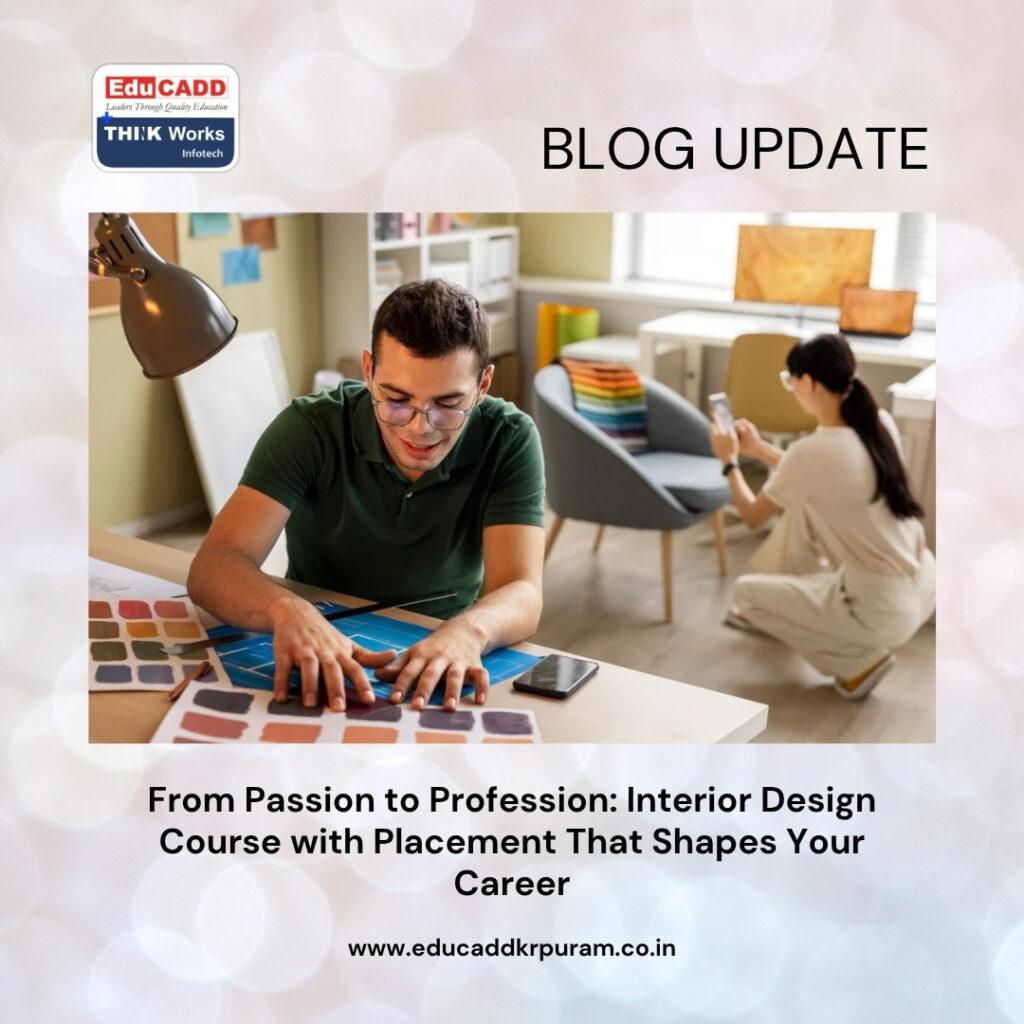
Interior Design Course Placement
Interior design has emerged as one of the most exciting and rewarding career paths in today’s creative industry. With the rapid growth of urban development and evolving lifestyle preferences, people are placing greater importance on well-designed spaces. Whether it is a home, office, retail store, or hospitality setting, interiors now play a crucial role in enhancing comfort, functionality, and visual appeal. As a result, the need for skilled interior designers continues to rise across multiple sectors.
1. What Defines an Interior Design Course with Placement
An Interior Design Course Placement is a structured program that combines professional training with job assistance. Unlike general courses, these programs are tailored to meet industry requirements, ensuring that students are job-ready by the end of their training. They include both classroom learning and practical exposure, giving students a well-rounded understanding of design concepts.
The placement aspect is what sets these courses apart. Institutes collaborate with companies, design studios, and architects to provide job opportunities for students. This ensures a smooth transition from education to employment. Additionally, these courses are regularly updated to reflect the latest trends and technologies, making them highly relevant in today’s competitive market.
2. Why Interior Design is a High-Growth Career
Interior design has gained significant momentum as a career option due to increasing demand for aesthetically pleasing and functional spaces. As cities expand and lifestyles evolve, people are investing more in interiors to create environments that reflect their personality and needs.
The commercial sector is also contributing to this growth. Offices, hotels, restaurants, and retail spaces require professional design to attract customers and improve efficiency. This growing demand has created numerous job opportunities for trained designers. Therefore, enrolling in an interior design course with placement can open doors to a stable and fulfilling career.
3. Essential Skills You Will Master
Interior design is a skill-driven profession that requires a balance of creativity and technical knowledge. During the course, students develop a wide range of abilities that prepare them for professional roles.
They learn how to plan spaces effectively, select suitable materials, and create visually appealing designs. Technical skills such as drafting and 3D modeling are also emphasized. Communication skills are equally important, as designers need to present their ideas clearly to clients. Over time, students gain confidence and develop a unique design perspective that sets them apart in the industry.
4. Detailed Course Curriculum
The curriculum of an interior design course is designed to provide comprehensive knowledge of the field. It begins with basic concepts such as design principles, color theory, and space planning. As students progress, they are introduced to advanced topics like furniture design, lighting, and material selection.
Software training is an integral part of the curriculum. Students learn to use tools that help them create professional designs and presentations. This combination of theoretical knowledge and technical skills ensures that learners are well-prepared for real-world projects.
5. The Value of Practical Experience
Practical learning is a key component of interior design education. It allows students to apply their knowledge in real-life situations and gain valuable experience. Many courses include live projects, internships, and workshops to enhance practical understanding.
Through these activities, students learn how to handle client requirements, manage budgets, and meet deadlines. They also gain insights into industry practices and standards. This hands-on experience plays a crucial role in building confidence and preparing students for professional challenges.
6. Placement Assistance and Career Support
One of the biggest advantages of these courses is the placement support they offer. Institutes work closely with industry partners to provide job opportunities for students. This reduces the stress of job hunting and ensures a smoother transition into the workforce.
Career support services are also included to help students succeed in the hiring process.
- Resume building and portfolio development guidance
- Mock interviews and job placement assistance
These services help students present themselves effectively and increase their chances of securing desirable roles.
7. Career Opportunities After Completion
An interior design course with placement opens up a wide range of career opportunities. Graduates can work in various sectors, including residential, commercial, and hospitality design. Each sector offers unique challenges and experiences.
Common job roles include interior designer, space planner, design consultant, and project manager. Some professionals also choose to work independently, taking on freelance projects or starting their own design firms. This flexibility makes interior design a highly attractive career choice.
8. Benefits of Choosing a Placement-Focused Program
Selecting a course that offers placement support provides several advantages. It ensures that students not only gain knowledge but also secure employment after completing their training. This makes the learning process more purposeful and goal-oriented.
- Direct access to job opportunities through institute networks
- Better industry exposure and professional connections
These benefits help students build a strong foundation for their careers and achieve success more quickly.
9. How to Select the Best Course
Choosing the right interior design course is essential for achieving your career goals. With many options available, it is important to evaluate each program carefully. Factors such as curriculum, faculty expertise, and placement records should be considered.
It is also important to look for institutes that offer practical training and updated course content. Visiting the institute and interacting with students can provide valuable insights. Making an informed decision ensures that you receive quality education and better career opportunities.
10. Technology in Interior Design Education
Technology has revolutionized the interior design industry. Digital tools have made it easier for designers to create and present their ideas. Software applications allow students to develop detailed drawings and realistic 3D models.
These tools improve efficiency and accuracy, making the design process more effective. They also help clients visualize the final outcome, leading to better communication. Learning these technologies is essential for anyone pursuing a career in interior design.
11. Building an Impressive Portfolio
A portfolio is a crucial element in an interior designer’s career. It showcases your skills, creativity, and experience to potential employers. During the course, students work on various projects that contribute to their portfolio.
A well-designed portfolio reflects your design style and attention to detail. It helps you stand out in a competitive job market. Therefore, students should focus on creating high-quality work and presenting it effectively.
12. Latest Trends in Interior Design
Interior design trends are constantly evolving, and staying updated is essential for success. Sustainable design is becoming increasingly popular, as people focus on eco-friendly solutions. Designers are now using materials and techniques that minimize environmental impact.
Smart home technology is another growing trend. Designers are incorporating advanced systems to enhance convenience and functionality. Minimalistic designs and multifunctional spaces are also gaining popularity. Understanding these trends helps designers create modern and relevant interiors.
13. Challenges and How to Overcome Them
Interior design is a rewarding career, but it comes with its own set of challenges. Designers often need to manage multiple projects and meet strict deadlines. Client expectations can also be demanding.
However, these challenges can be managed with proper planning and communication. Time management and adaptability are essential skills for success. Continuous learning also helps designers stay updated and overcome obstacles effectively.
14. Future Scope of Interior Design Careers
The future of interior design is bright, with numerous opportunities emerging in the industry. As urbanization continues to grow, the demand for well-designed spaces will increase. New areas such as sustainable design and virtual interiors are gaining importance.
Global opportunities are also expanding, allowing designers to work on international projects. This creates a dynamic and exciting career path. With the right training and skills, aspiring designers can build successful and fulfilling careers in this field.
Conclusion
An Interior Design Course Placement provides a perfect blend of education and career opportunities. It equips students with the skills and experience needed to succeed in the industry while ensuring a smooth transition into the professional world. These courses are designed to meet the demands of a rapidly evolving market, making them an ideal choice for aspiring designers.
As the demand for interior designers continues to rise, choosing a placement-focused course can give you a significant advantage. It not only prepares you for the challenges of the industry but also helps you secure a stable and rewarding career. With dedication and the right training, you can turn your passion for design into a successful profession and create a future filled with creativity and growth.

