
Sheet Metal Design Course: Master the Art of Turning Metal into Smart, Precise Designs
Introduction
Modern manufacturing depends on designs that are accurate, practical, and ready for production. Sheet metal plays an important role in many industries because it is strong, lightweight, flexible, and suitable for large-scale manufacturing. From electrical enclosures and automobile components to industrial machines and consumer products, sheet metal parts are used in countless applications. Designing these components requires more than basic knowledge of computer-aided design. A Sheet Metal Design Course can help students and aspiring designers develop these skills in a structured way. It requires an understanding of materials, bends, thickness, fabrication methods, tolerances, and manufacturing needs.
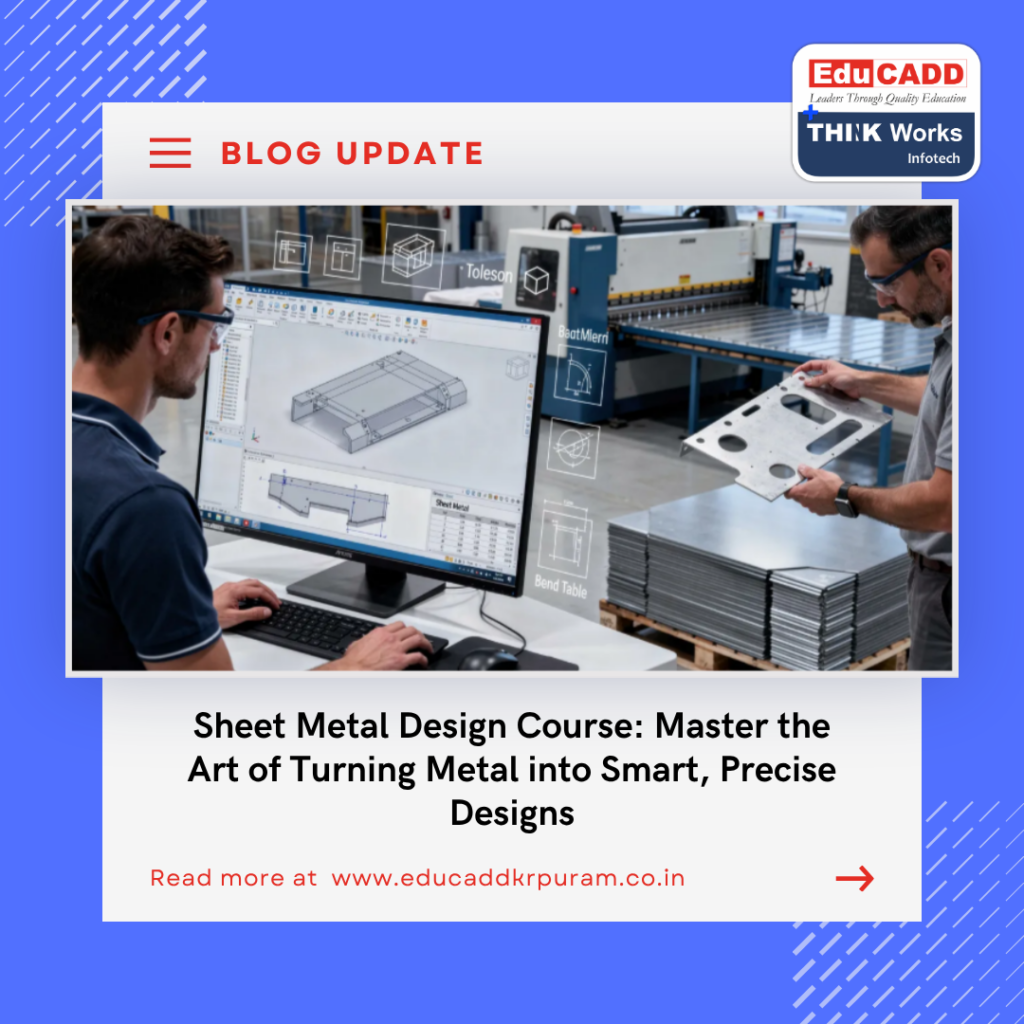
Sheet Metal Design Course
Instead of learning only how to create drawings, learners can understand how a digital model becomes a physical component. With practical training and software-based exercises, students can improve their design thinking and prepare for real engineering projects. As industries continue to adopt advanced manufacturing methods, professionals with strong sheet metal design knowledge can find opportunities across several technical fields.
Understanding the Importance of Sheet Metal Design
Sheet metal design focuses on creating components from thin or moderately thick metal sheets. These sheets can be cut, bent, folded, punched, rolled, or formed into useful shapes. While the basic concept may appear simple, creating a production-ready component requires careful planning. A designer must consider material properties, bend allowances, tooling limitations, joining methods, and the final function of the product.
Good design can reduce manufacturing problems and control production costs. For example, an incorrect bend radius may cause cracks or deformation during fabrication. Similarly, a poorly planned flat pattern can lead to incorrect dimensions after bending. Therefore, designers need to understand both digital modeling and physical manufacturing. This combination makes sheet metal design an important skill for modern engineering professionals.
What You Can Learn in a Sheet Metal Design Course
A structured Sheet Metal Design Course usually covers the complete design workflow, starting from basic concepts and moving toward practical applications. Students can learn how to create sheet metal parts, develop assemblies, generate manufacturing drawings, and prepare accurate flat patterns. Training can also introduce learners to important design rules that influence the final manufactured component.
The learning process may include topics such as:
- Sheet metal modeling techniques
- Material thickness and selection
- Bend and flange creation
- Bend allowance and bend deduction
- Corner treatment and reliefs
- Flat pattern development
- Sheet metal assemblies
- Manufacturing drawings
- Design modifications
- Tolerance considerations
- CAD-based production documentation
These skills provide a strong foundation for anyone planning to work in mechanical design or manufacturing. More importantly, practical exercises allow learners to understand how different design decisions affect the final product.
Building Strong CAD Modeling Skills
Computer-aided design software is central to modern sheet metal development. Designers use CAD platforms to create accurate three-dimensional components and prepare them for manufacturing. However, knowing software commands alone is not enough. A professional designer must understand why a particular feature is used and how it affects the final component.
During a Sheet Metal Design Course, students can practice creating base features, flanges, bends, cuts, holes, and other common elements. They can also learn how to modify models without damaging the overall design intent. This helps them become more confident when handling design changes.
As learners gain experience, they can work on increasingly complex components. This approach develops both software proficiency and engineering thinking. It also helps students understand how a clean digital model can make production documentation easier to prepare.
Learning the Science Behind Bends and Folds
Bending is one of the most important operations in sheet metal manufacturing. When a flat metal sheet is bent, its dimensions and material behavior change. Designers must therefore account for factors such as material thickness, bend radius, bend angle, and neutral axis.
A professional designer should understand how these factors influence the final component. If the calculations are incorrect, the manufactured part may not match the required dimensions. A Sheet Metal Design Course can introduce learners to these concepts through CAD exercises and practical examples.
Understanding bend behavior also helps designers avoid common manufacturing problems. Proper bend reliefs, suitable radii, and correct feature placement can improve the quality of the final part. As a result, students become better prepared to create designs that are both visually accurate and physically achievable.
From Digital Models to Flat Patterns
One major advantage of sheet metal CAD software is the ability to generate flat patterns from three-dimensional designs. A flat pattern represents how a sheet should be cut before it is bent into its final shape. Accuracy at this stage is essential because even a small error can affect the finished component.
Students can learn how software calculates and displays flat patterns based on the selected material and bending conditions. They can then review the developed shape and identify potential issues before manufacturing begins. This saves time and reduces material waste.
Learning this process is valuable because it connects design work with fabrication. Rather than treating the CAD model as the final output, learners begin to understand it as part of a larger production process. This mindset is useful for mechanical designers, production engineers, and CAD professionals.
Designing with Manufacturing in Mind
A good design is not simply one that looks correct on a computer screen. It must also be practical to manufacture. This principle is especially important in sheet metal work because fabrication processes have specific limitations.
A designer should think about tooling access, bend sequences, hole placement, material usage, joining methods, and assembly requirements. Designing a part without considering these factors can increase production time and cost.
A practical Sheet Metal Design Course helps learners develop a design-for-manufacturing approach. They can study how small changes to geometry may make fabrication easier. For example, changing a bend location or modifying a relief can prevent production difficulties.
This approach encourages designers to think beyond modeling. They begin to consider the complete journey of a component, from concept development to fabrication and final assembly.
Applications Across Modern Industries
Sheet metal components are used in a wide range of industries. Their versatility makes them suitable for products that require strength, protection, ventilation, structural support, or controlled weight.
Common applications include:
- Automotive components
- Electrical control panels
- Industrial equipment
- HVAC systems
- Machine enclosures
- Consumer appliances
- Aerospace components
- Railway equipment
- Electronics cabinets
- Fabricated structural parts
Because these industries have different requirements, designers need adaptable skills. A component used in an electrical enclosure may have different design considerations from an automotive bracket. However, the basic principles of accurate modeling, bending, fabrication, and documentation remain important.
Why Practical Training Matters
Theory provides the foundation, but practical experience helps learners develop confidence. A student may understand CAD commands but still struggle when asked to create a complete production-ready component. Practical assignments can bridge this gap.
During a Sheet Metal Design Course, learners can work on realistic models and gradually develop their problem-solving abilities. They can experiment with different feature combinations, identify errors, modify designs, and understand how manufacturing requirements influence their decisions.
Project-based learning can also improve portfolio development. Instead of showing only software exercises, students can demonstrate complete design projects that reflect their understanding of the engineering workflow. This can be useful when applying for internships or entry-level design positions.
Career Opportunities in Sheet Metal Design
The demand for skilled CAD professionals continues to grow as manufacturers adopt digital design and production systems. Candidates with sheet metal expertise can explore several career paths depending on their education and experience.
Potential roles include:
- Sheet Metal Designer
- Mechanical CAD Designer
- Production Design Engineer
- CAD Engineer
- Mechanical Design Engineer
- Fabrication Design Specialist
- Product Design Assistant
- Manufacturing Design Engineer
Career growth depends on technical ability, project exposure, software knowledge, communication skills, and industry experience. Therefore, completing a course should be viewed as the beginning of professional development rather than the final step.
Skills That Can Strengthen Your Professional Profile
Technical software knowledge is important, but successful designers also need a broader skill set. Attention to detail is essential because small dimensional errors can create significant manufacturing issues. Problem-solving ability helps designers find practical solutions when a component does not meet functional or production requirements.
Communication is another valuable skill. Designers often work with engineers, production teams, fabricators, quality professionals, and clients. They need to explain design decisions clearly and understand feedback from other departments.
Time management also matters. Engineering projects often involve deadlines and design revisions. Professionals who can organize their work and respond efficiently to changes can become valuable members of a design team.
Choosing the Right Sheet Metal Design Training
Not every training program offers the same learning experience. Before choosing a Sheet Metal Design Course, students should consider the course structure, software training, practical exposure, trainer expertise, and project-based learning opportunities.
A useful program should provide more than theoretical explanations. It should allow learners to practice different design situations and understand how their models relate to manufacturing.
You can also consider:
- Practical CAD assignments
- Industry-focused projects
- Experienced trainers
- Manufacturing-oriented concepts
- Design documentation practice
- Software-based modeling exercises
- Doubt-clearing sessions
- Portfolio development support
A well-structured learning environment can make the training process more effective and help students build confidence gradually.
Preparing for a Future in Engineering Design
Engineering design is constantly changing. New software features, manufacturing technologies, automation systems, and digital workflows continue to influence the industry. Professionals who keep learning can adapt more easily to these changes.
Learning sheet metal design provides a strong foundation because it combines creativity with technical accuracy. Designers must visualize a component, develop its geometry, understand how it will be manufactured, and ensure that the final design meets functional requirements.
A Sheet Metal Design Course can therefore be a useful starting point for students and professionals who want to strengthen their mechanical design capabilities. With consistent practice, learners can move from basic CAD modeling toward more advanced engineering applications.
Turn Design Knowledge into Practical Capability
Learning sheet metal design is not simply about creating attractive 3D models. It is about understanding how an idea can become a functional manufactured product. Every bend, hole, flange, cut, and dimension has a purpose. When designers understand these relationships, they can create solutions that are more accurate and easier to produce.
The right training can help learners develop this practical mindset. With CAD practice, manufacturing concepts, and project exposure, students can improve both their technical knowledge and confidence. They can also build a portfolio that demonstrates their ability to approach real design challenges.
Conclusion
Sheet metal remains an important part of modern engineering and manufacturing because it offers an effective combination of strength, flexibility, and production efficiency. As companies continue to rely on digital design workflows, professionals who understand both CAD modeling and manufacturing principles can gain an advantage in the workplace.
A Sheet Metal Design Course can help learners develop the knowledge required to create accurate models, prepare flat patterns, understand bending processes, and design with manufacturing in mind. More importantly, practical training can turn software knowledge into useful engineering capability.
For students, fresh graduates, and professionals looking to strengthen their mechanical design skills, sheet metal design can open the door to a wide range of opportunities. With continuous practice, industry-focused learning, and a strong understanding of design principles, you can transform your ideas into precise components that are ready for the real world.

