
Strategic Project Excellence: Mastering Advanced Project Scheduling Techniques Using Primavera P6
In today’s competitive and fast-moving industries, delivering projects on time and within budget requires more than basic planning. Organizations must manage multiple stakeholders, strict deadlines, evolving scopes, and limited resources simultaneously. Under these demanding conditions, traditional scheduling methods often fall short. This is where Advanced Primavera P6 Scheduling become essential. Primavera P6 is widely recognized as one of the most powerful enterprise project management tools available.
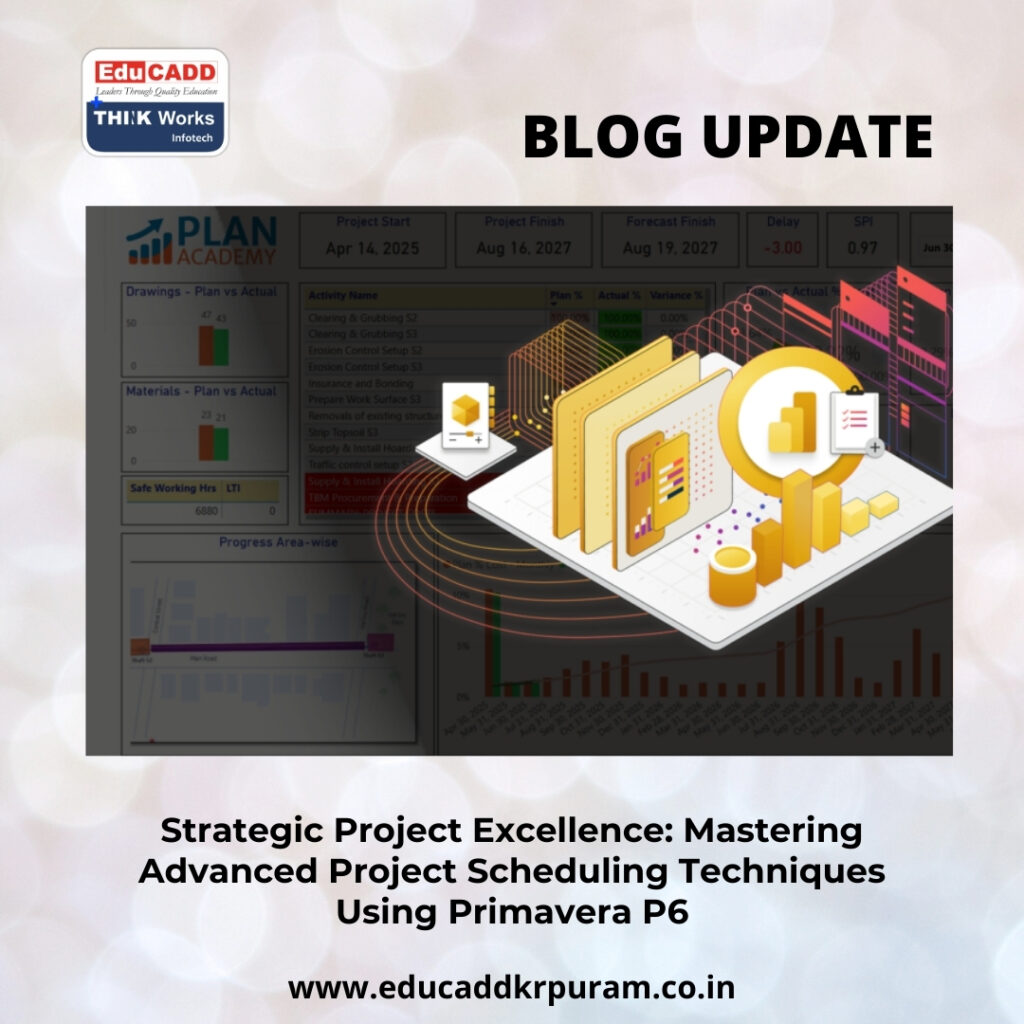
Advanced Primavera P6 Scheduling
However, its real strength lies not just in building timelines but in applying advanced scheduling strategies that provide deeper visibility, stronger forecasting, and better control. When professionals move beyond simple activity creation and explore Primavera’s full capabilities, they transform project scheduling into a strategic management function. This detailed guide explores how advanced methods within Primavera P6 can drive efficiency, improve decision-making, and ensure consistent project performance across industries.
1. The Expanding Role of Advanced Scheduling in Modern Projects
Modern projects are increasingly interconnected and multidisciplinary. Construction, oil and gas, infrastructure, manufacturing, and IT sectors all operate within strict regulatory frameworks and financial constraints. Therefore, planning must account for uncertainty, interdependencies, and performance tracking. Advanced Primavera P6 Scheduling address these challenges by offering a structured and intelligent scheduling environment.
Unlike static spreadsheets, Primavera P6 uses a dynamic scheduling engine that recalculates timelines whenever changes occur. This flexibility ensures that managers always work with updated information. Furthermore, advanced scheduling aligns project scope with strategic objectives. Instead of simply listing activities, planners design execution roadmaps that reflect real-world workflows.
As projects grow in scale, the need for centralized control increases. Primavera P6 enables teams to manage thousands of activities without losing clarity. Consequently, advanced scheduling becomes not just a technical requirement but a strategic advantage that strengthens organizational performance.
2. Building a Strong Foundation with a Structured Work Breakdown Structure
Every successful schedule begins with a clear framework. Within Advanced Primavera P6 Scheduling, the Work Breakdown Structure (WBS) serves as the structural backbone of the entire project.
A well-designed WBS divides the project into manageable and deliverable-focused components. Rather than organizing tasks randomly, planners group them by phases, systems, or locations. For example, a construction project may be segmented into design, procurement, civil works, structural installation, and commissioning. This approach ensures logical clarity and accountability.
Primavera P6 allows managers to assign budgets, responsibilities, and performance metrics at each WBS level. As a result, reporting becomes efficient and meaningful. Instead of reviewing hundreds of individual tasks, stakeholders can assess progress at summary levels. Therefore, a structured WBS enhances transparency, simplifies monitoring, and supports advanced project control.
3. Designing Logical Relationships for Accurate Sequencing
Effective scheduling depends on precise activity relationships. Advanced Primavera P6 Scheduling emphasize the importance of strong network logic to create realistic timelines.
Primavera P6 supports multiple dependency types, including Finish-to-Start, Start-to-Start, Finish-to-Finish, and Start-to-Finish. Advanced schedulers combine these relationships strategically to mirror actual field conditions. They also apply leads and lags carefully to represent overlaps or waiting periods.
Additionally, maintaining logic integrity is critical. Open-ended activities or incorrect links can distort critical path calculations. By regularly validating the network, planners ensure that the schedule reflects accurate execution strategies. Strong relationship management reduces forecasting errors and builds confidence among stakeholders.
4. Critical Path Analysis and Float Management Strategies
Understanding the critical path is central to Advanced Project Scheduling Techniques Using Primavera P6. The critical path identifies the longest sequence of dependent tasks that determine the project’s overall duration.
Primavera automatically calculates float values, which indicate scheduling flexibility. Advanced users, however, analyze more than just zero-float activities. They monitor near-critical tasks that have minimal float and could quickly become critical if delays occur.
Float management enables proactive risk mitigation. When planners redistribute float strategically, they protect high-risk milestones. Moreover, schedule compression techniques such as fast-tracking and crashing can be applied when deadlines tighten. Through detailed critical path analysis, project managers maintain control over completion dates and reduce unexpected disruptions.
5. Resource Loading and Balancing for Optimal Efficiency
Resource management significantly impacts project success. In Advanced Project Scheduling Techniques Using Primavera P6, resource loading ensures that each activity has assigned labor, equipment, or materials.
Once resources are allocated, Primavera generates histograms and usage curves. These visual tools reveal peaks, shortages, and inefficiencies. Advanced schedulers then perform resource leveling to resolve conflicts without compromising key milestones.
Balancing resources prevents over-allocation and improves workforce productivity. It also supports accurate cost forecasting. When resource usage aligns with availability, project execution becomes smoother and more predictable. Therefore, advanced resource strategies enhance both operational efficiency and financial stability.
6. Establishing Baselines for Performance Measurement
A project cannot be effectively controlled without a benchmark. Advanced Project Scheduling Techniques Using Primavera P6 rely on baseline schedules to measure performance accurately.
After final approval, planners create a baseline that captures the original plan. As work progresses, actual performance is compared against this reference. Variances in start dates, finish dates, and durations become immediately visible.
Baseline comparison allows early identification of schedule slippage. Managers can implement corrective actions before delays escalate. This proactive approach improves accountability and builds trust with clients and stakeholders. Baseline management, therefore, transforms scheduling into a measurable performance system.
7. Earned Value Management Integration for Holistic Control
Time and cost must be monitored together. Advanced Project Scheduling Techniques Using Primavera P6 integrate Earned Value Management (EVM) to evaluate both dimensions simultaneously.
EVM combines Planned Value, Earned Value, and Actual Cost to generate performance indicators such as Schedule Performance Index (SPI) and Cost Performance Index (CPI). These metrics provide early warning signals when deviations occur.
By integrating financial data directly into the schedule, Primavera ensures alignment between budget and timeline. Managers can quickly identify inefficiencies and implement strategic corrections. Consequently, earned value integration strengthens overall project governance.
8. Risk Assessment and Scenario Simulation
Uncertainty is unavoidable in complex projects. Therefore, Advanced Project Scheduling Techniques Using Primavera P6 incorporate risk analysis and what-if simulations to enhance preparedness.
Planners can create alternative schedule versions to test different assumptions. By adjusting durations or dependencies, they evaluate potential impacts on completion dates. This approach highlights schedule sensitivity and critical vulnerabilities.
Scenario simulation supports informed decision-making. When risks are identified early, contingency plans can be developed. As a result, projects remain resilient even under changing conditions.
9. Managing Constraints and Calendars for Realistic Planning
Improper constraints can distort schedules. In Advanced Project Scheduling Techniques Using Primavera P6, constraints are applied strategically and sparingly.
Hard constraints may hide float and create unrealistic expectations. Advanced schedulers prioritize logical relationships instead of fixed dates. When constraints are necessary, they are documented clearly.
Calendars also influence scheduling accuracy. Different resources may operate under varying work shifts and holidays. Custom calendars reflect these realities. Consequently, realistic planning enhances credibility and reduces execution challenges.
10. Progress Updating and Forecasting Accuracy
Regular updates keep the schedule relevant and reliable. Advanced Project Scheduling Techniques Using Primavera P6 require systematic entry of actual start dates, finish dates, and remaining durations.
Once updated, Primavera recalculates projected completion dates automatically. This forecasting capability allows managers to anticipate delays before they become critical.
Accurate forecasting supports strategic decision-making. Teams can adjust resources or modify sequencing to recover lost time. Continuous updates ensure that the schedule reflects real-time conditions rather than outdated assumptions.
11. Managing Multiple Projects with Enterprise Project Structure
Organizations often manage numerous projects simultaneously. Advanced Project Scheduling Techniques Using Primavera P6 enable enterprise-level oversight through the Enterprise Project Structure (EPS).
EPS organizes projects hierarchically under a centralized system. Executives can monitor portfolio performance through dashboards and summary reports. Shared resources are allocated efficiently across projects.
This centralized visibility enhances strategic planning. Decision-makers can prioritize initiatives and balance workloads effectively. Enterprise coordination ensures alignment between operational activities and corporate objectives.
12. Cost Loading and Financial Synchronization
Financial integration strengthens project control. In Advanced Project Scheduling Techniques Using Primavera P6, cost accounts are linked directly to activities.
Cost loading assigns budget values to tasks. When schedule changes occur, financial forecasts update automatically. This synchronization maintains budget accuracy.
Additionally, contractual milestones and payment schedules can be monitored within Primavera. Financial risks become visible early, allowing proactive management. Therefore, cost synchronization supports commercial stability and transparency.
13. Advanced Reporting and Data Visualization
Clear communication is essential for project success. Advanced Project Scheduling Techniques Using Primavera P6 provide customizable reporting and visualization tools.
Managers can create layouts that highlight float, milestones, or earned value metrics. Graphical dashboards simplify complex information for stakeholders.
Exporting data to business intelligence platforms enhances executive reporting. Visual clarity accelerates decision-making and strengthens collaboration between teams.
14. Continuous Improvement and Professional Development
Mastery of Advanced Project Scheduling Techniques Using Primavera P6 requires ongoing learning and adaptation. As industries evolve, scheduling challenges become more sophisticated.
Professionals benefit from certifications, workshops, and practical experience. Lessons learned from completed projects refine future strategies. Continuous improvement transforms scheduling into a strategic competency rather than an administrative function.
Organizations that invest in advanced Primavera expertise gain a competitive edge. Skilled schedulers drive efficiency, reduce risk, and deliver projects with confidence.
Conclusion
In complex and high-stakes industries, advanced scheduling determines project success. By applying Advanced Primavera P6 Scheduling, organizations gain clarity, control, and predictive insight. From structured WBS development to critical path mastery, resource balancing, earned value integration, and enterprise coordination, each technique strengthens project governance. Primavera P6 evolves from a basic planning tool into a comprehensive project control platform. When professionals embrace its advanced capabilities, they transform project management into a proactive and strategic discipline. Ultimately, mastery of these techniques ensures consistent delivery, stronger stakeholder confidence, and sustainable organizational growth.

