
The Algorithmic Advantage: Unlocking Business Growth Through AI-Driven Digital Marketing Tools and Use Cases
Digital marketing no longer revolves around guesswork or static campaign planning. It now operates within a dynamic ecosystem shaped by data, automation, and predictive intelligence. As consumer expectations rise and competition intensifies, organizations must respond faster and more precisely than ever before. In this context, AI Digital Marketing Growth have become the foundation of modern growth strategies.
Artificial intelligence enables marketers to interpret enormous volumes of data, anticipate trends, personalize communication, and automate execution. Instead of manually analyzing spreadsheets or running repetitive tasks, teams leverage algorithms that learn continuously. Consequently, decisions become smarter, campaigns become more agile, and customer experiences become more relevant.
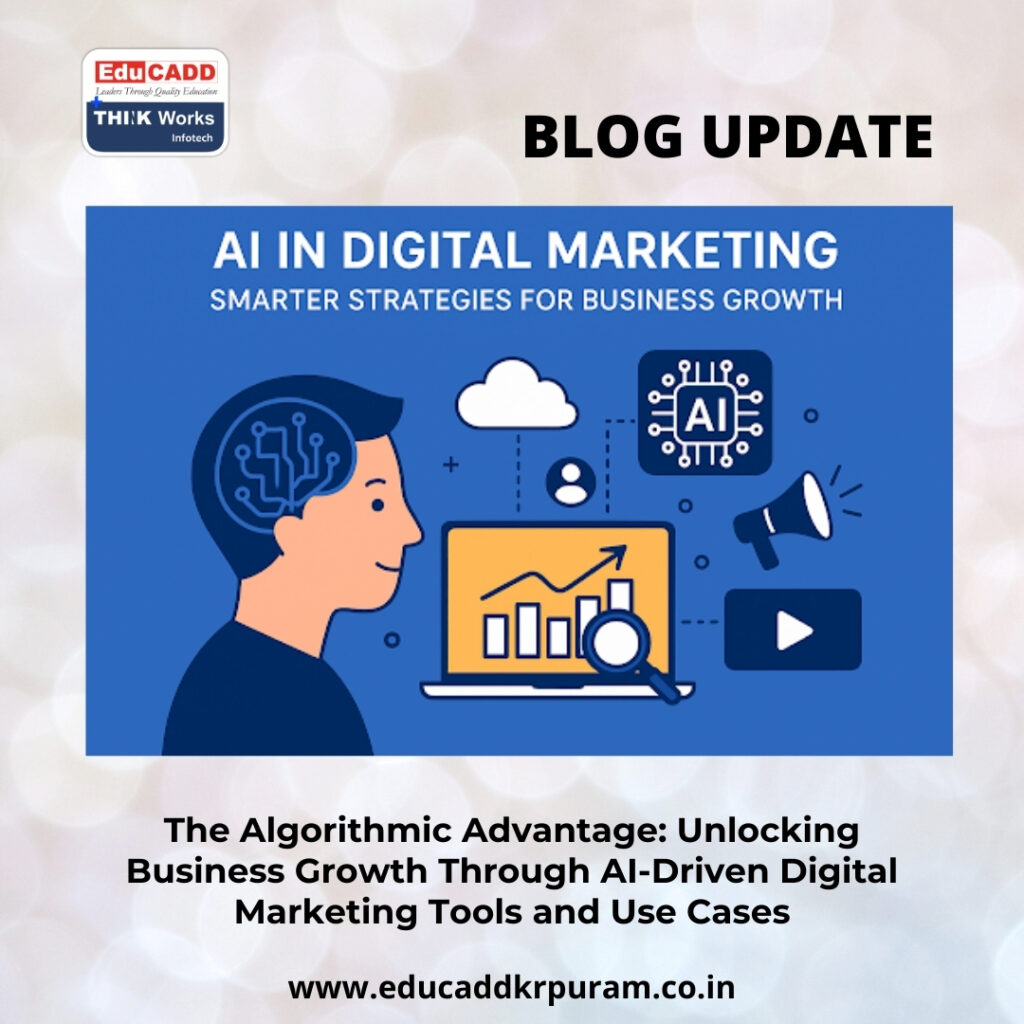
AI Digital Marketing Growth
This in-depth guide explores how AI Digital Marketing Growth from strategy development to performance measurement. Each section highlights practical applications, strategic insights, and long-term implications. By understanding these AI-driven digital marketing tools and use cases, businesses can build sustainable competitive advantages in an increasingly complex digital landscape.
1. The Strategic Shift Toward Intelligent Marketing
The transformation of marketing strategies began with the explosion of digital touchpoints. Consumers now interact with brands across websites, social platforms, mobile applications, and connected devices. Managing these interactions manually would limit scalability and reduce responsiveness. Therefore, AI-driven digital marketing tools and use cases emerged as essential solutions.
These intelligent systems process real-time data from multiple channels simultaneously. They uncover hidden patterns in customer behavior and highlight actionable insights. As a result, marketers transition from reactive planning to proactive strategy development. Campaigns are no longer adjusted after performance declines; they evolve continuously based on predictive signals.
Moreover, AI fosters agility. When market conditions change, algorithms adapt targeting parameters and messaging automatically. This responsiveness protects budgets and sustains performance. Organizations that integrate AI-driven digital marketing tools and use cases into their strategic frameworks gain the ability to innovate consistently while maintaining operational efficiency.
2. Data Intelligence and Behavioral Segmentation
Data represents the backbone of modern marketing, yet raw numbers alone hold little value. AI-driven digital marketing tools and use cases transform fragmented datasets into structured insights. Through machine learning algorithms, user behaviors are analyzed in depth, revealing purchasing habits, engagement preferences, and browsing tendencies.
Instead of grouping audiences solely by demographics, AI builds behavioral segments. For example, it distinguishes between frequent buyers, price-sensitive shoppers, and first-time visitors. Consequently, messaging becomes highly relevant. Personalized campaigns resonate more strongly, which increases conversion rates and customer satisfaction.
In addition, segmentation evolves dynamically. As customers interact with content, their profiles update instantly. This real-time adaptability ensures that campaigns reflect current intent rather than outdated assumptions. By leveraging AI-driven digital marketing tools and use cases for segmentation, brands achieve precision targeting that drives measurable growth.
3. AI-Powered Content Strategy and Creation
Content marketing remains central to brand visibility and engagement. However, maintaining consistency across channels requires significant resources. AI Digital Marketing Growth tools and use cases streamline content production while preserving quality. Intelligent platforms generate outlines, headlines, ad copy, and product descriptions efficiently.
Beyond creation, AI evaluates readability, keyword alignment, and search intent. It identifies gaps and suggests improvements that enhance discoverability. Therefore, marketers optimize content without relying solely on manual audits.
Additionally, AI supports content repurposing. A comprehensive article can transform into social posts, newsletters, and video scripts seamlessly. This process amplifies reach while maintaining cohesive messaging. Although human creativity shapes storytelling and emotional resonance, AI-driven digital marketing tools and use cases accelerate production cycles and strengthen strategic alignment.
4. Predictive Analytics and Revenue Forecasting
Predictive analytics stands among the most impactful AI-driven digital marketing tools and use cases. By analyzing historical performance and real-time signals, AI forecasts outcomes such as lead conversion probability and revenue potential.
These insights guide resource allocation. Marketing budgets shift toward high-performing channels while underperforming initiatives are refined or paused. Consequently, return on investment improves consistently.
AI also predicts churn risks. When engagement decreases or purchasing frequency declines, automated alerts prompt retention campaigns. Businesses intervene proactively rather than reactively.
Furthermore, revenue forecasting becomes more accurate. Instead of relying solely on past averages, predictive models incorporate seasonal patterns and emerging trends. Organizations that implement AI-driven digital marketing tools and use cases for forecasting gain strategic clarity and operational confidence.
5. Intelligent Advertising and Real-Time Optimization
Digital advertising ecosystems demand constant monitoring and rapid adjustments. AI-driven digital marketing tools and use cases automate bidding, targeting, and performance analysis effectively.
Programmatic platforms evaluate user context, device data, and browsing history before placing bids instantly. Ads reach audiences with higher purchase intent, which increases efficiency. Additionally, algorithms redistribute budgets dynamically based on campaign performance.
Creative testing also benefits from automation. AI compares multiple variations of visuals and copy simultaneously. The highest-performing combinations receive greater exposure automatically. Consequently, advertising outcomes improve without excessive manual intervention.
By incorporating AI-driven digital marketing tools and use cases into advertising strategies, organizations enhance scalability, precision, and profitability.
6. Conversational AI and Customer Engagement
Customer engagement now demands immediacy. AI-driven digital marketing tools and use cases enable conversational experiences through intelligent chatbots and virtual assistants. These systems handle inquiries, recommend products, and provide support around the clock.
Unlike traditional automated responses, conversational AI learns from interactions. It adapts language and context continuously. As a result, customers experience more natural and helpful communication.
Moreover, conversational marketing enhances lead qualification. Automated dialogues gather relevant information and pass qualified prospects to sales teams. This streamlined approach reduces response time and accelerates conversion cycles.
Through AI-driven digital marketing tools and use cases, brands combine efficiency with personalized engagement, strengthening customer relationships at scale.
7. Hyper-Personalization Across the Customer Journey
Personalization extends beyond using a customer’s name in an email. AI-driven digital marketing tools and use cases analyze browsing patterns, purchase history, and engagement metrics to deliver tailored experiences.
For instance, websites adapt product recommendations dynamically. Email campaigns adjust subject lines and content blocks according to user behavior. Consequently, open rates and click-through rates increase significantly.
Cross-channel consistency reinforces personalization. If a visitor abandons a cart, targeted reminders appear across email and social platforms. This integrated approach increases conversion likelihood while maintaining cohesive messaging.
AI-driven digital marketing tools and use cases empower brands to scale personalization without sacrificing operational efficiency.
8. Social Listening and Brand Sentiment Analysis
Social media platforms generate constant streams of customer feedback. AI-driven digital marketing tools and use cases analyze conversations in real time. Sentiment analysis identifies emotional tone within comments and reviews.
This capability allows brands to address concerns promptly and amplify positive discussions. Consequently, reputation management becomes proactive rather than reactive.
AI also identifies trending topics relevant to target audiences. Content strategies align with emerging conversations, which enhances visibility and engagement.
By integrating AI-driven digital marketing tools and use cases into social listening practices, businesses transform unstructured online dialogue into strategic insights.
9. Marketing Automation and Workflow Efficiency
Operational efficiency determines long-term scalability. AI Digital Marketing Growth tools and use cases automate repetitive workflows such as welcome sequences, follow-up emails, and reporting dashboards.
Behavior-based triggers initiate communication automatically. For example, downloading a resource activates a nurturing sequence instantly. This timely engagement increases conversion probability.
Automation reduces human error and ensures consistent execution. Meanwhile, real-time analytics dashboards provide immediate performance updates. Teams adjust strategies quickly and effectively.
Through integrated systems, AI-driven digital marketing tools and use cases connect CRM platforms, advertising channels, and analytics tools seamlessly. This unified infrastructure supports sustainable growth.
10. Voice Search and Visual Discovery Innovations
Consumer search behavior continues to evolve. AI-driven digital marketing tools and use cases adapt strategies to voice queries and image-based searches.
Voice search optimization emphasizes conversational phrases and question-based keywords. Content structured around natural language improves visibility in voice assistant results.
Visual discovery technologies allow users to upload images and find similar products instantly. This capability enhances user experience and shortens decision-making cycles.
By embracing AI-driven digital marketing tools and use cases for emerging search formats, brands remain accessible and competitive in shifting digital environments.
11. Comprehensive Customer Journey Mapping
Understanding the entire customer journey enhances strategic coordination. AI-driven digital marketing tools and use cases integrate touchpoints across platforms into unified profiles.
This holistic perspective reveals friction points and high-impact opportunities. Marketers design targeted interventions at crucial moments. Consequently, conversion rates improve while customer satisfaction increases.
Predictive algorithms suggest next best actions tailored to individual users. Timely communication guides prospects smoothly toward purchase decisions.
AI-driven digital marketing tools and use cases foster collaboration among marketing, sales, and support teams by providing shared insights and consistent data visibility.
12. Ethical AI and Responsible Data Practices
As reliance on data grows, ethical responsibility becomes paramount. AI-driven digital marketing tools and use cases must operate within transparent frameworks.
Organizations should secure customer information, obtain clear consent, and communicate data usage policies openly. Trust strengthens brand loyalty and mitigates risk.
Algorithm audits ensure fairness and prevent unintended bias. Diverse datasets improve inclusivity and campaign relevance.
Responsible implementation of AI-driven digital marketing tools and use cases balances innovation with integrity, reinforcing long-term credibility.
13. Measuring Performance with Advanced Attribution Models
Accurate measurement underpins effective strategy. AI-driven digital marketing tools and use cases employ advanced attribution models that evaluate every touchpoint.
Instead of crediting a single interaction, algorithms assess the combined influence of ads, emails, and organic content. Consequently, marketing investments align with genuine impact.
Interactive dashboards translate complex metrics into actionable insights. Continuous optimization strengthens ROI and supports strategic planning.
By leveraging AI-driven digital marketing tools and use cases for analytics, organizations transform reporting into a growth-driving mechanism.
14. Building a Sustainable AI-Enabled Marketing Ecosystem
Implementing AI requires structured planning and ongoing refinement. AI-driven digital marketing tools and use cases deliver maximum value when integrated with clear objectives and reliable data infrastructure.
Businesses should define measurable goals, assess technology readiness, and train teams effectively. Cross-department collaboration accelerates adoption and innovation.
Continuous monitoring ensures that algorithms adapt to evolving customer behavior. Feedback loops refine targeting and personalization strategies.
By embedding AI-driven digital marketing tools and use cases into long-term strategy, organizations establish resilient ecosystems capable of sustained growth and competitive leadership.
Conclusion
The integration of AI Digital Marketing Growth tools and use cases marks a pivotal transformation in how brands connect with audiences. From predictive analytics and intelligent advertising to hyper-personalization and journey optimization, artificial intelligence enhances every stage of marketing operations.
Organizations that embrace this technological shift position themselves for enduring success. They operate with agility, allocate resources efficiently, and deliver experiences that resonate deeply with customers.
As digital landscapes continue evolving, the algorithmic advantage will define market leaders. By investing strategically in AI-driven digital marketing tools and use cases, businesses secure a future built on innovation, efficiency, and meaningful engagement.

