
When Cities Learn to Think: AI-Driven Intelligence Powering the Smart Urban Revolution
Cities are no longer defined only by skylines, roads, and buildings. They are becoming living systems that observe, analyze, and respond to human behavior in real time. This transformation is powered by AI Smart City Intelligence, a force that blends artificial intelligence with digital infrastructure to reshape urban life. As populations grow and resources become more constrained, traditional city management methods struggle to keep pace. AI introduces a new way of governing cities—one that relies on intelligence, prediction, and automation. The result is an urban environment that adapts continuously to the needs of its people.
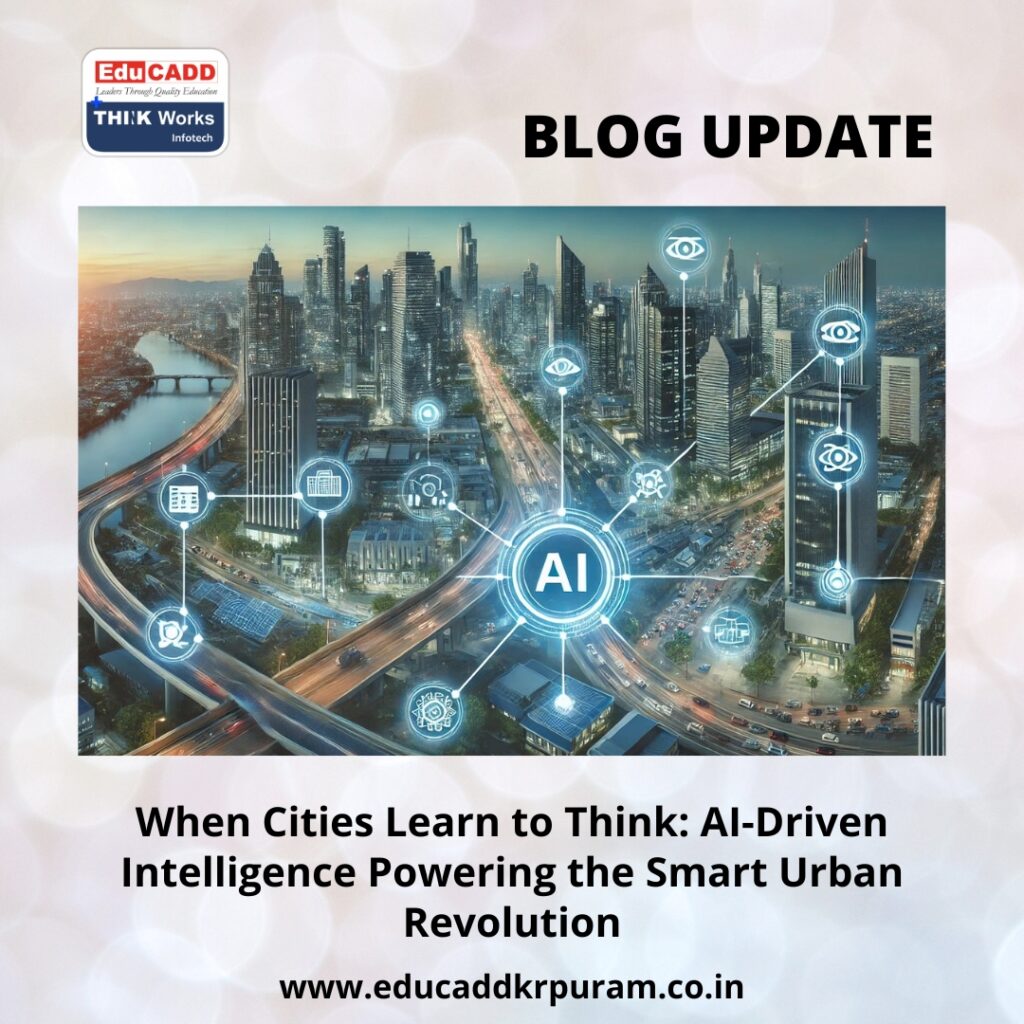
AI Smart City Intelligence
1. From Static Urban Centers to Intelligent Living Systems
Conventional cities operate through fixed processes and delayed decision-making. Smart cities function differently. They behave like dynamic ecosystems where data flows constantly between infrastructure, services, and citizens. AI Smart City Intelligence transforms this data into insights that guide real-time action. Traffic patterns, energy usage, and public service demands are analyzed continuously. This shift enables cities to move beyond reactive management and toward adaptive urban systems that evolve alongside their residents.
2. Artificial Intelligence as the Digital Brain of Smart Cities
Artificial intelligence serves as the decision-making engine behind smart city operations. While sensors and connected devices collect information, AI interprets it at scale. AI in Smart Cities allows systems to recognize patterns, forecast outcomes, and recommend optimal actions. Unlike rule-based automation, AI systems learn over time. Each decision improves future performance. This learning capability makes urban services smarter, faster, and more reliable with every passing day.
3. Data as the Foundation of Intelligent Urban Transformation
Smart cities thrive on data, and AI unlocks its full potential. Millions of data points flow from transportation systems, utilities, public services, and citizen interactions. AI in Smart Cities processes this information to create a unified view of urban activity. City leaders gain access to predictive insights instead of historical reports. This shift supports informed decision-making and ensures that urban development aligns with real-world needs.
4. AI-Led Urban Planning for Sustainable Growth
Urban planning has traditionally relied on static projections and long approval cycles. AI changes this approach by enabling simulation-driven planning. AI in Smart Cities allows planners to test multiple development scenarios before construction begins. Population density, traffic flow, environmental impact, and infrastructure demand can all be modeled accurately. This results in smarter zoning decisions, efficient land use, and sustainable city expansion that anticipates future challenges.
5. Redefining Urban Mobility with Intelligent Transportation
Transportation is one of the most complex urban systems to manage. AI introduces intelligence into every layer of mobility. AI in Smart Cities enables real-time traffic optimization by adjusting signals, predicting congestion, and rerouting vehicles dynamically. Public transportation systems benefit through demand forecasting and schedule optimization. These advancements reduce travel time, lower fuel consumption, and improve commuter satisfaction across the city.
6. Strengthening Public Safety Through Predictive AI
Public safety has moved beyond reactive policing and emergency response. AI-driven systems analyze crime trends, crowd behavior, and environmental signals to identify potential risks early. AI in Smart Cities supports predictive safety strategies that allocate resources where they are needed most. Emergency response teams benefit from optimized dispatch systems and faster routing. This proactive approach enhances safety while improving operational efficiency.
7. Smart Energy Management for Efficient Urban Living
Energy consumption places enormous pressure on urban infrastructure. AI-powered energy systems optimize production, distribution, and usage across the city. AI in Smart Cities enables smart grids that balance demand in real time and integrate renewable energy sources efficiently. Buildings equipped with AI adjust lighting, temperature, and power usage automatically. These systems reduce waste, cut costs, and support sustainability goals without sacrificing comfort.
8. Intelligent Water and Waste Management Systems
Water scarcity and waste management demand precision and efficiency. AI models detect leaks, forecast consumption, and optimize distribution networks. AI in Smart Cities also improves waste collection through smart bins and optimized routes. Collection schedules adjust based on real-time demand rather than fixed timetables. These innovations conserve resources, lower operational expenses, and maintain cleaner urban environments.
9. Transforming Urban Healthcare with AI Integration
Healthcare delivery improves significantly when integrated into smart city ecosystems. AI analyzes patient data, environmental factors, and hospital capacity to optimize care. AI in Smart Cities supports early disease detection, faster emergency response, and efficient hospital management. Telehealth platforms powered by AI expand access to care, especially in densely populated areas. This integration strengthens public health outcomes and system resilience.
10. Citizen-Centric Governance Enabled by AI
Modern governance requires transparency, speed, and accessibility. AI-powered platforms streamline interactions between citizens and authorities. AI in Smart Cities enables chatbots, automated service requests, and real-time grievance tracking. Data analytics help governments understand public sentiment and service performance. This approach builds trust, improves engagement, and ensures that governance remains responsive to citizen needs.
11. Environmental Intelligence and Climate Adaptation
Environmental monitoring has become a priority for urban resilience. AI systems track air quality, noise levels, temperature variations, and pollution sources continuously. AI in Smart Cities provides early warnings for hazardous conditions and supports evidence-based environmental policies. Predictive models also help cities prepare for climate risks such as flooding or heatwaves. These capabilities promote healthier living conditions and long-term sustainability.
12. Integrating AI Across Urban Departments
Smart cities operate best when systems communicate seamlessly. AI enables integration across transportation, utilities, healthcare, and governance platforms. AI in Smart Cities breaks down data silos and creates a unified operational framework. Insights generated in one department benefit others instantly. This coordination improves efficiency, reduces duplication, and enhances overall service delivery.
13. Ethical, Privacy, and Security Considerations
AI adoption introduces important ethical responsibilities. Data privacy, algorithmic fairness, and cybersecurity must be addressed proactively. AI in Smart Cities requires transparent data governance frameworks and responsible AI practices. Public trust depends on how data is collected, stored, and used. Cities that prioritize ethical implementation will ensure inclusive and sustainable digital transformation.
14. Economic Growth Fueled by AI-Powered Cities
Smart cities act as catalysts for economic development. Intelligent infrastructure attracts innovation, investment, and skilled talent. AI in Smart Cities supports new industries, digital startups, and technology-driven jobs. Efficient urban systems reduce business costs and increase productivity. As innovation ecosystems grow, cities strengthen their position in the global digital economy.
Conclusion
The integration of artificial intelligence into city systems represents a defining shift in urban evolution. AI Smart City Intelligence enables cities to think, adapt, and grow intelligently. By transforming data into actionable insights, AI improves efficiency, sustainability, and quality of life. As cities continue to expand, intelligent systems will determine their resilience and success. The future belongs to cities that embrace AI not just as technology, but as the foundation of smarter, more human-centric urban living.

