
AutoCAD Electrical for Industrial Control Design: Building Intelligent Systems for the Future of Automation
Industrial environments have changed dramatically over the past decade. Automation systems are no longer limited to basic motor starters and relay logic. Today, industries rely on advanced control architectures that integrate PLCs, sensors, drives, safety systems, and data communication networks. Designing these systems requires far more than simple drafting skills. It demands precision, intelligence, and structured documentation.This is where AutoCAD Electrical Industrial Design becomes indispensable. Unlike conventional CAD software, AutoCAD Electrical is engineered specifically for electrical and control engineers. It transforms static drawings into data-rich design assets that support accuracy, compliance, and efficiency throughout the project lifecycle.
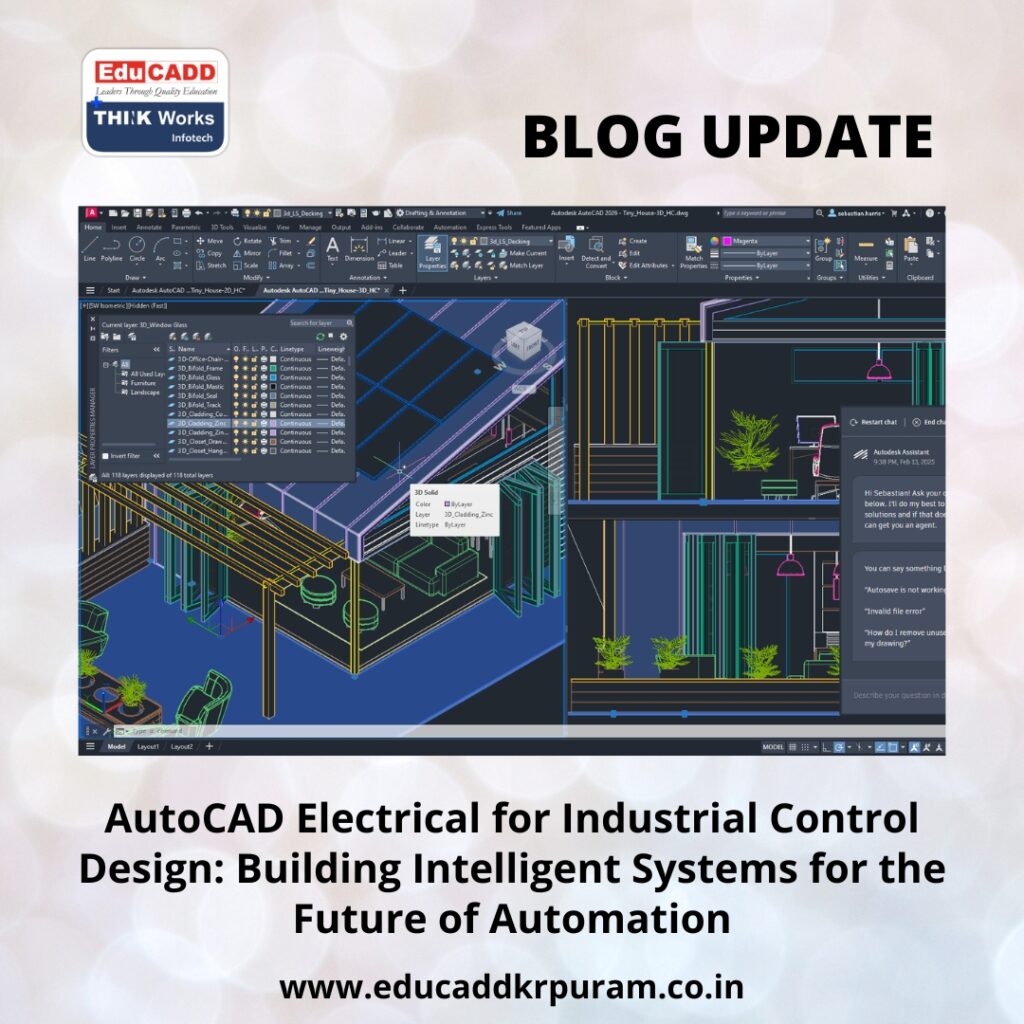
AutoCAD Electrical Industrial Design
Learning AutoCAD Electrical Industrial Design allows professionals to design smarter control systems, reduce engineering errors, and meet modern industry expectations. This blog explores how AutoCAD Electrical supports industrial control design, how it improves productivity, and why mastering it is a powerful career move in today’s automation-driven world.
Industrial Control Design: The Backbone of Automated Operations
Industrial control design focuses on creating electrical systems that regulate machines, processes, and production lines. These systems ensure that equipment operates safely, efficiently, and reliably. Control designs connect field devices such as sensors and actuators with control hardware like relays, contactors, and PLCs.
As automation expands, control systems grow more complex. Designers must consider safety interlocks, fault diagnostics, energy efficiency, and regulatory compliance. Even a small design oversight can cause operational delays or safety incidents. Therefore, clarity and consistency in control documentation are essential.
Learning AutoCAD Electrical for industrial control design equips engineers with tools that support structured workflows. The software helps manage complexity by organizing components, connections, and references in a logical and traceable manner. This structured approach improves both design quality and long-term system reliability.
How AutoCAD Electrical Transforms Traditional Electrical Drafting
Traditional electrical drafting relies heavily on manual processes. Wire numbers, device tags, and cross-references are often managed by hand. While this approach may work for small projects, it becomes inefficient and error-prone as project size increases.
AutoCAD Electrical introduces intelligence into every aspect of electrical drafting. Each component contains embedded data that the software manages automatically. When a device tag changes, all related references update instantly. This eliminates inconsistencies that commonly occur in manual drawings.
By learning AutoCAD Electrical for industrial control design, professionals move beyond simple drafting. They gain the ability to create interconnected designs that remain accurate even as changes occur. This capability is especially valuable in fast-paced industrial projects where revisions are frequent.
Designing Clear and Reliable Electrical Schematics
Electrical schematics serve as the primary communication tool between designers, installers, and maintenance teams. A well-designed schematic ensures that everyone understands how the control system functions. Poorly structured schematics, on the other hand, can lead to wiring mistakes and extended troubleshooting.
AutoCAD Electrical enhances schematic design by automating common tasks such as wire numbering, component tagging, and reference linking. Designers can focus on logic and functionality instead of repetitive manual work. The software also checks designs for errors as they are created, helping prevent issues early.
Learning AutoCAD Electrical for industrial control design allows engineers to create standardized, easy-to-read schematics. Reusable circuits and macros further improve consistency across projects. As a result, schematics become more reliable and easier to maintain throughout the system’s life.
Efficient Control Panel and Cabinet Layout Design
Industrial control systems do not exist only on paper. They are installed inside control panels and cabinets that must meet physical, thermal, and safety requirements. Effective panel layout design ensures that components are accessible, properly spaced, and wired efficiently.
AutoCAD Electrical integrates panel layout tools that link directly to schematic components. This connection ensures that every device shown in the schematic appears correctly in the panel layout. If a component changes, the panel design updates accordingly.
By learning AutoCAD Electrical for industrial control design, professionals can design panels with greater confidence. The software supports enclosure selection, footprint management, and spacing rules. These features reduce manufacturing errors and simplify panel assembly on the shop floor.
PLC and Automation Control Design Simplified
Programmable Logic Controllers play a critical role in modern automation systems. Designing PLC control circuits requires precise coordination between electrical schematics and control logic. Any mismatch between wiring and programming can delay commissioning and increase costs.
AutoCAD Electrical provides dedicated tools for PLC design. Designers can insert PLC modules, assign I/O points, and generate PLC wiring diagrams automatically. The software supports a wide range of PLC brands, making it suitable for diverse industrial environments.
Learning AutoCAD Electrical for industrial control design enables engineers to generate accurate PLC I/O reports directly from the design. These reports serve as a clear reference for programmers and commissioning engineers. This alignment improves collaboration and reduces startup issues.
Automated Reports and Documentation for Industrial Projects
Documentation plays a vital role in industrial control projects. Bills of materials, wire lists, terminal schedules, and panel layouts must be accurate and consistent. Manual documentation processes often consume significant time and remain vulnerable to errors.
AutoCAD Electrical automates report generation using live design data. Any change made in the schematic or panel layout updates all related reports instantly. This dynamic documentation approach improves reliability and saves valuable engineering time.
By learning AutoCAD Electrical for industrial control design, professionals can deliver comprehensive project documentation with minimal effort. This capability strengthens client trust and simplifies future system upgrades or maintenance activities.
Ensuring Compliance with International Electrical Standards
Industrial control systems must comply with strict electrical standards and safety regulations. These standards vary by region and industry, making compliance a complex challenge. Non-compliant designs can lead to costly revisions or project delays.
AutoCAD Electrical includes built-in support for major international standards such as IEC, NFPA, IEEE, and JIC. Symbol libraries, tagging formats, and documentation styles align with these requirements. Designers can select the appropriate standard at the project level.
Learning AutoCAD Electrical for industrial control design helps engineers maintain compliance without manual adjustments. This reduces risk and ensures that designs meet regulatory expectations from the outset.
Boosting Productivity and Reducing Design Errors
Industrial projects often operate under tight timelines. Efficiency and accuracy directly affect project success. AutoCAD Electrical improves productivity by automating repetitive tasks and minimizing human error.
Features such as real-time error checking, automated cross-referencing, and reusable design elements allow designers to work faster without sacrificing quality. These efficiencies become increasingly valuable as project complexity grows.
Learning AutoCAD Electrical for industrial control design empowers professionals to handle larger projects with confidence. Over time, improved productivity leads to better project outcomes and stronger professional credibility.
Career Opportunities Enabled by AutoCAD Electrical Expertise
The demand for skilled industrial control designers continues to rise across manufacturing, energy, infrastructure, and automation sectors. Employers seek professionals who can deliver intelligent, standardized electrical designs efficiently.
Learning AutoCAD Electrical for industrial control design positions individuals as specialists in a high-demand skill area. This expertise supports roles such as electrical design engineer, automation engineer, control panel designer, and technical consultant.
Additionally, professionals with AutoCAD Electrical skills often command higher compensation due to their ability to reduce errors and optimize workflows. As industrial automation continues to expand, this expertise remains highly relevant.
Best Practices for Learning AutoCAD Electrical Effectively
Mastering AutoCAD Electrical requires both software proficiency and electrical knowledge. A strong understanding of control fundamentals ensures that designs remain practical and compliant. Combining theory with hands-on practice accelerates learning.
Working on real-world industrial scenarios enhances understanding. Designing motor control circuits, PLC systems, and control panels builds confidence and skill. Consistent practice improves speed and accuracy over time.
Learning AutoCAD Electrical for industrial control design is most effective when approached as a continuous process. Staying updated with new features and industry trends ensures long-term professional growth.
Conclusion
AutoCAD Electrical has become a cornerstone of modern industrial control design. It enables engineers to move beyond basic drafting and embrace intelligent, data-driven workflows. By integrating schematics, panel layouts, PLC design, and documentation, the software supports every stage of control system development.
Learning AutoCAD Electrical Industrial Design is a strategic investment in both technical excellence and career advancement. It improves accuracy, enhances productivity, and ensures compliance in complex industrial environments.
As automation continues to redefine industries, professionals who master AutoCAD Electrical will remain at the forefront of innovation. This skill empowers designers to build reliable, efficient, and future-ready control systems that drive industrial success.

