
Designing Precision in Civil Projects: A Civil Engineer’s Perspective on BIM Coordination
In modern civil engineering, construction projects have grown increasingly complex. Roads, bridges, and large-scale infrastructure demand precise planning, accurate execution, and seamless collaboration. Traditional methods of drawing, checking, and revising often lead to delays, misunderstandings, and budget overruns. This is where BIM Coordination in Civil comes into play.
BIM coordination is more than just a technical tool—it is a methodology that aligns all project data into a single, coherent model. Civil engineers can use it to identify conflicts early, streamline workflows, and improve communication across disciplines.
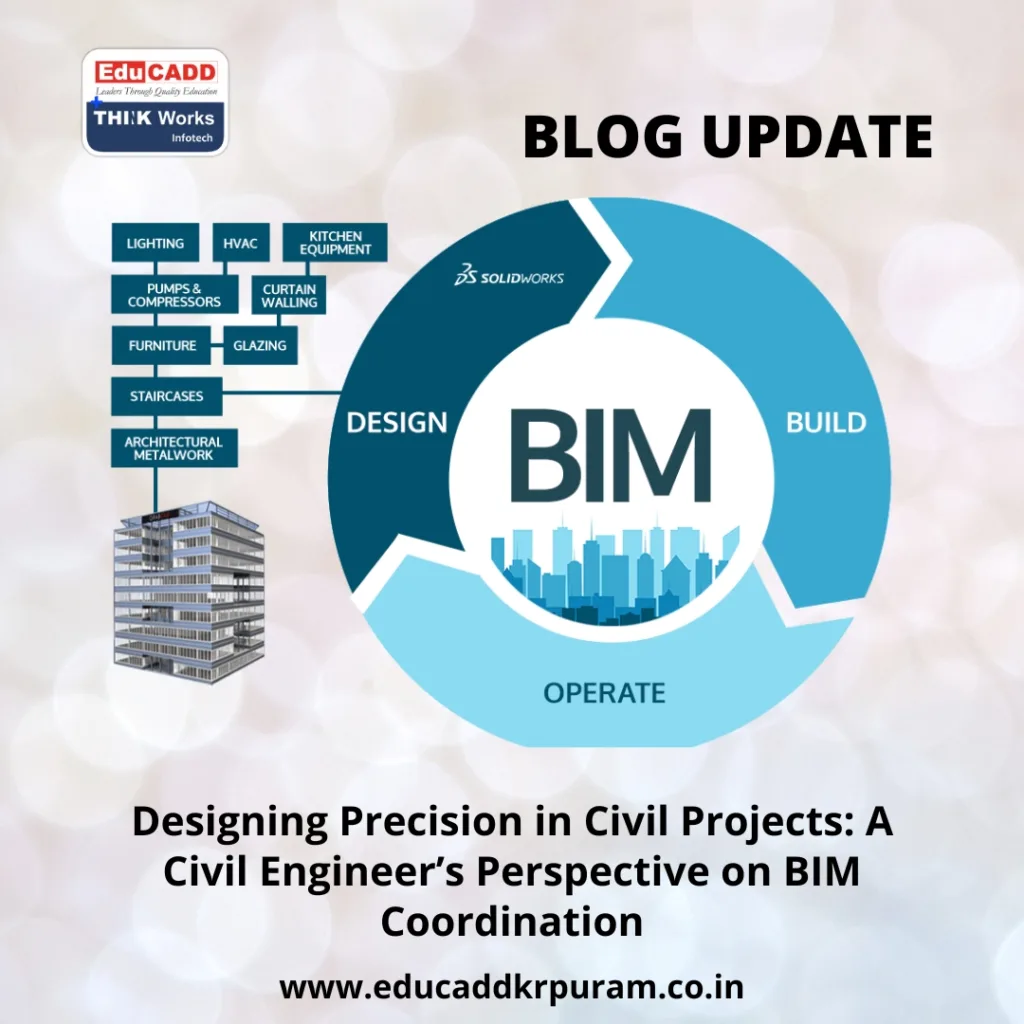
BIM Coordination in Civil
In this guide, we explore BIM coordination from the civil engineer’s viewpoint. We will cover its processes, essential tools, benefits, challenges, and practical strategies for success. By the end, you’ll understand how BIM coordination transforms design and construction into a more predictable, efficient, and accurate process.
1. What BIM Coordination Means for Civil Engineers
BIM coordination involves combining multiple models from different disciplines into a unified environment. Civil engineers often work alongside structural, architectural, and MEP teams, ensuring all elements fit together without clashes.
Unlike traditional 2D designs, BIM provides a 3D digital model that contains detailed metadata. For instance, a highway project does not only show alignment—it includes materials, dimensions, drainage capacity, and more. Through coordination, civil engineers detect errors early, reducing the risk of costly mistakes.
Furthermore, BIM coordination enhances interdisciplinary communication. Engineers no longer rely solely on printed drawings or endless emails; they collaborate directly within the model. This fosters better decision-making, faster approvals, and a shared understanding of the project.
2. The BIM Coordination Workflow in Civil Projects
Understanding the workflow helps civil engineers leverage BIM coordination effectively. Typically, the process involves the following stages:
a. Model Development
Each team creates its own digital model. Structural engineers design foundations, beams, and reinforcements. Civil engineers develop road layouts, utilities, and drainage systems. Architects focus on building geometries and interiors.
b. Model Integration
All models are imported into a central platform, creating a comprehensive view of the project. This step ensures that every element aligns correctly in 3D space.
c. Clash Detection
Specialized software identifies conflicts between models, such as overlapping pipes or structural elements. Civil engineers review these issues to prevent field problems.
d. Coordination Meetings
Regular collaborative sessions involve all stakeholders. Issues are discussed, responsibilities assigned, and revisions implemented. This iterative process continues until the model is clash-free.
e. Model Validation
Once the integration is complete, the final model undergoes rigorous checks. This validated model serves as the reference for construction, scheduling, and cost estimation.
Following this structured workflow allows civil engineers to reduce errors, improve communication, and ensure that the final project is feasible and efficient.
3. Tools Empowering BIM Coordination for Civil Engineers
The effectiveness of BIM coordination depends on the right tools. Civil engineers benefit from software that supports modeling, integration, and collaboration.
a. Autodesk Navisworks
Navisworks is a leading tool for integrating models and detecting clashes. It allows engineers to visualize complex projects and resolve conflicts before construction.
b. Revit
Revit is versatile for both architectural and civil modeling. Engineers use it to create detailed models that integrate with other disciplines seamlessly.
c. Bentley ProjectWise
This platform enhances collaboration and manages large datasets. It is particularly useful for infrastructure projects requiring version control and data consistency.
d. Tekla Structures
Tekla is ideal for detailed structural modeling. Civil engineers working on bridges, tunnels, or industrial facilities can coordinate complex steel and concrete structures.
e. Cloud-Based Collaboration Tools
Platforms like BIM 360 and Trimble Connect enable real-time collaboration. Engineers can access models remotely, ensuring that all stakeholders are updated with the latest changes.
Choosing the right combination of these tools depends on project scale, complexity, and collaboration needs.
4. Advantages of BIM Coordination in Civil Engineering
BIM coordination provides civil engineers with multiple benefits that improve project outcomes.
a. Minimizes Errors and Rework
By detecting conflicts early, engineers prevent costly mistakes during construction. This leads to more accurate and efficient project execution.
b. Enhances Collaboration
A shared digital model fosters teamwork. Civil engineers, contractors, and architects work from the same dataset, reducing miscommunication.
c. Saves Time and Costs
Efficient coordination accelerates project timelines and optimizes resources. Fewer delays translate to reduced overall costs.
d. Supports Sustainable Design
BIM allows engineers to simulate environmental impacts, optimize material use, and design energy-efficient infrastructure.
e. Informed Decision-Making
Integrated models provide a rich source of data. Civil engineers can assess multiple scenarios, evaluate risks, and make better-informed choices.
These advantages demonstrate why BIM coordination has become essential for modern civil engineering projects.
5. Challenges and Best Practices for Successful BIM Coordination
Despite its clear benefits, BIM coordination poses challenges that require strategic management.
Common Challenges
-
Software Compatibility: Models from different platforms may not integrate easily.
-
Adoption Resistance: Teams may be reluctant to embrace new workflows.
-
Training Demands: Effective use of BIM requires technical proficiency.
-
Data Management: Large projects generate significant data that must be organized.
Best Practices for Civil Engineers
-
Set Clear Standards: Define modeling conventions, naming protocols, and quality checks.
-
Invest in Training: Provide ongoing education to ensure teams use tools effectively.
-
Centralize Collaboration: Use cloud-based platforms for accessibility and real-time updates.
-
Conduct Frequent Reviews: Regular coordination meetings maintain alignment and accountability.
-
Plan for the Project Lifecycle: Ensure models support construction, operations, and maintenance.
Implementing these strategies allows civil engineers to overcome obstacles and maximize BIM coordination benefits.
Conclusion
BIM Coordination in Civil transforms the way civil engineers design, plan, and execute projects. By integrating models from all disciplines into a single collaborative environment, engineers can reduce errors, improve efficiency, and enhance communication.
In the evolving field of civil engineering, embracing BIM coordination is crucial. It ensures projects are not only precise and efficient but also cost-effective and sustainable. As infrastructure projects grow in scale and complexity, BIM coordination bridges the gap between conceptual design and successful construction, delivering high-quality results.

