
Digital Drafting Mastery: Why Civil CADD Is a Game-Changing Skill for Civil Engineers
Civil CADD Skills Training has become a fundamental skill for civil engineers who want to remain competitive in the modern engineering industry. Today’s construction projects are more complex than ever, involving multiple disciplines, large-scale planning, and strict deadlines. Engineers must produce precise designs quickly while ensuring that every component of a project aligns perfectly with the overall plan.
Civil engineering has always played a crucial role in shaping modern society. From highways and bridges to residential buildings and drainage systems, civil engineers design and develop the infrastructure that supports everyday life. However, the tools and techniques used in civil engineering have evolved dramatically over time. In the past, engineers relied heavily on manual drafting methods to create technical drawings and construction plans. These traditional methods demanded patience, precision, and significant time investment.
As technology advanced, the engineering industry began adopting digital solutions that improved the design process. One of the most important innovations in this transformation is Civil Computer-Aided Design and Drafting, widely known as Civil CADD. This technology allows engineers to create highly accurate digital drawings, analyze project details, and modify designs efficiently.
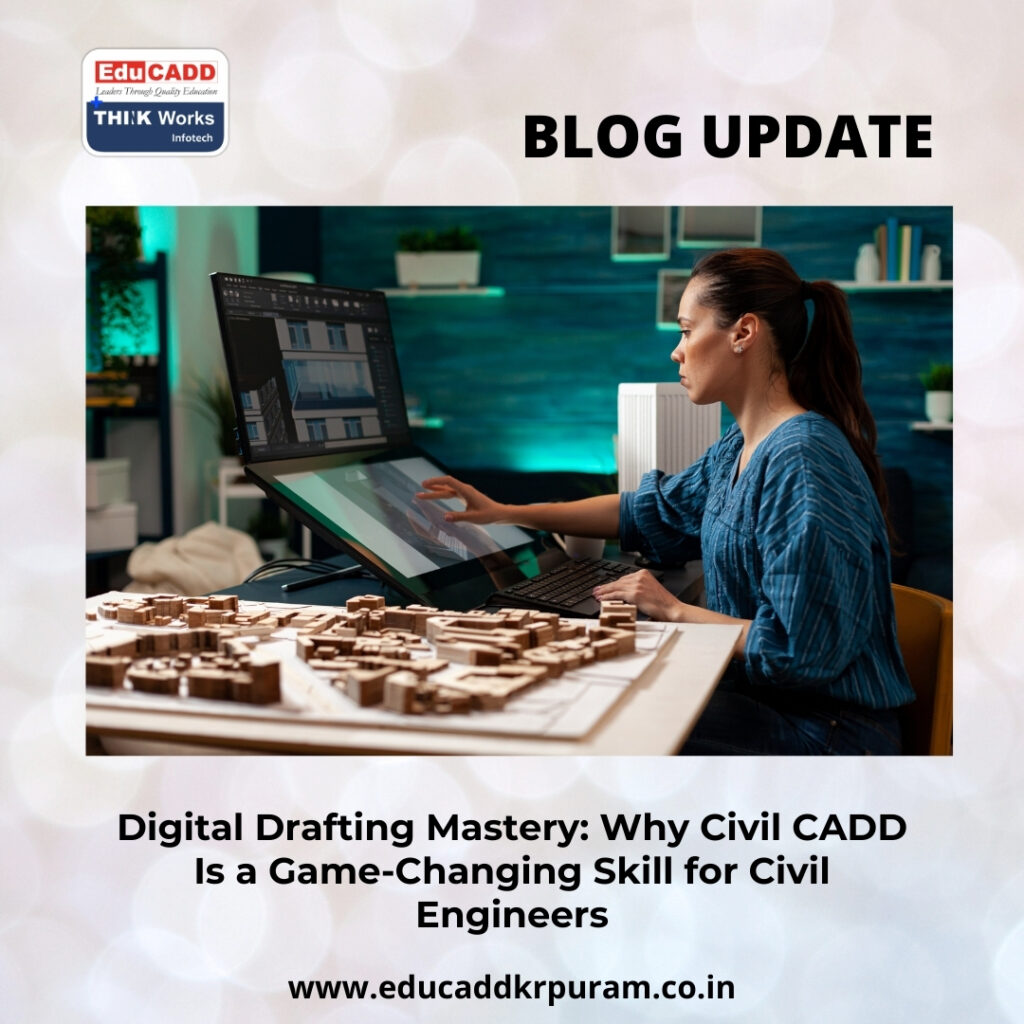
Civil CADD Skills Training
Another important benefit is the career advantage it provides. Companies now prefer engineers who are skilled in digital drafting tools because they can contribute immediately to project design tasks. As infrastructure development continues to expand worldwide, Civil CADD has become an essential capability for engineers who want to advance professionally.
This article explores the many reasons civil engineers should learn Civil CADD Skills Training and explains how it enhances productivity, improves design quality, and opens doors to new career opportunities.
The Shift from Manual Drafting to Digital Design
Civil engineering design has undergone a remarkable transformation over the last several decades. In earlier times, engineers prepared construction drawings using drafting boards, scale rulers, compasses, and technical pens. These manual drafting methods required exceptional attention to detail and a steady hand.
Although manual drafting produced accurate drawings, the process was extremely time-consuming. Even minor changes in a design could require redrawing large portions of the plan. This often delayed project timelines and increased the risk of human errors.
With the development of computer technology, engineers began adopting digital drafting systems. Civil CADD emerged as a powerful tool that simplified the design process and significantly improved accuracy. Engineers could now create complex layouts using digital commands rather than physical instruments.
This shift allowed engineers to work faster and make modifications easily. Digital drawings could be stored, shared, and updated without the limitations of paper-based documentation. As a result, engineering teams could collaborate more efficiently and deliver projects within tighter deadlines.
Today, digital drafting is the industry standard, and Civil CADD plays a vital role in modern civil engineering design.
What Civil CADD Actually Means in Engineering Practice
Civil CADD Skills Training refers to the use of computer software specifically designed for drafting and designing civil engineering projects. These programs allow engineers to create technical drawings that represent real-world infrastructure such as roads, bridges, buildings, and drainage systems.
Using Civil CADD tools, engineers can develop detailed site plans, cross-sections, profiles, and structural layouts. The software provides various drawing commands that enable engineers to construct precise geometric shapes, define measurements, and apply technical annotations.
One of the key features of Civil CADD is its ability to maintain accurate scale and dimensions. Engineers can specify exact coordinates and measurements, ensuring that digital designs correspond precisely with real-world conditions.
Civil CADD also allows engineers to layer different components of a project. For example, roads, utilities, structural elements, and landscaping can be organized into separate layers within the same drawing. This organization improves clarity and simplifies design management.
By combining engineering knowledge with advanced digital tools, Civil CADD has become an indispensable part of modern project design.
Enhancing Accuracy in Engineering Drawings
Accuracy is one of the most important factors in civil engineering. A small error in design measurements can result in costly construction problems or structural issues. Civil CADD helps engineers achieve exceptional accuracy when preparing technical drawings.
Digital drafting tools allow engineers to define exact dimensions, angles, and coordinates within a design. Unlike manual drawings, which may be affected by measurement variations, Civil CADD ensures consistent precision across the entire project.
Another advantage is the ability to update related elements automatically. When engineers modify a particular feature in a design, other associated components can adjust accordingly. This automated coordination reduces inconsistencies and ensures that all project drawings remain aligned.
Civil CADD also provides tools for verifying measurements and checking design constraints. Engineers can analyze distances, slopes, and intersections directly within the software environment.
Because of these capabilities, Civil CADD significantly reduces the risk of design errors and improves the reliability of construction documentation.
Improving Productivity and Saving Valuable Time
Engineering projects often operate under strict schedules. Designers must prepare detailed plans quickly so that construction activities can begin on time. Civil CADD improves efficiency by simplifying many aspects of the drafting process.
Engineers can use built-in tools to create shapes, curves, and structural components with minimal effort. Instead of drawing every detail manually, they can rely on automated commands that generate complex elements instantly.
Another time-saving feature is the ability to reuse existing design components. Engineers can create libraries of blocks, templates, and symbols that can be inserted into future projects. This reduces repetitive work and accelerates the design process.
Editing drawings also becomes much easier with Civil CADD. Engineers can modify dimensions, move elements, or adjust layouts without recreating the entire design.
These productivity improvements allow engineering teams to focus more on innovation and problem-solving rather than routine drafting tasks.
Visualizing Infrastructure Projects More Clearly
Civil CADD Skills Training enables engineers to visualize their designs in ways that were not possible with traditional drafting techniques. Digital drawings can represent complex infrastructure systems clearly and accurately.
Engineers can create detailed layouts that illustrate how different elements of a project interact with each other. Roads, drainage systems, utility networks, and structural components can all be displayed within a coordinated design environment.
Visualization becomes even more powerful when engineers generate three-dimensional models. These models provide a realistic view of the proposed structure and help engineers analyze spatial relationships between different components.
Clear visual representation also helps when presenting designs to clients and stakeholders. Decision-makers can easily understand the proposed project when it is displayed through professional digital drawings.
This improved visualization reduces confusion, enhances communication, and ensures that projects move forward smoothly.
Meeting Industry Expectations and Professional Standards
The engineering industry increasingly relies on digital tools to manage project design and documentation. As a result, Civil CADD knowledge has become a fundamental requirement for civil engineering professionals.
Many engineering firms expect new employees to possess basic drafting software skills. Engineers who understand Civil CADD can contribute immediately to design tasks and project documentation.
Civil CADD software also helps engineers maintain professional drafting standards. The programs include features for layers, line types, dimensions, and annotations that follow industry guidelines.
Maintaining standardized drawings ensures that all project stakeholders can interpret the design correctly. When engineers follow consistent drafting practices, collaboration becomes easier across different departments.
For these reasons, Civil CADD training is now considered an essential component of modern civil engineering education.
Opening New Career Opportunities for Engineers
Civil engineers who learn Civil CADD gain access to a wide range of career opportunities. The construction and infrastructure industries constantly require skilled professionals who can create and manage digital design drawings.
Engineers with Civil CADD expertise can work in several roles, including design engineers, CAD technicians, and project planning specialists. These roles involve preparing technical drawings, analyzing layouts, and assisting in project coordination.
Industries that frequently hire Civil CADD professionals include:
-
Infrastructure development and urban planning organizations
-
Construction companies and engineering consultancy firms
Because digital drafting has become an industry standard, engineers who possess these skills often have a competitive advantage in the job market.
Supporting Better Collaboration in Engineering Projects
Large infrastructure projects require teamwork between multiple professionals. Architects, structural engineers, surveyors, and contractors must coordinate their efforts to ensure successful project completion.
Civil CADD Skills Training makes collaboration easier by enabling engineers to share digital drawings quickly. Files can be transmitted electronically through cloud platforms or project management systems.
These digital documents allow team members to review designs, suggest modifications, and coordinate different aspects of the project.
Civil CADD also allows engineers to integrate various project elements into a unified drawing. Site layouts, structural plans, and utility networks can be combined within a single digital environment.
This integrated approach helps teams detect design conflicts early and resolve issues before construction begins.
Simplifying Engineering Calculations and Measurements
Civil engineering design often involves numerous calculations related to land area, material quantities, and elevation levels. Performing these calculations manually can be tedious and prone to mistakes.
Civil CADD simplifies this process by offering automated measurement tools. Engineers can calculate distances, areas, and volumes directly within the software.
These calculations update automatically when design changes occur. For example, adjusting a road alignment may instantly update earthwork quantities and slope measurements.
Civil CADD also allows engineers to evaluate multiple design alternatives quickly. They can experiment with different layouts and compare results before selecting the best option.
By automating calculations and reducing errors, Civil CADD improves the efficiency of project planning.
Encouraging Sustainable Infrastructure Design
Modern civil engineering projects must consider environmental sustainability. Engineers must design infrastructure that balances economic development with environmental protection.
Civil CADD tools help engineers analyze natural terrain, water flow patterns, and land usage. This information allows them to design projects that minimize environmental impact.
Digital design tools also help optimize material usage. Engineers can estimate exact quantities of construction materials required for a project.
Some sustainability benefits include:
-
Reduced construction waste through accurate material estimation
-
Better land development planning using digital terrain analysis
These capabilities support environmentally responsible engineering practices.
Helping Engineers Adapt to Emerging Technologies
The construction industry continues to adopt new technologies such as Building Information Modeling (BIM), digital surveying systems, and smart infrastructure planning tools. Civil CADD provides the foundational knowledge required to use these technologies effectively.
Engineers who understand digital drafting concepts can transition more easily to advanced design platforms. The principles of coordinate systems, geometry, and design layers remain consistent across many engineering tools.
Learning Civil CADD also helps engineers develop digital problem-solving skills. They become comfortable working with computer-based design environments and analyzing project data.
As technology continues to evolve, engineers with strong digital skills will remain highly valuable in the industry.
Inspiring Creativity and Innovation in Engineering Design
Civil engineering is not only about technical accuracy but also about innovative problem-solving. Engineers must design structures that are efficient, durable, and visually appealing.
Civil CADD encourages creativity by providing a flexible digital workspace. Engineers can experiment with different design ideas, test multiple configurations, and refine their concepts easily.
Because designs can be modified quickly, engineers feel more confident exploring new solutions. They can evaluate alternative layouts and identify the most effective approach before finalizing the project plan.
This creative flexibility often leads to more efficient infrastructure designs and improved project outcomes.
Preparing Engineers for the Future of Infrastructure Development
Infrastructure development is rapidly evolving as cities grow and technological innovation accelerates. Future projects will rely heavily on digital design systems and integrated planning tools.
Civil CADD serves as the foundation for many of these modern technologies. Engineers who understand digital drafting are better prepared to work on advanced infrastructure projects.
Smart cities, transportation networks, and sustainable urban development initiatives all depend on digital engineering tools. Civil engineers who master Civil CADD can participate effectively in these large-scale initiatives.
By acquiring these skills early in their careers, engineers ensure they remain relevant in an increasingly technology-driven industry.
Conclusion
Civil engineering has entered a new era where digital tools play a crucial role in project design and execution. Traditional drafting methods have gradually been replaced by advanced technologies that improve accuracy, efficiency, and collaboration. Among these technologies, Civil CADD Skills Training stands out as one of the most essential tools for modern civil engineers.
Learning Civil CADD allows engineers to create precise technical drawings, analyze complex designs, and manage project modifications efficiently. It enhances productivity, improves communication among project teams, and supports sustainable infrastructure planning.
In addition to technical advantages, Civil CADD also offers significant career benefits. Engineers who possess strong digital drafting skills are highly valued in the construction and infrastructure industries. These professionals can access diverse career opportunities and contribute effectively to modern engineering projects.
As infrastructure development continues to expand worldwide, the demand for skilled Civil CADD professionals will only increase. Civil engineers who invest time in mastering this technology position themselves for long-term success. By combining engineering expertise with digital drafting capabilities, they can transform innovative ideas into reliable and sustainable infrastructure solutions.

