
Data-Driven Revenue Architecture: Engineering High-Performance Marketing Funnels for Sustainable Growth
Modern marketing operates in an environment shaped by constant technological innovation, shifting consumer expectations, and increasing competition. Businesses no longer compete only on product quality or pricing. Instead, they compete on experience, precision, and speed of execution. In this landscape, companies that understand how to transform data into actionable strategy gain a decisive advantage. Data Driven Revenue Funnels has emerged as a powerful framework that allows brands to move beyond random experimentation and build structured, predictable growth systems.
Every digital interaction creates measurable signals. From the moment a prospect encounters an advertisement to the point where they become a loyal customer, data flows continuously. Yet many organizations collect data without converting it into insight. They monitor traffic, clicks, and impressions, but they fail to interpret behavioral patterns deeply. Consequently, their marketing funnels leak potential revenue at multiple stages.
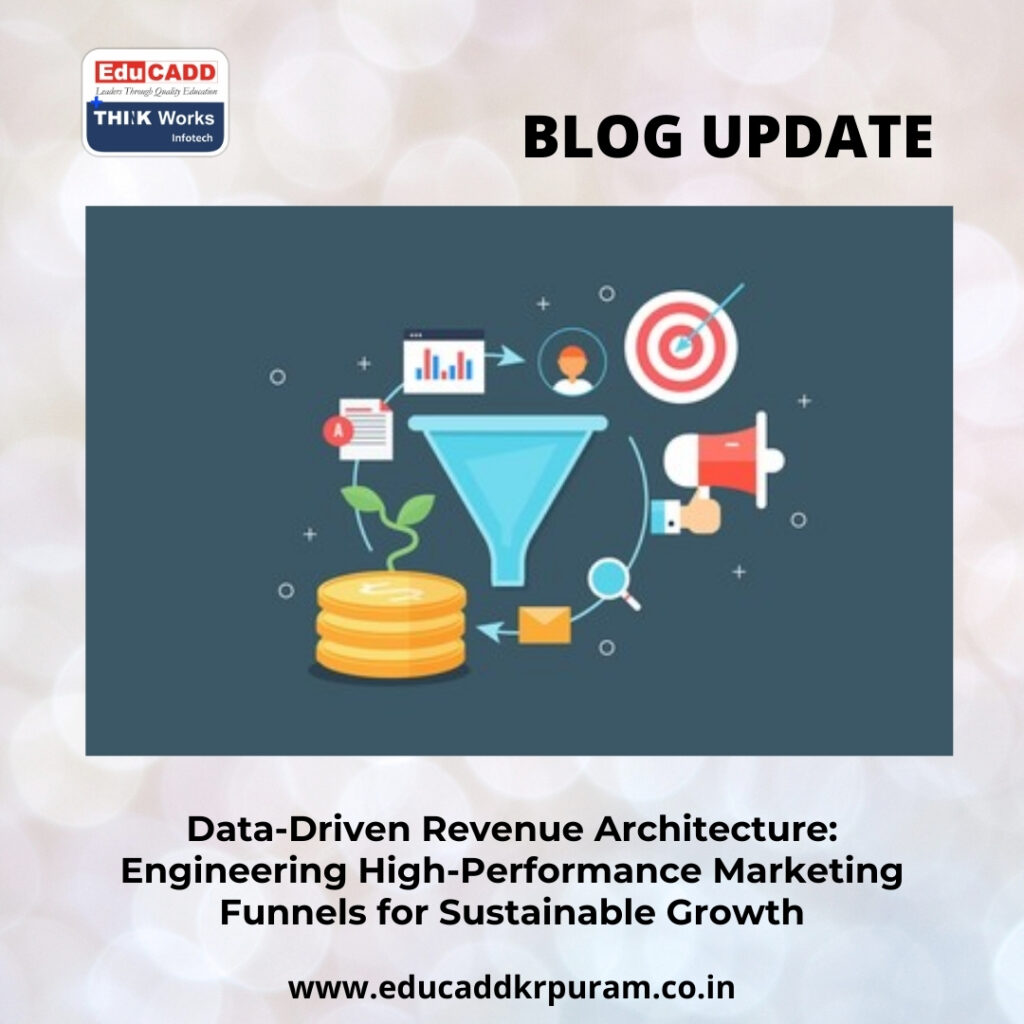
Data Driven Revenue Funnels
A Data Driven Revenue Funnels represents the journey prospects take from awareness to advocacy. However, optimizing that journey requires more than surface-level metrics. It demands integrated analytics, disciplined testing, personalization strategies, and continuous refinement. When organizations implement marketing funnel optimization using data analytics effectively, they replace guesswork with structured improvement cycles. This guide explores how businesses can design, analyze, and refine every stage of their funnels to create sustainable, scalable growth.
1. Redefining the Marketing Funnel in the Digital Era
The concept of the marketing funnel originated in traditional advertising, where customer journeys followed predictable paths. Today, digital ecosystems have reshaped that journey entirely. Consumers move between devices, platforms, and channels before making decisions. Therefore, businesses must redefine their understanding of funnel dynamics.
The contemporary funnel consists of awareness, engagement, evaluation, conversion, retention, and advocacy. At the top, potential customers discover a brand through search engines, paid campaigns, social media interactions, or referrals. As they engage further, they explore content, compare solutions, and evaluate credibility. Conversion represents the moment of commitment, whether through purchase or lead submission. Afterward, retention and advocacy determine long-term value.
Marketing funnel optimization using data analytics allows organizations to measure movement across these phases accurately. Instead of assuming linear progression, analytics reveal nonlinear pathways, repeated visits, and cross-channel interactions. This insight empowers marketers to design strategies that match real behavior rather than outdated assumptions.
Moreover, digital funnels are fluid. Prospects may skip stages, return later, or interact simultaneously across multiple touchpoints. Data-driven mapping ensures that each interaction receives proper evaluation, leading to precise optimization.
2. Cultivating a Performance-Oriented Data Culture
Effective optimization begins with cultural alignment. Organizations must adopt a performance-oriented mindset where decisions rely on measurable evidence. While creativity drives messaging, analytics guides execution. Without this balance, marketing becomes unpredictable.
Data Driven Revenue Funnels requires leadership support. Decision-makers must prioritize structured experimentation and transparent reporting. Teams should view performance metrics not as judgment tools but as improvement indicators.
Additionally, collaboration between marketing, sales, and analytics departments strengthens outcomes. When teams share data openly, they gain unified visibility into the customer lifecycle. For instance, sales insights about lead quality can inform marketing adjustments at the acquisition stage.
Establishing standardized tracking protocols further enhances consistency. Clear definitions of metrics prevent confusion and misalignment. As a result, organizations create a shared language around performance, enabling strategic clarity and accountability.
3. Setting Strategic Objectives Across Funnel Stages
Optimization without defined objectives lacks direction. Businesses must identify specific outcomes for each funnel phase. Marketing funnel optimization using data analytics begins with measurable goals aligned to revenue targets.
At the awareness stage, objectives may include expanding qualified reach or increasing high-intent traffic. During engagement and evaluation, goals might focus on content interaction rates or lead qualification metrics. Conversion objectives center on improving conversion rates, lowering acquisition costs, and increasing revenue per visitor.
Retention and advocacy goals extend beyond immediate revenue. They include repeat purchase frequency, subscription renewal rates, referral activity, and customer lifetime value.
Clear objectives create structured analysis frameworks. Instead of reacting to isolated metrics, teams evaluate performance in context. For example, high traffic paired with low engagement signals targeting misalignment. Conversely, moderate traffic with strong conversions indicates effective qualification. Strategic clarity ensures optimization efforts produce meaningful impact.
4. Integrating Data Ecosystems for Holistic Visibility
In many organizations, data resides in isolated platforms. Website analytics tools track behavior. Advertising dashboards measure campaign performance. CRM systems record sales interactions. Email platforms monitor engagement. However, disconnected data limits comprehensive insight.
Marketing funnel optimization using data analytics requires integration across these systems. By connecting platforms through centralized dashboards or data warehouses, companies create unified visibility. This integration enables cross-channel attribution and accurate journey mapping.
For example, combining CRM revenue data with advertising performance reveals which campaigns drive profitable customers rather than superficial clicks. Similarly, linking email engagement metrics with purchase history identifies content themes that influence revenue.
Data hygiene remains critical during integration. Businesses must ensure consistent naming conventions, eliminate duplicates, and verify tracking accuracy. Clean, reliable data strengthens analytical confidence and reduces strategic errors.
5. Deep Behavioral Analysis for Precision Targeting
Traffic volume alone does not define funnel health. Behavioral analysis reveals how users interact with digital assets. Marketing funnel optimization using data analytics emphasizes understanding intent and friction points.
Heatmaps illustrate where users click, scroll, and pause. Session recordings show navigation patterns and hesitation moments. Funnel visualization tools identify exact stages where drop-offs occur. These insights expose friction that traditional metrics overlook.
Segmentation enhances precision. Businesses can analyze behavior by device type, geographic location, referral source, or demographic segment. For example, if mobile users abandon checkout pages more frequently, design adjustments may be necessary.
Cohort analysis provides long-term perspective. By grouping users based on acquisition period or campaign origin, marketers evaluate retention patterns and lifetime value trends. This layered understanding supports strategic forecasting and resource allocation.
6. Optimizing Top-of-Funnel Strategies for Quality Acquisition
Awareness campaigns often focus heavily on volume. However, attracting unqualified traffic wastes resources. Marketing funnel optimization using data analytics ensures top-of-funnel efforts prioritize quality over quantity.
Keyword performance analysis guides search engine optimization strategies. Engagement metrics identify content that resonates with target audiences. Advertising analytics reveal which audience segments respond positively to messaging.
By evaluating click-through rates, cost per click, and engagement depth, marketers refine targeting parameters. Budget allocation shifts toward high-performing channels. Consequently, funnel entry points become more aligned with business objectives.
Content analytics further support acquisition strategies. Tracking article performance, video completion rates, and social shares highlights themes that generate meaningful engagement. Businesses can replicate successful topics while discontinuing underperforming formats.
7. Enhancing Mid-Funnel Engagement Through Personalization
As prospects move into evaluation stages, relevance becomes crucial. Generic messaging reduces engagement, while personalized communication strengthens trust. Marketing funnel optimization using data analytics leverages behavioral data to tailor experiences.
Dynamic website content adjusts according to browsing history. Automated email sequences respond to specific user actions. Personalized product recommendations increase perceived value.
Predictive analytics further elevates personalization. By analyzing historical data, algorithms anticipate user preferences and recommend solutions proactively. This anticipation reduces decision fatigue and accelerates progression toward conversion.
Retargeting campaigns also benefit from segmentation insights. Ads addressing previously viewed products or abandoned pages maintain momentum. Personalized engagement creates a seamless transition from interest to commitment.
8. Elevating Conversion Performance with Structured Testing
Conversion rate optimization represents the turning point in funnel performance. Data Driven Revenue Funnels relies on systematic experimentation rather than random changes.
A/B testing compares variations of headlines, visuals, or calls to action. Multivariate testing examines multiple elements simultaneously. Statistical validation ensures reliable conclusions.
Checkout optimization often yields significant improvements. Simplifying forms, clarifying pricing transparency, and reinforcing trust signals enhance completion rates. Behavioral data guides these refinements.
Furthermore, analyzing user feedback provides qualitative insight. Surveys and exit polls complement quantitative metrics, offering deeper understanding of objections or confusion. Continuous experimentation transforms conversion optimization into a disciplined growth engine.
9. Maximizing Retention and Lifetime Value
Sustainable profitability depends on retaining customers. Acquisition efforts lose value if churn remains high. Marketing funnel optimization using data analytics identifies patterns influencing long-term engagement.
Churn analysis highlights risk indicators. Businesses can deploy proactive re-engagement campaigns before customers disengage completely. Personalized incentives, loyalty programs, and subscription reminders increase retention.
Customer lifetime value analysis guides segmentation strategies. High-value customers may receive exclusive benefits, while at-risk segments receive targeted nurturing. Predictive modeling estimates future purchasing behavior, supporting revenue forecasting.
Retention-focused optimization strengthens brand relationships and stabilizes revenue streams.
10. Harnessing Automation and Predictive Intelligence
Automation enhances efficiency and scalability. Marketing funnel optimization using data analytics incorporates artificial intelligence to process complex datasets rapidly.
Predictive lead scoring ranks prospects based on probability of conversion. Automated workflows deliver timely content aligned with user intent. Chatbots provide instant assistance, reducing friction and enhancing satisfaction.
Recommendation engines personalize shopping experiences. These systems analyze behavioral data to suggest complementary products, increasing average order value.
AI-driven analytics also identify emerging trends. By detecting subtle patterns early, businesses adapt strategies proactively rather than reactively.
11. Attribution Modeling for Accurate Budget Allocation
Understanding channel contribution ensures effective resource distribution. Traditional last-click attribution oversimplifies customer journeys. Marketing funnel optimization using data analytics embraces multi-touch attribution models.
These models distribute credit across interactions, recognizing the influence of awareness campaigns, content engagement, and retargeting efforts. Accurate attribution prevents undervaluing upper-funnel strategies.
With comprehensive attribution insight, marketers allocate budgets strategically. Investment decisions become evidence-based, improving overall return on marketing spend.
12. Real-Time Performance Monitoring and Agile Response
Dynamic markets require agile responses. Real-time dashboards provide continuous visibility into funnel metrics. Marketing funnel optimization using data analytics benefits from immediate feedback loops.
If engagement drops suddenly, teams investigate promptly. When campaigns outperform expectations, budgets scale accordingly.
Visual reporting tools simplify complex datasets, enhancing stakeholder communication. Frequent performance reviews encourage iterative improvements rather than periodic overhauls.
Agile monitoring transforms optimization into an ongoing operational discipline.
13. Overcoming Barriers to Data-Driven Optimization
Despite its advantages, implementing analytics-driven optimization presents challenges. Data overload can create confusion. Therefore, focusing on actionable insights remains essential.
Cross-department alignment ensures consistent implementation. Marketing, analytics, and sales teams must share objectives and collaborate on strategy.
Privacy regulations demand ethical data handling. Transparent communication builds trust and protects brand reputation.
Resistance to change may also emerge. Leaders must encourage experimentation and foster a culture where learning from data drives innovation.
14. Designing a Repeatable Growth Framework
Long-term success depends on structured processes. Marketing funnel optimization using data analytics should follow a repeatable cycle. First, define measurable objectives aligned with revenue goals. Next, collect and integrate reliable data. Then, analyze performance and identify bottlenecks. Afterward, implement targeted experiments and evaluate results. Finally, scale successful strategies and repeat the process.
This iterative methodology produces incremental improvements that compound over time. Organizations that embed analytics into daily operations build resilient growth engines capable of adapting to evolving market conditions.
By transforming marketing into a disciplined system grounded in evidence, businesses achieve sustainable competitive advantage.
Conclusion
In an era defined by data abundance and customer empowerment, strategic insight determines success. Data Driven Revenue Funnels empowers organizations to understand complex journeys, eliminate inefficiencies, and maximize revenue potential.
Through integrated data ecosystems, behavioral analysis, personalization, structured experimentation, retention strategies, automation, and accurate attribution, companies create high-performance funnels. These funnels generate predictable outcomes rather than uncertain results.
When businesses commit to continuous optimization and cultivate a data-centric culture, marketing evolves from isolated campaigns into a cohesive revenue architecture. Insight becomes the foundation of growth, and every interaction contributes to measurable, sustainable success.

