
Designing with Confidence: A Complete Professional Guide to the Best Software for Electrical CADD Drafting
Electrical design has entered a new phase of digital transformation. Engineers no longer rely on manual diagrams or fragmented documentation systems. Instead, they depend on intelligent drafting platforms that combine automation, precision, and integration. In this evolving environment, choosing the Electrical CADD Drafting Software has become a strategic business decision rather than a simple technical preference. The right solution increases productivity, minimizes errors, strengthens collaboration, and supports compliance with global engineering standards.
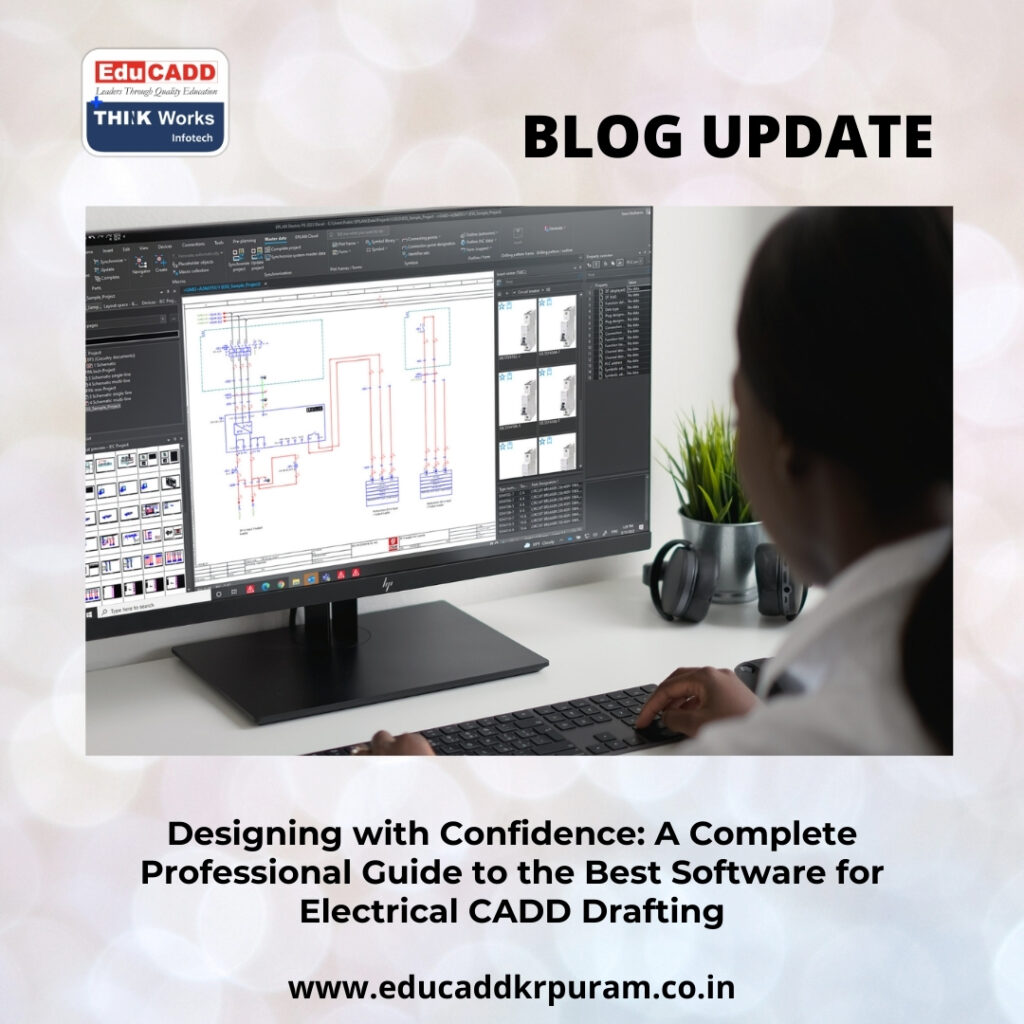
Electrical CADD Drafting Software
Electrical CADD (Computer-Aided Design and Drafting) software empowers professionals to create schematics, wiring diagrams, panel layouts, cable schedules, and control system drawings with exceptional clarity. However, each platform offers unique strengths, features, and workflows. Some focus heavily on automation, while others prioritize integration with mechanical or architectural systems. Therefore, selecting the ideal platform requires careful evaluation of project scope, industry requirements, team expertise, and long-term scalability. This comprehensive guide explores the tools, technologies, and considerations that define the Electrical CADD Drafting Software in today’s competitive engineering landscape.
1. Understanding the Foundation of Electrical CADD Drafting
Electrical drafting demands more than drawing lines and symbols. It involves representing complex systems with clarity, ensuring that every connection, component, and annotation communicates precise technical information. The Best Software for Electrical CADD Drafting must support intelligent symbol libraries, automated wire numbering, cross-referencing tools, and dynamic error detection. Without these capabilities, teams spend valuable time correcting inconsistencies instead of innovating.
Modern projects also require structured data management. For example, when a component changes, the update must reflect across every related sheet automatically. Advanced CADD platforms handle this process seamlessly. In addition, integration with other engineering disciplines has become essential. Electrical systems interact closely with mechanical assemblies and architectural layouts. Therefore, drafting software must enable coordination and reduce design clashes. A strong foundation in these core features determines whether a platform truly supports professional electrical design workflows.
2. AutoCAD Electrical: A Proven Industry Benchmark
Among established solutions, AutoCAD Electrical frequently appears in discussions about the Best Software for Electrical CADD Drafting. Built on the widely trusted AutoCAD framework, it provides a specialized environment tailored for electrical engineers. The software includes extensive symbol libraries compliant with international standards, which allows users to create accurate schematics quickly.
Automation is one of its strongest features. Designers can generate wire numbers, component tags, and cross-references automatically. This capability significantly reduces repetitive tasks. Additionally, the software creates detailed reports such as bills of materials and terminal plans. Because it integrates smoothly with other Autodesk tools, firms operating within that ecosystem gain added advantages. While the interface may require time to master, the long-term productivity benefits often outweigh the initial learning curve.
3. SolidWorks Electrical: Integrating Schematics with 3D Design
Electrical systems rarely operate independently from mechanical components. SolidWorks Electrical addresses this reality by linking schematic drafting with three-dimensional modeling. As a result, many professionals consider it among the Best Software for Electrical CADD Drafting for multidisciplinary projects.
Designers can create detailed circuit diagrams in a 2D interface and then route wires within a 3D mechanical assembly. This synchronization ensures accurate placement of cables, connectors, and harnesses. Moreover, real-time collaboration allows multiple team members to contribute simultaneously. Because the platform aligns closely with SolidWorks mechanical software, it enhances coordination between departments. For industries such as manufacturing, automotive, and machinery design, this integration proves invaluable.
4. EPLAN Electric P8: Automation for Complex Industrial Systems
EPLAN Electric P8 distinguishes itself through its database-driven architecture. Rather than treating drawings as separate files, it centralizes all project information. This structure ensures that updates apply consistently across schematics, panel layouts, and reports. Therefore, it stands as a powerful contender for the Best Software for Electrical CADD Drafting in industrial environments.
The platform supports advanced macro technology, which allows designers to reuse standardized modules efficiently. Automated checks verify connections and prevent logical errors. Additionally, multi-language documentation supports international operations. Although implementation requires structured training, organizations handling automation systems and production lines often benefit from its comprehensive approach. Over time, its automation capabilities deliver measurable efficiency gains.
5. Zuken E3.series: Precision Through Structured Data Management
Zuken’s E3.series offers a modular solution tailored for electrical and fluid system design. Its database-driven workflow maintains consistency throughout the drafting process. Consequently, many professionals include it when evaluating the Electrical CADD Drafting Software.
The software emphasizes hierarchical project organization, which simplifies management of large-scale systems. Real-time validation tools ensure that connections and component references remain accurate. Furthermore, integration with mechanical CAD tools enhances cross-disciplinary collaboration. Industries such as aerospace, transportation, and industrial automation value this reliability. By focusing on structured data management, Zuken E3.series delivers clarity and control in complex projects.
6. SEE Electrical: Scalable Performance for Growing Businesses
Not every organization requires enterprise-level complexity. SEE Electrical offers scalable packages that adapt to different project sizes and budgets. This flexibility makes it a competitive option among solutions labeled as the Best Software for Electrical CADD Drafting.
The interface remains user-friendly, which accelerates onboarding for new designers. Automation features such as wire numbering and symbol customization streamline documentation tasks. Moreover, companies can upgrade to advanced modules as project demands expand. This scalability ensures that businesses maintain efficiency without overspending at the outset. For small to mid-sized engineering firms, SEE Electrical provides a practical balance between performance and affordability.
7. BricsCAD Electrical: Familiarity with Enhanced Functionality
BricsCAD Electrical builds upon a DWG-compatible environment, allowing seamless file sharing with standard CAD users. Because of this compatibility, many teams find the transition straightforward. Its competitive pricing further strengthens its appeal as a candidate for the Best Software for Electrical CADD Drafting.
The platform offers schematic creation tools, customizable libraries, and automated documentation features. While it may not provide the same depth of automation as some enterprise solutions, it handles moderate-scale projects effectively. Organizations that prioritize cost efficiency and interoperability often select BricsCAD Electrical as a dependable drafting solution.
8. DraftSight Electrical: Simplified Workflow for Efficient Drafting
DraftSight Electrical focuses on providing specialized features within an intuitive interface. Many designers appreciate its similarity to traditional CAD systems. As a result, it earns recognition among potential options for the Best Software for Electrical CADD Drafting.
Its automation tools reduce repetitive tasks, and built-in libraries accelerate diagram creation. Additionally, compatibility with widely used CAD formats ensures smooth collaboration. For teams transitioning from general drafting tools to dedicated electrical platforms, DraftSight Electrical offers a logical and manageable progression path.
9. MicroStation Electrical: Robust Performance for Infrastructure Projects
MicroStation, when combined with electrical modules, supports extensive infrastructure projects. Utilities, transportation networks, and industrial facilities often rely on its powerful modeling capabilities. Therefore, it frequently appears in conversations regarding the Best Software for Electrical CADD Drafting for large-scale systems.
Its architecture manages vast datasets without compromising performance. Designers benefit from precise control over documentation and modeling. Although the learning curve can be significant, the platform’s reliability and scalability justify its adoption in complex engineering environments.
10. The Role of Automation in Modern Drafting
Automation differentiates advanced platforms from basic drafting tools. The Best Software for Electrical CADD Drafting minimizes manual editing by automatically updating references, generating reports, and synchronizing design data. This capability reduces the likelihood of human error while accelerating project timelines.
For instance, when a component changes, the system can update all related drawings instantly. Automated bill of materials generation supports procurement teams. These efficiencies improve workflow continuity and strengthen overall project management. Therefore, evaluating automation depth remains essential during software selection.
11. BIM Integration and Collaborative Capabilities
Building Information Modeling has reshaped the engineering industry. Electrical drafting now requires seamless integration with architectural and mechanical systems. The Best Software for Electrical CADD Drafting supports BIM workflows, enabling coordinated project development.
Cloud-based collaboration further enhances teamwork. Designers can access centralized files, monitor version history, and review changes in real time. This digital connectivity promotes transparency and reduces miscommunication. As remote collaboration becomes more common, these features hold increasing importance.
12. Training, Technical Support, and User Communities
A powerful platform alone does not guarantee success. Training programs, documentation, and responsive technical support significantly influence long-term productivity. The Best Software for Electrical CADD Drafting provides structured learning resources that help teams maximize features effectively.
Active user communities offer additional support through shared expertise and troubleshooting discussions. Organizations that invest in proper training see faster adoption and improved workflow optimization. Therefore, evaluating the strength of a software provider’s support ecosystem is equally important as reviewing technical features.
13. Cost Considerations and Return on Investment
Budget planning plays a critical role in software adoption. Subscription-based models, perpetual licenses, and scalable packages provide diverse financial options. The Best Software for Electrical CADD Drafting delivers measurable value through efficiency gains and reduced project delays.
Decision-makers should analyze total ownership costs, including training and maintenance expenses. While some platforms require higher initial investments, they often generate long-term savings through automation and accuracy improvements. Aligning financial planning with operational goals ensures sustainable growth.
14. Strategic Evaluation for Long-Term Success
Selecting the Electrical CADD Drafting Software requires thoughtful analysis of organizational objectives. Companies should assess project complexity, collaboration needs, and future scalability. Testing trial versions and gathering team feedback provide practical insights before finalizing decisions.
Rather than focusing solely on brand recognition, professionals should examine real-world performance and workflow compatibility. By aligning software capabilities with strategic vision, organizations strengthen both productivity and innovation capacity. This deliberate evaluation process ensures long-term operational success.
Conclusion
Electrical drafting stands at the core of modern engineering achievements. From industrial automation to infrastructure development, accurate documentation ensures safe and efficient system operation. Choosing the Electrical CADD Drafting Software empowers teams to design with precision, collaborate effectively, and deliver projects on schedule.
As technology advances, drafting platforms continue to integrate automation, cloud collaboration, and data-driven workflows. Professionals who embrace these innovations position themselves at the forefront of the industry. By carefully evaluating features, integration capabilities, support systems, and cost structures, organizations can confidently select a solution that drives productivity and innovation. Ultimately, the right software becomes more than a drafting tool—it becomes a catalyst for engineering excellence and sustainable success.

