
Powering Intelligent Architecture: Mastering Electrical CADD for Smart Buildings & Energy Systems
Buildings have evolved from static shelters into responsive, data-driven environments that adapt to user behavior, climate conditions, and energy demand. This transformation depends heavily on precise electrical planning and digital design accuracy. Electrical CADD Smart Buildings & Energy Systems has emerged as the technological backbone that enables this evolution. It combines computer-aided drafting with advanced electrical engineering strategies to create infrastructure that supports automation, sustainability, and real-time performance monitoring.
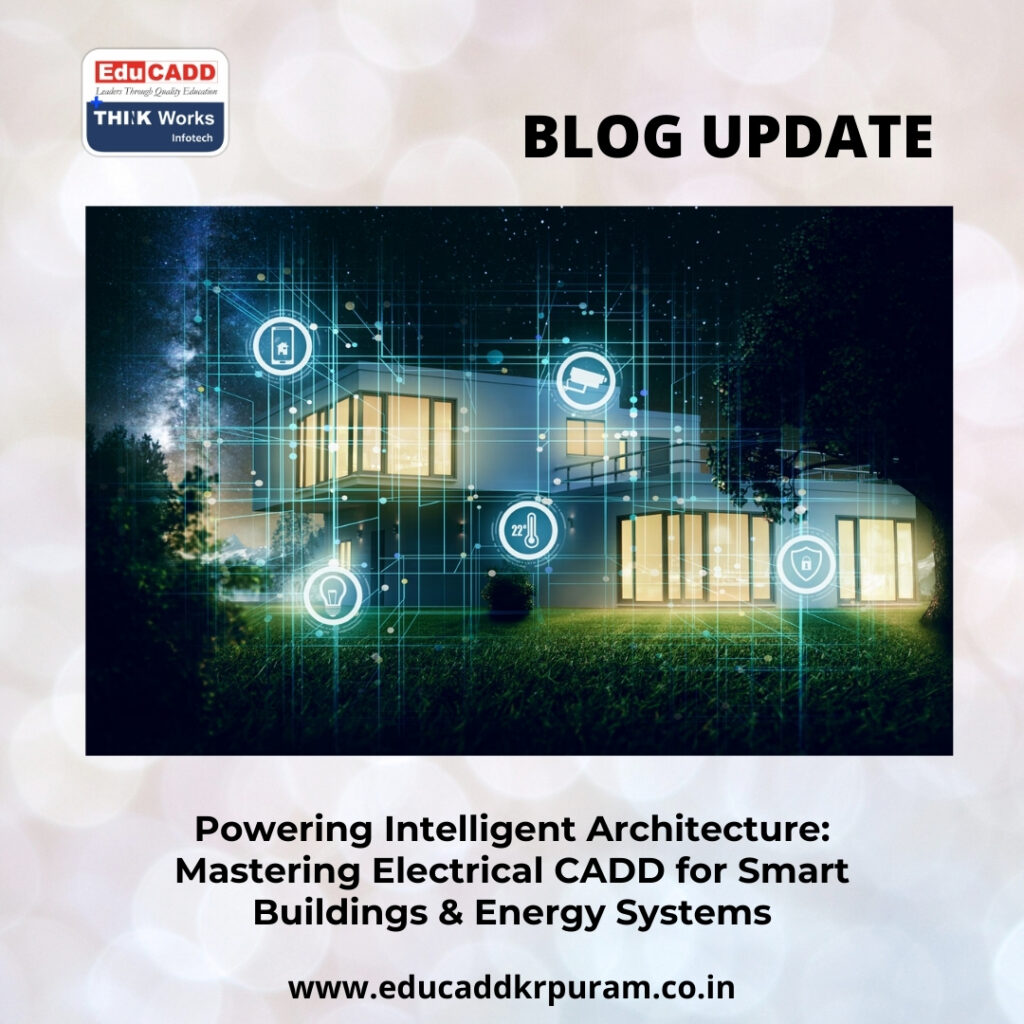
Electrical CADD Smart Buildings
Today’s projects demand more than conventional wiring diagrams. Engineers must design interconnected networks that link lighting, HVAC systems, renewable energy sources, security platforms, and energy management software. Therefore, Electrical CADD for Smart Buildings & Energy Systems allows professionals to visualize complex systems, simulate performance scenarios, and optimize electrical layouts before construction begins. This proactive approach enhances safety, reduces costs, and ensures seamless coordination among all building services.
1. The Digital Transformation of Electrical Drafting
Electrical drafting once relied on manual drawings and repetitive revisions. However, modern projects require flexibility, accuracy, and rapid updates. Electrical CADD Smart Buildings & Energy Systems replaces outdated methods with dynamic digital tools that streamline the entire design workflow.
Using advanced software platforms, engineers create detailed single-line diagrams, panel schedules, cable tray layouts, and lighting control schematics. These tools update related drawings automatically when changes occur. As a result, teams avoid inconsistencies and reduce the risk of site errors.
Furthermore, digital drafting enhances visualization. Designers can zoom into specific components, evaluate load distributions, and refine layouts efficiently. This capability significantly improves design clarity and supports faster project delivery.
2. Smart Buildings Demand Smarter Electrical Systems
Smart buildings integrate sensors, automation devices, and centralized management platforms. These systems communicate continuously to improve comfort, safety, and energy efficiency. However, such integration requires a robust electrical framework.
Electrical CADD Smart Buildings & Energy Systems provides the structure that supports this interconnected ecosystem. Engineers design power networks that feed data centers, smart meters, occupancy sensors, and control panels reliably. Without proper planning, system performance can suffer due to overloads or communication failures.
Additionally, digital drafting allows engineers to anticipate future expansion. Designers incorporate spare capacity and scalable configurations to accommodate technological upgrades. Consequently, buildings remain adaptable for years to come.
3. Constructing the Electrical Backbone
Every intelligent building depends on a well-organized electrical backbone. Transformers, switchgear, distribution boards, and protective devices must operate cohesively to maintain stable performance. Electrical CADD for Smart Buildings & Energy Systems enables engineers to map these elements precisely within a digital environment.
Load calculations form the foundation of this process. Engineers evaluate expected demand, peak usage, and safety margins before selecting equipment ratings. They also analyze voltage drop and short-circuit levels to prevent operational inefficiencies.
Moreover, digital platforms help designers structure layered layouts. Power circuits, communication lines, and control wiring are organized clearly. This clarity simplifies installation and enhances maintenance efficiency throughout the building’s lifecycle.
4. Integrating Energy Management Systems
Energy management has become a strategic priority for commercial and residential developments. Owners seek reduced operational costs and improved sustainability performance. Therefore, electrical design must incorporate advanced monitoring tools from the start.
Electrical CADD for Smart Buildings & Energy Systems supports the integration of smart meters, sub-metering devices, and real-time analytics platforms. Engineers can simulate consumption patterns and evaluate alternative distribution strategies digitally.
Through these simulations, designers identify inefficiencies and optimize equipment placement. Consequently, buildings operate with greater transparency and control over energy usage. This proactive planning ensures measurable long-term savings.
5. Renewable Energy and Hybrid Power Integration
Renewable energy systems now form an essential component of modern construction projects. Solar arrays, wind turbines, and battery storage units contribute to reduced carbon emissions and energy independence. However, integrating these systems into conventional power networks demands precise coordination.
Electrical CADD Smart Buildings & Energy Systems allows engineers to design grid-tied and hybrid configurations accurately. They can model inverter connections, protective devices, and synchronization mechanisms within a unified digital framework.
Additionally, designers assess backup scenarios to maintain uninterrupted power during outages. By simulating real-world conditions, they ensure reliability and compliance with safety standards. Renewable integration therefore becomes efficient and technically sound.
6. Intelligent Lighting and Control Networks
Lighting significantly influences building efficiency and occupant comfort. Automated systems adjust brightness levels based on occupancy and daylight availability. These systems require detailed coordination between electrical and control circuits.
Electrical CADD for Smart Buildings & Energy Systems enables designers to create structured lighting zones and define automation sequences clearly. They can position sensors strategically and verify communication pathways digitally.
Furthermore, energy-efficient fixtures and dimming technologies reduce consumption while maintaining optimal illumination levels. This intelligent design approach improves workplace productivity and enhances overall environmental performance.
7. Prioritizing Safety Through Advanced Planning
Safety remains a fundamental aspect of electrical engineering. Fire alarms, emergency lighting, surveillance systems, and access controls must function reliably under all conditions. Electrical CADD for Smart Buildings & Energy Systems supports comprehensive safety planning within a cohesive design framework.
Engineers develop selective coordination studies to ensure protective devices isolate faults without disrupting essential operations. They also simulate emergency scenarios to verify that evacuation systems operate effectively.
Moreover, digital documentation simplifies regulatory compliance and inspection processes. Clear schematics and accurate labeling reduce confusion during installation and maintenance.
8. Enhancing Power Distribution Efficiency
Balanced power distribution ensures long-term operational stability. Poor load management can cause overheating, voltage fluctuations, and premature equipment failure. Electrical CADD for Smart Buildings & Energy Systems enables engineers to design optimized distribution networks.
Using analytical tools, designers evaluate transformer efficiency, cable sizing, and panel capacities. They distribute loads evenly across phases and account for future growth.
Additionally, automated reports provide insights into potential improvements. This data-driven strategy minimizes downtime and extends system lifespan.
9. Collaborative Design Through BIM Integration
Modern construction projects require interdisciplinary collaboration. Electrical systems must align seamlessly with architectural and mechanical components. Electrical CADD for Smart Buildings & Energy Systems integrates smoothly with Building Information Modeling platforms.
Through shared digital models, engineers identify clashes between cable trays and structural elements early in the design phase. This proactive approach reduces rework and improves project timelines.
Furthermore, cloud-based collaboration enhances communication among stakeholders. Teams access updated drawings instantly, which supports efficient decision-making.
10. Smart Grid Connectivity and Demand Optimization
Smart grids enable dynamic interaction between buildings and utility providers. They adjust supply based on real-time demand and support renewable integration. Electrical CADD for Smart Buildings & Energy Systems equips engineers to design advanced metering and demand response mechanisms.
Designers create automation sequences that reduce consumption during peak hours. They also configure load-shedding strategies to maintain stability during high-demand periods.
This integration not only lowers operational costs but also strengthens grid reliability. Buildings become active participants in the broader energy ecosystem.
11. Designing Resilient Commercial Infrastructure
Commercial facilities, hospitals, and data centers require uninterrupted power supply. Even minor disruptions can cause significant operational losses. Electrical CADD for Smart Buildings & Energy Systems supports resilient design strategies that prioritize reliability.
Engineers incorporate redundant feeders, backup generators, and uninterruptible power supply systems within digital models. They simulate load transfers and emergency switching procedures to verify performance.
Detailed documentation further simplifies maintenance operations. Technicians access accurate panel schedules and circuit diagrams, which enhances response efficiency during system faults.
12. Sustainability and Green Building Goals
Environmental responsibility now shapes construction standards worldwide. Electrical systems play a decisive role in achieving energy efficiency certifications and sustainability benchmarks. Electrical CADD for Smart Buildings & Energy Systems enables engineers to design eco-friendly electrical networks.
Designers integrate efficient lighting systems, renewable sources, and advanced monitoring platforms into comprehensive layouts. They document performance metrics clearly for certification processes.
By embedding sustainability within electrical planning, buildings reduce carbon footprints while maintaining operational excellence.
13. Expanding Professional Opportunities
The rapid growth of intelligent infrastructure has increased demand for skilled electrical designers. Electrical CADD for Smart Buildings & Energy Systems offers promising career pathways in consulting firms, renewable energy companies, and smart city initiatives.
Professionals who master digital drafting tools gain a competitive advantage in the job market. Continuous learning ensures adaptability to emerging technologies such as artificial intelligence and IoT integration.
As infrastructure becomes increasingly data-driven, electrical design expertise remains indispensable.
14. The Future of Electrical Intelligence
Technological advancements continue to redefine electrical engineering practices. Artificial intelligence now supports predictive maintenance and load forecasting. Digital twins replicate real-time building performance within virtual environments.
Electrical CADD for Smart Buildings & Energy Systems will evolve into an interactive design ecosystem that integrates analytics, automation, and cloud collaboration seamlessly. Engineers will design adaptive systems capable of responding dynamically to environmental changes.
This forward-looking approach ensures that buildings remain efficient, resilient, and technologically advanced throughout their lifespan.
Conclusion
Electrical CADD Smart Buildings & Energy Systems stands as a transformative force in modern construction. It enables engineers to create intelligent, efficient, and sustainable electrical infrastructures that support automation and renewable integration.
Through digital precision and proactive planning, professionals minimize errors, enhance collaboration, and optimize performance from concept to completion. As cities expand and sustainability priorities intensify, Electrical CADD for Smart Buildings & Energy Systems will continue to shape the next generation of intelligent architecture.

