
Designing Safe and Efficient Electrical Systems: Circuit Protection and Electrical CAD
Electrical systems are the backbone of modern infrastructure. From industrial machinery to residential buildings, electricity powers almost everything around us. However, without proper safety measures, electrical faults can lead to equipment damage, operational downtime, or even accidents. That’s why Electrical Circuit Protection Design are vital for engineers, technicians, and designers aiming to create reliable and secure systems.
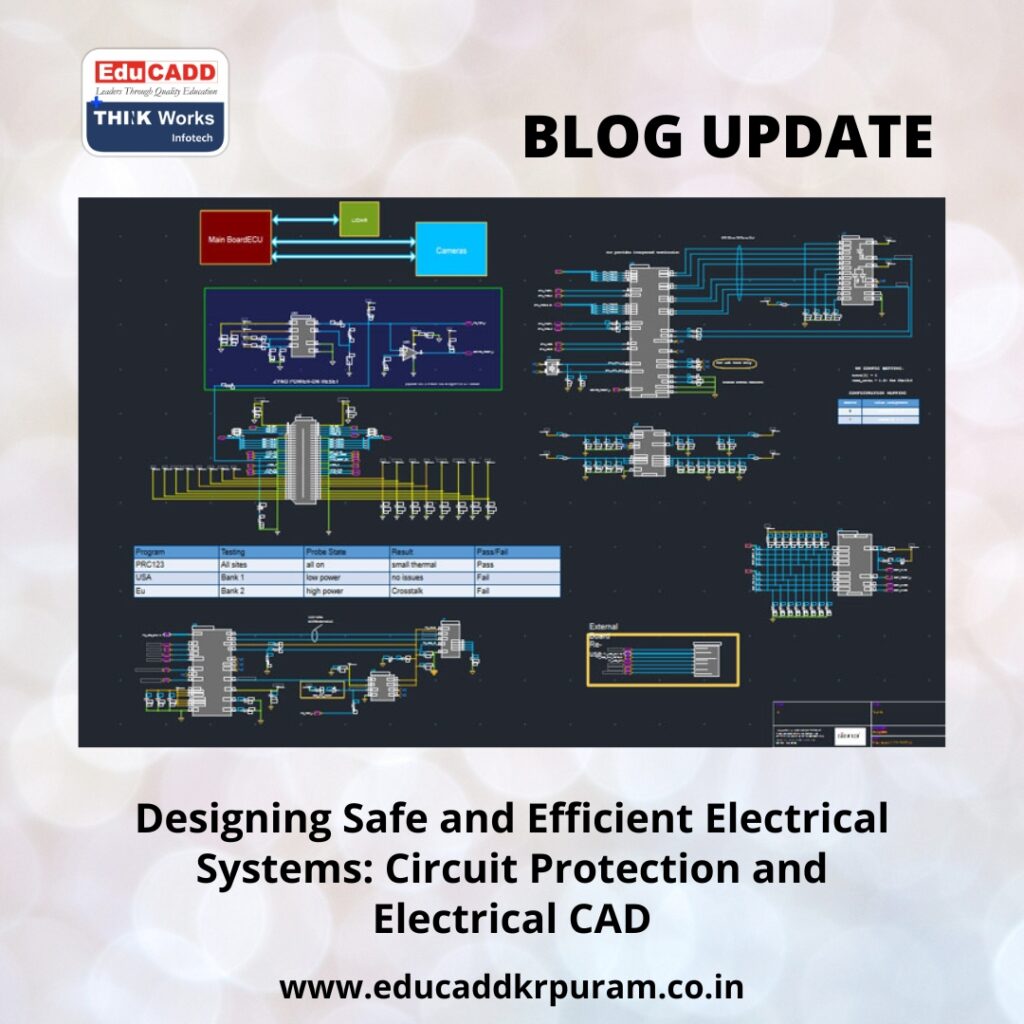
Electrical Circuit Protection Design
In this article, we explore the importance of circuit protection, the role of Electrical CAD in design, the benefits of structured training, and the career advantages for skilled professionals.
Why Circuit Protection Is Critical
Electrical systems constantly face risks such as short circuits, overloads, and voltage surges. Circuit protection devices—including fuses, circuit breakers, and relays—act as safeguards to prevent these hazards.
These devices monitor current flow and disconnect the circuit during abnormal conditions. For instance, a motor drawing excess current triggers a breaker, protecting wiring and equipment from overheating. Surge protectors, on the other hand, shield sensitive electronics from sudden voltage spikes.
Training in circuit protection and Electrical CAD ensures professionals can select appropriate devices, calculate ratings accurately, and incorporate them into practical layouts. It also helps them stay compliant with safety standards and evolving electrical codes.
Structured learning moves engineers beyond theory, enabling them to apply knowledge confidently in real-world projects.
How Electrical CAD Streamlines Design
Before CAD software, electrical engineers relied on hand-drawn diagrams and manual calculations, which were prone to errors. Today, Electrical CAD tools such as AutoCAD Electrical, EPLAN, and SolidWorks Electrical have transformed how electrical systems are designed.
CAD software allows engineers to create precise, error-free schematics efficiently. Changes in one part of a design automatically update the entire layout, saving time and reducing mistakes. Engineers can simulate fault conditions, test protective device coordination, and visualize circuits before installation.
When combined with circuit protection knowledge, CAD expertise enables engineers to design systems that are both efficient and safe. As industries adopt automation, smart grids, and renewable energy, CAD proficiency has become essential.
The Value of Practical Training
Understanding theory alone is not enough. Hands-on experience is crucial. Structured circuit protection and Electrical CAD training essentials offer this practical exposure.
Courses typically cover:
-
Selection and coordination of protective devices
-
Overload and short-circuit calculations
-
CAD-based schematic development and integration
-
Compliance with national and international standards
-
Documentation for commissioning and maintenance
Practical exercises, such as designing power distribution panels with protective devices in CAD, bridge the gap between classroom learning and industry requirements. Training also boosts confidence, allowing engineers to make accurate decisions regarding breaker sizing, wiring layouts, and system safety.
Applications Across Industries
Skills in circuit protection and Electrical CAD training essentials are applicable across multiple sectors:
-
Manufacturing – Ensures machines operate safely with minimal downtime.
-
Construction and Building Services – CAD designs enable safe wiring layouts and efficient power distribution.
-
Renewable Energy – Solar and wind installations require precise protection for inverters, batteries, and circuits.
-
Automotive and Transportation – Electric vehicles and rail systems depend on accurate electrical designs and protection.
-
Oil and Gas – Hazardous environments demand robust, fault-tolerant systems.
Understanding these applications highlights the real-world value of combining circuit protection knowledge with CAD proficiency.
Career Opportunities for Trained Professionals
Professionals skilled in circuit protection and Electrical CAD enjoy a variety of career paths:
-
Electrical Design Engineer – Develops layouts, selects devices, ensures compliance
-
CAD Specialist – Produces and maintains accurate electrical schematics
-
Maintenance Engineer – Prevents system failures with proper protection
-
Project Engineer – Manages design and implementation of large-scale projects
-
Trainer or Consultant – Guides organizations in safe and efficient electrical practices
As industries move toward smart grids, digital twins, and renewable energy, demand for these professionals continues to grow. Trained engineers reduce risks, enhance efficiency, and contribute to safer electrical systems.
Conclusion: Preparing for a Safer Electrical Future
Electrical systems will continue to evolve with technology, automation, and sustainable energy. At the core of reliable systems lies proper circuit protection and CAD-based design.
Investing in Electrical Circuit Protection Design equips professionals with the skills to design and implement safe, efficient, and compliant systems. For engineers, students, and organizations, this training transforms knowledge into practical expertise and prepares them for the challenges of tomorrow’s electrical infrastructure.

