
Revolutionizing Electrical Design: Cable Tray, Raceway & Lighting with CADD
In the world of modern construction, precision in electrical systems is no longer optional—it is essential. Efficient energy distribution, safe cabling, and effective lighting define not just functionality but also the longevity of infrastructure. The adoption of Cable Tray, Raceway & Lighting Design using Electrical Design with CADD has transformed how engineers plan, execute, and maintain electrical systems. This technology enables professionals to draft, visualize, and optimize complex electrical layouts digitally. With Electrical CADD, designers can ensure compliance with safety standards, minimize installation errors, and provide scalable solutions for future expansions. In this blog, we explore how Electrical CADD streamlines cable tray design, raceway planning, and lighting system integration, offering unmatched accuracy and efficiency for modern projects.
Electrical Design with CADD
1. The Strategic Importance of Electrical CADD in Today’s Construction
Electrical design today must support increasingly complex systems, including automation, data networks, and smart lighting. Traditional drafting methods are no longer sufficient for these demands. Electrical Design with CADD empowers engineers to create precise layouts and simulations before any physical installation occurs. It facilitates clash detection with mechanical and architectural elements, allowing for better coordination across project teams. By using Electrical CADD, project timelines are shortened, material costs are optimized, and risk of errors on-site is significantly reduced. In essence, Electrical CADD transforms electrical design from a manual, error-prone task into a highly accurate, collaborative process.
2. Fundamentals of Cable Tray Systems
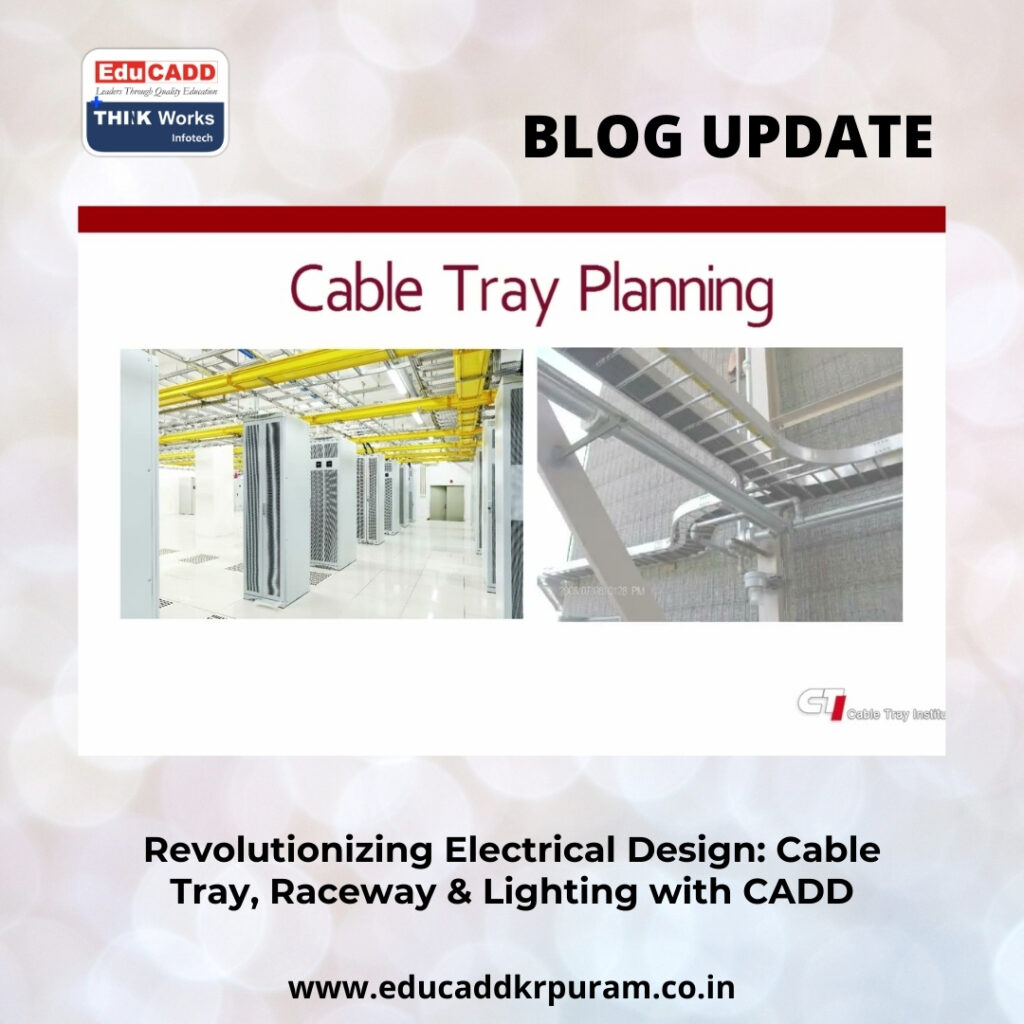
Cable trays are integral to organizing and supporting electrical cables in industrial, commercial, and residential projects. They offer a structured pathway that ensures safety, reduces maintenance complexity, and accommodates future expansion. Electrical CADD allows designers to model a variety of trays, such as ladder, solid-bottom, perforated, and wire mesh configurations. Engineers can calculate load-bearing capacities, optimize spacing, and ensure proper separation for power and communication cables. Digital modeling also enables accurate planning for bends, vertical drops, and support intervals, ensuring that installations are both safe and efficient.
3. Advanced Cable Tray Routing in Electrical CADD
Effective cable tray routing requires careful consideration of space, load, and existing building services. Electrical CADD simplifies this by offering 3D visualization and multi-layered drawings. Designers can plan tray paths across ceilings, walls, and floors with precision, avoiding interference with HVAC ducts, piping, and structural elements. The software also calculates minimum bending radii and fill percentages, ensuring that cables are not overstressed. Future expansions can be integrated into the design, reducing the need for costly rework. Overall, Electrical CADD ensures that cable trays are installed efficiently and safely.
4. Understanding Raceway Systems and Their Role
Raceway systems protect electrical conductors from damage, environmental exposure, and mechanical stress. Conduits, surface-mounted channels, and trunking systems are commonly used raceways. Electrical CADD enables accurate modeling of these systems, allowing designers to choose proper sizes, maintain clearances, and comply with code requirements. Designers can visualize raceway paths in both 2D and 3D, ensuring consistency and preventing overcrowding. A well-planned raceway system not only safeguards cables but also simplifies maintenance and ensures a longer lifespan for the electrical infrastructure.
5. Designing Conduit Layouts with Precision
Conduits are critical for guiding cables through tight spaces and protecting them from potential damage. Electrical CADD allows designers to create detailed conduit layouts, including exact lengths, bends, and offsets. Pull boxes, junctions, and terminations can be clearly documented, providing electricians with precise installation instructions. Accurate conduit layouts minimize installation errors and prevent cable strain, which can compromise system integrity. Electrical CADD also streamlines revisions, enabling quick adjustments to accommodate design changes without reworking the entire plan.
6. Coordinating Raceways with Other Building Systems
Modern buildings house multiple utilities within confined spaces, making coordination critical. Raceways must coexist seamlessly with plumbing, HVAC, fire protection, and data systems. Electrical CADD allows designers to overlay multiple service layers, detect clashes, and adjust layouts proactively. By resolving conflicts in the design phase, on-site installation becomes smoother and faster. Coordinated raceway planning ensures safe separation of circuits, improves accessibility for maintenance, and enhances overall project efficiency.
7. Lighting Design Principles in Electrical CADD
Lighting design is a crucial component of electrical planning that affects safety, energy consumption, and occupant comfort. Electrical CADD allows designers to position luminaires with precision, simulate illumination levels, and document wiring and control circuits. Designers can plan for uniform light distribution, minimize glare, and optimize fixture selection. The software also supports daylight integration, occupancy sensors, and zoned control strategies. By using Electrical CADD for lighting design, engineers can create functional, visually pleasing, and energy-efficient spaces that meet both user and regulatory requirements.
8. Ensuring Compliance Through Lighting Calculations
Compliance with lighting standards, such as minimum lux levels and uniformity ratios, is essential in modern construction. Electrical CADD integrates lighting calculation tools that allow designers to verify compliance early in the design process. Reports generated by CADD software provide documentation for regulatory approvals, inspections, and client presentations. By embedding compliance into the design phase, Electrical CADD prevents post-construction issues and ensures that lighting systems operate safely and effectively from the start.
9. Energy-Efficient Lighting Integration
Sustainable design is a priority in contemporary electrical engineering. Electrical CADD facilitates the integration of energy-saving technologies such as LEDs, automated controls, and daylight harvesting. Designers can plan circuit groupings, schedule dimming controls, and optimize fixture placement for maximum efficiency. By clearly documenting these systems, Electrical CADD ensures that energy-efficient strategies are implemented accurately, resulting in lower operational costs and reduced environmental impact. These measures contribute to sustainable, smart building designs.
10. Emergency and Safety Lighting Planning
Emergency lighting is essential for occupant safety during power failures or emergencies. Electrical CADD supports the planning of exit signs, route illumination, and backup circuits with precise detail. Designers can identify critical paths, mark emergency circuits, and ensure backup power is properly routed. Clear documentation assists authorities during inspections and guides installers in accurate placement. By utilizing Electrical CADD for emergency lighting, designers enhance building safety and meet stringent regulatory standards without compromising efficiency or aesthetics.
11. Integrating Cable Trays, Raceways, and Lighting Systems
Integration is the cornerstone of modern electrical design. Electrical CADD allows designers to work on cable trays, raceways, and lighting layouts simultaneously, ensuring coordinated and efficient designs. The software provides tools for elevation alignment, clash detection, and load balancing across systems. Designers can maintain separation between power, communication, and lighting circuits while ensuring seamless operation. Integrated planning reduces installation errors, improves overall project quality, and enhances operational efficiency once the systems are in use.
12. Standardization and Documentation Best Practices
Consistent documentation is essential for clarity, communication, and compliance. Electrical CADD supports standardized symbols, annotations, and layering conventions, making designs understandable across teams. Automatic generation of legends, schedules, and material lists simplifies installation, procurement, and auditing. Standardized documentation ensures contractors have clear instructions, reduces errors during construction, and provides clients with reliable reference material for future maintenance. Electrical CADD thus elevates the professionalism and usability of electrical designs.
13. Advantages for Project Stakeholders
Electrical CADD delivers tangible benefits to engineers, contractors, and clients. Designers achieve faster, more accurate results. Contractors receive precise installation guidance, reducing errors and project delays. Clients gain transparency through accurate visualizations and detailed reporting, allowing for informed decisions regarding costs and timelines. Accurate material estimation, reduced rework, and efficient coordination translate into higher project quality, cost savings, and stakeholder satisfaction. Electrical CADD fosters collaboration, efficiency, and accountability throughout the construction process.
14. Career Growth and Professional Opportunities
Mastery of Cable Tray, Raceway & Lighting Design in Electrical CADD significantly enhances professional prospects. Engineers skilled in this field are highly valued in EPC firms, consultancies, and construction companies. Proficiency in Electrical CADD enables professionals to handle complex projects, coordinate multidisciplinary teams, and deliver high-quality, compliant designs efficiently. It also opens doors to leadership and project management positions. As the demand for sophisticated electrical systems grows, expertise in Electrical CADD becomes a key differentiator, ensuring long-term career growth and market relevance.
Conclusion
Efficient electrical system design requires precision, foresight, and integration. Cable Tray, Raceway & Lighting Design using Electrical Design with CADD equips engineers with the tools to achieve these objectives. From accurate cable routing and protective raceway layouts to intelligent, energy-efficient lighting systems, Electrical CADD transforms planning into execution-ready designs. By reducing errors, ensuring compliance, and facilitating collaboration, Electrical CADD improves project quality, reduces costs, and enhances operational safety. For engineers and designers seeking to excel in modern construction, mastering Electrical CADD is not just advantageous—it is essential.

