
Beyond Lines and Symbols: Advanced Best Practices for Creating Electrical Wiring Diagrams in CADD
Electrical Wiring Diagrams CADD thrives on clarity, accuracy, and safety. Every powered building, industrial machine, and automation system relies on documentation that explains how electrical components connect and function. Among all technical documents, electrical wiring diagrams serve as the most practical and actionable guides. They translate complex electrical concepts into structured visual instructions that electricians and engineers can follow with confidence.
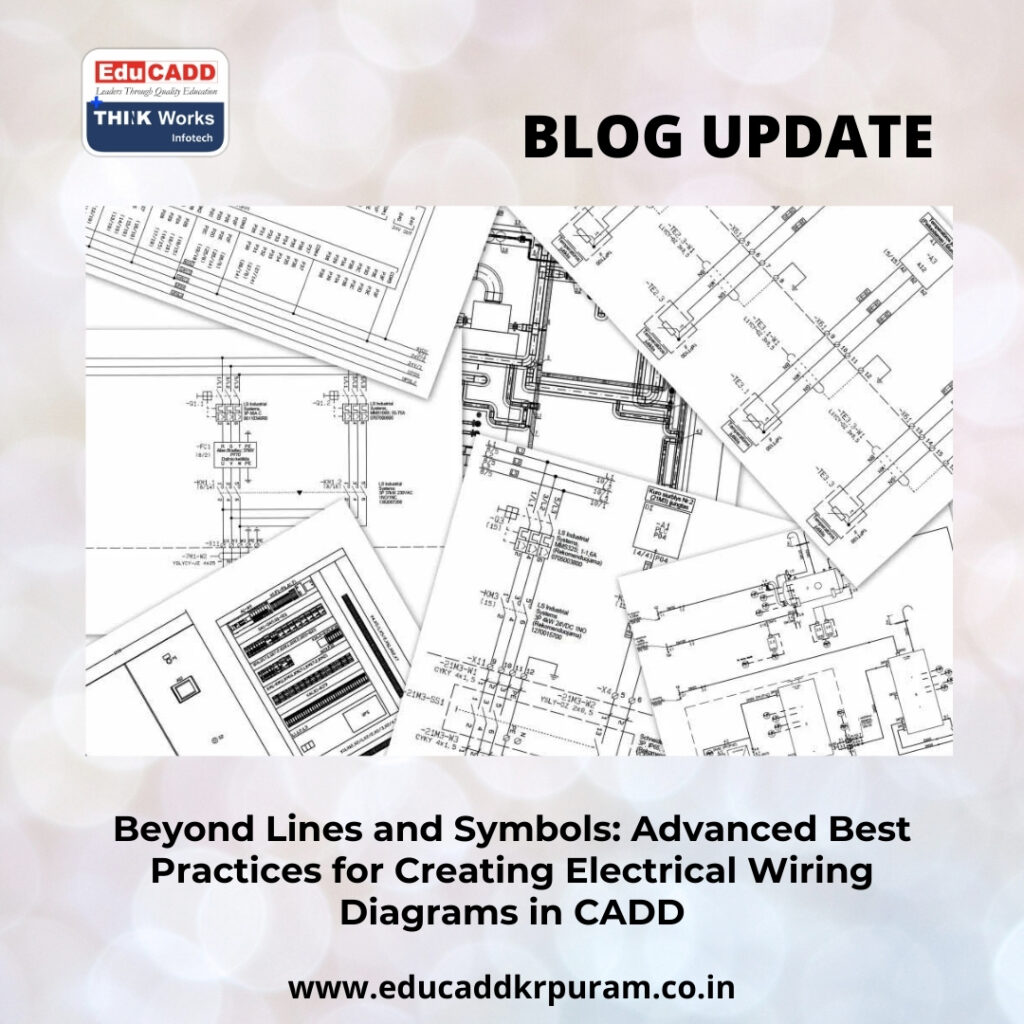
Electrical Wiring Diagrams CADD
With the evolution of Computer-Aided Design and Drafting technology, the preparation of electrical wiring diagrams has become more efficient and precise than ever before. However, software alone does not guarantee quality. True excellence emerges when professionals apply structured best practices, maintain drafting discipline, and prioritize safety at every stage. This detailed guide explores refined techniques, strategic workflows, and professional standards that help engineers produce high-quality electrical wiring diagrams using CADD tools.
1. The Strategic Importance of Electrical Wiring Diagrams in Modern Projects
Electrical Wiring Diagrams CADD act as the operational roadmap of any electrical system. They provide a clear depiction of conductor routing, device connections, terminal assignments, and control logic. Unlike conceptual schematics, these diagrams reflect real installation details, making them indispensable for field technicians.
In modern construction and industrial environments, projects often involve multiple teams working simultaneously. Electrical wiring diagrams ensure everyone follows a unified plan. When engineers develop these drawings using CADD platforms, they achieve consistent formatting and accurate alignment. Digital drafting eliminates the variability found in manual processes.
Furthermore, these diagrams support the entire project lifecycle. During commissioning, technicians rely on them to verify connections. During maintenance, engineers consult them to trace faults. During upgrades, designers refer to them for integration planning. Therefore, well-prepared electrical wiring diagrams contribute directly to operational reliability and long-term system performance.
2. Establishing a Robust Drafting Framework
Professional documentation begins with a structured drafting framework. Organizations must define internal guidelines that govern how electrical wiring diagrams are created. These guidelines should address line thickness, text formatting, scaling methods, dimension standards, and sheet organization.
By creating standardized templates in CADD software, engineering teams streamline their workflow. Templates predefine layers, symbols, borders, and title blocks. This preparation ensures uniformity across projects and saves valuable setup time.
Consistency improves collaboration. When every engineer follows the same formatting rules, drawings become easier to review and interpret. Structured drafting frameworks also enhance brand credibility and demonstrate technical professionalism.
Moreover, aligning internal standards with regulatory codes ensures compliance from the start. This proactive approach reduces approval delays and prevents costly redesigns.
3. Intelligent Layer Structuring for Enhanced Visualization
One of the most powerful advantages of CADD software lies in its layer management capabilities. Effective layer structuring transforms complex electrical wiring diagrams into organized, readable documents.
Engineers should categorize layers according to system functions. For example, separate layers can represent main power circuits, control circuits, grounding paths, cable trays, and annotations. This structured separation prevents visual clutter and improves editing efficiency.
Color differentiation enhances understanding. Assigning distinct colors to various voltage levels or functional systems allows reviewers to identify sections quickly. During troubleshooting, technicians can isolate specific layers to focus on particular circuits.
Well-organized layers also simplify revisions. Designers can modify specific system elements without disturbing unrelated components. Consequently, intelligent layer structuring plays a vital role in producing high-quality electrical wiring diagrams.
4. Standardized Symbol Libraries and Component Blocks
Symbols form the universal language of electrical documentation. Each device—whether a breaker, relay, motor, or switch—must appear with a recognized graphical representation. Inconsistent symbols can lead to misinterpretation and installation errors.
CADD software offers extensive symbol libraries. However, organizations should customize their libraries to match industry standards and internal preferences. Maintaining a centralized symbol database ensures consistency across projects.
Reusable blocks further improve efficiency. Engineers can save commonly used assemblies, such as motor control units or distribution panels, as dynamic blocks. These blocks retain predefined attributes and can be inserted repeatedly without redrawing components.
Updating a master block automatically updates all instances within a drawing set. This capability reduces repetitive work and maintains uniformity. Standardized symbols and blocks therefore enhance clarity, accuracy, and productivity.
5. Logical Wire Routing for Improved Readability
Clarity in conductor routing defines the effectiveness of electrical wiring diagrams. Engineers should prioritize horizontal and vertical alignment whenever possible. Straight routing paths make circuits easier to trace and understand.
Avoid excessive crossing lines or unnecessary bends. Where wires intersect, use clear connection markers to distinguish true junctions from overlapping paths. This practice eliminates ambiguity and enhances safety.
Each conductor should carry a unique identification number. Systematic wire numbering supports installation and simplifies future troubleshooting. Maintenance personnel can trace circuits efficiently when labels match panel schedules.
Consistent spacing between conductors enhances visual balance. Organized routing techniques transform intricate networks into structured, readable diagrams.
6. Comprehensive Annotation and Labeling Practices
Annotations provide essential technical details that extend beyond graphical elements. Electrical wiring diagrams must include clear labeling of components, voltage ratings, terminal numbers, and protective devices.
Each device should have a unique identification code that corresponds with system documentation. Structured numbering systems prevent duplication and improve traceability.
Text size and clarity remain critical considerations. Engineers must verify that annotations remain legible when printed at final scale. Testing print previews before project submission prevents readability issues.
Revision notes and cross-references should also appear clearly within the drawing. Detailed annotation ensures that field teams understand design intent without confusion.
7. Organized Sheet Layout and Logical Grouping
Presentation plays a significant role in technical communication. Although electrical wiring diagrams often represent logical connections rather than physical dimensions, sheet organization remains essential.
Engineers should group related circuits within defined sections. Separate high-voltage circuits from low-voltage control systems to enhance safety awareness. Logical grouping improves navigation and simplifies review processes.
Title blocks must include project details, drawing numbers, revision histories, and approval signatures. Accurate documentation ensures accountability and facilitates audits.
Structured layouts reflect professional discipline and improve overall document quality.
8. Quality Assurance and Error Prevention Strategies
Electrical Wiring Diagrams CADD demand precision. Even minor drafting errors can result in costly failures or safety hazards. Therefore, rigorous quality control must be integrated into the drafting workflow.
Peer reviews provide valuable oversight. Colleagues can verify connections, confirm wire numbering sequences, and check compliance with standards. Fresh perspectives often identify overlooked inconsistencies.
Modern CADD tools include automated checking features that detect incomplete connections and overlapping objects. Leveraging these tools enhances reliability.
Developing a standardized review checklist ensures systematic verification before final approval. Quality assurance protects project integrity and strengthens client confidence.
9. Effective Revision Tracking and Document Management
Projects evolve as design requirements change. Equipment substitutions, load adjustments, and regulatory updates often require modifications to electrical wiring diagrams.
CADD platforms enable efficient revision tracking. Engineers should highlight updates clearly using revision clouds and update logs. Transparent documentation prevents confusion among stakeholders.
Maintaining archived versions safeguards project history. Organized file naming conventions and secure backups protect valuable engineering data.
Effective document management ensures smooth communication throughout project development and future maintenance phases.
10. Integration with Multidisciplinary Workflows
Modern engineering projects demand collaboration across disciplines. Electrical designers must coordinate with architects, structural engineers, and mechanical teams.
Integrating electrical wiring diagrams into broader digital workflows enhances coordination. When aligned with 3D models, designers can detect spatial conflicts before construction begins. Early clash detection prevents expensive field corrections.
Cloud-based collaboration platforms allow real-time sharing of updated drawings. Stakeholders can review, comment, and approve changes efficiently.
Seamless integration improves project timelines and reduces coordination challenges.
11. Compliance with Safety Standards and Regulatory Codes
Electrical documentation must reflect strict adherence to safety regulations. Engineers must verify that conductor sizes, protective devices, and grounding systems meet applicable standards.
Electrical wiring diagrams should clearly indicate fault protection mechanisms and voltage classifications. Accurate documentation reduces the risk of accidents during installation and operation.
Regular code reviews ensure ongoing compliance as standards evolve. Engineers who prioritize regulatory alignment protect both users and organizations.
Safety-focused drafting builds trust and reinforces professional responsibility.
12. Leveraging Automation for Productivity Gains
Automation significantly enhances drafting efficiency. Many CADD systems provide tools for automatic wire numbering, attribute extraction, and batch plotting.
Automated numbering reduces human error and maintains consistency across extensive circuits. Attribute tagging allows quick generation of bills of materials and component schedules.
Macros and scripts can streamline repetitive tasks. By optimizing workflows, engineers allocate more time to technical analysis and system optimization.
Strategic use of automation balances productivity with precision.
13. Continuous Skill Development and Technological Adaptation
The engineering landscape evolves rapidly. New tools, standards, and technologies emerge continuously. Professionals must commit to ongoing learning to remain effective.
Advanced training programs enhance understanding of CADD capabilities and integrated design methodologies. Practical workshops improve proficiency in developing complex electrical wiring diagrams.
Professional growth strengthens career prospects and improves project outcomes. Engineers who embrace innovation adapt quickly to changing industry demands.
14. Long-Term Data Preservation and Digital Archiving
Electrical documentation must remain accessible long after project completion. Proper archiving ensures that electrical wiring diagrams support maintenance and future expansions.
Engineers should establish structured digital storage systems with clear folder hierarchies and indexing methods. Secure backups protect against data loss.
Access control policies maintain confidentiality while enabling authorized retrieval. Organized documentation preserves institutional knowledge and supports seamless system upgrades.
Long-term data management completes the professional lifecycle of electrical drafting projects.
Conclusion
Electrical Wiring Diagrams CADD represent far more than interconnected lines and symbols. They serve as the operational backbone of electrical systems, guiding installation, maintenance, and upgrades. When engineers apply structured best practices within CADD environments, they achieve clarity, precision, and compliance.
From standardized templates and organized layers to logical routing and comprehensive annotation, every element contributes to professional excellence. Rigorous quality control, disciplined revision management, automation, and collaborative integration further enhance reliability.
By embracing continuous learning and robust documentation strategies, engineering teams elevate the quality of electrical wiring diagrams and ensure long-term operational success. Mastery of these practices transforms digital drafting into a powerful tool that supports safety, efficiency, and sustainable engineering performance.

