
From Vision to Reality: The Complete Skill Set Every Future Interior Designer Must Master
Future Interior Designer Skills shapes how people experience the world inside buildings. Every home, office, retail store, hospital, and hotel carries a silent narrative created through thoughtful planning and artistic direction. A well-designed environment enhances comfort, productivity, safety, and emotional well-being. Therefore, interior design stands at the intersection of creativity, technical knowledge, and human understanding.
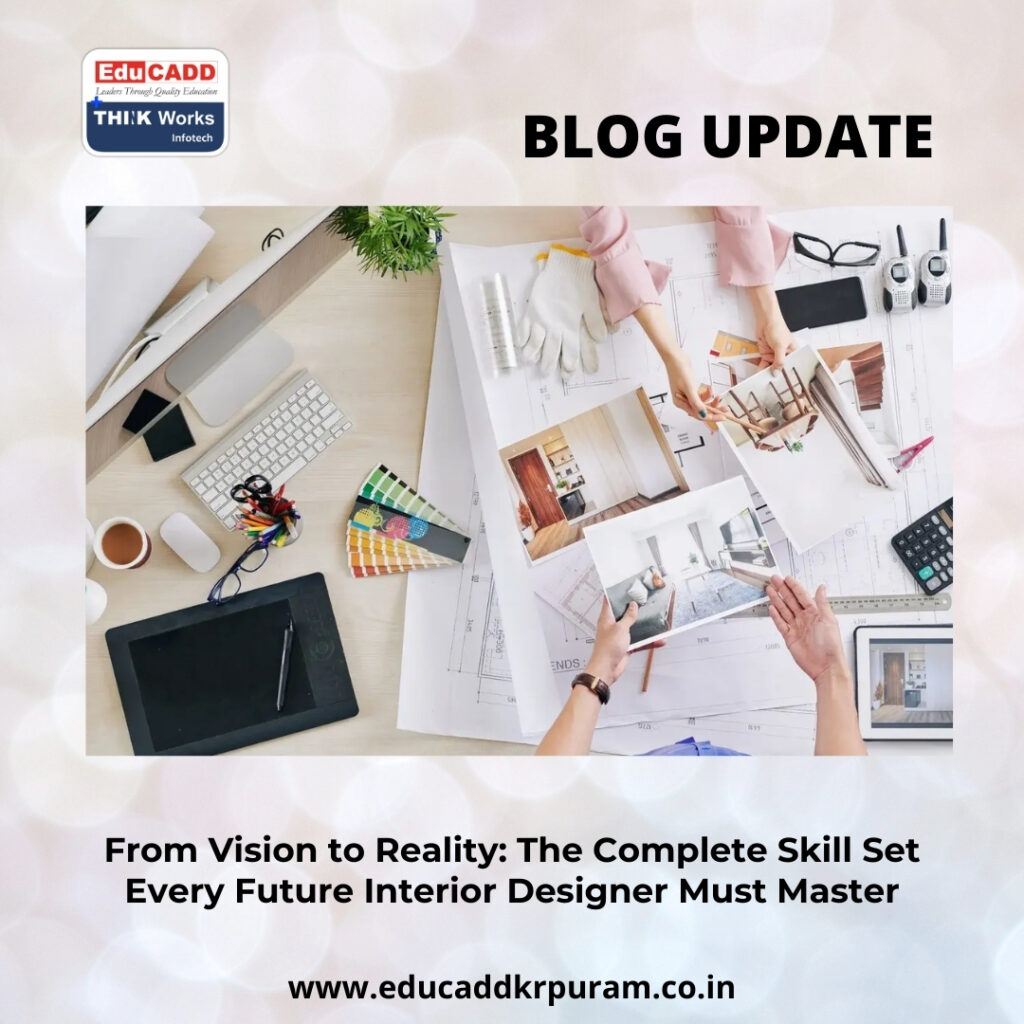
Future Interior Designer Skills
However, success in this profession requires far more than an eye for decoration. Professional designers must balance imagination with structure, aesthetics with engineering, and ambition with practicality. They guide projects from concept to completion while coordinating multiple stakeholders. In this detailed guide, you will discover the complete range of competencies that define a successful interior designer. Each section explores essential abilities that aspiring professionals must cultivate to thrive in this demanding and rewarding field.
1. Visionary Creativity and Conceptual Thinking
Future Interior Designer Skills begins with vision. A professional designer sees possibilities where others see empty rooms. This ability stems from creative thinking combined with conceptual clarity. Designers must imagine how light, color, texture, and form interact before implementation starts.
Conceptual thinking transforms client ideas into structured design narratives. For example, a boutique hotel might require a theme that reflects local culture while maintaining luxury appeal. A residential project may demand a balance between modern minimalism and family warmth. Designers interpret these requirements and develop cohesive concepts that guide every decision.
Moreover, creativity must remain purposeful. Random combinations rarely create harmony. Instead, designers align each element with the overarching theme. This disciplined imagination ensures that the final space feels intentional and memorable. Therefore, visionary creativity forms the foundation of professional interior design practice.
2. Deep Understanding of Design Principles
Strong design principles provide stability to creative ideas. Concepts such as balance, proportion, contrast, rhythm, scale, unity, and emphasis ensure that spaces feel organized and visually pleasing. Without these guiding principles, even innovative ideas may appear chaotic.
Balance distributes visual weight effectively. Proportion maintains correct relationships between furniture and spatial dimensions. Contrast introduces interest through variation in color, texture, or form. Rhythm guides the eye naturally across the room.
Professional interior designers apply these principles consciously. They analyze how elements interact and adjust layouts to maintain harmony. As a result, spaces feel cohesive rather than cluttered. Mastery of design fundamentals strengthens credibility and distinguishes trained professionals from enthusiasts.
3. Spatial Intelligence and Functional Planning
An interior designer must understand space thoroughly. Spatial intelligence involves interpreting floor plans, recognizing structural limitations, and optimizing room layouts. Designers evaluate dimensions carefully before selecting furniture or designing built-in features.
Functional planning enhances usability. Clear circulation paths prevent congestion. Zoning strategies define distinct areas within open layouts. In offices, workstations must support collaboration without sacrificing privacy. In homes, living areas should promote comfort and connection.
Additionally, ergonomic considerations ensure user comfort. Proper seating heights, desk placements, and storage accessibility improve everyday experiences. When designers prioritize functionality alongside aesthetics, they create spaces that serve people effectively. Spatial intelligence therefore remains a critical skill in professional interior design.
4. Technical Drawing and Digital Design Tools
Future Interior Designer Skills relies heavily on technical precision. Designers must translate concepts into accurate drawings that contractors can follow confidently. Floor plans, elevations, and sections communicate structural details clearly.
Digital tools enhance efficiency and presentation quality. Software platforms enable designers to produce three-dimensional renderings that help clients visualize final outcomes. These renderings reduce ambiguity and streamline approvals.
Technical knowledge also includes understanding construction documentation. Designers collaborate closely with architects and engineers. Clear drawings minimize errors and maintain project timelines. Therefore, technical proficiency supports smooth execution and professional reliability.
5. Material Expertise and Finish Coordination
Materials define both durability and character. Professional interior designers must understand how different materials perform in various environments. Wood offers warmth and natural appeal. Metal adds strength and modernity. Glass introduces openness and light reflection.
Designers evaluate factors such as maintenance, lifespan, sustainability, and cost before finalizing selections. In commercial spaces, durability often takes priority. In luxury residences, texture and refinement may lead decisions.
Finish coordination requires thoughtful alignment. Wall treatments, flooring options, lighting fixtures, and hardware details must complement each other. Cohesion enhances sophistication and ensures visual unity. Material expertise strengthens the designer’s ability to deliver lasting results.
6. Lighting Strategy and Atmosphere Design
Lighting influences mood significantly. Professional designers understand how to manipulate natural and artificial light to enhance ambience. Effective lighting plans include ambient, task, and accent layers.
Ambient lighting establishes overall brightness. Task lighting supports activities such as reading or cooking. Accent lighting highlights architectural features or artwork. Together, these layers create depth and dimension.
Designers must also consider energy efficiency and sustainability. Modern lighting systems offer adjustable controls that optimize consumption. By combining technical knowledge with artistic sensitivity, designers craft environments that feel inviting and functional.
7. Communication and Client Engagement
Interior design requires constant interaction with clients and collaborators. Strong communication skills help designers translate abstract ideas into actionable plans. Active listening ensures accurate understanding of client expectations.
Clear presentations build confidence. Designers must explain design concepts, material choices, and budget allocations effectively. Written documentation prevents confusion and supports accountability.
Additionally, empathy plays an essential role. Clients often feel emotionally invested in their spaces. Designers who communicate respectfully and transparently build long-term relationships. Effective communication strengthens reputation and encourages referrals.
8. Budget Management and Cost Awareness
Financial discipline supports sustainable design practice. Professional interior designers must manage budgets responsibly while maintaining design integrity. Accurate cost estimation prevents surprises and strengthens trust.
Designers compare vendor quotes and negotiate pricing carefully. They allocate resources strategically across furniture, materials, and installation services. Transparency throughout the budgeting process enhances professionalism.
Commercial projects often require awareness of return on investment. A well-designed retail store can improve customer engagement and increase sales. Financial awareness therefore complements creative expertise.
9. Project Coordination and Time Management
Interior design projects involve multiple phases and stakeholders. Designers must coordinate suppliers, contractors, and installation teams efficiently. Strong organizational skills ensure that deadlines are met.
Detailed scheduling aligns tasks logically. Monitoring progress helps identify delays early. Proactive management prevents disruptions and maintains workflow continuity.
Time management also affects client satisfaction. Projects delivered on schedule enhance credibility. Therefore, coordination and organizational excellence represent vital professional strengths.
10. Problem-Solving and Adaptability
Unexpected challenges arise frequently in interior design projects. Material shortages, structural surprises, or shifting client preferences can disrupt plans. Designers must respond calmly and creatively.
Effective problem-solving involves evaluating alternatives quickly and implementing practical solutions. Adaptability ensures resilience in evolving circumstances. Instead of viewing obstacles negatively, successful designers treat them as opportunities to innovate.
Furthermore, design trends and technologies change continuously. Professionals who embrace learning and remain flexible stay competitive. Adaptability supports long-term career growth.
11. Sustainability and Responsible Design
Environmental responsibility has become central to modern design practice. Clients increasingly request eco-friendly solutions that minimize environmental impact. Professional designers integrate sustainable materials and energy-efficient systems thoughtfully.
Low-emission paints, recycled furnishings, and responsibly sourced materials reduce ecological footprints. Designers also optimize natural light and ventilation to improve indoor air quality.
Responsible design not only benefits the environment but also enhances health and comfort. Sustainability awareness strengthens professional value in today’s conscious market.
12. Attention to Detail and Quality Assurance
Attention to detail distinguishes exceptional designers. Small inconsistencies can compromise overall harmony. Designers must inspect installations carefully to ensure alignment, finish consistency, and structural integrity.
Quality assurance protects client investment. Thorough supervision prevents costly rework and ensures durability. Designers who prioritize precision demonstrate commitment to excellence.
Consistency across all design elements reinforces the project’s theme. Therefore, meticulous attention remains indispensable in professional practice.
13. Industry Networking and Market Awareness
Strong industry connections expand opportunities. Designers who cultivate relationships with suppliers, artisans, and contractors gain access to innovative materials and expertise.
Attending exhibitions, workshops, and design conferences broadens knowledge. Exposure to global trends enhances creative insight. Networking also fosters collaboration and referral opportunities.
Maintaining an updated portfolio and online presence increases visibility. Market awareness helps designers adapt strategies according to demand. Industry engagement therefore strengthens career development.
14. Continuous Growth and Professional Evolution
Interior design remains a dynamic profession. Emerging technologies, sustainable practices, and evolving client preferences demand continuous learning. Professional designers pursue certifications and specialized training to refine their skills.
Studying architecture, art, and cultural influences expands creative horizons. Exploring diverse design styles enriches conceptual depth. Ongoing education strengthens adaptability and innovation.
Commitment to growth reflects dedication to excellence. Designers who invest in self-improvement position themselves for long-term success in competitive markets.
Conclusion
Becoming a Future Interior Designer Skills involves mastering a diverse and interconnected set of skills. Creativity forms the foundation, yet technical knowledge, communication ability, financial awareness, and adaptability complete the professional profile. Each competency supports the others, creating a balanced framework for success.
Interior design influences daily experiences profoundly. Designers who dedicate themselves to continuous learning and disciplined practice can transform empty spaces into environments that inspire, comfort, and empower. By embracing this comprehensive skill set, aspiring professionals can build fulfilling careers and leave lasting impressions through the spaces they create.

