
Crafting Tomorrow’s Innovations: The Future of CAD – Why Learning Advanced Modeling Tools Pays Off
Technology evolves rapidly, reshaping how we design, build, and bring ideas to life. At the heart of this transformation lies Computer-Aided Design (CAD), a tool once seen as a simple drafting alternative but now an essential engine of modern innovation. From 3D modeling and simulation to cloud-based collaboration, Future of CAD Tools has become a core skill for engineers, architects, product designers, and even entrepreneurs.
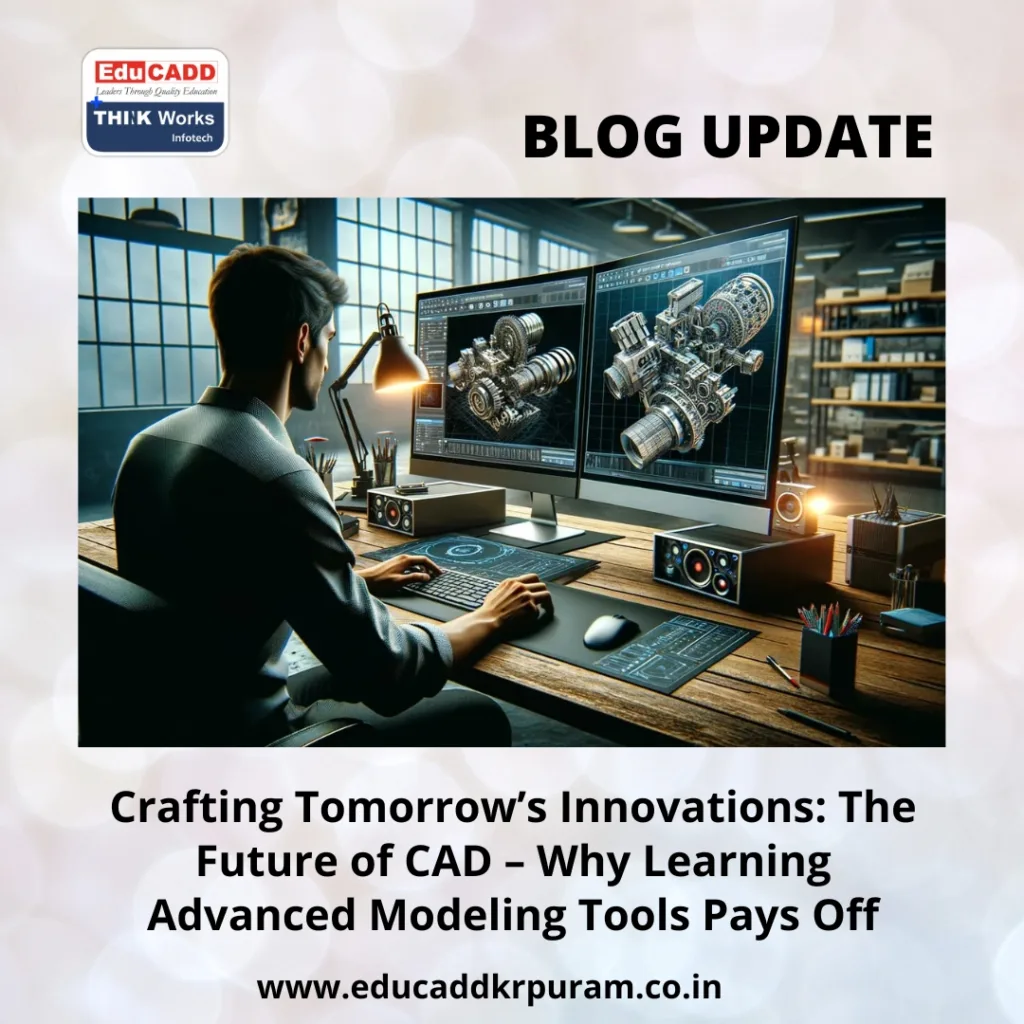
Future of CAD Tools
The phrase “The Future of CAD – Why Learning Advanced Modeling Tools Pays Off” captures this transition perfectly. It emphasizes that professionals who embrace advanced CAD platforms will remain relevant, secure better opportunities, and contribute directly to the breakthroughs of tomorrow. This blog explores CAD’s evolution, its career benefits, industry impact, essential skills, and why investing in CAD learning today creates lasting success.
Tracing CAD’s Transformation: From Drafting Aid to Design Intelligence
To understand The Future of CAD – Why Learning Advanced Modeling Tools Pays Off, it helps to revisit its history. CAD began decades ago as a substitute for manual drawing. Early systems helped engineers generate two-dimensional blueprints with greater accuracy than paper-based drafts.
However, CAD quickly evolved. The arrival of 3D modeling marked a turning point, enabling users to visualize designs in ways drawings never could. Engineers could now rotate models, examine parts, and test assemblies before production. These capabilities reduced design flaws and saved industries significant costs.
Modern CAD has gone far beyond geometry. Today’s platforms incorporate simulation, generative design, and even Artificial Intelligence (AI). Designers can run stress analyses, perform thermal checks, or simulate fluid dynamics—all within CAD software. Cloud integration allows global teams to collaborate in real time, while Augmented Reality (AR) brings designs into physical spaces for testing.
This continuous evolution shows why The Future of CAD – Why Learning Advanced Modeling Tools Pays Off. What started as a simple drawing replacement has become a hub for smart, interconnected design processes that define industrial innovation.
How CAD Expertise Creates Unmatched Career Advantages
One of the strongest arguments supporting The Future of CAD – Why Learning Advanced Modeling Tools Pays Off is its impact on careers. The global demand for professionals skilled in advanced CAD is rising, and the job market increasingly values expertise beyond basic drafting.
Employers now expect candidates to use platforms like SolidWorks, CATIA, Creo, or NX CAD to handle complex design tasks. Those who can simulate real-world performance, integrate design with manufacturing, and optimize processes hold a competitive edge.
The benefits extend well beyond employability. Professionals who master advanced CAD tools often enjoy:
-
Global opportunities – Multinational companies seek CAD experts for cross-border projects.
-
Higher salaries – Specialized CAD expertise translates into premium pay scales.
-
Entrepreneurial freedom – Designers can prototype products, collaborate with manufacturers, and even launch startups.
-
Future readiness – With Industry 4.0 integrating CAD into smart manufacturing, skilled professionals become irreplaceable.
Clearly, The Future of CAD – Why Learning Advanced Modeling Tools Pays Off for those who want careers that are not only secure but also dynamic and globally relevant.
How Advanced CAD Tools Revolutionize Entire Industries
The influence of CAD goes far beyond personal career growth. The phrase The Future of CAD – Why Learning Advanced Modeling Tools Pays Off also highlights how industries rely on these tools for transformation and progress.
Aerospace and Automotive Engineering
Aircraft and vehicles must balance safety, performance, and efficiency. CAD enables engineers to simulate airflow, test materials, and refine designs before production. In the automotive sector, CAD supports electric vehicle development, lightweight structures, and aerodynamic innovation.
Architecture and Infrastructure
Modern architecture uses Building Information Modeling (BIM) to combine structural, mechanical, and environmental factors in one model. CAD helps architects design eco-friendly spaces, plan smart cities, and reduce waste in construction.
Healthcare and Medical Devices
Medical professionals leverage CAD for life-changing outcomes. From prosthetics tailored to patients to surgical simulations, CAD enhances safety and precision in healthcare. Device manufacturers also rely on CAD to design implants, instruments, and diagnostic equipment.
Consumer Electronics and Products
Everyday devices like smartphones and appliances depend on CAD-driven designs. Advanced modeling tools allow companies to refine ergonomics, reduce costs, and speed up time-to-market.
Renewable Energy and Sustainability
Global efforts toward sustainability make CAD indispensable. Engineers use CAD to design wind turbines, solar farms, and energy-efficient systems. Without advanced modeling, progress toward clean energy would be significantly slower.
Across industries, these examples reinforce why The Future of CAD – Why Learning Advanced Modeling Tools Pays Off is not just a career mantra but an industrial reality.
Skills That Define the Future CAD Professional
Thriving in The Future of CAD – Why Learning Advanced Modeling Tools Pays Off requires building a strong, forward-looking skillset. Basic knowledge is no longer enough. To stand out, CAD professionals must focus on:
-
Parametric and Direct Modeling: Building models that update dynamically when parameters change ensures flexibility and efficiency.
-
Simulation Mastery: Running advanced analyses—structural, thermal, or fluid-based—saves costs by identifying issues early.
-
Cloud Collaboration: As design becomes global, working on cloud-based CAD platforms is essential.
-
CAD-CAM Integration: Understanding how CAD connects to CNC machining and 3D printing bridges design and production.
-
Generative Design and AI Tools: Learning how AI suggests optimized models prepares professionals for the future.
-
Sustainability-Focused Design: Knowledge of eco-friendly design principles positions professionals for green innovation projects.
Acquiring these skills cements why The Future of CAD – Why Learning Advanced Modeling Tools Pays Off. Professionals with advanced capabilities do not just survive in the market—they lead it.
Why CAD Training Today Secures Tomorrow’s Success
The final piece of understanding why The Future of CAD – Why Learning Advanced Modeling Tools Pays Off comes down to training. Advanced CAD skills are not innate—they must be learned through structured programs, hands-on practice, and certifications.
Training institutes and online platforms worldwide offer courses covering everything from 3D modeling basics to advanced simulation techniques. Industry-recognized certifications validate skills and boost credibility with employers.
Online learning has made CAD education more accessible than ever. Professionals can now balance work and study while mastering cutting-edge software. Entrepreneurs and students can also use flexible training to develop the skills needed for their aspirations.
The investment yields undeniable returns. With industries shifting toward automation, digital transformation, and sustainable innovation, professionals who act now secure long-term relevance and opportunities. Training is not simply education—it is the foundation of a future-ready career.
This directly proves why The Future of CAD – Why Learning Advanced Modeling Tools Pays Off is more than a slogan; it is a strategy for building professional success.
Conclusion: Building the Future Through CAD Mastery
The discussion throughout this blog confirms a vital truth: The Future of CAD – Why Learning Advanced Modeling Tools Pays Off is both a personal and industrial reality. CAD has evolved from a drafting alternative into a sophisticated ecosystem that fuels design, innovation, and sustainability across the globe.
For professionals, Future of CAD Tools mastery opens career doors, ensures long-term security, and provides opportunities to lead the innovations shaping our future. For industries, CAD enables efficiency, reduces costs, and drives progress toward sustainability and smarter technologies.
The choice is clear: those who embrace CAD’s future position themselves at the center of tomorrow’s advancements. By learning advanced modeling tools today, you not only invest in your career but also play a role in shaping the innovations that define the world.
That is exactly why The Future of CAD – Why Learning Advanced Modeling Tools Pays Off remains one of the most powerful commitments you can make to your growth and success.

