
Powering Precision: The Strategic Impact of Industrial Automation Drawings Using Electrical CADD
Industrial growth today depends heavily on intelligent systems that combine speed, accuracy, and seamless coordination. Manufacturing plants, processing facilities, and infrastructure projects rely on automation to maintain productivity and consistency. However, automation systems cannot perform efficiently without detailed and well-structured electrical documentation. This is where Industrial Automation Electrical CADD become the backbone of modern engineering execution.
Every automated system contains interconnected components such as control panels, PLCs, drives, sensors, relays, and communication networks. These elements must function together flawlessly. Therefore, engineers require clear documentation that explains how each device connects and operates within the larger framework. Industrial Automation Drawings Using Electrical CADD provide a digital environment where engineers can design, modify, and manage these complex systems with precision.
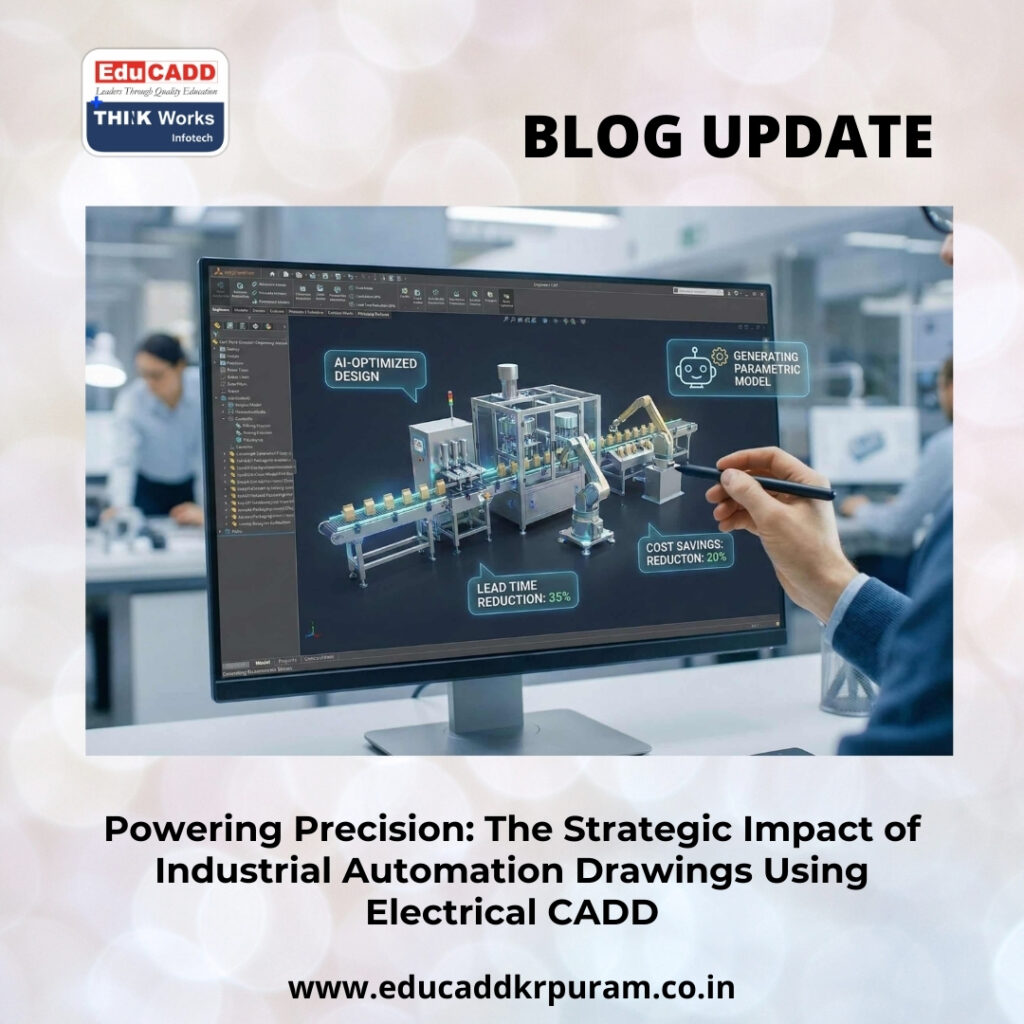
Industrial Automation Electrical CADD
Industrial Automation Electrical CADD eliminates ambiguity in design interpretation. It enhances collaboration between departments and supports project scalability. Moreover, it ensures compliance with safety standards while reducing costly errors. As industries transition toward smart manufacturing and digitally connected ecosystems, Electrical CADD has become an indispensable asset for automation professionals.
The Expanding Role of Automation in Modern Industry
Industrial Automation Electrical CADD now plays a central role across industries such as manufacturing, energy, pharmaceuticals, and logistics. Companies aim to reduce manual intervention while improving quality and output consistency. Consequently, automation systems have grown more advanced and interconnected.
Industrial Automation Drawings Using Electrical CADD support this complexity by organizing system architecture into structured visual formats. Engineers use these drawings to define power distribution, control logic, and communication pathways. Without proper documentation, installation errors increase and troubleshooting becomes inefficient.
Furthermore, automation systems often operate continuously, making downtime extremely costly. Accurate electrical drawings ensure that technicians can quickly diagnose and resolve issues. As automation technology evolves, documentation standards must also adapt to handle increased system sophistication. Electrical CADD provides the digital framework necessary to meet these growing demands.
What Electrical CADD Brings to Automation Engineering
Electrical CADD, or Computer-Aided Design and Drafting for electrical applications, is a specialized software solution tailored for electrical system design. Unlike traditional drafting tools, Electrical CADD incorporates intelligent features designed specifically for automation documentation.
Industrial Automation Drawings Using Electrical CADD allow engineers to build detailed schematics using standardized symbols and automated referencing tools. The software simplifies repetitive tasks such as wire numbering, component tagging, and cross-referencing. As a result, engineers can focus more on system logic rather than manual drafting.
Additionally, Electrical CADD provides centralized data management. Changes in one section automatically update related drawings, which maintains consistency across documentation sets. This level of integration significantly improves project efficiency and reduces the risk of oversight.
Core Elements of Automation Drawings
Automation documentation includes multiple drawing types that collectively represent the entire system. Industrial Automation Drawings Using Electrical CADD integrate these elements into a coherent design structure.
Schematic diagrams illustrate functional relationships between electrical components. They focus on logic flow rather than physical arrangement, helping engineers understand system behavior.
Panel layout drawings display the physical positioning of components within control cabinets. These layouts ensure optimal spacing, accessibility, and ventilation.
Wiring diagrams specify actual cable connections between devices. Technicians rely on these diagrams during installation and commissioning phases.
Single-line diagrams present simplified representations of power distribution networks. They assist engineers in analyzing load distribution and protection schemes.
Together, these drawing types create a comprehensive documentation package that guides automation projects from design to maintenance.
Achieving Design Precision and Standardization
Precision remains a non-negotiable requirement in industrial automation. Minor documentation errors can lead to wiring faults, equipment damage, or safety hazards. Therefore, Industrial Automation Drawings Using Electrical CADD emphasize structured accuracy.
Electrical CADD software incorporates symbol libraries that adhere to international standards. Engineers can maintain consistent formatting and labeling throughout the project lifecycle. This standardization enhances readability and simplifies interpretation for installation teams.
Moreover, automated validation tools identify missing references and mismatched tags. Engineers can correct issues during the design stage rather than after implementation. By maintaining high levels of precision, Electrical CADD strengthens system reliability and project credibility.
Facilitating Cross-Functional Collaboration
Automation projects typically involve multiple stakeholders, including electrical engineers, control system specialists, project managers, and field technicians. Clear communication among these teams is essential.
Industrial Automation Drawings Using Electrical CADD promote collaborative workflows by enabling digital file sharing and version control. Engineers can access updated drawings instantly, reducing miscommunication and delays.
Cloud integration further enhances accessibility, allowing teams in different locations to coordinate seamlessly. When everyone works from a single source of truth, project execution becomes more efficient and predictable. Effective collaboration not only improves productivity but also fosters innovation within engineering teams.
Integrating PLC and Control Systems
Programmable Logic Controllers serve as the intelligence behind automated operations. They interpret input signals, execute control logic, and activate outputs accordingly. Accurate PLC documentation is vital for smooth functionality.
Industrial Automation Electrical CADD enable engineers to design detailed input-output mappings, terminal diagrams, and communication interfaces. Automated cross-referencing ensures alignment between PLC addresses and field devices.
Furthermore, control systems often incorporate safety circuits and redundancy mechanisms. Proper documentation guarantees that these protective measures function correctly. Electrical CADD simplifies the management of complex PLC configurations, ensuring clarity and operational reliability.
Compliance with Safety and Regulatory Standards
Industrial facilities must adhere to strict safety guidelines and regulatory frameworks. Documentation plays a critical role in demonstrating compliance.
Industrial Automation Drawings Using Electrical CADD allow engineers to incorporate standardized safety symbols, grounding systems, and protective devices consistently. Clear documentation ensures that installation teams follow approved safety protocols.
Additionally, structured drawings facilitate inspections and audits. Regulatory authorities can review documentation efficiently to verify adherence to standards. By maintaining compliance through accurate documentation, organizations protect both personnel and equipment.
Digital Transformation and Workflow Optimization
The digital revolution has transformed engineering workflows across industries. Industrial Automation Drawings Using Electrical CADD integrate seamlessly with digital project management platforms and enterprise systems.
Engineers can link drawings to material databases and procurement tools, enabling accurate cost estimation and resource planning. Automated report generation simplifies the creation of bill-of-materials and cable schedules.
These digital capabilities reduce manual effort and accelerate project timelines. Teams can respond quickly to design changes without disrupting progress. Consequently, Electrical CADD enhances operational agility and strategic efficiency.
Quality Assurance and Error Prevention
Maintaining high quality standards is essential in automation projects. Industrial Automation Drawings Using Electrical CADD include built-in validation mechanisms that detect inconsistencies before drawings reach the field.
Engineers can run systematic checks to ensure that all connections and references are accurate. This proactive approach minimizes field corrections and avoids expensive downtime.
Revision tracking further strengthens quality assurance. Each modification is documented, providing a transparent history of changes. Such structured control enhances accountability and project reliability.
Managing Complex and Large-Scale Projects
Large industrial facilities may contain thousands of interconnected components. Managing documentation at this scale requires robust organizational capabilities.
Industrial Automation Drawings Using Electrical CADD provide database-driven design environments that handle extensive component libraries efficiently. Engineers can categorize and retrieve information quickly, even within massive projects.
Modular design practices enable reuse of standardized circuits across multiple systems. This approach improves consistency while reducing development time. Scalability ensures that documentation evolves alongside system expansion without losing clarity.
Supporting Smart Factories and Industry 4.0
Industry 4.0 emphasizes connectivity, data exchange, and intelligent analytics. Automation documentation must reflect these interconnected systems accurately.
Industrial Automation Electrical CADD capture communication networks, Ethernet configurations, and integration with IoT devices. Engineers can represent both electrical and data pathways within unified drawings.
This integration supports predictive maintenance and real-time monitoring. As factories adopt smart technologies, Electrical CADD ensures that documentation remains aligned with digital innovation. It bridges the gap between traditional electrical design and advanced data-driven operations.
Skill Development and Professional Growth
Mastering Electrical CADD requires both technical knowledge and practical experience. Engineers must understand electrical principles while navigating advanced software features.
Industrial Automation Drawings Using Electrical CADD demand precision, analytical thinking, and attention to detail. Training programs focus on drafting standards, PLC integration, and system design methodologies.
Continuous professional development enables engineers to adapt to evolving technologies. Organizations that invest in skill enhancement build stronger engineering teams capable of handling complex automation challenges.
Lifecycle Management and Long-Term Efficiency
Automation systems operate for many years, often undergoing upgrades and expansions. Accurate documentation ensures smooth lifecycle management.
Industrial Automation Drawings Using Electrical CADD provide reliable references for maintenance teams. Technicians can identify components, trace circuits, and implement modifications efficiently.
Digital archives preserve historical records of revisions and updates. This continuity supports operational stability and long-term efficiency. Well-maintained documentation reduces downtime and enhances overall plant performance.
Conclusion
Industrial automation drives modern manufacturing success, yet its effectiveness depends on precise and reliable documentation. Industrial Automation Electrical CADD form the structural framework that supports complex control systems and interconnected technologies.
By enhancing accuracy, promoting collaboration, and enabling digital integration, Electrical CADD transforms how engineers design and manage automation projects. It ensures compliance with safety standards, reduces operational risks, and supports scalable growth.
As industries continue to embrace intelligent manufacturing and data-driven processes, the significance of Electrical CADD will only increase. Organizations that prioritize structured documentation and advanced drafting tools will achieve sustainable operational excellence. Ultimately, Industrial Automation Drawings Using Electrical CADD empower engineers to convert innovative automation concepts into efficient, reliable, and future-ready industrial solutions.

