
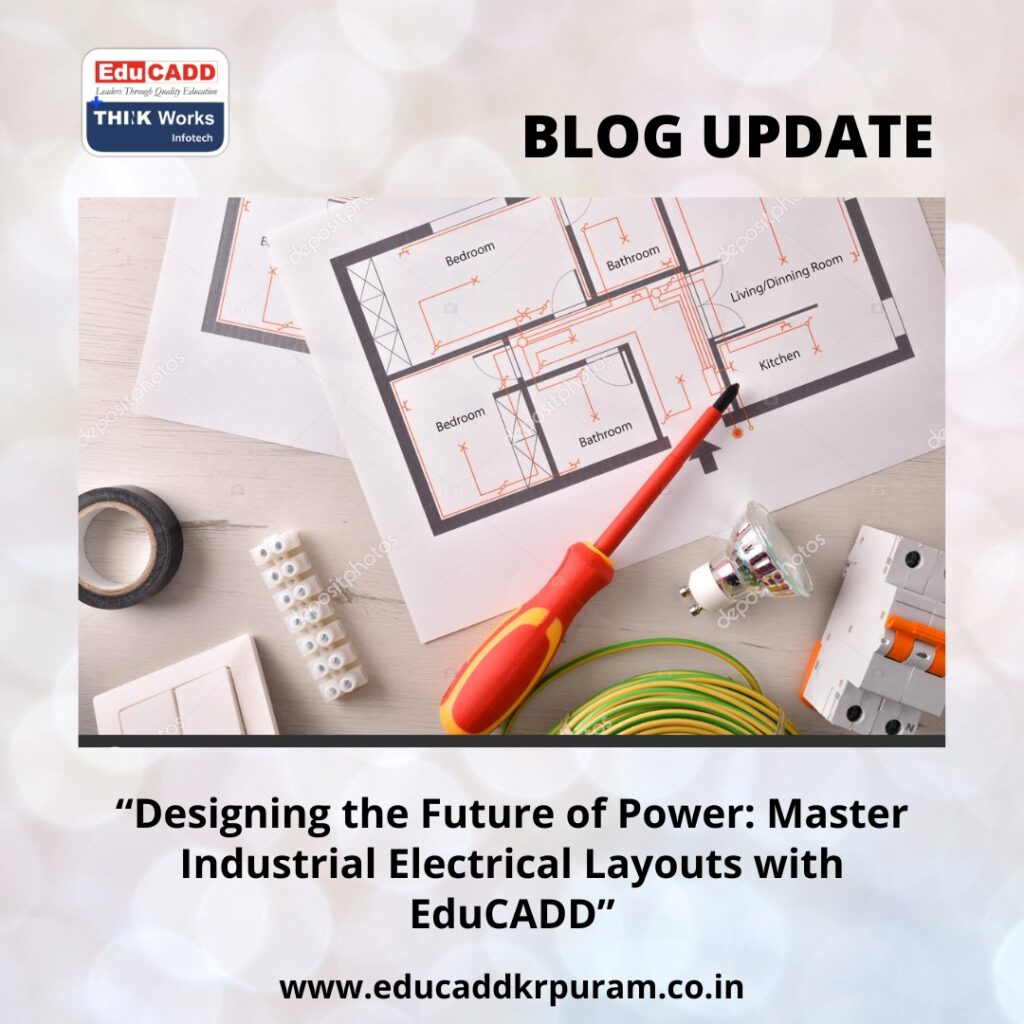
“Designing the Future of Power: Master Industrial Electrical Layouts with EduCADD”
Every industrial structure relies on one unseen but vital component — electricity. From large-scale production units to automated factories, a well-planned electrical system determines whether a facility operates smoothly or faces disruptions. The efficiency, safety, and reliability of these systems depend on the precision of Industrial Electrical Layout Design. These layouts act as the master blueprint for how energy is generated, distributed, and controlled throughout an industrial site.
Industrial Electrical Layout Design
However, designing these layouts is no simple task. It demands both creative problem-solving and technical expertise. This is where EduCADD makes the difference. As one of India’s leading design training institutes, EduCADD helps aspiring engineers, technicians, and professionals learn how to create accurate, efficient, and safety-compliant industrial electrical systems. The course blends technical fundamentals with hands-on training, enabling learners to design layouts that align with modern industry standards and future trends.
If you’re looking to build a strong foundation in industrial electrical design, EduCADD’s structured learning approach will guide you from understanding electrical principles to designing real-world industrial projects.
1. What Are Industrial Electrical Layouts and Why They Matter
An Industrial Electrical Layout Design serves as the visual and functional representation of how electricity flows within an industrial environment. It maps out the entire electrical network — including switchgear, distribution panels, cables, transformers, and control systems. Essentially, it’s the blueprint that ensures every machine receives adequate and safe power.
Unlike domestic wiring or simple electrical diagrams, industrial layouts deal with large-scale energy demands, multiple voltage levels, and automation integration. These layouts are critical in sectors like manufacturing, petrochemical, construction, and energy. They help engineers determine optimal cable routes, voltage requirements, and load capacities for each area of operation.
Without a well-structured layout, industrial systems face challenges like uneven load distribution, excessive power loss, and safety hazards. For instance, an incorrectly routed cable or overloaded circuit could lead to costly downtime or even accidents.
EduCADD’s training helps learners understand every layer of electrical design — from initial power demand assessment to the final implementation plan. By mastering concepts like load analysis, earthing systems, cable sizing, and fault calculations, students gain the confidence to design layouts that meet both operational and safety standards.
In short, Industrial Electrical Layouts are more than just drawings — they’re the backbone of industrial reliability and performance.
2. The Core Importance of Electrical Layouts in Industrial Infrastructure
Industrial operations depend heavily on uninterrupted power. The slightest electrical fault can halt production, damage equipment, or lead to massive financial losses. This is why Electrical Layouts play such a critical role in infrastructure planning.
Here are some key reasons why every industrial project needs a robust electrical layout:
-
Safety and Compliance: Proper layouts reduce risks of overloads, short circuits, and electrical fires. They also ensure compliance with international standards like IEC, NEC, and BIS.
-
Efficiency in Energy Use: Well-designed systems optimize cable length and power routes, minimizing energy loss.
-
Maintenance and Scalability: A clear layout allows easy identification of faults and provides room for future expansion.
-
Cost Optimization: Efficient layouts reduce material wastage and lower installation and maintenance costs.
Modern industries also focus on sustainability. Electrical design now integrates renewable sources like solar and wind energy, automation systems, and smart grids. EduCADD prepares students for this evolution. Its modules focus not just on traditional design but also on energy efficiency, automation compatibility, and sustainable engineering practices.
Through practical assignments, learners simulate real-world factory layouts and power systems, understanding how small design choices can have a massive impact on performance and safety. This approach helps them design smarter and work efficiently in professional environments after course completion.
3. EduCADD’s Unique Training Approach for Industrial Electrical Layout Design
EduCADD is known for turning theoretical knowledge into real-world expertise. Its Industrial Electrical Layout Design program follows an industry-oriented learning structure that equips students with both conceptual clarity and practical mastery.
Here’s what makes EduCADD’s approach stand out:
1. Comprehensive Curriculum:
The course covers everything from electrical fundamentals and power system design to automation and 3D modeling of industrial layouts.
2. Software Proficiency:
Students are trained on advanced design tools such as AutoCAD Electrical, Revit MEP, and ETAP. These platforms allow learners to design, simulate, and validate layouts digitally before real-world application.
3. Hands-On Training:
EduCADD ensures that students gain direct exposure to practical projects. By working on industrial case studies, learners experience the actual challenges faced during electrical layout planning.
4. Expert Mentorship:
The instructors at EduCADD bring decades of industry experience. Their guidance helps students understand how to interpret client requirements, adhere to safety codes, and optimize designs for cost and efficiency.
5. Career Assistance:
After completing the course, learners receive placement guidance and access to EduCADD’s strong network of industrial employers and engineering firms.
EduCADD doesn’t just teach students how to design — it trains them why certain design choices matter. From creating single-line diagrams to performing power balance calculations, students develop a strong technical base along with problem-solving skills.
The result is a generation of electrical designers who can confidently work on industrial power systems that are efficient, reliable, and sustainable.
4. The Industrial Electrical Layout Design Process: From Concept to Completion
Designing an industrial electrical system involves a structured process that blends creativity, technical analysis, and precision. Each stage builds toward creating a layout that ensures safety, efficiency, and scalability. EduCADD walks students through this process step by step:
1. Requirement Study and Data Collection:
Every design begins with understanding the project’s energy needs, machinery specifications, and operational workflow.
2. Conceptual Planning:
Based on power demand, designers determine where to position key equipment like transformers, switchboards, and control panels.
3. Load Distribution and Cable Sizing:
Engineers calculate the load on each circuit, select appropriate cable sizes, and ensure proper voltage regulation.
4. Layout Drafting and Circuit Design:
The layout is created using CAD tools, clearly marking cable routes, power lines, and equipment locations.
5. Integration of Safety and Control Systems:
Protective devices, grounding systems, and automation controls are incorporated into the layout.
6. Review and Validation:
Finally, the design is tested virtually to ensure compliance with safety and efficiency standards.
EduCADD’s methodical training allows students to practice each stage on simulated industrial projects. They learn how to use design software to visualize power flow and detect errors before implementation. Moreover, EduCADD emphasizes best practices like proper cable routing, minimal voltage drop, and balanced phase loading.
By following this structured process, learners can confidently transform complex power requirements into practical, safe, and maintainable designs — a skill that makes them valuable assets in industrial sectors.
5. Career Opportunities in Industrial Electrical Design
The growing demand for energy-efficient and automated industries has made electrical layout design a vital skill across multiple sectors. Professionals with expertise in Industrial Electrical Layouts are needed everywhere — from manufacturing plants and oil refineries to construction and renewable energy firms.
After completing EduCADD’s course, learners can pursue diverse roles such as:
-
Electrical Design Engineer: Plan and implement power systems for industrial projects.
-
AutoCAD Electrical Designer: Create and maintain technical drawings for electrical layouts.
-
Project Engineer (Electrical): Oversee on-site implementation and system integration.
-
Energy Consultant: Analyze and optimize energy use in industrial environments.
-
Maintenance and Reliability Engineer: Ensure long-term system safety and performance.
EduCADD’s placement support and career mentoring programs connect students with top companies in design, construction, and energy sectors. The course not only builds technical capability but also develops communication and project management skills — key traits for leadership roles in engineering.
Moreover, electrical design is a global skill. With international industries emphasizing automation and sustainability, EduCADD-trained professionals can find opportunities worldwide. Many graduates also choose to work as freelancers or consultants, offering specialized design services for industrial clients.
Conclusion
In the modern industrial era, electrical design is not just about wiring — it’s about innovation, precision, and reliability. A well-planned Industrial Electrical Layout Design ensures that every piece of equipment runs efficiently, every system operates safely, and every operation achieves maximum productivity.
EduCADD empowers learners to master this essential engineering discipline. With its expert-led training, practical exposure, and software integration, the institute transforms aspiring engineers into skilled professionals ready to take on real industrial challenges. Whether you are a beginner or an experienced professional, EduCADD offers the tools, guidance, and confidence to design the power systems that keep industries alive.
Start your journey today with EduCADD — and design the future of power, one layout at a time.

