
Innovative Construction Management: 5 Essential Tools Shaping the Industry
The Innovative Construction Management Tools is experiencing a technological revolution. Traditional methods of managing projects—paper blueprints, manual reporting, and isolated communication—are no longer sufficient. Modern construction projects are complex, involving multiple teams, tight deadlines, and significant budgets. To succeed in this environment, companies are turning to digital tools that streamline operations, enhance collaboration, and improve overall project efficiency.
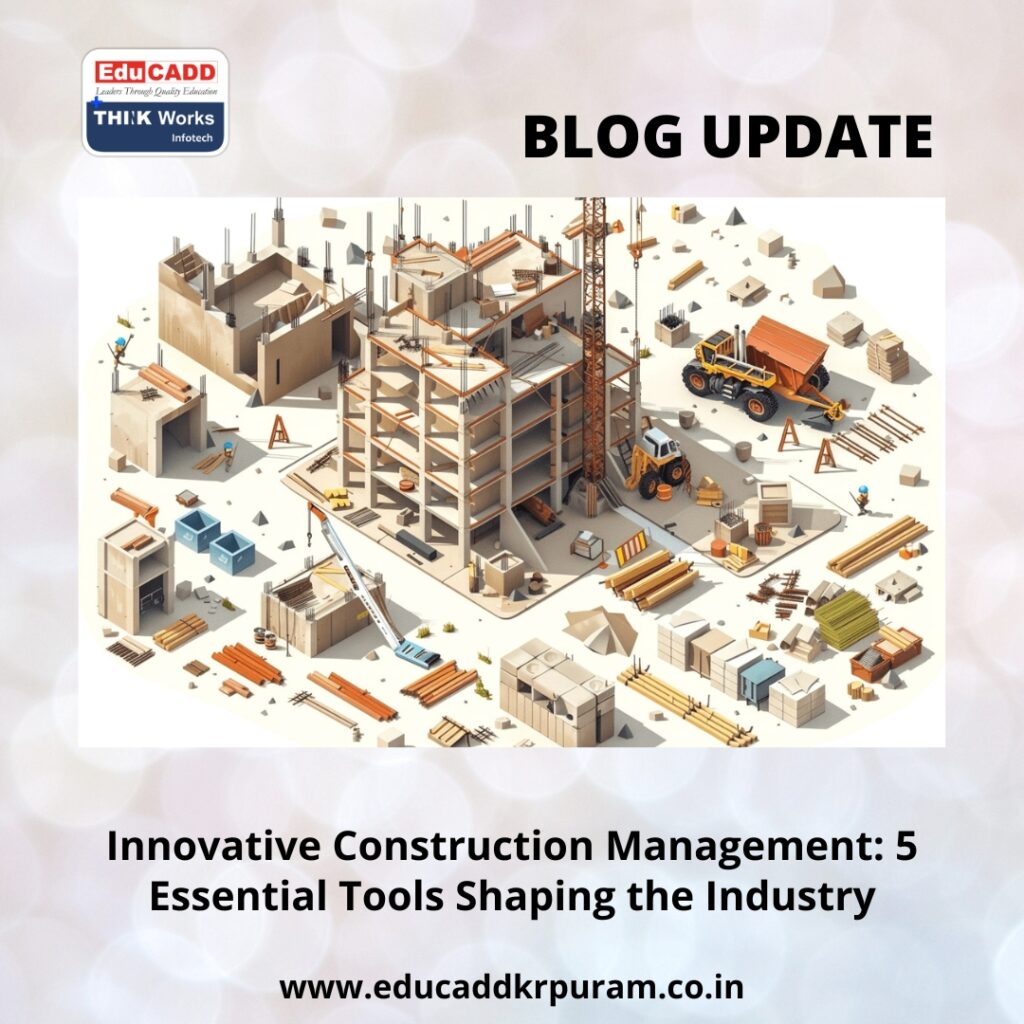
Innovative Construction Management Tools
This blog highlights the Innovative Construction Management Tools, explaining how each contributes to smarter planning, faster execution, and better outcomes.
Understanding the Need for Modern Tools in Construction
Construction projects today are far more intricate than they were a decade ago. Large-scale developments require precise planning, real-time monitoring, and continuous coordination among architects, engineers, contractors, and clients. Delays, miscommunication, or errors can lead to costly setbacks.
Modern construction tools help teams overcome these challenges by providing:
-
Improved communication: Ensuring all stakeholders are on the same page.
-
Efficient scheduling: Reducing downtime and preventing bottlenecks.
-
Accurate cost control: Tracking budgets and avoiding overruns.
-
Enhanced safety: Minimizing risks through predictive and monitoring tools.
By integrating technology into the construction process, companies can complete projects faster, safer, and more cost-effectively.
1. Building Information Modeling (BIM)
Building Information Modeling (BIM) is one of the most transformative tools in construction management. Unlike traditional 2D plans, BIM creates a digital 3D model of a building, integrating information about materials, structural elements, schedules, and costs.
Key Benefits of BIM:
-
Early clash detection: Potential conflicts between systems like plumbing, electrical, and HVAC can be resolved before construction begins.
-
Improved collaboration: Architects, engineers, and contractors work simultaneously on the same digital model, reducing miscommunication.
-
Scenario simulation: Managers can simulate design changes and understand their impact on timelines and budgets.
BIM not only improves accuracy but also helps in sustainability by optimizing resource usage and energy efficiency. For complex projects, it becomes an indispensable tool for ensuring smooth execution.
2. Construction Project Management Software
Managing a construction project involves tracking multiple variables—timelines, resources, labor, procurement, and costs. Construction project management software centralizes these operations, making it easier for managers to oversee the entire process.
Popular software such as Procore, Buildertrend, and Oracle Primavera provides:
-
Real-time updates: Managers can see the latest progress and adjust plans immediately.
-
Task assignment: Teams are clearly assigned responsibilities with deadlines.
-
Automated reporting: Reports on costs, schedules, and progress are generated without manual effort.
Cloud-based platforms enable mobility, allowing managers to monitor projects from anywhere. This reduces errors, ensures accountability, and improves overall efficiency. By integrating project management software, construction firms can maintain timelines and budgets more effectively.
3. Drones for Site Monitoring and Surveying
Drones have emerged as one of the most practical tools in modern construction management. They provide aerial surveys, capturing high-resolution images and videos of construction sites quickly and accurately.
Applications of Drones in Construction:
-
Topographic surveys: Mapping large sites with precision in a fraction of the time.
-
Progress monitoring: Real-time visuals help managers track work completion and identify delays.
-
Material management: Keeping an inventory check on stockpiles and equipment.
-
Safety inspection: Surveying hazardous or hard-to-reach areas without risking worker safety.
The data collected by drones can be integrated with project management software for better visualization and documentation. Drones save time, reduce costs, and enhance site safety, making them a critical tool in modern construction projects.
4. Artificial Intelligence (AI) and Data Analytics
Artificial Intelligence (AI) is transforming construction by converting vast amounts of data into actionable insights. AI algorithms can predict potential risks, schedule delays, or budget overruns based on historical data.
Key Benefits of AI and Data Analytics:
-
Risk prediction: AI can identify recurring issues and suggest preventive measures.
-
Optimized resource allocation: Ensuring labor, equipment, and materials are used efficiently.
-
Predictive maintenance: AI forecasts machinery breakdowns, reducing downtime.
-
Decision support: Data-driven insights enable managers to make better decisions quickly.
Data analytics complements AI by providing detailed reports on project performance. Together, these tools help managers identify trends, anticipate problems, and optimize workflows. Integrating AI ensures projects are managed proactively rather than reactively, saving time and resources.
5. Mobile Applications and Cloud Collaboration Tools
Modern construction teams are often spread across multiple locations. Mobile applications and cloud collaboration platforms bridge this gap by enabling real-time communication and access to information.
Advantages of Mobile and Cloud Solutions:
-
Instant access: Team members can view plans, schedules, and updates from their mobile devices.
-
Document sharing: Drawings, approvals, and reports are shared seamlessly across all stakeholders.
-
Progress documentation: Photos and videos can be uploaded instantly to track quality and compliance.
-
Enhanced coordination: Design changes or updates are communicated instantly, reducing delays.
Cloud-based collaboration ensures that everyone—from field workers to office managers—remains connected. These tools improve transparency, reduce errors, and enable faster decision-making.
Integrating These Tools for Maximum Impact
Individually, each of these five tools offers significant benefits. However, the real transformation happens when they are integrated into a cohesive system. For example:
-
BIM data can be linked with project management software to track progress against the design.
-
Drone imagery can be fed into AI algorithms for predictive analysis.
-
Cloud-based collaboration ensures that updates from all tools reach every stakeholder instantly.
By creating a connected ecosystem, construction teams can anticipate challenges, optimize workflows, and deliver projects with higher quality and lower costs.
Future Trends in Construction Management Tools
The construction industry continues to evolve, with emerging technologies complementing these tools:
-
Augmented Reality (AR): AR allows workers to visualize designs directly on-site.
-
Internet of Things (IoT): Sensors monitor equipment performance and environmental conditions in real time.
-
Robotics: Automated machinery reduces labor-intensive tasks and enhances precision.
Organizations that adopt these innovations early gain a competitive advantage, delivering projects faster and more efficiently than their peers.
Conclusion: Technology as the Backbone of Modern Construction
The Innovative Construction Management Tools—BIM, project management software, drones, AI, and mobile/cloud solutions—are redefining how projects are planned, executed, and monitored. They enhance collaboration, improve safety, optimize costs, and ensure timely delivery.
In today’s competitive construction landscape, integrating these tools is no longer optional. Firms that embrace technology-driven construction management can anticipate challenges, respond to changes proactively, and consistently deliver superior results. The future of construction lies in innovation, connectivity, and smart management practices, making these tools essential for any modern construction project.

