
Beyond Creativity: How Interior Design Certification Elevates Your Career to Professional Excellence
Interior design has evolved into a powerful profession that blends artistic vision with technical precision, strategic planning, and human-centered thinking. Modern clients expect more than beautiful rooms; they demand functional layouts, sustainable solutions, budget clarity, and flawless execution. As expectations continue to rise, professionals must demonstrate both talent and verified expertise. This is where the true value of Interior Design Certification Career becomes undeniable. Certification represents more than a certificate on the wall. It reflects structured learning, industry alignment, and commitment to excellence.
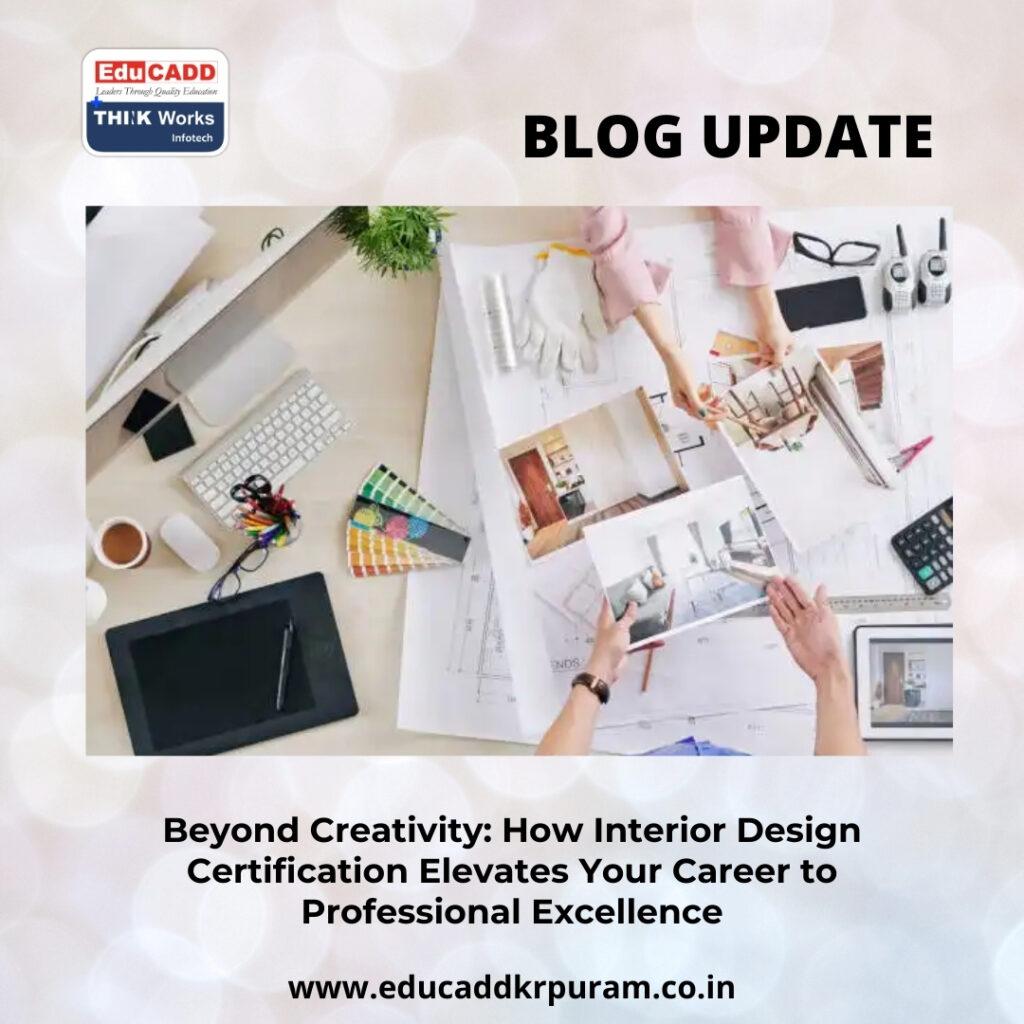
Interior Design Certification Career
In today’s competitive design environment, credibility plays a defining role in career advancement. Designers who invest in certification gain measurable advantages in employability, income growth, client trust, and long-term stability. Moreover, structured education strengthens both technical knowledge and creative confidence. This comprehensive guide explores the full spectrum of Interior Design Certification Benefits and explains how certification transforms not only your resume but also your professional journey.
1. Building Professional Identity and Market Credibility
A strong professional identity sets successful designers apart from hobbyists. One of the most influential Interior Design Certification Benefits is the credibility it brings to your profile. Certification validates your training and confirms that you understand design principles, construction standards, and ethical practices.
Clients often evaluate designers based on qualifications before reviewing portfolios. When they see recognized credentials, they immediately perceive professionalism and reliability. This perception influences hiring decisions significantly. Therefore, certification strengthens your position during competitive bidding processes.
Additionally, credibility impacts collaborations. Architects, contractors, and developers prefer working with certified designers because they understand industry standards. This trust improves teamwork and project efficiency. Over time, your professional identity becomes associated with competence and accountability, which enhances long-term reputation in the market.
2. Comprehensive Knowledge That Strengthens Design Foundations
Interior design demands a balance between creativity and technical understanding. While natural talent plays a role, structured education refines that talent into expertise. One of the core Interior Design Certification Career is access to a comprehensive curriculum that covers essential topics in depth.
Certification programs teach space planning, lighting design, material selection, ergonomics, building codes, and digital tools. Instead of learning through trial and error, students gain systematic knowledge. This approach ensures that designers understand both aesthetic harmony and structural limitations.
Because the learning process follows a logical sequence, gaps in understanding are minimized. Designers become more confident when handling complex projects. As a result, certified professionals consistently deliver designs that are not only visually appealing but also practical and compliant with regulations.
3. Greater Career Opportunities Across Industries
The design industry spans residential homes, corporate offices, retail outlets, hospitality venues, and healthcare facilities. However, access to these sectors often depends on qualifications. Among the significant Interior Design Certification Benefits is broader career access.
Employers frequently prioritize candidates who hold recognized certifications. Credentials demonstrate readiness and reduce onboarding time. Therefore, certified designers often receive interview opportunities more quickly than non-certified applicants.
Moreover, multinational firms and architectural companies require formal qualifications for certain roles. Certification opens doors to these prestigious opportunities. Over time, expanded career options allow professionals to explore diverse sectors and refine their expertise.
4. Increased Earning Potential and Financial Stability
Financial growth remains a primary goal for many professionals. One of the most measurable Interior Design Certification Career is enhanced income potential. Certified designers often command higher salaries and consulting fees compared to their uncertified counterparts.
Clients associate certification with expertise. Consequently, they are willing to invest more in qualified professionals. This perception enables designers to position themselves as premium service providers.
In corporate settings, credentials strengthen negotiation power. Employers recognize the value of formal training and industry knowledge. Therefore, certified professionals often secure better compensation packages and performance-based incentives.
Over time, increased earning potential contributes to financial stability and supports further professional development investments.
5. Strengthened Client Confidence and Long-Term Relationships
Interior design projects involve emotional attachment and financial commitment. Clients seek reassurance that their chosen designer understands both creativity and responsibility. Among the impactful Interior Design Certification Benefits is the trust it inspires in clients.
Certification assures clients that the designer has studied safety regulations, spatial planning techniques, and professional standards. This assurance reduces hesitation and builds confidence during project discussions.
When clients trust your expertise, communication becomes smoother. They are more receptive to suggestions and strategic recommendations. As a result, projects progress efficiently, and outcomes align closely with expectations.
Satisfied clients often become repeat customers and refer others. Strong relationships built on trust create sustainable business growth.
6. Competitive Edge in an Expanding Market
The interior design field continues to attract new entrants every year. While competition increases, differentiation becomes essential. One of the strategic Interior Design Certification Benefits is market distinction.
Certification signals dedication and seriousness. It communicates that you have invested time and effort to master your craft. This distinction influences both clients and employers when comparing multiple professionals.
Furthermore, certification enhances your online presence. When credentials are highlighted on websites and social media profiles, they strengthen brand positioning. Potential clients searching for qualified designers are more likely to contact certified professionals.
In highly competitive markets, small advantages create significant impact. Certification serves as a powerful differentiator.
7. Improved Project Management and Organizational Skills
Design projects require careful coordination of budgets, timelines, vendors, and documentation. Without strong organizational skills, even creative concepts can face delays. Certification programs address these operational aspects comprehensively.
One of the practical Interior Design Certification Benefits is improved project management capability. Designers learn cost estimation, scheduling strategies, and vendor coordination techniques.
Effective management ensures projects remain within budget and meet deadlines. Clients appreciate efficiency and transparency. Consequently, successful execution strengthens your professional reputation.
Strong organizational skills also reduce stress and enhance productivity, allowing designers to focus on creativity without compromising structure.
8. Exposure to Modern Technology and Industry Trends
Technology plays a central role in contemporary interior design. Digital modeling, 3D visualization, and rendering software enhance precision and presentation quality. Certification programs incorporate these tools into training modules.
Among the forward-thinking Interior Design Certification Benefits is familiarity with industry-standard software. Designers learn to present concepts professionally and make accurate revisions.
Additionally, certification exposes professionals to emerging trends such as sustainable materials, energy-efficient solutions, and smart home integration. Staying informed about innovations ensures long-term relevance in evolving markets.
Technological competence not only improves efficiency but also strengthens client presentations and project approvals.
9. Knowledge of Safety Regulations and Legal Compliance
Interior design involves more than aesthetics. Safety standards, building codes, and accessibility regulations are essential components of professional practice. Certification programs emphasize these responsibilities.
One of the crucial Interior Design Certification Benefits is awareness of legal compliance. Designers learn to prioritize fire safety, material durability, and ergonomic considerations.
This knowledge protects both clients and professionals from potential risks. Moreover, compliance enhances credibility. Clients appreciate designers who combine creativity with responsibility.
Understanding regulations ensures that projects achieve both beauty and structural integrity.
10. Enhanced Creative Confidence and Decision-Making
Creativity thrives when supported by knowledge. Certification strengthens theoretical understanding, which boosts confidence in practical applications.
Among the empowering Interior Design Certification Benefits is improved decision-making ability. Designers make informed choices about color schemes, materials, lighting, and layouts.
Confidence transforms client presentations. When designers articulate ideas clearly and justify decisions logically, clients respond positively.
Furthermore, creative confidence encourages experimentation within structured boundaries. This balance leads to innovative yet practical design solutions.
11. Opportunities for Specialization and Advanced Expertise
Interior design offers diverse specialization paths, including commercial design, sustainable interiors, kitchen planning, and hospitality projects. Certification introduces these areas in detail.
One of the strategic Interior Design Certification Career is clarity in career direction. Designers discover interests and strengths during training.
Specialization increases professional demand. Clients often seek experts with niche expertise rather than generalists. Advanced certifications further strengthen authority in chosen domains.
Focused expertise enhances both market value and long-term career satisfaction.
12. Foundation for Entrepreneurial Success
Many designers aspire to launch independent studios. However, entrepreneurship requires credibility and business skills. Certification provides both.
Interior Design Certification Benefits extend to brand development and marketing. Credentials strengthen client acquisition efforts and build trust during negotiations.
Training often includes lessons in budgeting, contracts, and client communication. These skills are essential for running a successful firm.
When establishing a design business, certified professionals present a compelling value proposition that accelerates growth and enhances sustainability.
13. Long-Term Career Resilience and Adaptability
Professional landscapes change due to economic shifts and technological advancements. Certification enhances resilience in uncertain times.
Among the enduring Interior Design Certification Benefits is adaptability. Designers with strong foundational knowledge can transition between roles or industries more easily.
Qualifications remain relevant even as trends evolve. This stability ensures continued demand for certified expertise.
Career longevity often depends on continuous development. Certification establishes a habit of lifelong learning that supports sustained growth.
14. Personal Growth and Professional Fulfillment
Beyond strategic advantages, certification offers emotional rewards. Completing a recognized program symbolizes dedication and achievement.
One of the inspiring Interior Design Certification Benefits is personal fulfillment. Designers gain pride in their accomplishments and confidence in their capabilities.
This sense of achievement fuels motivation and encourages ongoing improvement. Passion for the profession deepens as expertise grows.
Ultimately, personal growth enhances professional performance. Designers who feel accomplished approach projects with enthusiasm, creativity, and commitment.
Conclusion
Interior design demands more than imagination. It requires technical knowledge, strategic thinking, and professional credibility. The numerous Interior Design Certification Career explored above demonstrate how certification elevates careers in meaningful ways. From improved employability and higher income potential to stronger client trust and creative confidence, certification provides a solid framework for sustainable success.
By investing in certification, designers invest in their future. They strengthen their authority, expand opportunities, and build lasting professional value. In a dynamic and competitive industry, certification stands as a transformative milestone that turns creative passion into recognized professional excellence.

