
Luxury Interior Design: Crafting Spaces That Express Prestige, Comfort, and Timeless Character
Luxury Interior Design Ideas is no longer defined by extravagance alone. It has evolved into a thoughtful discipline that balances elegance, comfort, and functionality. A truly luxurious interior does not overwhelm the senses. Instead, it creates a refined atmosphere where every detail feels intentional and harmonious.
In modern living, interiors must do more than look impressive. They must support lifestyle, enhance well-being, and reflect personal identity. Luxury Interior Design addresses these expectations by combining craftsmanship, innovation, and emotional intelligence. It transforms ordinary structures into environments that feel composed, inviting, and enduring.
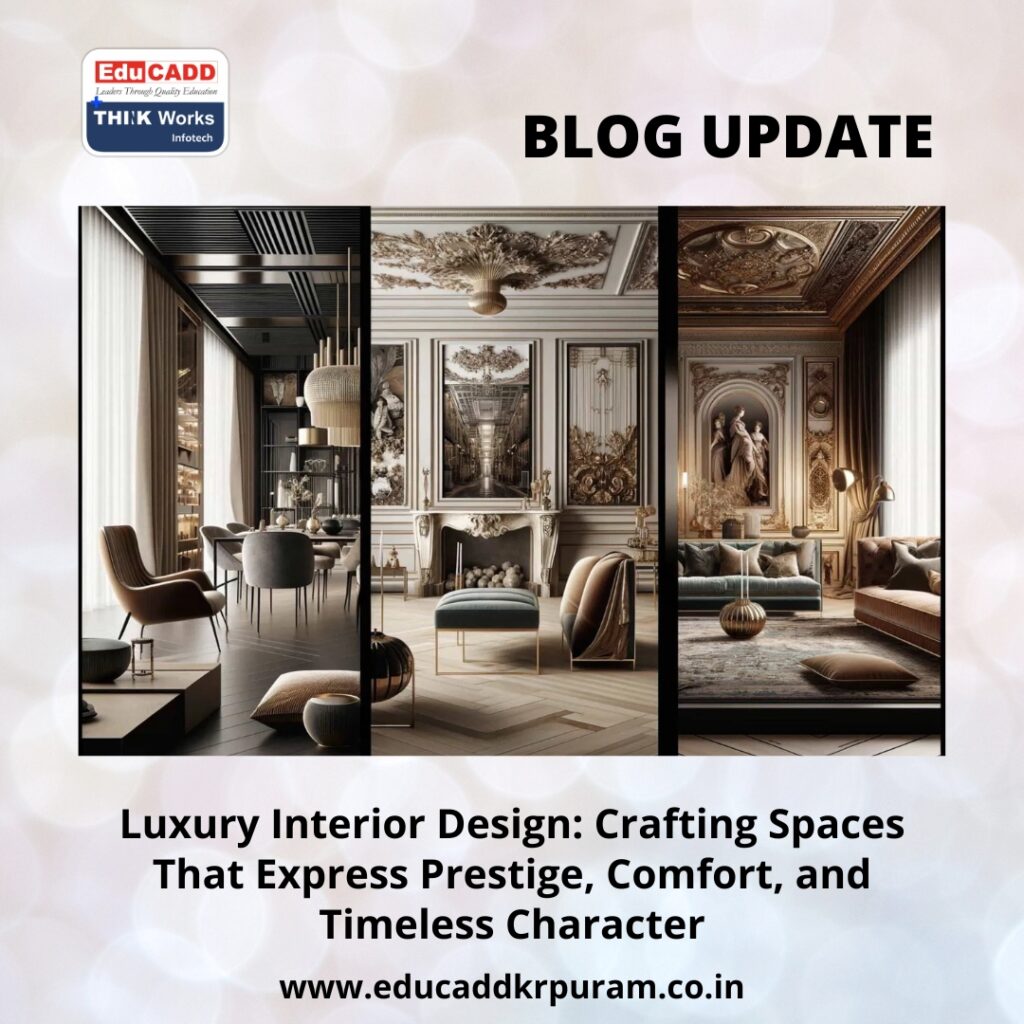
Luxury Interior Design Ideas
Luxury today is subtle. It appears in proportions rather than decoration. It reveals itself through material authenticity, spatial flow, and attention to detail. This blog explores how Luxury Interior Design shapes premium spaces that remain relevant, elegant, and meaningful over time.
1. Understanding Luxury Interior Design in the Modern Context
Luxury Interior Design begins with clarity of purpose. It is not about following trends or showcasing wealth. Instead, it focuses on creating spaces that feel refined, balanced, and deeply personal.
In contemporary design, luxury is defined by restraint. Designers intentionally reduce visual noise to highlight quality and craftsmanship. This approach allows key elements to stand out without competition. As a result, interiors feel calm and sophisticated.
Luxury Interior Design also prioritizes user experience. Designers consider how people move, relax, work, and socialize within a space. Every design decision supports comfort and functionality. This human-centered approach ensures that luxury interiors feel effortless rather than forced.
2. Space Planning as the Core of Premium Interiors
Thoughtful space planning forms the backbone of Luxury Interior Design. Without proper planning, even the finest materials fail to achieve impact. Designers begin by studying layout efficiency, movement patterns, and spatial proportions.
Luxury Interior Design emphasizes seamless flow. Rooms connect naturally, creating continuity and openness. Designers use zoning techniques to define areas without interrupting visual harmony. This balance enhances both privacy and interaction.
Vertical space also plays a vital role. Ceiling height, wall volume, and architectural features influence how luxury is perceived. Luxury Interior Design often incorporates open ceilings, layered levels, and architectural focal points to enhance spatial richness. Through intelligent planning, interiors feel expansive, composed, and functional.
3. Material Integrity and Craftsmanship
Materials define the essence of Luxury Interior Design. Premium interiors rely on materials that convey authenticity, durability, and tactile richness. Natural stone, solid wood, fine fabrics, leather, glass, and metal dominate luxury spaces.
Luxury Interior Design values craftsmanship above imitation. Hand-finished surfaces, natural textures, and artisanal details add depth and character. These materials age gracefully, developing patina and personality over time.
Equally important is material harmony. Designers avoid excessive combinations that create visual clutter. Instead, they curate a limited palette where each material complements the others. This thoughtful selection ensures cohesion and long-term elegance.
4. Color Strategy and Textural Depth
Color selection influences emotion and perception. Luxury Interior Design often begins with neutral tones to establish timeless appeal. Shades such as ivory, beige, stone, grey, and muted earth tones create a refined base.
Texture adds warmth and dimension to these palettes. Luxury Interior Design layers fabrics, finishes, and surfaces to enrich visual and tactile experience. Soft upholstery, textured walls, layered rugs, and subtle patterns enhance comfort without overwhelming the space.
Accent colors appear with restraint. Designers introduce them through artwork, décor, or statement furniture. This controlled approach ensures flexibility and longevity. Through balanced color and texture, Luxury Interior Design achieves understated sophistication.
5. Lighting Design: Sculpting Mood and Atmosphere
Lighting is a powerful tool in Luxury Interior Design. It shapes ambiance, highlights materials, and enhances architectural form. A well-executed lighting plan transforms spaces throughout the day.
Luxury Interior Design uses layered lighting strategies. Ambient lighting establishes overall brightness. Task lighting supports specific functions. Accent lighting draws attention to textures and focal points. Together, these layers create depth and visual interest.
Decorative lighting fixtures add identity. Chandeliers, pendants, and designer lamps act as sculptural elements. Meanwhile, concealed lighting maintains subtlety and elegance. Through thoughtful lighting design, luxury interiors feel dynamic and inviting.
6. Bespoke Furniture and Custom Solutions
Customization defines exclusivity in Luxury Interior Design. Mass-produced furniture often fails to meet the spatial and aesthetic demands of premium interiors. Designers therefore rely on bespoke solutions.
Custom furniture ensures precise proportions, superior comfort, and material consistency. Luxury Interior Design often features made-to-measure seating, dining tables, storage units, and wardrobes. These elements integrate seamlessly with the architectural framework.
Custom detailing extends beyond furniture. Tailored wall panels, handcrafted joinery, unique hardware, and personalized finishes elevate the overall design. This level of detail reinforces the uniqueness and refinement of luxury spaces.
7. Technology Integration for Contemporary Luxury
Modern Luxury Interior Design embraces technology as a silent enhancer. Smart systems improve comfort, efficiency, and security while maintaining visual harmony.
Designers integrate automation discreetly. Lighting, climate, curtains, and entertainment systems remain intuitive and unobtrusive. Hidden wiring and minimal interfaces preserve aesthetic purity.
Sustainability also influences Luxury Interior Design. Energy-efficient lighting, intelligent climate control, and eco-conscious materials align luxury with responsible living. This integration ensures that premium interiors remain relevant in a changing world.
8. Art, Styling, and Finishing Touches
Styling completes the narrative of Luxury Interior Design. Art and accessories add personality, emotion, and cultural depth. Designers curate pieces that resonate with the client’s identity and the space’s character.
Luxury Interior Design emphasizes quality over quantity. A single impactful artwork often creates more presence than multiple decorative items. Accessories such as sculptures, books, textiles, and curated objects add subtle layers of interest.
Negative space remains intentional. Allowing areas to breathe enhances visual clarity and calm. Through thoughtful styling, luxury interiors achieve balance, elegance, and refinement.
Conclusion
Luxury Interior Design Ideas is a thoughtful blend of aesthetics, functionality, and emotional resonance. It is not defined by cost alone, but by intention, craftsmanship, and experience. Premium interiors succeed when every element works in harmony.
Through intelligent planning, authentic materials, refined color palettes, and bespoke detailing, Luxury Interior Design creates spaces that endure. These interiors adapt to evolving lifestyles while maintaining timeless appeal.
Ultimately, Luxury Interior Design transforms spaces into meaningful environments. It elevates everyday living into an experience of comfort, confidence, and elegance. When designed with care and precision, luxury interiors become lasting expressions of personal and architectural excellence.

