
From Concepts to Careers: Job-Oriented Mechanical Design Courses That Build Industry-Ready Engineers
The engineering world is undergoing a major transformation, driven by rapid technological advancements and increasing industrial demands. In this evolving landscape, mechanical engineers are expected to go beyond theoretical understanding and demonstrate strong practical expertise. This shift has made Mechanical Design Career Courses more important than ever before. These courses are carefully structured to equip learners with hands-on skills, real-world exposure, and in-depth knowledge of modern design tools.
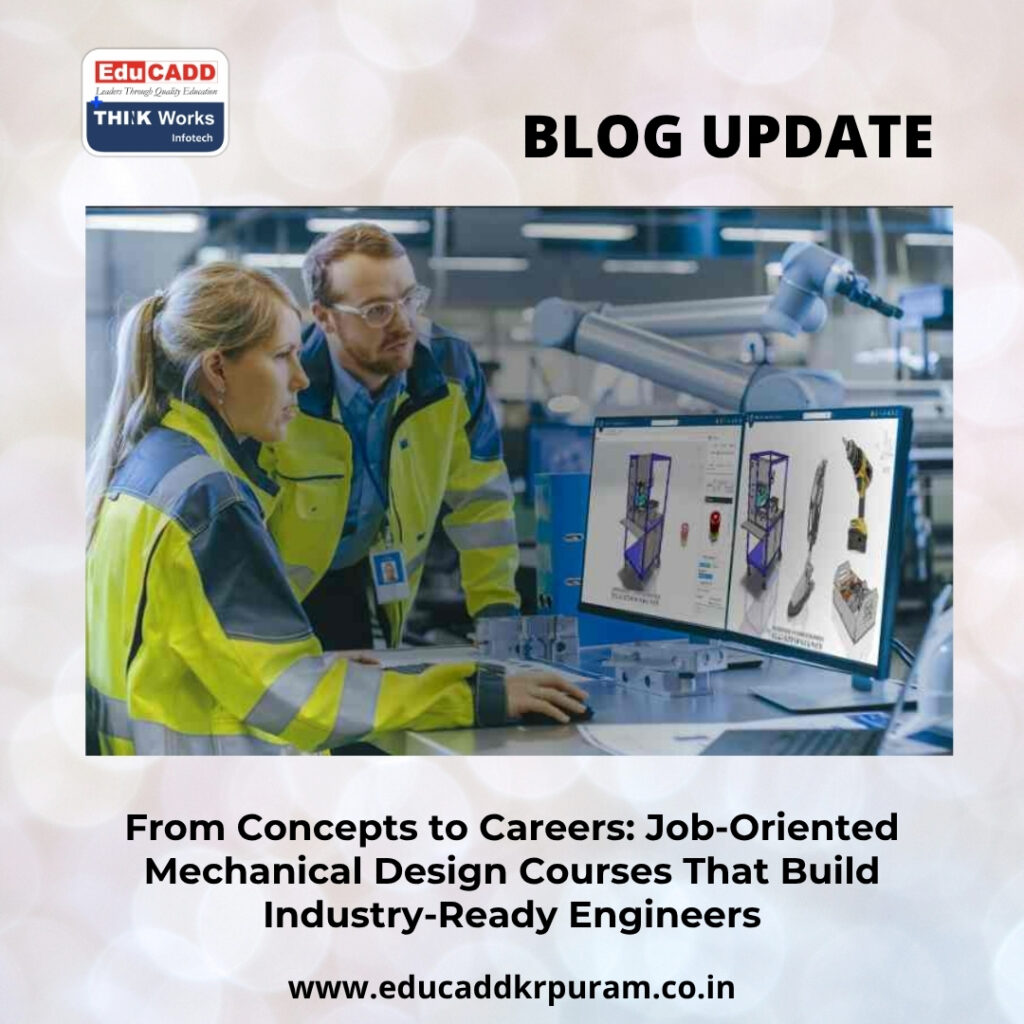
Mechanical Design Career Courses
Mechanical design plays a vital role in shaping industries such as automotive, aerospace, manufacturing, and energy. Every machine, component, or system begins with a well-thought-out design. Therefore, professionals who can create efficient, innovative, and cost-effective designs are highly valued. By enrolling in career-focused mechanical design courses, students and professionals can bridge the gap between education and employment while building a strong foundation for long-term success.
1. Defining Mechanical Design Courses in Today’s Context
Mechanical Design Career Courses are specialized training programs that focus on teaching the principles, techniques, and tools required to design mechanical components and systems. These programs combine theoretical knowledge with practical implementation, enabling learners to understand how designs are developed and optimized in real-world scenarios.
In addition, these courses emphasize precision, creativity, and analytical thinking. Students learn how to interpret design requirements, create detailed drawings, and evaluate performance. As industries continue to evolve, such comprehensive training ensures that learners are prepared to meet modern engineering challenges effectively.
2. Why Job-Oriented Learning Is the Future of Engineering Education
The traditional approach to engineering education often lacks practical exposure, which creates a gap between academic learning and industry expectations. Job-oriented mechanical design courses address this issue by focusing on skill development and employability.
These programs include real-time projects, case studies, and practical assignments that simulate workplace conditions. Moreover, they are frequently updated to reflect the latest industry trends. As a result, learners gain relevant skills that make them job-ready from day one, giving them a competitive edge in the job market.
3. Comprehensive Curriculum That Builds Strong Foundations
A well-designed mechanical design course covers a wide range of subjects to ensure holistic learning. Each module contributes to building a strong technical base and enhancing practical skills.
Key topics typically include:
- Engineering graphics and technical drawing
- 3D modeling and assembly techniques
- Finite Element Analysis (FEA)
- Design for manufacturing (DFM)
- Product development processes
This comprehensive curriculum ensures that students gain both depth and breadth in their knowledge. Consequently, they are able to handle complex design challenges with confidence and efficiency.
4. Mastering Industry-Relevant Design Software
In the modern engineering environment, proficiency in design software is essential. Mechanical design courses provide extensive training in tools that are widely used across industries.
Students are trained in:
- AutoCAD for 2D drafting
- SolidWorks for 3D modeling and simulations
- CATIA for advanced product design
- ANSYS for analysis and testing
Learning these tools enables students to create accurate designs and perform detailed analysis. Furthermore, it enhances their productivity and makes them valuable assets to employers.
5. Key Benefits of Enrolling in Job-Oriented Mechanical Design Courses
Choosing a job-oriented mechanical design course offers several advantages that significantly impact career growth. One of the primary benefits is the emphasis on practical learning, which helps students apply theoretical concepts effectively.
Another important advantage is the availability of placement assistance. Many institutes collaborate with industries to provide job opportunities for their students. As a result, learners can transition smoothly from training to employment, reducing the uncertainty associated with job searching.
6. Diverse Career Opportunities in Mechanical Design
Mechanical design courses open doors to a variety of career paths across multiple industries. With the right skills and knowledge, graduates can explore numerous roles based on their interests.
Some common career options include:
- Mechanical Design Engineer
- CAD Designer
- Product Design Specialist
- Simulation Engineer
- Quality Control Engineer
Each role offers unique challenges and opportunities for growth. Therefore, these courses provide a versatile foundation for building a successful career.
7. Increasing Industry Demand for Skilled Designers
The demand for skilled mechanical designers is on the rise due to rapid industrialization and technological advancements. Companies are constantly seeking professionals who can design efficient systems and improve product performance.
Additionally, the integration of automation and smart technologies has further increased the need for skilled designers. Professionals who can adapt to these changes and work with advanced tools are highly sought after. Hence, pursuing job-oriented training is a strategic move for long-term career stability.
8. Practical Exposure Through Hands-On Training
Hands-on training is a crucial element of mechanical design education. It allows students to apply theoretical knowledge in practical scenarios, making learning more engaging and effective.
Working on real-world projects helps students understand industry requirements and standards. It also enhances their problem-solving abilities and technical skills. As a result, they become confident professionals who can handle complex tasks with ease.
9. Importance of Certification in Career Advancement
Certification plays a significant role in validating a candidate’s skills and knowledge. Employers often prefer certified professionals, as it assures them of the candidate’s competence.
A recognized certification not only strengthens your resume but also increases your chances of getting shortlisted for job opportunities. Moreover, it demonstrates your commitment to continuous learning and professional development.
10. Factors to Consider When Choosing the Right Course
Selecting the right mechanical design course is essential for achieving your career goals. Several factors should be taken into account to make an informed decision.
Important considerations include:
- Updated curriculum aligned with industry standards
- Availability of practical training and projects
- Experienced faculty and mentors
- Placement support and industry connections
By evaluating these factors carefully, students can choose a course that best suits their needs and aspirations.
11. Internships as a Gateway to Industry Experience
Internships provide valuable exposure to real-world working environments. They allow students to gain practical experience and understand how theoretical concepts are applied in industries.
In addition, internships help in developing essential soft skills such as communication, teamwork, and time management. They also offer opportunities to build professional networks, which can be beneficial for future career growth.
12. Salary Potential and Career Growth Opportunities
Mechanical design professionals enjoy attractive salary packages and excellent growth prospects. Entry-level positions offer competitive salaries, which increase with experience and expertise.
Over time, professionals can advance to senior roles, managerial positions, or specialized domains. Some may even choose to start their own ventures. Therefore, this field offers both financial rewards and long-term career development.
13. Emerging Technologies Shaping Mechanical Design
The future of mechanical design is being shaped by emerging technologies such as artificial intelligence, additive manufacturing, and digital engineering. These advancements are transforming the way designs are created and analyzed.
Engineers must continuously upgrade their skills to stay relevant in this dynamic environment. Job-oriented courses are regularly updated to include these technologies, ensuring that students remain competitive in the job market.
14. The Growing Importance of Mechanical Design Skills Across Industries
Mechanical design skills are essential across a wide range of industries. From manufacturing to healthcare, every sector relies on efficient and innovative designs.
These skills enable professionals to improve product quality, optimize performance, and reduce costs. Additionally, they encourage creativity and innovation, which are crucial for solving modern engineering challenges. Therefore, investing in mechanical design education is a smart decision for a successful future.
Conclusion
In conclusion, Mechanical Design Career Courses serve as a powerful stepping stone for building a successful engineering career. They provide the perfect blend of theoretical knowledge and practical expertise, preparing individuals to meet industry demands with confidence.
By choosing the right course, gaining hands-on experience, and staying updated with emerging trends, aspiring engineers can unlock numerous opportunities in the field of mechanical design. Ultimately, these courses not only enhance employability but also empower individuals to contribute to innovation and technological progress.

