
Mastering Modern Manufacturing Projects with Primavera: A Smarter Roadmap to Industrial Success
The manufacturing sector is evolving faster than ever. Companies now juggle complex production lines, large-scale project portfolios, rapid customer demands, and strict quality standards—all at the same time. To stay competitive, they must plan with precision, manage resources effectively, and respond quickly to changing operational needs. This is where Primavera Manufacturing Project Management becomes a transformative force.
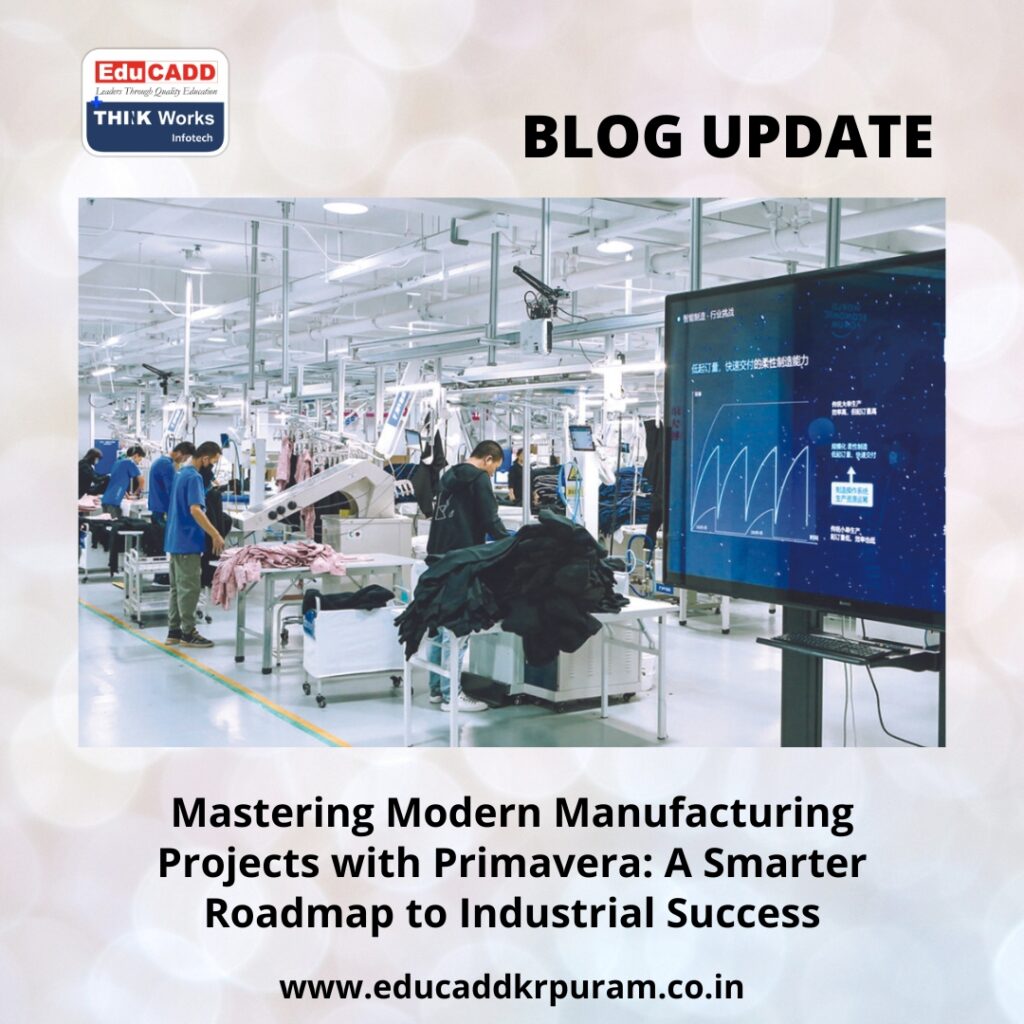
Primavera Manufacturing Project Management
Its powerful planning, scheduling, and monitoring capabilities help manufacturers stay organized, improve productivity, and complete projects with confidence. This fresh, in-depth blog explores how Primavera supports modern manufacturing, strengthens collaboration, and drives operational excellence across the industry.
1. The New Landscape of Manufacturing Projects and Why Primavera Matters
Manufacturing has shifted from traditional, linear production methods to highly interconnected systems. Companies today manage large-scale production upgrades, factory expansions, automation rollouts, and technological transformations. Each of these initiatives requires detailed planning and seamless execution. However, without the right tools, manufacturing teams struggle with delays, resource shortages, and workflow disruptions. This is exactly where Primavera Manufacturing Project Management brings value by offering structure, visibility, and control.
The modern manufacturing environment is also influenced by shorter product life cycles, frequent design changes, and growing market competition. Teams no longer work in isolation; engineers, maintenance technicians, quality teams, logistics partners, and suppliers all collaborate closely. Primavera acts as a central platform that connects these groups, making it easier to track progress, share updates, and adjust plans when unexpected situations arise.
Additionally, manufacturers must comply with strict industry regulations, safety requirements, and environmental guidelines. Tracking all these elements manually can lead to errors. Primavera ensures that every step and approval is documented, making compliance easier to achieve and maintain.
Another major change in manufacturing is the increasing need for real-time insights. Decision-makers need instant visibility into shop-floor performance, project health, resource utilization, and cost trends. Primavera offers detailed analytics and dashboards that help managers make informed decisions and respond quickly to challenges. In a world where delays cost money, this visibility becomes a competitive advantage.
Through its scheduling power, collaborative capabilities, and data-driven insights, Primavera helps manufacturers adapt to the new industrial landscape with confidence and clarity.
2. How Primavera Reinforces Strategic Planning and Organized Execution
Behind every successful manufacturing initiative lies a strong plan. This is why planning is considered the backbone of manufacturing project success. Primavera for Manufacturing Industry Projects enhances planning by offering advanced scheduling tools, accurate forecasting features, and structured task breakdowns. These capabilities enable teams to create detailed project blueprints that align with operational goals.
Primavera uses techniques like Critical Path Analysis, resource leveling, and milestone planning to build schedules that reflect real-world challenges. For instance, if a machine requires calibration before a new production run, Primavera ensures that the calibration task is added to the workflow and linked to dependent tasks. This prevents overlooked activities and last-minute disruptions.
Manufacturers also face the constant challenge of managing multiple projects at the same time. Primavera allows them to run several projects concurrently while maintaining control over timelines, resources, and costs. With portfolio management features, decision-makers can prioritize projects, allocate budgets effectively, and evaluate potential risks before beginning execution.
Forecasting is another strength of Primavera. Manufacturing projects rely heavily on predictable timelines and accurate resource estimates. Primavera provides tools that help managers forecast labor needs, equipment availability, material flow, and cost patterns. This helps companies avoid resource conflicts, production downtime, or budget overruns.
Integration plays a significant role in modern manufacturing. Primavera easily connects with ERP, MES, and supply chain systems, enabling seamless information flow across departments. This integration ensures that production planning, inventory updates, procurement processes, and project schedules remain aligned. It also reduces manual work, eliminates data duplication, and increases overall efficiency.
Through structured planning, intelligent forecasting, and seamless integration, Primavera strengthens the foundation of manufacturing projects and makes execution smoother and more predictable.
3. Building Stronger Team Collaboration and Real-Time Visibility
No manufacturing project can succeed without teamwork. Whether it involves equipment upgrades, new product introductions, or system automation, collaboration is essential. Primavera for Manufacturing Industry Projects improves team alignment by providing a central communication hub where every stakeholder can view project updates, task assignments, and timeline changes.
One of the biggest challenges in manufacturing is the communication gap between departments. For example, the engineering team may update a design, but the production team may not be informed on time. Primavera prevents these gaps by sending real-time notifications and updates to all relevant users. This ensures smooth coordination and reduces costly misunderstandings.
Primavera’s dashboards also provide live visibility into project health. Managers can see which tasks are complete, which ones need attention, and where delays are likely. This proactive monitoring enables quick problem-solving, minimizing disruptions to the production schedule.
Role-based access further enhances Primavera’s collaborative environment. Each user receives access only to the information relevant to their responsibilities. For example, quality inspectors can track inspection tasks, while procurement teams monitor material status. This keeps the system organized and protects sensitive data.
External collaboration also plays a major role in manufacturing. Suppliers, contractors, and service providers need timely updates to deliver on time. Primavera allows external partners to stay aligned with project requirements, share documents, and confirm deliveries without delays.
By improving communication, increasing transparency, and enabling multi-team collaboration, Primavera creates a connected and efficient project ecosystem where everyone works towards a common goal.
4. Maximizing Efficiency Through Smart Resource and Cost Management
Resource management is one of the most critical elements of successful manufacturing. Labor, machinery, tools, materials, and production time must be allocated wisely. Mismanaged resources can lead to production bottlenecks, increased costs, and delayed delivery. Primavera for Manufacturing Industry Projects helps manufacturers optimize resource usage through intelligent allocation tools and real-time performance tracking.
Primavera provides a complete overview of resource availability, helping managers schedule tasks based on skill levels, machine capacity, and operational urgency. This prevents overloading certain team members while others remain underutilized. It also identifies resource clashes early so managers can adjust plans before delays occur.
Machine efficiency is another factor that directly affects project timelines. Primavera tracks machine usage, maintenance schedules, and downtime. With this information, companies can plan tasks around maintenance activities instead of reacting to unplanned breakdowns. This reduces disruptions and improves equipment reliability.
Material flow also influences manufacturing success. Delayed materials can stop production completely. Primavera integrates material planning with project schedules, ensuring that required materials reach the production floor at the right time. It tracks consumption, vendor performance, and delivery timelines, helping teams avoid costly shortages.
Cost control is equally important. Primavera monitors budgets, compares actual costs with forecasts, and highlights cost overruns early. This helps manufacturers stay financially disciplined and avoid last-minute cost pressures.
Through smarter allocation, predictive analysis, and transparent cost tracking, Primavera empowers manufacturers to achieve maximum efficiency while keeping projects financially stable and strategically aligned.
5. Driving Productivity, Innovation, and Competitive Strength
Manufacturing companies are constantly looking for ways to improve productivity, enhance quality, and innovate faster. This is especially important as global competition intensifies and customer expectations continue to rise. Primavera for Manufacturing Industry Projects supports these goals by creating a structured framework that encourages continuous improvement, consistent execution, and informed decision-making.
One of Primavera’s powerful benefits is its analytical capability. It tracks project performance, identifies trends, and highlights improvement opportunities. Managers can study these insights to refine their strategies and reduce inefficiencies across future projects.
Quality assurance is another priority in manufacturing. Primavera helps teams manage inspections, audits, compliance checkpoints, and documentation. This ensures that products meet standards and that the entire process is traceable and transparent.
Innovation is also fueled by structured project management. When teams spend less time dealing with chaos and more time analyzing performance, they can focus on improving processes, adopting new technologies, and introducing better products to the market.
As organizations scale, Primavera adapts to growing project demands, new business units, and advanced automation technologies. It supports digital transformation by integrating with AI tools, IoT sensors, and cloud-based manufacturing systems.
With Primavera, manufacturers gain the confidence to deliver faster, produce higher-quality results, and operate with precision—giving them a strong competitive edge in an industry where efficiency defines success.
Conclusion
Manufacturing has entered a new era where precision, speed, and strategic coordination determine long-term success. As projects become more complex and production demands continue to rise, companies need a reliable system that keeps everything aligned and efficient. Primavera Manufacturing Project Management delivers exactly that. It empowers organizations with clear planning, real-time visibility, smarter resource control, and stronger collaboration across every stage of project execution.
With its powerful scheduling and analytical capabilities, manufacturers can reduce risks, eliminate delays, and maintain full control over timelines and costs. More importantly, Primavera supports continuous improvement and helps teams innovate faster in an increasingly competitive landscape. By embracing Primavera, manufacturing companies gain a strong foundation for operational excellence, sustainable growth, and a more productive future.

