
From Blueprint to Benchmark: Mastering Primavera P6 Fundamentals for Elite Project Planning Performance
Projects today operate in an environment defined by tight deadlines, limited budgets, global competition, and rising stakeholder expectations. Whether in construction, infrastructure, oil and gas, engineering, manufacturing, or information technology, organizations must deliver predictable results while managing increasing complexity. In this context, advanced scheduling and control systems are not optional—they are essential. Primavera P6 Project Planning has earned its reputation as one of the most powerful enterprise project management tools available, enabling planners to design structured schedules and maintain strategic oversight throughout the project lifecycle.
Understanding Primavera P6 fundamentals is the first step toward achieving project planning excellence. These fundamentals go beyond learning software commands. They involve adopting a disciplined planning mindset, applying structured methodologies, and using data-driven insights to guide execution. When professionals master these principles, they gain the ability to create realistic timelines, allocate resources efficiently, control costs, analyze risks, and monitor performance with confidence..
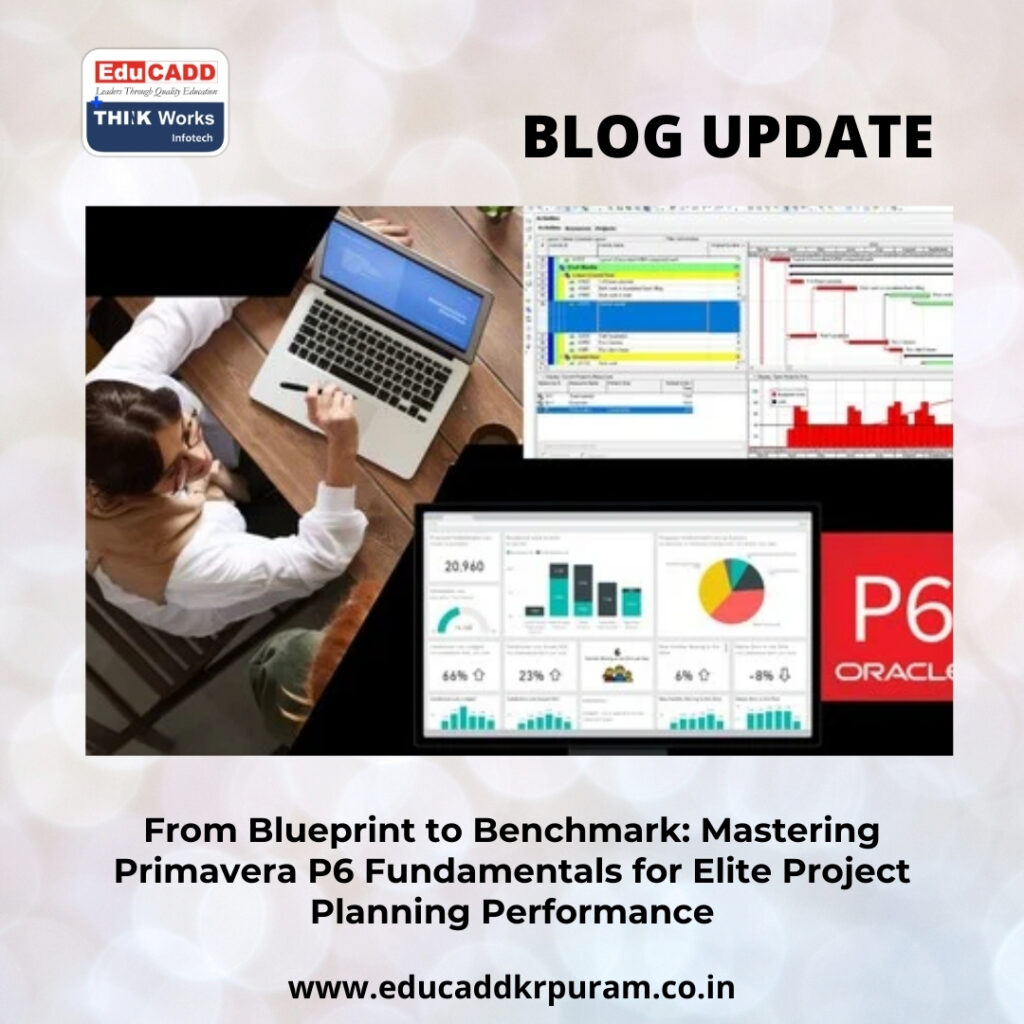
Primavera P6 Project Planning
This comprehensive guide explores the essential components of Primavera P6 fundamentals and explains how they contribute to superior project planning outcomes. Each section provides detailed insights into the processes, structures, and best practices that transform scheduling into a strategic advantage.
1. The Strategic Value of Primavera P6 in Complex Project Environments
Large-scale projects demand sophisticated coordination. Simple task lists or spreadsheet trackers cannot handle thousands of activities, overlapping dependencies, and multi-disciplinary collaboration. Primavera P6 Project Planning addresses this challenge by offering a centralized platform designed for enterprise-level scheduling and portfolio management.
At its core, Primavera P6 fundamentals emphasize structured organization. The software allows planners to manage multiple projects simultaneously while maintaining clear visibility at both program and portfolio levels. This capability is crucial for organizations managing concurrent initiatives across different regions or business units.
Moreover, Primavera P6 supports advanced analytical functions such as critical path identification, float analysis, and resource forecasting. These features help teams anticipate delays rather than react to them. By providing accurate projections and real-time insights, the system empowers decision-makers to act proactively.
When organizations integrate Primavera P6 into their strategic planning processes, they strengthen governance, improve transparency, and enhance overall project reliability.
2. Building a Robust Enterprise Project Structure (EPS)
The Enterprise Project Structure forms the backbone of organized project management within Primavera P6. EPS arranges projects in a hierarchical framework that reflects the organization’s structure. This alignment ensures clarity and consistency across all initiatives.
Primavera P6 Project Planning fundamentals require careful planning when designing the EPS. Each level should correspond to meaningful organizational categories such as departments, regions, or client groups. This structured hierarchy enables executives to monitor performance at various levels of detail.
A well-defined EPS enhances reporting accuracy. Managers can evaluate overall portfolio health or drill down into individual project metrics. This flexibility supports informed strategic decisions.
Additionally, EPS improves user management and access control. By assigning permissions based on hierarchy, organizations protect sensitive information and maintain data integrity. A thoughtful EPS design lays the groundwork for efficient project governance and long-term scalability.
3. Clarifying Roles Through Organizational Breakdown Structure (OBS)
While EPS organizes projects structurally, the Organizational Breakdown Structure defines managerial accountability. OBS connects specific managers or departments to corresponding project segments.
Primavera P6 fundamentals highlight the importance of clear responsibility assignments. When each project node has a designated manager, communication becomes streamlined. Issues escalate to the appropriate authority without confusion.
OBS also enhances security and workflow management. User access levels can align with organizational roles, preventing unauthorized modifications. This control strengthens trust in the scheduling system.
Furthermore, linking OBS with EPS ensures that reporting reflects both structural and managerial dimensions. This dual alignment improves collaboration and reinforces a culture of accountability.
4. Designing a Deliverable-Oriented Work Breakdown Structure (WBS)
The Work Breakdown Structure plays a central role in achieving project planning excellence. WBS divides the overall project scope into logical, manageable components based on deliverables.
Primavera P6 fundamentals encourage planners to focus on outcomes rather than tasks when developing the WBS. Each level should represent a clear deliverable that contributes to project objectives. This approach enhances clarity and simplifies performance tracking.
A well-organized WBS improves communication among stakeholders. Team members understand their responsibilities, and managers can monitor progress at various levels. Additionally, cost and resource assignments become more structured.
When planners establish a strong WBS early in the planning phase, they create a stable foundation for detailed scheduling and effective project control.
5. Defining Activities with Precision and Logical Flow
Activities translate deliverables into actionable steps. Primavera P6 fundamentals require planners to define activities clearly, ensuring each one has a measurable duration and specific scope.
Precision in activity definition reduces ambiguity. Teams know exactly what needs to be accomplished. This clarity prevents scope overlap and misinterpretation.
Logical relationships between activities determine sequencing. Finish-to-Start connections often guide project flow, though other relationship types address complex dependencies. Maintaining logic-driven schedules ensures flexibility and realism.
Avoiding excessive constraints allows the software to calculate accurate timelines automatically. This practice enhances reliability and supports dynamic schedule adjustments when changes occur.
6. Applying Critical Path Method for Time Control
The Critical Path Method forms the analytical engine of Primavera P6 fundamentals. CPM identifies the longest sequence of dependent activities that determines project duration.
Activities on the critical path require close monitoring because delays directly impact completion dates. Understanding float values helps planners recognize flexibility within non-critical activities.
Regular schedule updates may shift the critical path as progress changes. Continuous monitoring ensures planners respond promptly to emerging risks.
By mastering CPM analysis, project teams maintain control over timelines and protect delivery commitments. This structured approach transforms scheduling into a predictive management tool.
7. Resource Planning and Optimization Strategies
Resource management directly influences project performance. Primavera P6 fundamentals include defining and categorizing labor, equipment, and material resources within the system.
Assigning resources to activities enables planners to calculate demand and identify over-allocations. This visibility prevents unrealistic workloads and enhances productivity.
Resource leveling tools help resolve conflicts by adjusting activity timing within available float. Balanced allocation improves efficiency and reduces burnout.
Tracking actual resource performance against planned usage also supports accurate forecasting. Organizations can refine future schedules based on historical productivity data, strengthening long-term planning accuracy.
8. Integrating Cost Control with Schedule Management
Effective project planning requires synchronization between time and cost. Primavera P6 fundamentals allow planners to assign cost rates to resources and activities, generating detailed budget projections.
Cost-loaded schedules provide comprehensive financial visibility. As execution progresses, teams track actual expenditures and compare them with planned values.
Earned Value Management metrics reveal cost efficiency and schedule adherence. Early detection of variances enables corrective action before overruns escalate.
This integration of cost and schedule control enhances transparency and reinforces financial discipline throughout the project lifecycle.
9. Establishing Baselines for Objective Performance Measurement
A baseline captures the approved version of the schedule and budget before execution begins. Primavera P6 fundamentals emphasize setting clear baselines to establish performance benchmarks.
Baselines allow planners to measure deviations objectively. Comparing current progress with original targets reveals schedule slippage or acceleration.
This structured evaluation process strengthens accountability. Managers can analyze root causes of delays and implement corrective strategies effectively.
Maintaining accurate baseline records also improves stakeholder confidence by providing transparent and measurable performance data.
10. Monitoring Progress and Updating Schedules Consistently
Project conditions evolve continuously. Therefore, consistent progress updates are essential. Primavera P6 fundamentals include structured procedures for entering actual start dates, finish dates, and remaining durations.
After updates, the system recalculates timelines and identifies changes in the critical path. This recalculation provides real-time insights into project health.
Frequent monitoring enhances responsiveness. Managers can adjust strategies based on current performance rather than outdated assumptions.
Consistent updates also promote accountability among team members, reinforcing disciplined execution.
11. Identifying and Mitigating Schedule Risks
Risk management is integral to planning excellence. Primavera P6 fundamentals support detailed schedule analysis to uncover vulnerabilities.
Float analysis reveals sensitive areas within the timeline. Shifts in critical path sequences may signal emerging risks.
Planners can test alternative scenarios by adjusting durations or resources. Evaluating these scenarios helps teams choose effective mitigation strategies.
By integrating risk assessment into routine planning processes, organizations enhance resilience and protect project objectives from uncertainty.
12. Leveraging Reports and Dashboards for Strategic Insight
Effective communication drives successful project outcomes. Primavera P6 provides customizable reports and dashboards that translate complex data into actionable insights.
Primavera P6 fundamentals encourage tailoring reports to stakeholder needs. Executives often require summary dashboards, while project teams need detailed activity data.
Visual charts and performance indicators simplify analysis. Decision-makers can identify trends quickly and take informed actions.
Clear reporting fosters collaboration and builds trust among stakeholders, strengthening overall project governance.
13. Integrating Primavera P6 with Enterprise Systems
Modern organizations operate within interconnected digital ecosystems. Primavera P6 fundamentals extend to integration with financial systems, ERP platforms, and other project tools.
Integration eliminates redundant data entry and enhances consistency. Schedule updates synchronize with financial records, improving reporting reliability.
This connectivity supports comprehensive planning approaches that align operational and financial objectives. By streamlining workflows, organizations reduce errors and enhance efficiency across departments.
14. Sustaining Excellence Through Best Practices and Continuous Improvement
Achieving lasting project planning excellence requires more than technical proficiency. Primavera P6 fundamentals must be applied consistently and strategically.
Maintaining logic-driven schedules preserves analytical integrity. Conducting periodic schedule reviews ensures quality and accuracy. Documenting assumptions improves transparency.
Investing in training enhances user competency and confidence. Skilled planners interpret data accurately and respond effectively to change.
Continuous improvement practices strengthen organizational capability. By refining methodologies and leveraging system capabilities fully, organizations sustain high standards of project performance.
Conclusion
Primavera P6 Project Planning provide a comprehensive framework for disciplined, data-driven project planning. From structuring enterprise hierarchies and defining responsibilities to managing resources, costs, risks, and performance metrics, each component contributes to superior project control.
When organizations master these principles, they elevate scheduling from a routine administrative task to a strategic management function. Projects gain clarity, predictability, and measurable benchmarks that guide execution. Stakeholders receive transparent insights, and teams operate with enhanced coordination and confidence.
Ultimately, excellence in project planning stems from structured methodology and continuous improvement. By leveraging Primavera P6 effectively and embracing its core fundamentals, professionals build resilient schedules that transform complex projects into well-orchestrated successes.

